






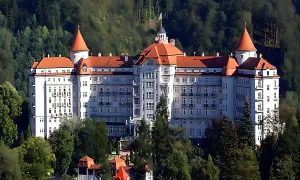
lázeňský dům Atlantic Hotel building
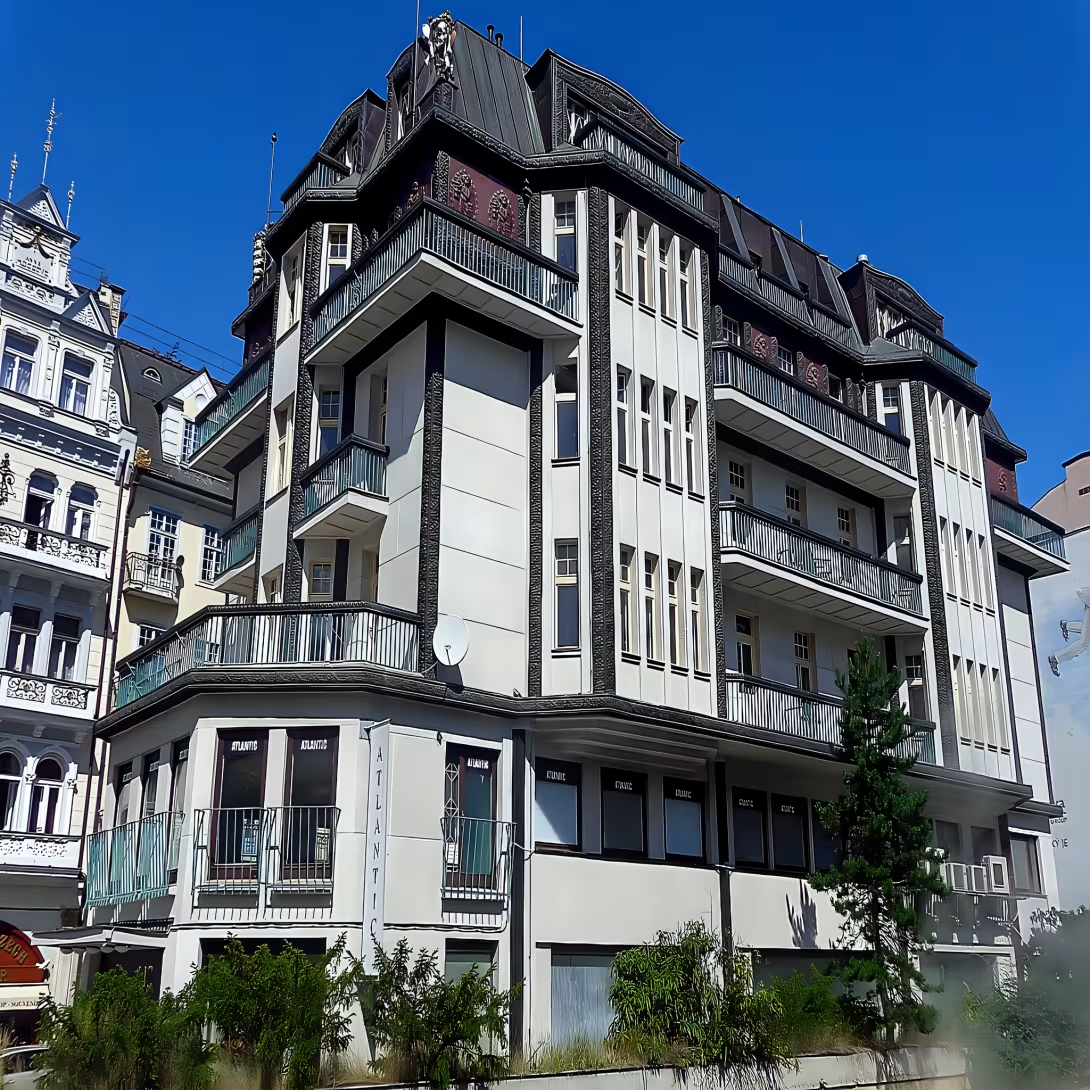
Lázeňský dům Atlantic, originally known as Hotel Atlantic Palace, is a prominent secessionist building in Karlovy Vary's spa district. Constructed at the beginning of the 20th century, it features art deco elements and an intricate facade design. The hotel has been recognized as a cultural monument since 1981 due to its historical significance and architectural uniqueness.
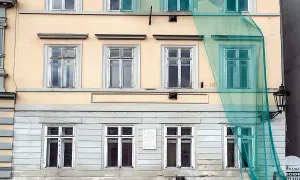
The site where Lázeňský dům Atlantic now stands was originally home to a baroque house from 1732 known as U tří skřivanů. This building gained fame when Josef Becher experimented with a bitter tonic here in 1805, which later became known as Becherovka. In 1899, a plaque commemorating Otto von Bismarck's stay at the site was unveiled. By November 1911, Alois Klein acquired the property and commissioned architects Fritz Mahler and Alfred Bayer to design a luxury hotel. Construction began in 1912 and concluded by May 1914, resulting in an architectural masterpiece that embodies secessionist style with elements of cubism.
The architecture of Lázeňský dům Atlantic is characterized by its intricate facade, featuring both vertical and horizontal divisions accentuated by color contrasts and alternating smooth and detailed surfaces. The building's design includes cubist elements, particularly evident in the mansard window frames and the shapes of the side facades. Notable decorative features include large ornamental vases at the corners of the roof, crafted from stone imitating Meissen porcelain in typical rococo forms. The hotel's facade is further adorned with angel sculptures created by Viennese artist Michael Powolny, which remain symbolic to this day.
Ownership and administration of Lázeňský dům Atlantic have seen several changes over the years. After Alois Klein's acquisition, he faced threats from Nazi repression before World War II, prompting his escape. During the war, the building was occupied by the Greater German Reich. Post-war, it was briefly managed by Bázler and Žaloudek, followed by a period under Interhotely until 1989. Since November 2019, the hotel has been part of the EA Hotels network.
Throughout its history, Lázeňský dům Atlantic has witnessed significant events and transformations. The site's association with Becherovka and Otto von Bismarck adds to its historical allure. During its construction in the early 20th century, Bohemia was part of Austria-Hungary, a period marked by a flourishing of secessionist architecture across Europe.
Today, Lázeňský dům Atlantic stands as a testament to architectural innovation and cultural heritage. The hotel offers 21 luxury rooms with balconies, maintaining its status as a four-star establishment since January 2019. Its location near the Teplá River and close to Karlovy Vary's famous springs makes it an ideal destination for visitors seeking both relaxation and historical exploration.
Lázeňský dům Atlantic is not only a remarkable example of secessionist architecture but also a living piece of history that continues to captivate those who visit. Its rich past, combined with its stunning design and prime location, make it a must-see for anyone exploring Karlovy Vary's spa district.
Historical milestones
- 1899
- A plaque was unveiled commemorating Otto von Bismarck's stay.
- 1981
- The building was designated as a cultural monument.
Architectural development
The original building on this site was a baroque house from 1732. In 1911, Alois Klein acquired it and commissioned architects Fritz Mahler and Alfred Bayer to design the luxury hotel. The construction began in 1912 and completed by May 1914, featuring secessionist style with elements of cubism.
Historical events
In 1805, Josef Becher experimented with a bitter tonic here, later known as Becherovka.
Otto von Bismarck stayed at the site in 1864, commemorated by a plaque unveiled in 1899.
Owners
Alois Klein (1911-1939)
Bázler and Žaloudek (post-WWII)
Interhotely (until 1989)
EA Hotels (since 2019)
Points of interest
- Lázeňský dům Atlantic was originally known as Hotel Atlantic Palace and is a prominent secessionist building in Karlovy Vary's spa district. - The site where Lázeňský dům Atlantic now stands was originally home to a baroque house from 1732 called U tří skřivanů, which gained fame when Josef Becher experimented with a bitter tonic here in 1805, later known as Becherovka. - In 1899, a plaque commemorating Otto von Bismarck's stay at the site was unveiled. - The architecture of Lázeňský dům Atlantic features intricate facades with vertical and horizontal divisions, color contrasts, alternati
Guide
Show guide text
This text was created by artificial intelligence and has not been editorially reviewed. It may contain inaccuracies.
Welcome to the heart of Karlovy Vary. As you stand here, taking in the vibrant atmosphere of this world-renowned spa district, your eyes are naturally drawn to the magnificent structure rising before you. You are standing in front of the Lázeňský dům Atlantic, a building that commands attention and serves as a breathtaking anchor for this historic streetscape. Even before you move closer, you can feel the sense of grandeur and the weight of history that radiates from its walls. It is a building that does not merely occupy space; it defines the very character of the surroundings, acting as a silent, elegant witness to the passing of eras and the changing tides of European high society.
To truly appreciate the Lázeňský dům Atlantic, we must first look beneath its surface and understand the layers of history upon which it rests. It is easy to see this building as a singular, monumental achievement of the early twentieth century, but the ground beneath your feet tells a much older story. Long before this grand edifice was conceived, this very site was home to a different kind of elegance. In 1732, a baroque house stood here, known as U tří skřivanů. This earlier residence was not just a simple dwelling; it gained significant fame and importance due to its association with Josef Becher, a name deeply intertwined with the history and the very spirit of Karlovy Vary. As you stand here today, imagine the transition of this location—from the intimate, baroque charm of the eighteenth century to the sweeping, ambitious scale of the modern age. The site has evolved from a place of local significance into a landmark of international prestige.
As we move our attention from the history of the site to the building itself, let us consider the era in which it was born. The Lázeňský dům Atlantic, which was originally known to the world as Hotel Atlantic Palace, was constructed at the dawn of the twentieth century. This was a time of immense optimism, rapid change, and a profound desire for new forms of beauty. The building was designed to reflect this spirit, serving as a centerpiece for the burgeoning luxury of the spa district. It was created to be a place of refuge and splendor for the elite, a setting where the most influential figures of the age could gather.
Now, I invite you to look closely at the facade. Please, take a moment to observe the intricate design that characterizes this remarkable structure. The Lázeňský dům Atlantic is a premier example of secessionist architecture. This movement was a revolutionary departure from the rigid, traditional styles of the past, seeking instead to embrace more fluid, organic, and decorative forms. As you scan the exterior, you can see how this secessionist influence is woven into the very fabric of the building. It is a style that celebrates craftsmanship and a unique sense of rhythm. Furthermore, as your eyes move across the details, you will notice the sophisticated integration of Art Deco elements. This blend of styles creates a visual dialogue between the flowing grace of the secessionist movement and the more structured, modern geometry of Art Deco. The result is a facade that is both complex and harmonious, a testament to the vision of its architects, Fritz Mahler and Alfred Bayer. These two men were tasked with creating a landmark that would stand the test of time, and in their masterful combination of styles, they succeeded. They crafted a building that feels both monumental and incredibly detailed, inviting you to linger and admire the artistry that defines its presence.
The history of this building is not just written in stone and ornament, but also in the lives of the people who once walked through its doors. The Lázeňský dům Atlantic has been a stage for some of the most significant figures of the era. One such individual was the statesman Otto von Bismarck. His connection to this location was so profound that in 1899, a special plaque was unveiled to commemorate his stay. Imagine the atmosphere of the hotel during those years—the hushed conversations of diplomats, the elegance of the guests, and the sense that the world's most important decisions were being discussed just a few steps away from where you are standing now. The building has always been more than just a place of lodging; it has been a cultural crossroads, a place where history was made and where the social fabric of Europe was woven.
There is a certain mystery in how such a structure survives the passage of time, maintaining its dignity through the decades. While many buildings from this era have been lost to change or decay, the Lázeňský dům Atlantic has remained a constant. Its historical and architectural importance was officially recognized in 1981, when it was designated as a cultural monument. This status is a testament to its enduring value, ensuring that the unique vision of Fritz Mahler and Alfred Bayer, and the storied history of the site, will be preserved for all who visit Karlovy Vary.
As you prepare to continue your journey through this beautiful city, take one last look at the facade of the Lázeňský dům Atlantic. Let the intricate lines and the grand scale of the building remind you of the incredible layers of history that exist in every corner of this spa town. From the baroque echoes of U tří skřivanů to the high-society splendor of the Hotel Atlantic Palace, this building is a bridge between the past and the present. Thank you for joining me for this brief moment of reflection. Please, continue your exploration, and may the beauty of Karlovy Vary continue to inspire you as you walk through its historic streets.
Tips for visitors
The best time to visit the area around lázaňský dům Atlantic is during the warmer months when the spa district is most vibrant and the atmosphere is at its peak. To reach the location, you can use public transport or arrive by car; please consult a local transit search engine for current connections and schedules.
When visiting, it is highly recommended to bring comfortable walking shoes, as the area around the Teplá River and the various spa facilities is best explored on foot. For photography enthusiasts, the secessionist architecture of the building is best captured in the soft light of the early morning or late afternoon to highlight its unique details.
There are many interesting sites to see within a short distance, including the famous Karlovy Vary springs and various cultural landmarks. These attractions are located in the heart of the spa district and are easily accessible from the Atlantic building.
For families with children, the surroundings offer a pleasant environment for walking. Exploring the area near the Teplá River and observing the various spa facilities can be an engaging experience for visitors of all ages.
Businesses nearby
Do you run a restaurant, accommodation, shop, museum, rental, wellness or other visitor service near this monument? Show yourself directly to the people heading to it — this is how they will see you in the app and on the web:
Nearby
Located near the Teplá River and close to Karlovy Vary's famous springs, the area is rich in spa facilities and cultural landmarks.
Accommodation nearby
Trips and activities nearby
Guided tours, tickets and activities nearby from GetYourGuide
Affiliate link: if you buy from the partner, we may receive a commission. The price for you does not change.
Search tours and activities →Themed route
Thematic Tour Itinerary: Karlovy Vary Spa and Cultural Experience
1. Lázeňský dům Atlantic (Hotel Building) - *Type:* Historical Spa Hotel - *Why Visit:* Begin your journey at the iconic Lázeňský dům Atlantic, a stunning example of spa architecture that has been providing relaxation and wellness since its establishment. Its elegant design and rich history make it a must-see for anyone interested in the cultural heritage of Karlovy Vary.
2. Karlovarské Lázně (Karlovy Vary Springs) - *Type:* Natural Spa - *Why Visit:* Just a short walk from the hotel, these famous springs are renowned for their therapeutic properties and have been attracting visitors since the 19th century. Experience the unique ambiance of this historic spa area where locals and tourists alike come to enjoy the healing waters.
3. Teplá River - *Type:* Natural Waterway - *Why Visit:* Located near the springs, the Teplá River offers a serene setting for relaxation and reflection. Enjoy a leisurely stroll along its banks or simply sit back and take in the peaceful surroundings, making it an ideal spot to unwind after visiting the bustling spa facilities.
4. Karlovy Vary Spa Facilities - *Type:* Wellness Centers - *Why Visit:* Explore the variety of modern spa treatments available in Karlovy Vary's numerous wellness centers. These facilities offer a range of services from massages and hydrotherapy to more specialized treatments, ensuring a rejuvenating experience for every visitor.
This itinerary provides a comprehensive look at the spa culture and natural beauty surrounding Lázeňský dům Atlantic, making it perfect for anyone seeking relaxation and cultural enrichment in Karlovy Vary.
Seasonal recommendations
In spring, the Atlantic spa house is surrounded by the awakening nature of Karlovy Vary, with fresh greenery and blooming flowers adding color to the landscape. The light becomes softer and more even, making it an ideal time for photography. Since the weather can be unpredictable, it is wise to dress in layers. You will find fewer tourists than in the peak months, allowing for a more tranquil experience.
Summer brings a vibrant and energetic atmosphere to the area. The sun shines brightly on the facade of the Atlantic, and the streets are filled with life. However, this is the busiest time of the year, so expect significant crowds. To make the most of your visit, try to arrive early in the morning to avoid the midday rush. Light, breathable clothing and sun protection are essential for exploring the town.
As autumn arrives, the scenery around Karlovy Vary transforms into a palette of gold and amber. A gentle mist often settles over the valley, creating a poetic and slightly mysterious atmosphere. The lighting in the late afternoon is particularly beautiful for strolls. Because the air turns crisp, bring a warm jacket and comfortable, water-resistant shoes for walking along the colonnades.
During the winter months, the Atlantic takes on a serene and cozy character. If there is snow, the architecture of Karlovy Vary looks truly magical under a white blanket, and the festive lighting adds a warm glow to the evenings. It is the quietest season, offering peace and solitude. Be sure to wear heavy, warm clothing and sturdy footwear to navigate potentially icy sidewalks, and keep in mind that daylight hours are much shorter.
Visualizations and artistic views


The visualisations are generated by artificial intelligence and serve as inspiration.
Photos from the area
Real photos taken near the monument


Zdroj a licence jsou uvedeny u každého snímku.
Tips from visitors
No tips yet. Be the first!
Log in and add your tip.
Sources and literature
Fotografie: DagmarJ / CC BY-SA 3.0, rozlišení zvýšeno umělou inteligencí — Wikimedia Commons. The author and licence also appear when you hover over the image.
Faktickým podkladem tohoto textu byl článek na Wikipedii, jehož autory jsou přispěvatelé Wikipedie. Článek je dostupný pod licencí CC BY-SA 4.0.
Location on the map
More monuments – Karlovy Vary
Show all in the municipality
Příběhy a pověsti
Legendy, pověsti a příběhy spjaté s touto památkou

Fotografie návštěvníků
Zatím žádné fotografie. Buďte první, kdo přidá fotografii z návštěvy!
Přihlaste se a přidejte svou fotografii nebo hodnoťte.
Za ověřenou návštěvu v aplikaci získáte víc bodů — poznáme podle GPS, že jste na místě.
Reviews and comments