



Lázeňský dům Heluán Building
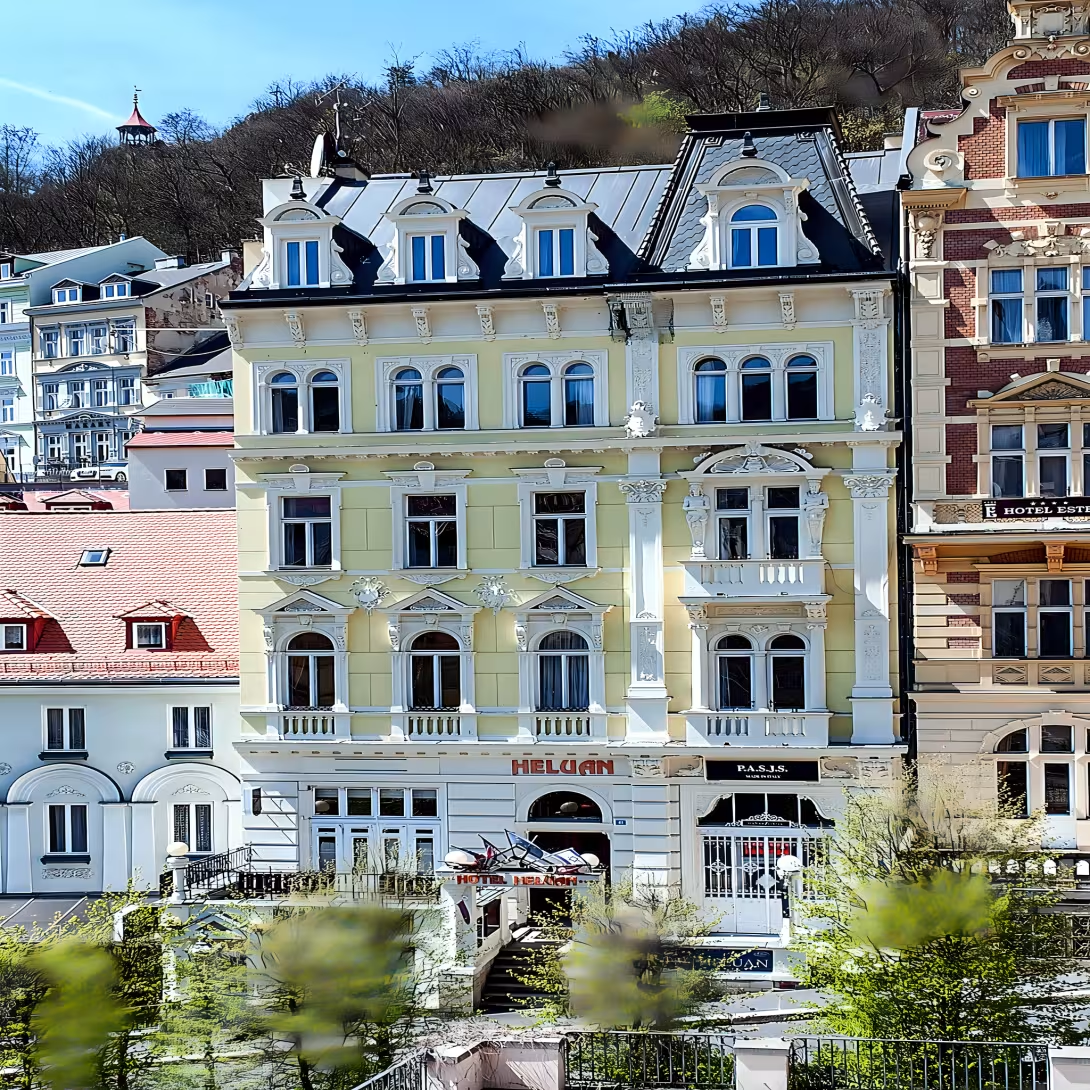
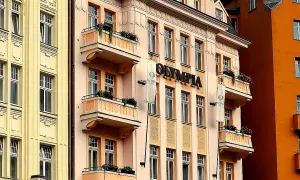
Lázeňský dům Heluán, formerly known as Russische Krone, is located in the centre of the spa area of Karlovy Vary at Market 41. It is a four-storey building in the style of Italian neo-Renaissance from 1893- 1895, which since 1991 protects the status of cultural monuments. Its architectural expression and historical connection with the photographic studio of the important court photographer Carl Pietzner makes it a unique monument to the spa city.
Originally, the Baroque building was in its place, which burned down in 1759. After the reconstruction in 1860 he received the name Russische Krone, referring to the then popular Russian motifs in the spa architecture. In the late 1980s, it was owned by Carl Pietzner, a court photographer of the emperor and princes of Schaumburg-Lippe. In 1888 he had a photographic studio built in the yard of the house and two years later he had a large reconstruction of the whole building. The city council approved a new regulatory plan that required building orientation perpendicular to the street - unusual at the time. The project was developed by the Vienna Studio Event & German, which represented the house in the Italian Neo-Renaissance. Pietzner Studio has been preserved as part of the new building.
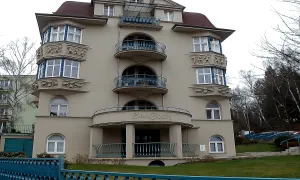
The house Heluán features a four-axis facade with distinctive elements of Italian neo-Renaissance. The ground floor is quadrupled, in the right part there is a rectangular entrance with original glass doors and bars. There's an arch entrance in the middle while there's a raised terrace on the left. The first floor separates the ledge, the right window axis is wider and flanked by pilasters. The windows of the first floor are arched, in a risality doubled with a balcony, the others ended with triangular frontons. The second floor has rectangular windows with a ledge and jeweler, risalite double with balcony and karyatides. The third floor separates another ledge, in risality there is a triple combined arch window. The crown ledge is on heavy consoles, above the risalite there is a mansard tower with a skyline. The roof is covered with metal.
The property fate of the house adapted to the needs of the spa industry. After the death of Carl Pietzner in 1926, Ida Söldner bought it, which she had adjusted the selling space for porcelain on the ground floor. Currently the house is owned by ANZ PLUS s. r. o., which runs the hotel.
The house retains Carl Pietzner's original photographic studio, an important artist of its time, and the original orientation perpendicular to the street, as required by the regulatory plan of the late 19th century. In 1991 it was declared a cultural monument, thus confirming its importance for the urban monument zone.
Today the house Heluán is part of the spa architecture and offers visitors the opportunity to learn the historical appearance of spa houses from the end of the 19th century. Its architecture and preserved elements represent a rare example of Italian neo-Renaissance in Karlovy Vary. For lovers of history and architecture, visiting this house is an interesting legacy of the past.
Then and now
Drag the slider to compare how the landmark may have looked when it was built with the view today.
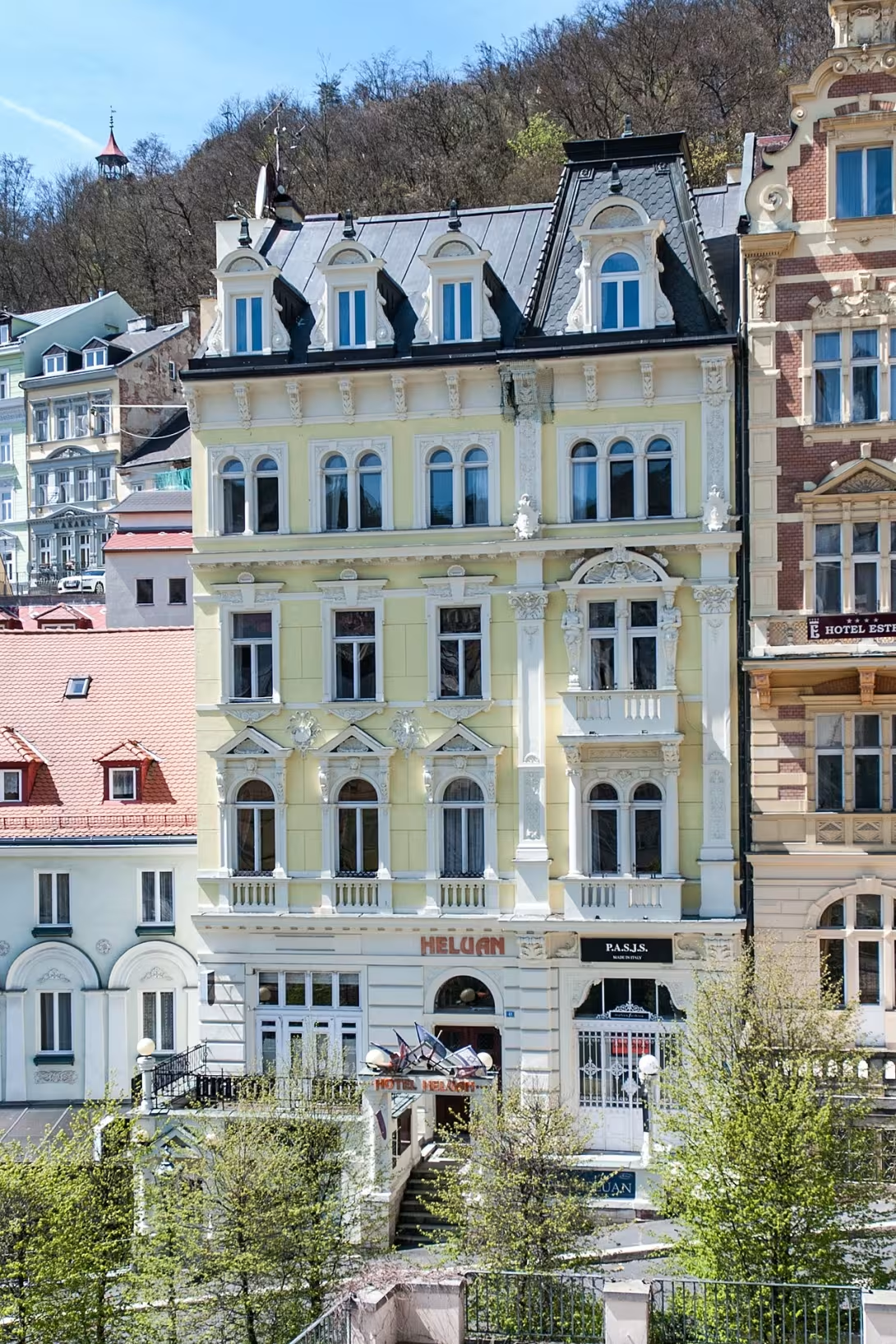
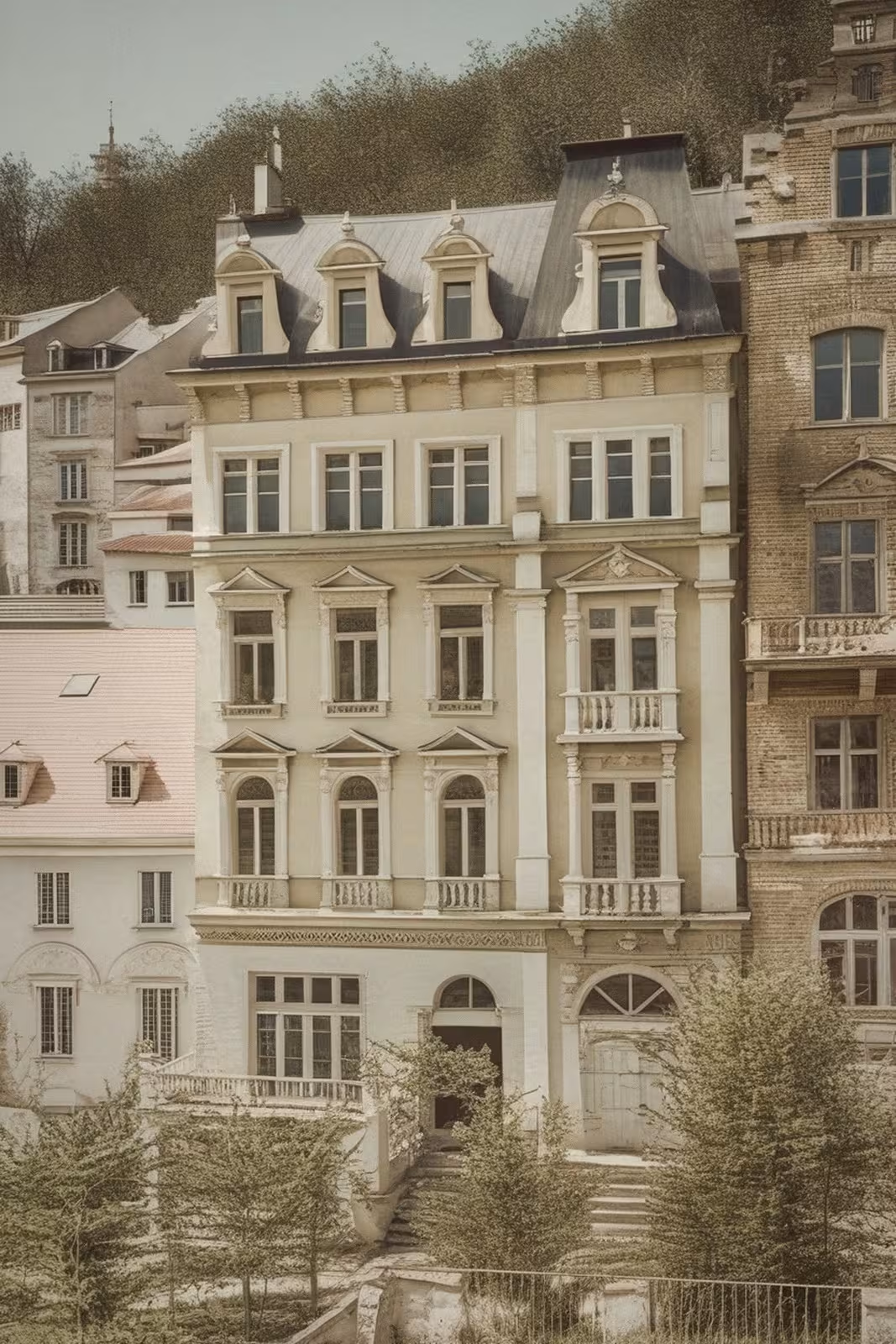
The historical appearance on the left is an AI-generated visualisation and serves as inspiration only.
Historical milestones
- 1759
- The fire of the original home of Golden Krone and its subsequent restoration.
- 1888
- Carl Pietzner added a photographic studio in the yard.
- 1893- 1895
- Basic rebuilding of the house in the style of Italian neo-Renaissance.
- 1991
- Declaration for a cultural monument.
Architectural development
The original Baroque house was rebuilt perpendicular to the street in the 19th century, which required a new construction regulatory plan. In 1893- 1895 a new building was created with Italian-Renaissance elements, including a mansard roof and double windows in risality. In 1926 the sales space for porcelain was modified on the ground floor. The building materials include quaking ground floor and tin roof.
Historical events
- 1759
- The fire damaged the original Golden Krone house, which was subsequently restored.
- 1860
- The house was renamed Russische Krone after renovation.
- 1893- 1895
- Basic reconstruction in the style of Italian Neo-Renaissance according to the Project Events & German.
- 1991
- Declaration for a cultural monument.
Points of interest
- The house Heluán was originally known as Russische Krone and referred to the popular Russian motifs in the spa architecture.
- In 1888, an important court photographer Carl Pietzner had a photographic studio built here in the yard of the building.
- The building was rebuilt in 1893- 1895 in the style of Italian neo-Renaissance, while respecting the unusual orientation perpendicular to the street, as required by the regulatory plan of the late 19th century.
- The house was declared a cultural monument in 1991 and retains Carl Pietzner's original photographic studio.
- Its architecture represents a rare example of Italian neo-Renaissance in Karlovy Vary from the end of the 19th century.
Guide
Show guide text
This text was created by artificial intelligence and has not been editorially reviewed. It may contain inaccuracies.
Welcome to this beautiful house, which is now opening up to you with its lovely view. You are standing in front of one of the most distinctive spa houses in Karlovy Vary - in front of a building which, with its Italian neo-Renaissance style, projects the history of the city as a living document of the past. There is a four-story object in front of you with a facade that immediately captures you with its elegance. Notice how the Mansard canopy with a tower ending stretches over your heads as if home was trying to reach the sky. Arched windows that rank all over the facade, as if whispering to you about the times when guests came here to heal and enjoy the beauty of art art. And it is above these windows that little balconies are drawn, which provide the whole building with the right nodding and nobility.
Let's move back a little bit in time. This house, known today as Heluan, originally had the name Russische Krone - the Golden Crown, which referred to the popular Russian motifs in the architecture of spa houses. In 1759 there was a tragedy - the original house under the name Golden Krone burned down, but soon followed by its renewal, which laid the foundation for what you see before you. It was only between 1893 and 1895 that a major reconstruction took place which gave him today's appearance. This was the task of the architects from Vienna, the Event and the German who specialized in Italian neo-Renaissance. Their work can be seen in every detail - from the symmetrical arrangement of windows to the harmonious proportions of the entire facade. Note how the architecture connected with the function here: this house was originally a spa house, where guests stayed and there was also a photo studio.
Now pay attention to some specific elements that may interest you. Look up and watch a series of arc windows stretch over you. These windows are not only a function but also an artistic element that gives the facade its characteristic appearance. Note also the Mansard roof with tower end - this detail is typical of Italian neo-Renaissance and gives the house the right touch. And it is under this ending that a house is hiding, which in the past was not only an accommodation, but also a place where photographic artist Carl Pietzner decided to build his studio in 1888. This photographer was an important figure in his time and his work was linked to the life of the court. His studio in the courtyard of the house was a place where guests could get photographed and capture memories of their stay at the Karlovy Vary Spa.
Let's remember one more interesting thing about this house. If you look at his name Heluan, you can wonder why it changed from the original Russische Krone. The answer is that the name was adapted to local conditions and trends. At the time the house was built, Russian architecture was very popular, but with time trends changed and the name was reworked. Today, this house is part of the urban monument zone and is protected as a cultural monument. His history is so rich that he can tell you about many times - from spa tourism to photographic studios.
There's another mystery page in front of this house. When you look at his facade, you can imagine what it was like when guests came here to heal and enjoy the beauty of art. The house was not only an accommodation, but also a place where people from all over the world met. Their stories, their experiences and memories are part of this house and they give him this strange atmosphere. And that's why this house is so valuable - it's not just a building, it's a living history document that can tell you about the past.
If all you've done so far is look at this house from the outside, now is the time to explore again. Karlovy Vary is a city full of hidden pearls and every corner has its own story. Stay in this area for a while and look at other spa houses that will offer you as other chapters of the history of this city. And once you return, you may be able to discover something new that will make this house even more open its doors to the past.
Thank you for making time for this place today. His history is so rich that he can tell you about many times and every detail can bring you new knowledge. May you enjoy your stay at the Karlovy Vary Spa and may this house, which opens up to you with its lovely view, be accompanied by its stories for a long time.
Tips for visitors
The best time to visit Heluán Spa House is between 9:00 and 11:00 in the morning. At that time there are more peaceful, fewer crowds and you can see the facade and inner spaces without rush. If you want to experience the historical atmosphere of the city, avoid the noon hours when the marketplace (main spa street) is the busiest. In summer it is ideal to visit the house in sunny weather, when light is reflected from white plaster facades and emphasizes architectural details.
The morning is ideal for a quiet tour and you can better look at the detailed elements of the Italian neo-Renaissance.
For example, you can get from the main station or from the marketplace (street) where buses and trolleybuses stop. Find out the current connection in the traffic search engine because the lines can change.
When you visit, wear comfortable shoes because you will walk on tiles and stairs. It is also important to take a map or mobile navigation so that you can easily navigate in the historical centre. If you are planning to take pictures, take a macro-photography lens because the facade of the house offers many details such as statues, moldings and ornaments. In the summer bring a hat or sunglasses because the sun can be strong.
Comfortable shoes and navigation will facilitate inspection, macrophotography will highlight architectural details.
The best places for photography are the facade of the house Heluán, especially from an angle where it is visible its four-axis arrangement and sculptures elements. Sunlight falling from left or right on the facade creates interesting shadows and contrasts. If you want to capture the overall impression, photograph the house from the marketplace (street) where it can be seen its location in the city centre. In the interior there are also interesting historical elements, but photography inside can be limited.
Angle and light improve the quality of facade photos and details.
In the vicinity of the spa house Heluán is worth visiting the neighbouring spa house Split, which is also in historical style. Both houses are nearby and offer a similar atmosphere. If you have time, you can also visit the Karlovy Vary Miracle Spring, which is about half a kilometer from Heluan. It is the main spa spring and the spa center. A tour of these places will give you an overall picture of the historical centre of Karlovy Vary.
Neighborhood houses and springs complement the tour of the historic part of the city.
For families with children, a visit to the spa house Heluán is interesting thanks to its historical architecture and surrounding environment. Children can see the facade with statues and talk about the history of the house. There are also plenty of places for short walks, for example in the marketplace (street), where there are historical buildings and small shops. If you want to shorten the time, you can relax on benches near the house and observe the surrounding architecture.
The historical facade and walks around the marketplace will attract children.
Frequently asked questions
Can the monument be visited?
The building is in use (offices, a school, shops and the like). The interior is generally accessible only during operating hours and tours are not usually offered; we have not verified the details. You can see the exterior from the street.
Where is the monument?
Location: Karlovy Vary, Karlovarský kraj. The map on this page shows the exact spot.
Why is the monument protected?
It is listed in the Central List of Cultural Monuments of the Czech Republic as a cultural monument (register no. 1000121704).
Businesses nearby
Do you run a restaurant, accommodation, shop, museum, rental, wellness or other visitor service near this monument? Show yourself directly to the people heading to it — this is how they will see you in the app and on the web:
Nearby
- Další lázeňský dům z období historismu, který prošel podobnou přestavbou.
- Hlavní lázeňský pramen, který je centrem lázeňského ruchu.
- Hlavní lázeňská ulice s řadou historických budov.
Accommodation nearby
Trips and activities nearby
Guided tours, tickets and activities nearby from GetYourGuide
Affiliate link: if you buy from the partner, we may receive a commission. The price for you does not change.
Search tours and activities →Themed route
Thematic spa route in Karlovy Vary
1.Lázeňský dům Heluán Type: Historical spa house from the 19th century, rebuilt in the spirit of Art Nouveau style. Its elegant facade and interiors with the original atmosphere of spa life are typical of Karlovy Vary architecture. Suitable for walking and admiring historical details.
2. House Split Type: Another spa house from the history period, formerly known as Stadt Bremen. Its classical elements and original functions as a spa facilities resemble the golden era of the spa. Interesting for comparison with Heluan - both houses reflect similar treatment and importance for spa tourism.
3. Karlovy Vary Miracle Spring Type: Main spa spring, city symbol. Its mineral water and historical fountain are the center of spa activity. Walk around the spring offers a feeling of authentic spa environment and the opportunity to taste local mineral water.
4. Market (street) Type: Main spa street with a number of historical buildings, shops and cafés. Walking the Market is ideal for the spa atmosphere - from traditional pharmacies to modern restaurants. Here the sights and present life of the city meet.
Order: Heluan → House Split (approx. 200 m) → Miracle spring (about 500 m) → Market (approximately nearby). The route connects the main monuments in a logical sequence - from architecture to the source to the city's pulse.
Seasonal recommendations
Spring
At this time nature is awakening and the spa house Heluán offers a background full of air atmosphere. Sun rays illuminate the premises of the building where life returns - green leaves, flowering trees and a quiet pond bring a feeling of freshness. The inner spaces are warm and are only just beginning to be fully used, so it is advisable to visit the memory in the morning when there are fewer people and enjoy a quiet bloom.
To visit you bring light clothes with long sleeves to protect you from cold wind air, and suitable shoes for solid ground. The best time to visit is in the first weeks of spring when the temperature is pleasant and nature has not yet reached maximum intensity. Avoid late spring days when crowds can increase due to natural events such as flower exhibitions.
---
Summer
In the main summer season the spa house Heluán is full of life and sunny bright light. The outside areas are lit by warm dawn and evening shading, which creates a pleasant atmosphere for walks. The indoor areas are warm and refreshing, ideal for relaxation from hot weather. Visit your memory early in the morning or late in the afternoon to avoid crowds and enjoy peace.
Suitable clothing includes light swimwear, light clothes and wide sun hats. It is also important to have a protective cream and suitable shoes on a solid surface. The best time to visit is in the first half of the summer months when the temperature is milder and visitors are less numerous. Avoid hot lunches when there are most people.
---
Autumn
In autumn days, the atmosphere in the spa house Heluán is completely different - the temperature is falling, leaves are changing and lighting goes from bright sun to light. The inner spaces are warm and pleasantly lit, ideal for walking between shaded paths. The outdoor areas offer a beautiful coloring and a calm atmosphere that allows you to relax from the summer excitement.
To visit, choose warm clothes with layers to protect yourself from cold wind weather. Long sleeves and shoes on a solid surface are also suitable. The best time to visit is in the second half of autumn months when the temperature is pleasant and nature is full of beauty. Avoid late autumn days when crowds may increase due to natural events such as forest fruit exhibitions.
--- Winter
In the winter months the spa house Heluán is full of quiet and warm comfort. The inner spaces are lit with mild light and warm air, which creates a cozy atmosphere. The outer spaces are covered with snow and ice, which brings a magical atmosphere. Visit the memory at a time when the inner space is open, and avoid long walks outside to protect from cold.
Bring warm clothes for your visit, including overcoats and gloves. Hot shoes on a solid surface and a blanket for cold moments are also suitable. The best time to visit is from December to February when the interior space is available and the temperature inside is pleasant. Avoid very cold days when opening times can be limited.
Visualizations and artistic views


The visualisations are generated by artificial intelligence and serve as inspiration.
Photos from the area
Real photos taken near the monument


Zdroj a licence jsou uvedeny u každého snímku.
Tips from visitors
No tips yet. Be the first!
Log in and add your tip.
Sources and literature
Photos: Zorka Sojka / CC BY-SA 4.0, rozlišení zvýšeno umělou inteligencí — Wikimedia Commons. The author and licence also appear when you hover over the image.
Faktickým podkladem tohoto textu byl článek na Wikipedii, jehož autory jsou přispěvatelé Wikipedie. Článek je dostupný pod licencí CC BY-SA 4.0.
Location on the map
More monuments – Karlovy Vary
Show all in the municipality
Příběhy a pověsti
Legendy, pověsti a příběhy spjaté s touto památkou
Fotografie návštěvníků
Zatím žádné fotografie. Buďte první, kdo přidá fotografii z návštěvy!
Log in a přidejte svou fotografii nebo hodnoťte.
Za ověřenou návštěvu v aplikaci získáte víc bodů — poznáme podle GPS, že jste na místě.
Reviews and comments