



Lázně III Building
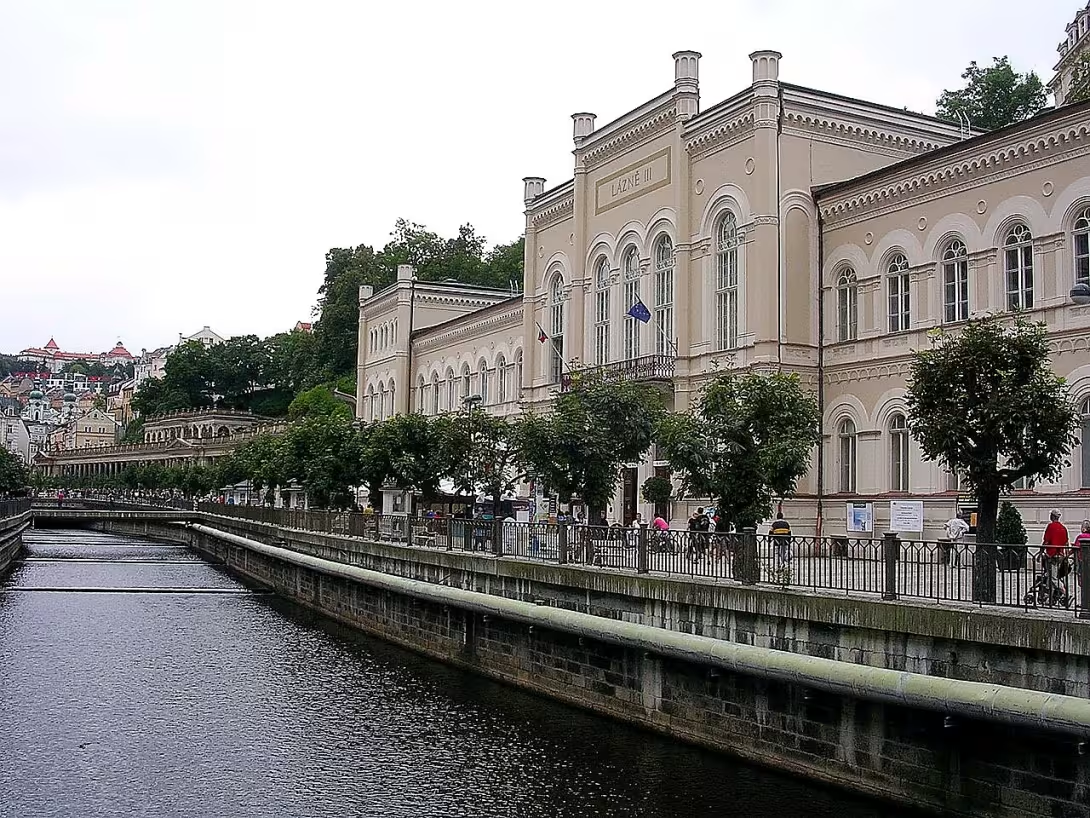
Lázně III, formerly known as Kurhaus or Spa House, is one of the older spa buildings in Karlovy Vary. It is located on the left bank of the Teplá River and lies between the Military Spa Institute and the Mill Colonnade, which increases its importance in the spa centre of the city. The building was built in 1864-1866 in the style of early history - English neo-gothic, thus becoming architectural and cultural value.
The history of Spa III dates back to the early 1960s, when the City Council of Karlovy Vary decided to build a new spa building near the Military Spa Institute. The project was developed by architects Ludwig Renner, Gustav Hain and Eduard Labitzky in 1863. The opening ceremony of Spa III took place on 10 September 1866. At the time of its creation, the building concentrated most of the treatment processes at the time, offering patients baths, massages and medical examinations. There were laboratories, X-rays, swimming pool, pharmacy and accommodation. The spa building also served as a cultural centre with a concert salon Antonín Dvořák, other smaller halls and restaurants.
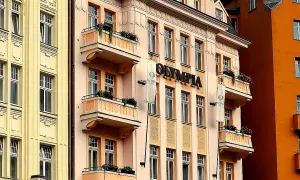
Architecturally, Lázně III is a rectangular floor plan with two inner walls. The main entrance is directed towards the Hot River, highlighted above the central risalite with a balcony and two corner risalts. High rectangular, semi-rounded arcade windows belong to the main representative space of the building - the festive hall. The facade is dealt with by a triple arcade in the side wing leading from the Mill Colonnade. The roofs of the building are very low, which highlights the profiled ledge as a distinct athic with towers of individual pavilions.
The building has undergone several phases of modifications and changes. In 1891, adjustments were made to improve spa facilities, including a new entrance from the Mill Colonnade. At the end of the 19th century there were extensive modifications to the Ceremony Hall, which included the removal of the balcony and reconstruction of the stage for the orchestra. After 1918, the building was numbered as Lázně III. In 1951, the Central Health Institute of Czechoslovak Baths and Rays was established in the building, which led to extensive reconstruction of the internal facility. On 3 May 1958, the Lázně III building was entered in the state list of real cultural monuments.
Lázně III also had its political history, when the Sudeten-German Party Congress was held in 1938. During World War II, part of the ground floor was rebuilt for the needs of the hospital of the Reich capital. In 2002 there was a fire in the attic, which destroyed the roof above the festive hall, which led to extensive reconstruction completed in 2004. On 24 July 2021, the building was protected under UNESCO as part of Europe's famous spa cities.
Today Lázně III serves not only for traditional spa treatments and modern balneology, but also as a cultural and social centre. In the concert hall Antonín Dvořák is regularly performed by the Karlovy Vary Symphony Orchestra and during the International Film Festival there are film projections. The building also offers a pharmacy, gastro-enterological advice and services such as manicure and pedicure. There are also galleries or branches of the city Infocenter and hotel.
Lázně III is a monument not only to architecture, but also to the rich history of Karlovy Vary as a spa centre. Their importance to local culture and social life is undeniable. Exploring this monument offers visitors the opportunity to immerse themselves in history while enjoying the modern services offered by the building. Their protected status under UNESCO merely highlights their cultural value and recalls the importance of preserving such historical sites for future generations.
Then and now
Drag the slider to compare how the landmark may have looked when it was built with the view today.
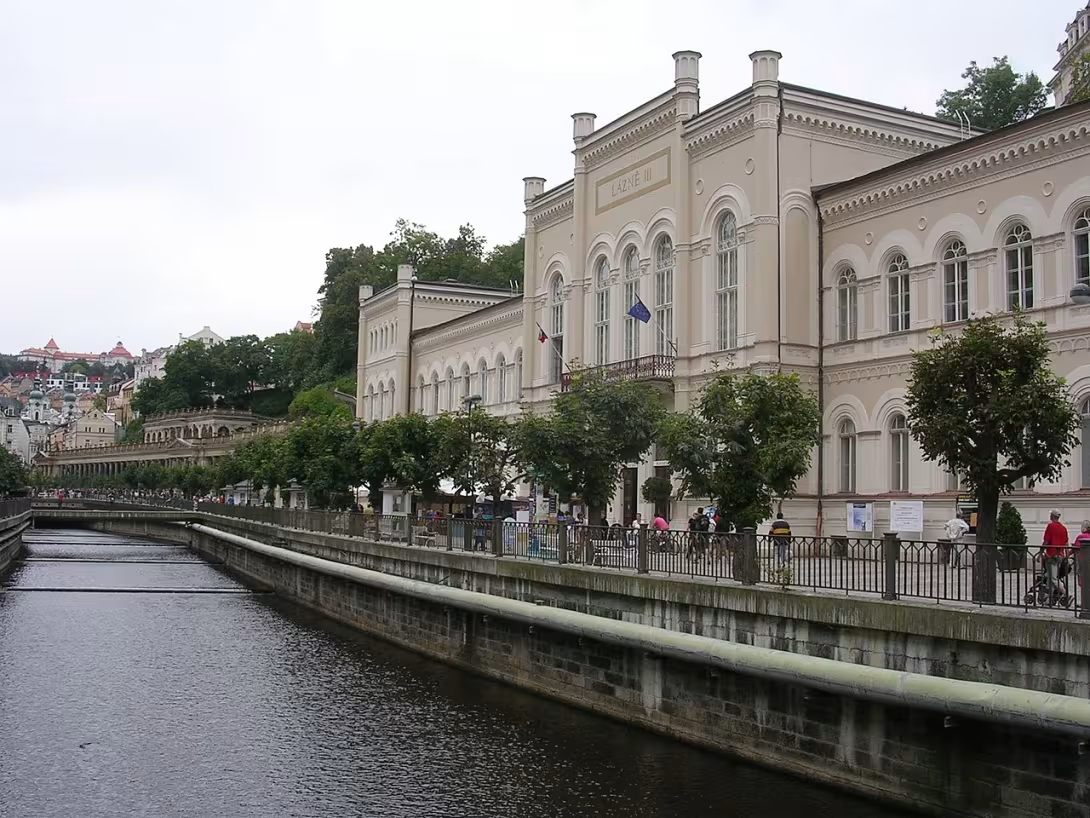
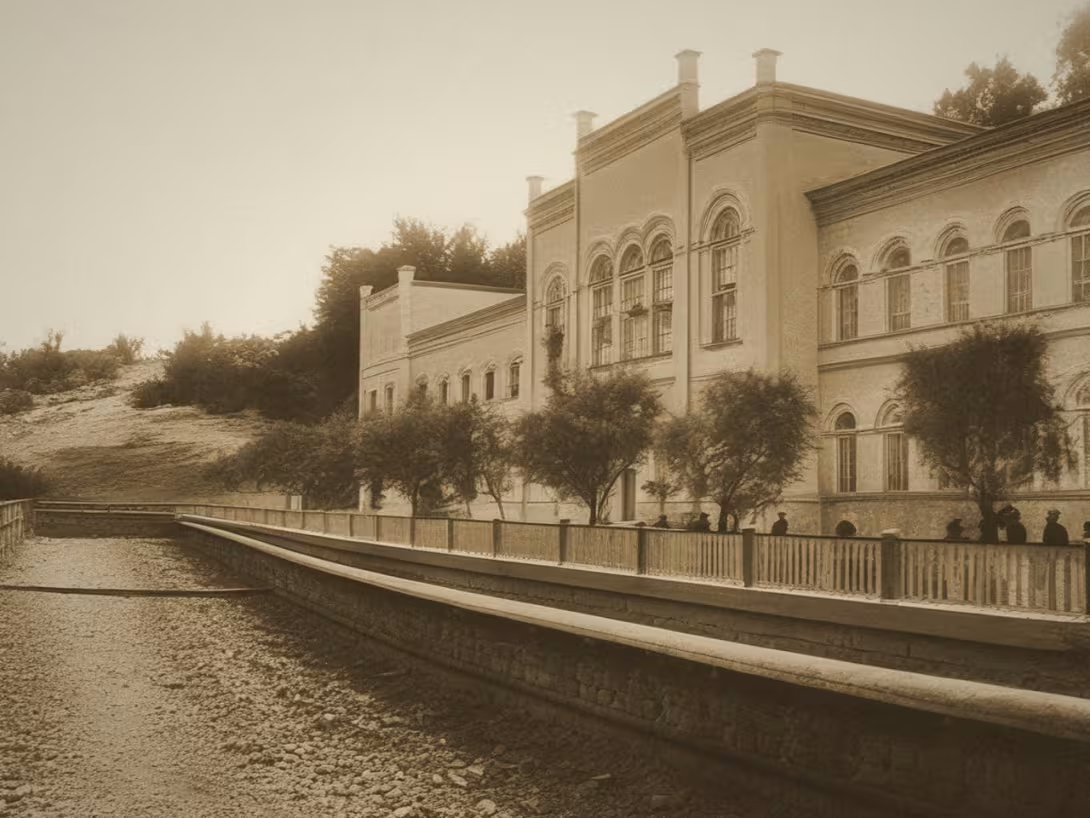
The historical appearance on the left is an AI-generated visualisation and serves as inspiration only.
Historical milestones
- 1866
- The opening ceremony of Spa III.
- 1958
- Listing in the state list of real cultural monuments.
- 2021
- Protected by UNESCO - Europe's famous spa cities.
Architectural development
Lázně III was built in 1864-1866. In 1891 there were modifications to improve spa facilities, and in the 1990s there were extensive modifications to the Festival Hall. After the fire in 2002, the building was reconstructed and restored some of its elements, such as the festive hall.
Historical events
- 1866
- The opening ceremony of Spa III.
- 1891
- Building modifications to improve spa facilities.
- 1958
- Listing in the state list of real cultural monuments.
Points of interest
- The building was built in 1864-1866 in the style of English neo-gothic and was originally known as the Spa House. - There is a concert salon Antonín Dvořák in the building, where the Karlovy Vary Symphony Orchestra is performing today. - In 1938 there was a meeting of the Sudeten-German Party. - The fire in 2002 destroyed the roof of the festive hall, which led to the reconstruction completed in 2004. - Since 24 July 2021 the building has been protected as part of the famous spa cities of Europe.
Guide
Show guide text
This text was created by artificial intelligence and has not been editorially reviewed. It may contain inaccuracies.
Welcome to Karlovy Vary, a place where water, history and beauty unite into one unrepeatable whole. Stop for a moment, take a breath and look in front of you. You're standing in front of a building called Spa Three. It's a building that will immediately impress you with its size and appearance and carry you through time into the nineteenth century. Feel its location, because this is the key position. The building is located on the left bank of the Tepla River, which flows across the city and gives it its unique character. It is because this monument is placed in this way that it is one of the most important pillars of the spa centre that surrounds you.
Now let's look together at how this building came into being and why it actually stands here. Imagine Karlovy Vary in the middle of the nineteenth century, at a time when the city was becoming the centre of treatment. It is in this atmosphere of bloom that in the years of a thousand eight hundred sixty-four to a thousand eight hundred sixty-six this building was built. Back then, she was known as the Spa House. Its purpose was not only to provide space for therapeutic procedures, but to become a real centre of social life. It was supposed to be a place where nobles, artists and rich businessmen met, where health talks were mixed up with discussions about politics and culture.
Three recognised architects, which were Ludwig Renner, Gustav Hain and Eduard Labitzky, were behind this ambitious project. Together, they designed a space to emit prestige and stability. If you look at the facade of the building now, notice its specific style. The architects chose the direction of early history, and specifically inspired by English neo-gothic. This means that the building knowingly follows the elements of Gothic architecture, but interprets them in a way that was modern for the time of its creation. Notice how the building looks noble and harmonious. Novogotics here brings a sense of elegance and a certain rigour, but it is softened by the surroundings of the river and parks. Take a look at the facade details and see how the architects worked with the rhythm of the windows and with the overall wall layout. It's an architecture that was meant to create astonishment and sense of security and tradition.
Now that you see the exterior beauty of the building, let's think about what's going on inside and who left their trail. One of the most important places in the whole building is the concert salon named after Antonín Dvořák. Imagine how there were music tones in these areas that accompanied the relaxation and regeneration of spa guests. There is still a music tradition in this hall today, as the Karlovy Vary Symphony Orchestra regularly performs here. It is fascinating to think that the same walls that you see before you still reflect the sounds of symphonies and compositions that link the past to the present. The music was and is an inherent part of the spa ritual, and this hall is its living proof.
But the history of this building is not just about beauty and music. Spa Three witnessed some very tense moments in history. If we return to the year one thousand nine hundred thirty-eight, the building became a place of political activity, when the Sudeten-German Party was here. It is a reminder that even such elegant buildings are entangled in complex and sometimes painful events that shaped our modern history. This layer of history gives the place depth and reminds us that architecture is a silent witness to everything that happens in its shadow.
In addition to political shocks, the building had to face natural and random disasters. Two thousand two years ago, there was a tragic event that was a fire. The fire destroyed part of the object and compromised its integrity. However, at this very moment it became clear how much this monument represents both the city and the state. The building was not left to its fate, but it was restored with care to continue to serve future generations. This cycle of destruction and rebirth only underlines the resilience and importance of Spa Three.
Pay attention now to the recognition this building has received over the years. Its value was officially recognised in a thousand and nine hundred and fifty-eight, when it was included in the state list of real cultural monuments. That was the first important step in protecting her. But the peak of recognition came much later, in the year two thousand twenty-one. At that time, the building was included in the World Heritage List of Europe's Famous Spa Cities under the auspices of UNESCO. This means that Spa Three is no longer just a local or national jewel, but they are considered a monument of universal value for all mankind. When you look at the building, you see a part of the global heritage that is protected for all the people in the world.
The interesting thing that may interest you is the contrast between the original name of the Spa House and the current designation of Spa Three. This change in the name refers to changes in the organisation of the spa operation over the decade, but the nature of the site remained the same. The building is still fulfilling its role as a centre where health, culture and history meet. It is a place where you can stop and feel the rhythm of the old Karlovy Vary, which still beats in the heart of this city.
Now that you know the story of this building, its architects and its fates, I suggest you look at it quietly for a while longer. Feel it reflected in the waters of the Tepla River and fit into the overall atmosphere of this magical place. Look at the details that we've taken apart together, and try to imagine the thousands of people who have been passing through here in the last hundred and sixty years.
But your trip to Karlovy Vary does not end here. Around you are still many other secrets and beautiful buildings waiting for their discovery. Now let's move on slowly and explore the other corners of this unique city. Thank you for your attention to Spa Three, and I wish you a pleasant continued walk full of new experiences and discoveries. Say goodbye to this building and make your way to the next history that awaits you on these streets.
Tips for visitors
The best time to visit is in the morning or late afternoon when the sun gently illuminates the facade details in the style of English neo-gothic. For photography are ideal places with a view of the architectural elements of the building, especially during the golden hour when the light best excels.
You can reach the building by car and public transport.
We recommend to bring comfortable shoes suitable for walking along the waterfront. For families with children, the surrounding roads are suitable for prams, which makes it easier to move around historical buildings.
In the immediate surroundings, within a short walk, you can visit the Military Spa Institute, the Mill Colonnade or take a walk along the Mlyn waterfront.
Frequently asked questions
Can the monument be visited?
Some buildings of this kind are open for guided tours, others serve another purpose or are privately owned. We have not verified whether and when this monument is open – please ask the operator.
What are the opening hours and admission?
We have not verified the opening hours or admission. Current information is published by the operator.
Where is the monument?
Location: Karlovy Vary, Karlovarský kraj. The map on this page shows the exact spot.
Why is the monument protected?
It is listed in the Central List of Cultural Monuments of the Czech Republic as a cultural monument (register no. 1000140992).
Businesses nearby
Do you run a restaurant, accommodation, shop, museum, rental, wellness or other visitor service near this monument? Show yourself directly to the people heading to it — this is how they will see you in the app and on the web:
Nearby
Vojenský lázeňský ústav
Mlýnská kolonáda
Mlýnské nábřeží
Accommodation nearby
Trips and activities nearby
Guided tours, tickets and activities nearby from GetYourGuide
Affiliate link: if you buy from the partner, we may receive a commission. The price for you does not change.
Search tours and activities →Themed route
Tour route from Spa III in Karlovy Vary
1. Lázně III (building) Type: Historical spa building Why is it worth a visit: This architecturally interesting building is part of the legacy of the Military Spa Institute. It is ideal for those who want to understand the history and development of Karlovy Vary baths.
2. Mill Colonnade Type: Architectural monument Why is worth a visit: This colonnade is a beautiful example of Baroque architecture and provides a view of the history of local industry. Its location near the Mlyn waterfront gives aesthetic value to the road.
3. Mill's waterfront Type: A waterfront with historical significance Why is worth a visit: This place offers beautiful views of the Karlovy Vary and is ideal for relaxation after exploring the spa. The waterfront is also of historical importance associated with the local industry.
Visiting order: - Start at Spa III, where you can see history and architecture. - Then move to the Mill Colonnade. Its proximity to the baths ensures a smooth path. - Enlarge your trip at the Mlyn waterfront, where you can enjoy quiet moments and beautiful views.
The total length of the route is approximately 1-2 kilometres, which ensures comfortable walks around the historic place.
Seasonal recommendations
Spring: In the spring period, Lázně III in Karlovy Vary is strongly revived when the sun's rays illuminate historical architecture and nature begins to bloom. The pleasant temperatures offer ideal conditions for walking around the spa where the first shoots and flowers can appear. At this time it is recommended to visit in the morning or in the evening to avoid the noon sun, which may be too strong. Clothes should be mild and suitable for variable spring weather.
Summer: Lázně III in the main summer season offers a special atmosphere where warm air accompanies the historical nature of the building. Sunshine days attract many visitors, so it is advisable to visit the spa early in the day or in the shade of the afternoon to avoid long fronts. Clothes should be light and light, with sun protection like a hat or a parasol.
Autumn: In autumn days Lázně III is transformed into a place full of calm and quiet colors. The colour of the leaves gives the place a specific glow, while warmer clothing is essential for comfort during colder days. This period offers a softer attendance and a pleasant noon dawn, which illuminates architecture in a fascinating way.
Winter: Winter Lázně III is revived by the atmosphere of glaciers and snow, when the historical character of the building deepens even further. Hot clothes are necessary due to cold weather, while short opening times require careful planning of visits. If you visit the spa during this period, you can enjoy a quiet environment and a unique winter beauty that emphasizes even more the historical nature of the place.
Visualizations and artistic views


The visualisations are generated by artificial intelligence and serve as inspiration.
Photos from the area
Real photos taken near the monument


Zdroj a licence jsou uvedeny u každého snímku.
Tips from visitors
No tips yet. Be the first!
Log in and add your tip.
Sources and literature
Photos: cs:ŠJů / CC BY-SA 3.0 — Wikimedia Commons. The author and licence also appear when you hover over the image.
Faktickým podkladem tohoto textu byl článek na Wikipedii, jehož autory jsou přispěvatelé Wikipedie. Článek je dostupný pod licencí CC BY-SA 4.0.
Location on the map
More monuments – Karlovy Vary
Show all in the municipality
Příběhy a pověsti
Legendy, pověsti a příběhy spjaté s touto památkou
Fotografie návštěvníků
Zatím žádné fotografie. Buďte první, kdo přidá fotografii z návštěvy!
Log in a přidejte svou fotografii nebo hodnoťte.
Za ověřenou návštěvu v aplikaci získáte víc bodů — poznáme podle GPS, že jste na místě.
Reviews and comments