






Leština Ruin
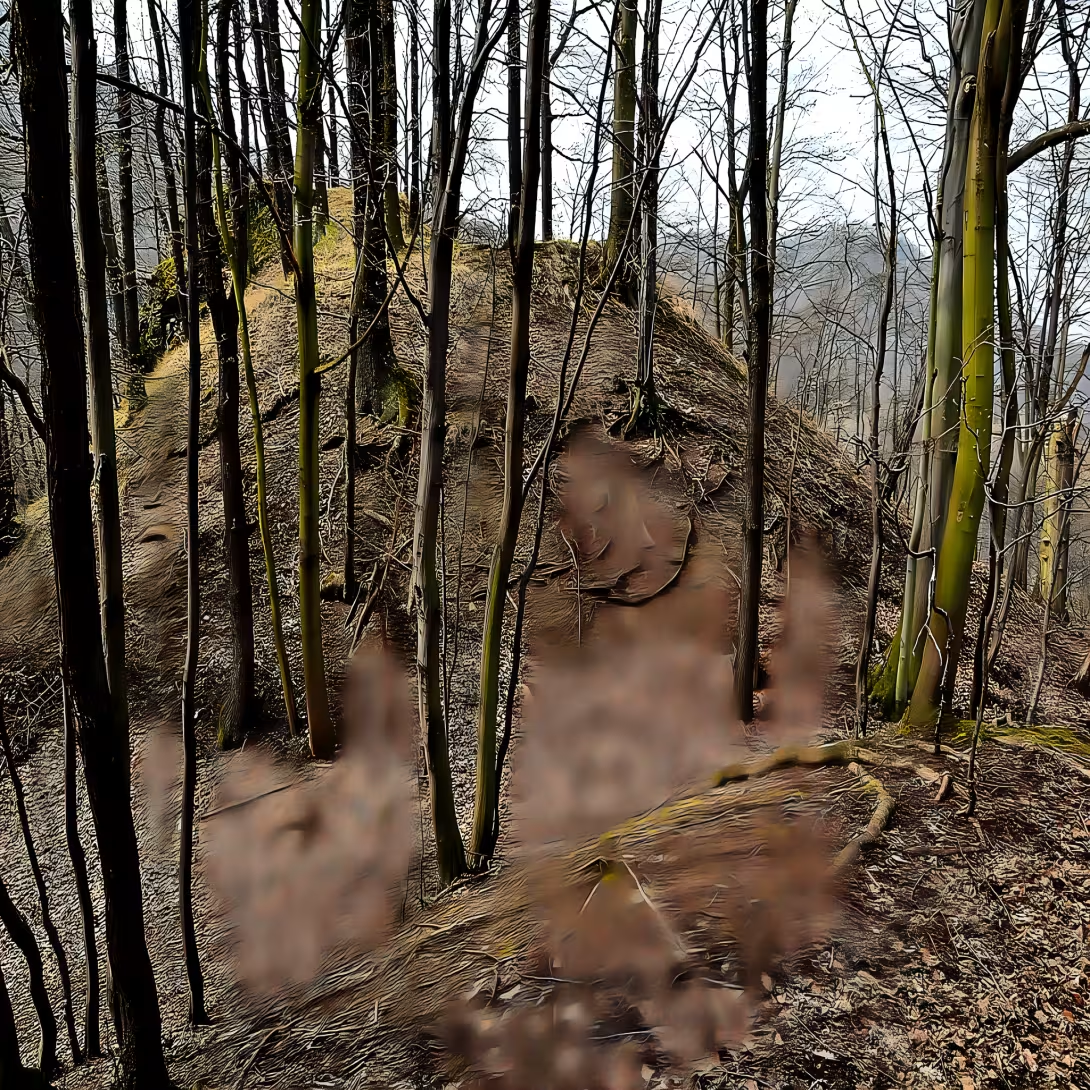
The extinct chateau Leština is located on the edge of the Stone Mountain in the Czech Central Mountains, southwest of Lesky near Little March. It is one of those parts of the relevant landscape which have not been preserved by any written sources. Its establishment can only be speculated - it could have been established in the fourteenth century by the Litomeric Proboshty to protect its property, or it was the work of a member of the genus Vartenberk. Archaeological findings reveal that the chateau was inhabited from the eighteenth century to the fifteenth century, i.e. that it existed about half a century.
The origins of his ownership and fate are unclear. In 1437 the territory in which the chateau used to stand was included in the inventory as part of the bullpen estate. Fifteen years later, in 1454, he owned the estate of Jan z Vartenberka on Decin, which then passed it on to King Ladislav. Soon after, the chateau seems to have disappeared from history.
The architecture of the chateau site was adapted to the terrain. The small chateau core was spread out at the end of the island, which protected it from three sides with steep slopes. The entrance from the south was guarded by a trench that, according to the earlier descriptions on the outside, lined the stone wall. In the front of the core there was a large square deepening - the remains of the original structure. A similar, smaller depth has also been preserved to elevated back parts of the core. There is a ground structure in front of its own chateau, which August Sedláček considered to be a forward bastion, but was probably part of a wider chateau area.
The remains of the chateau are freely accessible but without a tourist route. You'll find them through the forest road coming from Leska. The visit requires some initiative and orientation skills, but the reward is a place where nature and the unclear history of Czech Central Games are met.
Then and now
Drag the slider to compare how the landmark may have looked when it was built with the view today.
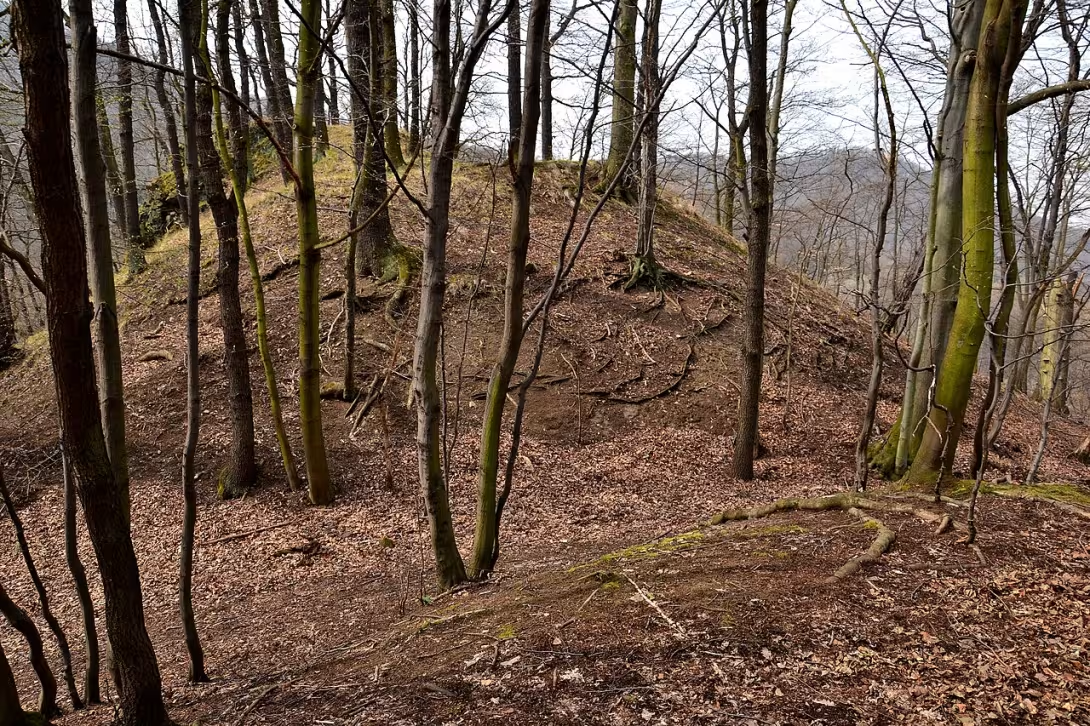

The historical appearance on the left is an AI-generated visualisation and serves as inspiration only.
Architectural development
The chateau core was located at the end of the islanders protected by steep slopes. The approach was taken by the neck moat and stone wall. In the core are the remains of a square depth which probably belonged to some construction.
Historical events
- 1437
- The territory belonged to a bull house.
- 1454
- Jan z Vartenberka has transferred the estate to King Ladislav.
Owners
In 1437 it belonged to the territory of the bull house. In 1454, the estate was owned by Jan of Vartenberk, who transferred it to King Ladislav.
Points of interest
- The extinct chateau Leština is located on the edge of the Stone Mountain in the Czech Central Mountains, southwest of Lesky near Little March.
- It can only be speculated upon - it could have been established in the fourteenth century by the Litomeric Probostness to protect its property, or it was the work of a member of the genus Vartenberk.
- Archaeological findings reveal that the chateau was inhabited from the eighties of the 14th century to the fifteenth century, i.e. that it existed about half a century.
The origins of his ownership and fate are unclear. In 1437 the territory in which the chateau used to stand was included in the inventory as part of the bullpen estate.
The architecture of the chateau site was adapted to the terrain. The small chateau core was spread out at the end of the island, which protected it from three sides with steep slopes.
Guide
This guide is narrated by a synthetic voice generated by artificial intelligence.
Show guide text
This text was created by artificial intelligence and has not been editorially reviewed. It may contain inaccuracies.
Welcome to a quiet and quiet place where history and nature speak the language of the extinct walls. You are standing in front of the remnants of Lesky, one of the mysterious locks of the Czech Central Mountains, which is situated on the edge of the Stone Mountain. If you allow yourself to listen and observe, these ancient stone remains can lead you through centuries past.
Leština was probably founded in the 14th century when its history began to form here. The chateau wall and the remains of the chateau core now stand as witnesses to the past, which was linked to the protection of church property or perhaps even the House of Vartenberk. These remains are freely accessible and offer a unique view of how life at that time took place.
Let's move closer to these structures and look up. The remains of the chateau core tell the story with their decayed walls, which you will notice as they are projected into the landscape frame. Although they may seem like just random groups of stone, each of them has its own story and meaning. Notice how these structures are projected into the surrounding environment, creating an atmosphere that is unique to this location.
Among the personalities associated with this monument appears Jan z Vartenberka. This historical representative may have been part of what we see today as the ruins of Leština. His participation in its creation or administration can only be one of many chapters of this fascinating history.
Interesting fact is that the precise circumstances and course of Leština remain a secret. Whether the chateau was actually founded to protect church property or as part of a strategic initiative of the House of Vartenberk, no one will say. This uncertainty gives Leštine a mystical atmosphere and attracts both historians and travelers to further research.
Imagine moving between these remains of the chateau where every stone can tell its own story. It's a place that offers a peaceful escape period from modern life and allows you to think about the past.
An invitation to further explore is a reminder that although the chateau buildings are not fully preserved, their silence speaks with deep historical sounds. Whether you look at the landscape around or notice details in the structure itself, Leština offers everyone something unique.
Thank you for your visit and remind us that even after removing headphones history can continue to appear in every step. We hope that this guide will inspire you to further discover and explore this fascinating place. When we meet the past again!
Tips for visitors
The best time to visit the extinct chateau Leština is autumn or spring when the views of the surrounding landscape are the most beautiful and nature offers diverse colors. Sunshine days provide ideal conditions for walking between ruins.
When you visit, you should take with you durable shoes for impenetrable terrain, protective sunglasses, water and refreshments. It is also important to have a map or GPS device with you, because the road signs in the chateau area may not always be clear.
For photography are the best places around the southern and western slopes of Stone Mountain, where it is possible to capture sunlight falling on the ruins. The best time for a photo is in the morning or in the evening when the light is softer and the views are the most prominent.
The Leština is surrounded by Stone Mountain, which offers beautiful walks and views of the Ohře Valley. For families with children is a suitable visit to the park in the nearby town of Chomutov, where there are various entertainment facilities and the possibility of walking on the forest trails.
Frequently asked questions
Can the monument be visited?
This is a ruin. Such sites are often freely accessible, but some can only be visited with a guide or are closed for safety reasons. We have not verified the current situation – take care and respect any restrictions.
Where is the monument?
Location: Leština, Ústecký kraj. The map on this page shows the exact spot.
For kids
Imagine going back to the past and taking the path to the extinct chateau Leština. The place where the forest grows today and the leaves were once a fortress that was home to nobles and warriors.
How did it look here? Who lived here? What happened here? Imagine you were in the 15th century when the chateau stood on top of the hill above the valley. There lived knights and their families who took care of agriculture and hunting. The chateau was a fortress where the warriors met and planned their campaign. They were people who had courage and bravery.
Businesses nearby
Do you run a restaurant, accommodation, shop, museum, rental, wellness or other visitor service near this monument? Show yourself directly to the people heading to it — this is how they will see you in the app and on the web:
Events nearby





Zdroj akcí: otevřená data měst a obcí ČR (Národní katalog otevřených dat) a kalendář akcí Národního památkového ústavu.
Nearby
Stone Mountain, Czech Mediterranean
Accommodation nearby
Trips and activities nearby
Guided tours, tickets and activities nearby from GetYourGuide
Affiliate link: if you buy from the partner, we may receive a commission. The price for you does not change.
Search tours and activities →Themed route
Thematic cruise route: Ruins of Leština and its surroundings
1. Ruins Leština * Type: * Historical ruins * Why is it worth a visit: * This ruin is a reminder of the past and offers a unique view of the history of the region. It is an ideal place for those who like historical monuments and want to learn more about the history of the area.
2. Church of St. Lawrence in Polštiny * Type: * Church * Why is it worth visiting: * This church is not only a beautiful example of sacral architecture, but also a key part of local spiritual life. Its history and architectural structure make it important to visit.
3. Natural terrain around ruins * Type: * Natural area * Why is it worth a visit: * The surrounding nature offers beautiful walks and the opportunity to enjoy peace in green. It's the perfect place for people who want to connect history to nature.
4. Local Traditional Stores * Type: * Business Center * Why is it worth a visit: * Visit local traditional shops where you can discover products and souvenirs typical of the region. It's a great way to learn more about local culture and support the local economy.
This route offers a combination of history, spirituality and nature, making it ideal for a day trip.
Seasonal recommendations
Spring: Leština offers a unique experience in spring when nature wakes up and illuminates the old walls with its warm colors. It blooms many shrubs and flowering tree leaves create a vivid picture around the ruins, adding to the atmosphere of mystery and history. This season visitors can often be met with the morning fog, which adds instead of a romantic feeling. It is recommended to visit Lesčina in the early afternoon or evening light when the temperature is pleasant and fewer people pass through. It is well equipped with water to use when walking on the terrain and clothes suitable for mild climate.
Summer: In summer Leština takes its full bloom, when the lighting of long days is ideal for exploring its ruins. The heat and presence of the crowd may, however, disturb a peaceful experience, so it is advisable to visit the memory sooner or later on the day when fewer people are found. It is also recommended to wear a protective hat and strong UV protection during long sun days. This season there are various kinds of birds around, which may be another attraction for visitors.
Autumn: Leština gains melancholy beauty in autumn, when tree leaves turn into golden and red shades, which gives the ruins a romantic atmosphere. Sunshine days are an ideal time to visit, because fewer people visit the memory and the temperature is still pleasant. When planning the trip we recommend to recall warm clothes on any cool winds as well as shoes suitable for walking on uneven terrain. This season is also ideal for photography due to beautiful colour contrasts.
Winter: Winter Leština offers a completely different experience where historical walls are transformed in the background of snow paintings. The atmosphere is quiet and mysterious, especially during freezing days or evenings with ice lights. Visiting a monument this season requires warm clothes, protective shoes and perhaps some helmet to protect against the cool wind. Despite difficult conditions, Leština offers unique views and a sense of solitude in winter, which is difficult to reach in other parts of the year.
Visualizations and artistic views


The visualisations are generated by artificial intelligence and serve as inspiration.
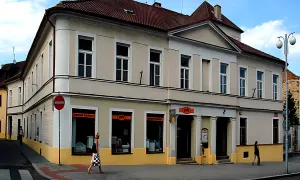
Photos from the area
Real photos taken near the monument

Zdroj a licence jsou uvedeny u každého snímku.
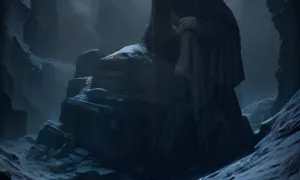
Atmosphere of the place
This atmospheric visualisation of the place and period was generated by artificial intelligence. It is not real footage of the location.
Tips from visitors
No tips yet. Be the first!
Log in and add your tip.
Sources and literature
Photos: Petr Kinšt / CC BY-SA 3.0, rozlišení zvýšeno umělou inteligencí — Wikimedia Commons. The author and licence also appear when you hover over the image.
Faktickým podkladem tohoto textu byl článek na Wikipedii, jehož autory jsou přispěvatelé Wikipedie. Článek je dostupný pod licencí CC BY-SA 4.0.
Location on the map
Příběhy a pověsti
Legendy, pověsti a příběhy spjaté s touto památkou
Fotografie návštěvníků
Zatím žádné fotografie. Buďte první, kdo přidá fotografii z návštěvy!
Log in a přidejte svou fotografii nebo hodnoťte.
Za ověřenou návštěvu v aplikaci získáte víc bodů — poznáme podle GPS, že jste na místě.
Reviews and comments