






Liegiosserův mlýn Water mill
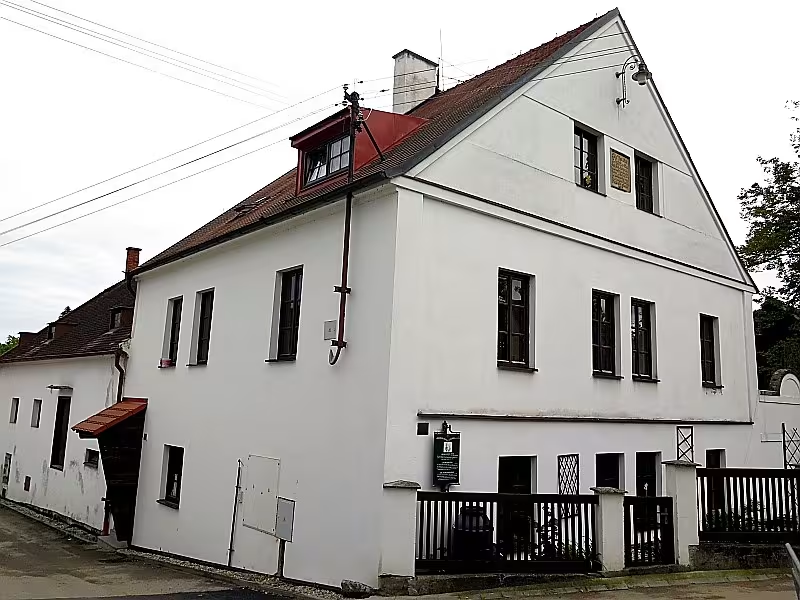
Ziegrosser or Liegiosserův mlýn is a protected real estate cultural monument located in the heart of the city of Netolice in the district of Prachatice. It comes from the last quarter of the 16th century and is located on the Bezdrev river right under the dam of the Monk pond. This originally Renaissance water mill is a valuable proof of historical water construction and water management in southern Bohemia.
It is assumed that the mill was already operating at the end of the 16th century, when it became part of the dispute related to the development of the Rosberg pond. In the second half of the 16th century, a massive construction of water works took place on the southern Czech lands, which came across the interests of cities and miller workers. Netolice had a dispute with Rozberg regent Jakub Krčín. He took most of the water from the stream, which was powered by a network of Hrbovské, Poděžek and Monk ponds during the construction of the sewer called Krčínka. The local mills therefore lacked enough water to power the equipment.
From the point of view of architecture it is originally a Renaissance building whose surrounding wall contains early Baroque elements. These come from the renewal of the building after July 10, 1663, when the mill destroyed the flood. The water was brought to the original water wheel. A significant technical change occurred in 1930, when the older drives replaced Francis' turbine with a fall of 5.3 meters, a flow of 0.410 m ³ / s and a power of 13 horsepower.
The original miller technology has not been preserved until today. However, the building itself has retained its design and connection to the water flow. The mill lies in the historical heart of the city. In its nearby surroundings there is a Pond Pond Pond or archaeological park on the hill Ján. The building is a valuable example of how historical water works shaped the shape of South Bohemian settlements. A ride or walk around this mill offers inquisitive visitors a direct meeting with a tangible link to modern water construction.
Then and now
Drag the slider to compare how the landmark may have looked when it was built with the view today.
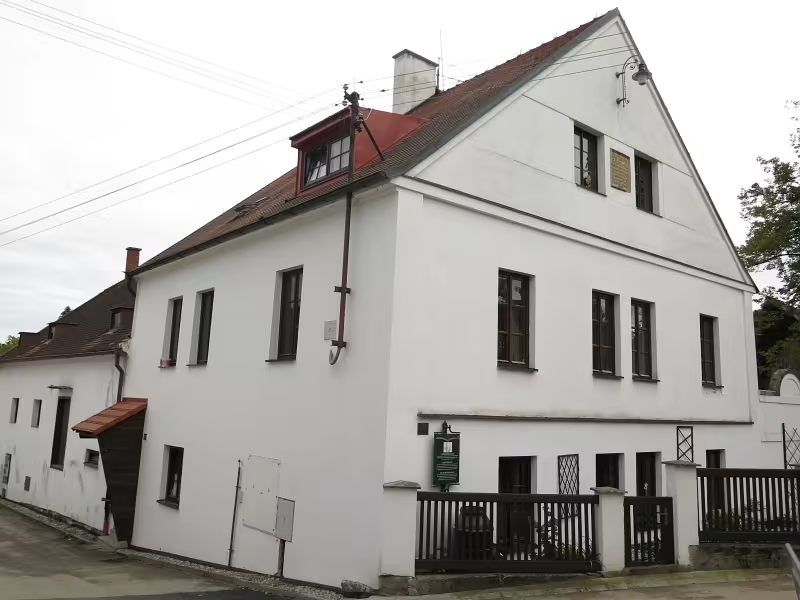
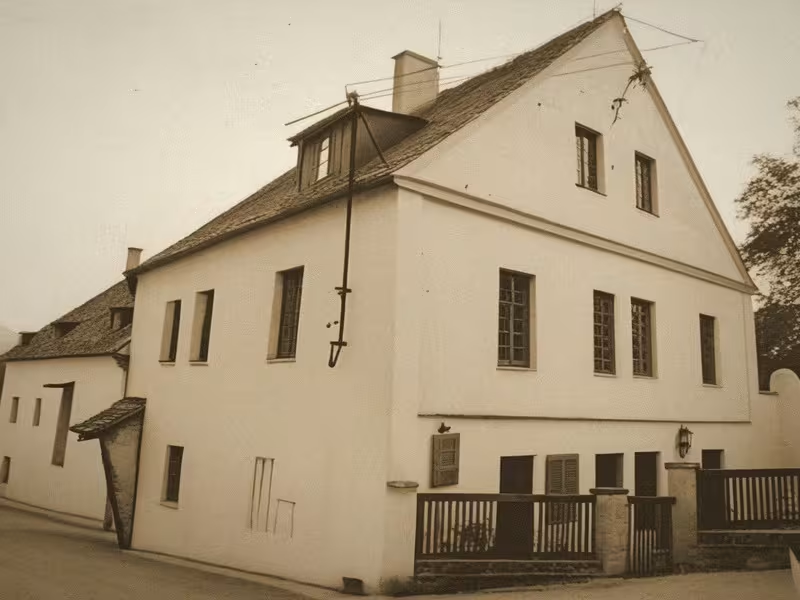
The historical appearance on the left is an AI-generated visualisation and serves as inspiration only.
Historical milestones
- 16th Century
- The creation of the mill in the last quarter of the 16th century and disputes with Jakub Krčín for construction of the sewer Krčínek.
- 1663
- The destruction of the mill by the flood on July 10 and its subsequent early Baroque restoration.
- 1930
- Installation of Francis turbine with a flow rate of 0,410 m ³ / s and a power output of 13 HP.
Architectural development
It is originally a Renaissance water mill, which has in its circumference preserved early Baroque elements from the period after the 1663 flood. The water was brought to the water wheel by a drive. In 1930, the older drives replaced the Francis turbine with a drop of 5.3 meters and a power of 13 horsepower.
Historical events
Disputes of the city Netolice with the Rožmberg regent Jakub Krčín for the water drain of Krčinek in the 16th century. On 10 July 1663 the mill was destroyed by devastating floods and then restored.
Points of interest
- The construction dates from the last quarter of the 16th century and is located in the heart of the city Netolice on the Bezdrev stream under the dam of the Monk pond. - The mill was at the end of the 16th century part of the dispute with the Rozberg regent Jakub Krčín, who took most of the water from the creek when building the sewer called Krčínka. - After 10 July 1663 the mill was destroyed by the flood and in the subsequent reconstruction it gained early Baroque elements into the perimeter wall. - In 1930 there was a significant technical change, when older drives replaced Francis's turbine with the power of 13 horsepower. - The original miller technology has not been preserved until today, but the building has retained its building shape and its connection to the water flow.
Guide
Show guide text
This text was created by artificial intelligence and has not been editorially reviewed. It may contain inaccuracies.
Welcome to the Netolics. Stop for a moment, take a breath and feel the atmosphere of this place. You're standing in front of one of the most important witnesses of local history, the Liegiosser Mill. It's a fascinating place that takes you deep into the past in time. Look around you. You are in the very heart of the city, where the Bezdrev stream seeks its way under the dam of the Monk pond. This position, in close proximity to the water and strategically located below the dam, determined the fate of the entire object. Water has been a source of life in the past, but also the greatest enemy, and it is this dualism that carries Liegiosserův mlýn for centuries.
Now that you're looking at the building in front of you, remember that its basic history dates back to the last quarter of the 16th century. So imagine the time of the Renaissance, the time of the boom of art, trade and new thinking. This is when the mill was founded. At that time, the mill was not just a simple grain milling building, but a key economic center of the whole area. It was a knot where local farmers, traders and craftsmen met. The whole building was closely linked from the beginning to the water development of the region, which was at that time absolutely essential for the survival and prosperity of the city.
Now pay attention to the appearance of the building itself. Look at its facade and feel its overall availability. Even though we're looking at an object today that's been through a lot of changes, there's still a long way to go. It is a protected cultural monument of the Czech Republic and it is in this protection that recognition of its value lies. Although the internal miller technology, the complex system of wheels, heaters and millstones, has unfortunately not been preserved, the object itself remains a valuable architectural document. Notice how the building fits into the landscape and how naturally it communicates with the flowing water of the stream. It is harmony that has been created for generations.
Now let's move on to the stories that took place in these walls and around them. The history of this mill is not only a story about grinding grains, but also a story about power, disputes and ambitions. At the end of the 16th century, the mill found itself in the center of a dramatic conflict. The main role here was played by Jakub Krčín, a powerful Rozberg regent, a man with a great vision, but also with a firm will. The Krčín set out to build a large sewer which did not go in the name Krčínka. For many, it was an engineering triumph, but for the owners of this mill, it was a disaster. The construction of the sewer took most of the water from the creek, which meant the loss of its most valuable energy source for the mill. Imagine the resistance and desperation of the miller who saw their livelihoods disappear in the newly dug canals for the greater goals of the local monarch. It was a dispute over water, about survival and the right to use natural resources that left a deep mark in local memory.
But the fate of the mill was tested in a different way than human disputes. In the seventeenth century, there was a test that was much more destructive. Look at the stream of the stream and imagine what happened on July 10th in the year six hundred and sixty-three. That's when the devastating flood came, which with brutal force hit the entire area. The water that used to serve the mill turned into a destroyer. The mill was practically destroyed at the time. It was a period of deep sadness and loss, but also a period of new hope. The building was not left in ruins. The early Baroque renewal followed, which gave the mill a new face and a new life energy. It is thanks to this resilience and will of local people that we can stand before this construction today and admire its duration.
But time did not stand and the mill had to adapt to new times. If we move far ahead until the year one thousand nine hundred thirty, we will see a fascinating technological leap. At that time, Francis' turbine was installed in the mill. That was the moment when the old mill met with modern technology. The turbine had a flow rate of 0.400 cubic meters per second and a power output of 13 horsepower. It may seem like a small number to you today, but at the time it meant a huge increase in efficiency and modernisation of the entire operation. It was a symbol that Liegiosserův mlýn was able to survive the Renaissance, the baroque and the flood disasters and remain relevant in the modern world of the twentieth century.
Interestingly, this mill has a certain mystery in it. It's a secret about invisible wealth. Although we do not see any wheels or belts in operation today, the whole building still carries a print of the miller's craft. It's like a book from which some pages were ripped out, but we can still read the whole story out of context. The mystery remains, how many other small stories, arguments and laughter have taken place in these walls over the centuries. How many people have come here with the hope of a good yield and how many have left with a full bag of flour and a calm heart.
Now that you know the story of Liegiosser's Mill, I suggest you stay with him for a while. Close your eyes and listen to the noise of the Bezdrev creek. Try to imagine the noise that existed here centuries ago, when the turbine or the mill wheel worked with great force and the whole building vibrated slightly. Feel the contrast between today's peace of the centre of Netolic and the dynamics that have defined this place for more than 400 years.
This mill is a reminder of how important we have a relationship to water and how much nature can give us, but also punish us. It is a symbol of endurance, because even after the destruction of floods and disputes with powerful people like Jakub Krčín, the building still stands and tells its story to anyone who stops and puts on headphones.
Thank you for accompanying me on this short journey to the history of Liegiosser Mill. I hope you are interested in this story and that you are now looking at this building with different eyes. Now invited to further explore the beautiful corners of Netolic. Take a look at the surroundings, see the architecture of the city, and look for the other traces of the past that this picturesque place hides inside. I wish you a pleasant journey and a beautiful day in our city. Goodbye.
Tips for visitors
The best time to visit the Liegiosser Mill in Netolice is early morning or morning, when the quiet atmosphere of the historical core of the city is not yet disturbed by crowds of tourists and sunlight ideally radiates the building on the Bezdrev stream. You can use your own car and public transport for transport, and you can best verify the current connection in the online connection search engine. Take a comfortable footwear suitable for longer walks on historic paving and surrounding nature, a bottle with a drink and a camera. The best light for photography is during the golden watch before sunset, while the great composition is obtained by looking around the dam of the Monk, which offers a unique view of the whole memory and water flow. Within a 30-minute walk or drive you can visit the nearby Monk pond, the picturesque Pond Podloužek or head for the hill Ján, where the popular archaeological park Netolice is located. Families with children will appreciate a light walk around the water areas associated with exploring the history of the city and visiting the said archaeological park, where small visitors will enjoy a lot of fun and lessons in nature.
Businesses nearby
Do you run a restaurant, accommodation, shop, museum, rental, wellness or other visitor service near this monument? Show yourself directly to the people heading to it — this is how they will see you in the app and on the web:
Events nearby


Zdroj akcí: otevřená data měst a obcí ČR (Národní katalog otevřených dat) a kalendář akcí Národního památkového ústavu.
Nearby
The mill is located near the Monk pond in the historical heart of Netolice. In the nearby area there is a Pond Pond Pond and an archaeological park Netolice on the hill Ján.
Accommodation nearby
Trips and activities nearby
Guided tours, tickets and activities nearby from GetYourGuide
Affiliate link: if you buy from the partner, we may receive a commission. The price for you does not change.
Search tours and activities →Themed route
1. ARCHEOLOGICAL PARK Netolice on top of Ján Type: Historical castle. This location offers a unique view of the early Middle Ages thanks to the faithful reconstruction of the wooden fortification and tower. From the top there is also a beautiful view of the whole city and surrounding landscape.
2. Pond of the Monk Type: Water surface. Located close to the historical core and forms a picturesque environment for a peaceful walk. Its shores naturally link the city centre with other monuments.
3.Liegiosserův mlýn Type: Technical monument. The main objective of the route lies in the heart of the village and represents an important construction that illustrates the historical use of water power. The mill captures its architecture and position at the water stream.
4. Pond Under Type: Vacation pond. This water area nearby is an ideal place for final rest and a longer walk in nature. It offers a quiet environment suitable for water level observation and relaxation.
Seasonal recommendations
Spring When nature wakes up in Netolice, Liegiosserův mlýn comes to life in a gentle dawn, when the sun's rays shine between the fresh flowering leaves and flowers along the stream. In this period, the atmosphere is quiet and romantic, ideal for photographing historical wooden structures in contrast to green vegetation. We recommend to come early in the morning when visitors are still in the minority, and dress up in a light jacket or raincoat - the weather may be variable and occasionally mild showers appear. The entrance to the mill is open in the spring months from 9 am, so we can avoid the midday crowds.
Summer In the summer months, the sun stretches over Liegiosser's Mill in full bloom, lighting up stone walls and a water wheel that shines like a mirror in hot days. The surrounding meadows are littered with wild flowers and bees fly around, giving the place a lively and joyful character. Due to the higher attendance rates, especially during weekends, it is best to arrive soon after opening (from 8 am) or late afternoon when the crowd dissipates. Light clothing, sunglasses and sunscreen are essential; Remember also the comfortable shoes, as part of the route leads along uneven rocks along the river.
Autumn Autumn light in Liegiosser Mill has a golden touch, leaves on the surrounding trees pass into red, orange and brown shades, and cooler air brings the smell of moist wood and fallen leaves. The atmosphere is calm but also charged with nostalgia, which underlines the historical character of the building. During this period it is appropriate to plan a visit between the end of September and mid-October, when the crowds are smaller and the opening hours are extended up to 18 hours. Dress in layered clothes - sweater, light jacket and tight shoes - because temperatures can fluctuate rapidly during the day and moisture may appear along the stream.
Winter The winter Liegiosserův mlýn is wrapped in a quiet white cover; The snow covers both the roof and the surrounding field and the sun's rays are reflected from the ice, creating dramatic, almost mystical lighting. The atmosphere is intimate and peaceful, ideal for contemplation over the history of the place. Due to limited opening hours (usually from 10 am to 16 pm) and possible snow conditions, it is reasonable to schedule a visit during the working day when the probability of a smaller crowd is higher. Don't forget to wear warm clothes - thermal linens, thick jacket, hat, gloves and waterproof shoes with anti-slip soles to keep your stay in cool wind even on slippery terrain.
Visualizations and artistic views


The visualisations are generated by artificial intelligence and serve as inspiration.
Photos from the area
Real photos taken near the monument


Zdroj a licence jsou uvedeny u každého snímku.
Tips from visitors
No tips yet. Be the first!
Log in and add your tip.
Sources and literature
Fotografie: Sovicka169 / CC BY-SA 4.0 — Wikimedia Commons. The author and licence also appear when you hover over the image.
Faktickým podkladem tohoto textu byl článek na Wikipedii, jehož autory jsou přispěvatelé Wikipedie. Článek je dostupný pod licencí CC BY-SA 4.0.
Location on the map
More monuments – Netolice
Show all in the municipality
Příběhy a pověsti
Legendy, pověsti a příběhy spjaté s touto památkou

Fotografie návštěvníků
Zatím žádné fotografie. Buďte první, kdo přidá fotografii z návštěvy!
Přihlaste se a přidejte svou fotografii nebo hodnoťte.
Za ověřenou návštěvu v aplikaci získáte víc bodů — poznáme podle GPS, že jste na místě.
Reviews and comments