



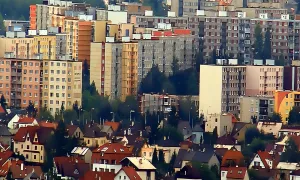
Litice (hrad, okres Plzeň-město) Housing estate
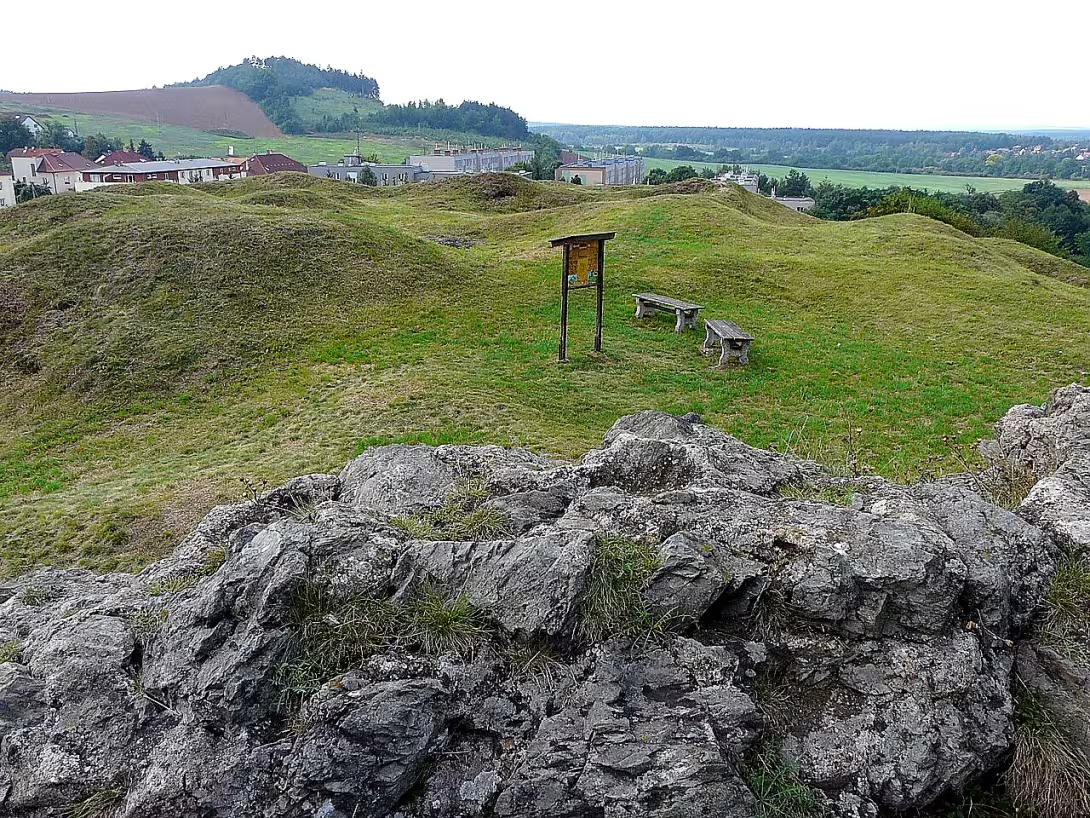
Litice is a ruin of the Gothic castle in the village Litice in the district of Pilsen-town, situated on the island above the confluence of the Litika stream and Radbuzy. It is one of the oldest noble castles in Bohemia and is protected as a cultural monument of the Czech Republic.
The locality was settled in prehistoric times. In the eneolite there was a high settlement of Schussenriedand chamese culture. In the late Bronze period and at the end of the Halštatian time, there was probably a fort, which was probably destroyed during the construction of the castle. The first wooden building was built in the first third of the 13th century, which corresponded to the trend of replacing the older forts with noble castles. The builder was probably the House of Drslavice, who acted as the highest regional officials from Pilsen Castle. The first mention of Oldřich from Litice dates back to 1212, although he could still live in the village yard during this period.
In the middle of the 13th century the castle on the top of the island hall was converted into a stone building of the bergfrit type. It was characterized by a massive defensive tower and a barrier, which was fortified by a boulder and a double moat. Access to the castle was defended by a deep moat of ten metres and a width of 30 metres.
In 1304 the Czech king Václav II. became owner of half the castle Four years later, in 1318, it was conquered by the army of John of Luxembourg after the then owners, Rous and Seagull, took sides with the ruler. In 1367, the indebted owners sold the entire property, including the settlement to the premonstrates of the Chotošov monastery, who also rented the castle to various holders. After Hussite wars, the premonstrators maintained the lithic estate, but the castle itself was abandoned.
In 1782 the castle was transferred to the administration of the Religious Fund as part of the Yosefin reforms. Then, in 1822, along with the whole estate of Chotoshov, Prince Karel Alexandr Thurn-Taxis bought it. In the early 1940s, the ruins of the castle were dismantled and used as building material for building houses in the village.
Today, there was a ditch and a part of the eastern walls. The monument is proof of the early development of noble construction and strategic use of the terrain during the early Gothic period.
Visiting this place allows you to observe the remains of one of the oldest noble settlements in the region. It is a valuable goal for anyone who is interested in the beginnings of Czech fortification and medieval history.
Historical milestones
- 1212
- First mention of Oldřich from Litice
- 1304
- King Václav II. becomes owner of half the castle
- 1318
- Conquest of the castle by the army of John of Luxembourg
- 1367
- Sale of the castle to the premonstrats of Chotosova
Architectural development
The first castle from the first third of the 13th century was built of wood. In the middle of the 13th century it was converted into a stone castle of the bergfrit type with a massive defensive tower, fortified wall and a double moat. Access to the castle separated the moat ten metres deep and 30 metres wide.
Historical events
1318: Conquest of the castle by the army of John of Luxembourg after the revolt of the owners of Rousa and Rack; 1367: Sale of property to premonstrates from the Chotebov monastery; 1822: Purchase of the estate by Karl Alexander Thurn-Taxis
Owners
Rod Drslavice, King of Václav II. (from 1304 half), Premonstrats of Chotosov (from 1367), Religious Fund (from 1782), Prince of Karel Alexandr Thurn-Taxis (from 1822)
Points of interest
- Litice is a ruin of the Gothic castle situated on the edge above the confluence of the Litika stream and Radbuza.
- It is one of the oldest noble castles in Bohemia and is protected as a cultural monument of the Czech Republic.
- The first wooden building of the castle was established in the first third of the 13th century, which corresponded to the trend of replacing the older castles with noble castles.
- In the middle of the 13th century, the castle was converted into a stone building of the bergfrit type with a massive defensive tower and fortification of the fortifications.
- After Hussite wars the castle was abandoned, later dismantled for building materials for building houses in the village.
Guide
Show guide text
This text was created by artificial intelligence and has not been editorially reviewed. It may contain inaccuracies.
Welcome to the ruins of Castle Litice. You have just entered the space where history meets the silence of Pilsen landscape. Stop for a moment, take a breath and look around you. You are standing in a strategic place, a so-called sharpness, which naturally stands out above the confluence of the Litic creek and the Radbuza River. It is this position, surrounded by water flows, that gave the castle its greatest glory of unsurpassed and significance. In front of you, the remains of a once powerful structure are now spread out, which today resembles only the shadows of its past, but still radiates pride and strength. Feel the atmosphere of this place where the wind whispers stories of knights, kings and moths.
Let us now return together in time, deep into the Middle Ages, to understand how this journey began. Imagine the first third of the 13th century. At that time in Czech countries there was a trend of replacing old fortifications with new, more modern structures. This is when the first wooden building was built. Litice is therefore one of the oldest noble castles in the whole Czech Republic. The first written mention from 1212 brings us to a person named Oldřich z Litic. Imagine him as one of the first masters of this place to establish the basis for a future strategic home in this wilderness. At the time, the castle was not only a home, but above all a fortress to guard the surroundings and demonstrate the power of its owner.
Now pay attention to what you see before you. Even though Litice is a ruin today, you can still read a trail of Gothic style in it. Look at the remnants of the walls and see how the castle copies the terrain of the edge. Gothic was not only about pointy curves, but above all about vertical-facing space and efficient use of terrain. Notice how the ruins are spread out in space and how dominant the surrounding valleys are. Even though there are no more roofs or floating towers, the castle's very schedule tells you how carefully his defence equipment has been thought out. Take a look at the facade of the remaining walls and try to imagine what these stones looked like centuries ago, when they were plastered and protected the inhabitants of the castle from enemies and weather.
The history of Litic is not only the story of one noble family, but it is closely linked to the highest powers in the country. The castle was in the possession of the Czech kings themselves at certain times, indicating its enormous strategic value. In 1304 King Václav the Second became owner of half the castle. Imagine the prestige that had to have the place that the co-ruler had. Litice thus became part of the board of political interests at the time. However, life in the castle was not just about diplomatic visits and luxury. History is written in blood and fighting. In 1318 there was a dramatic break when the castle was conquered by the army of John of Luxembourg. This event shows that even such a well-fortified spot on the island could have been compromised in a direct attack by the Royal Army.
If we look further into the 14th century, we will find that the fate of the castle has changed again. In 1367, the castle was sold to the premonstras of Chotosov. Imagine, then, that instead of armed soldiers and noblemen, monks in white robes began to move here, who in the silence of these spaces sought the closeness to God. This change in the character of the castle from the military fortress to the seat of the clergy was at that time quite common, when strategic places became centres of the administration of church property.
However, no fortress is eternal. The break brought the Hussite wars, which solved the foundations of many Czech castles. After this turbulent period, the castle Litice was abandoned. Imagine the moment of silence when the last person left the castle, the gates remained open and the spaces where voices and steps had previously sounded began to penetrate. The castle began to crumble slowly, the stones burst under the frost and the walls filled the plants. This process continued until the nineteenth century, when the castle was gradually dismantled. At that time, the ruins were often seen as a source of cheap building material for the surrounding buildings, which caused the last fatal blow to castle Litice. In later times, the place associated names, such as Karel Alexander Thurn Taxis, became part of its wider history, although the castle was no longer in full glory.
You may now be interested in why Litice is still so fascinating, even though all that remains is ruins. There's a mystery and melancholy. It's a place that reminds us of the fleeting power and time. Take another look at the river and creek confluence below you. The water still flows here as it flowed at the time of Oldřich from Litik or King Václav the Second. While human structures fall to the ground and return to nature, the landscape remains. It is this contrast between the endurance of nature and the fragility of human architecture that makes Litic a place with unrepeatable energy. Today this ruin is protected as a cultural monument of the Czech Republic, which means that its remains are now safe and can tell their story to other generations.
Now that you know the basic fates of this place, I encourage you to go on your own research. Go through the ruins at a slow pace. Feel the texture of the stones, listen to the noise of water in the valley and try to reconstruct images from the past in your mind. Where was the main gate? Which way did the monks walk into their chambers? Where was the soldier who observed the approaching army of John of Luxembourg in 1318? Let your imagination guide you, but at the same time respect the peace and quiet of this historic space.
Litice is not just a pile of stones, it is the archive of our ancestors, written directly into the landscape. I hope that this short journey has attracted you over time and that you have felt the depth of history that still lies in these walls. I wish you a pleasant rest of the walk and don't forget to take only memories and photographs while leaving the castle with you. See you in the next corner of our beautiful country.
Tips for visitors
The best time to visit is late afternoon when the sun best illuminates ruins and creates interesting shadows on stone structures. Autumn season is also ideal thanks to color change of surrounding vegetation.
Since it is a ruin in the natural environment, we recommend that you bring comfortable shoes suitable for uneven terrain and plenty of drinking water. For families with children, walking around the castle is an interesting activity in the fresh air.
For the best photos, take advantage of elevated points overlooking the confluence of the Litika creek and Radbuzy, which offer beautiful natural scenery and a combination of history with the landscape.
Frequently asked questions
Can the monument be visited?
This is a structure in a public space that can usually be seen from outside free of charge. We have not verified that this particular one is freely accessible.
Where is the monument?
Location: Litice, Plzeňský kraj. The map on this page shows the exact spot.
Why is the monument protected?
It is listed in the Central List of Cultural Monuments of the Czech Republic as a cultural monument (register no. 1000145119).
Businesses nearby
Do you run a restaurant, accommodation, shop, museum, rental, wellness or other visitor service near this monument? Show yourself directly to the people heading to it — this is how they will see you in the app and on the web:
Events nearby

Zdroj akcí: otevřená data měst a obcí ČR (Národní katalog otevřených dat) a kalendář akcí Národního památkového ústavu.
Nearby
Litika creek and Radbuza confluence
Accommodation nearby
Trips and activities nearby
Guided tours, tickets and activities nearby from GetYourGuide
Affiliate link: if you buy from the partner, we may receive a commission. The price for you does not change.
Search tours and activities →Seasonal recommendations
Spring on the ruins of castle Litice brings a waking landscape where green leaves contradict grey stone remains of walls. Light is often soft and scattered, which creates a calm, almost meditation atmosphere ideal for photographic images. Nature is coming to life around the castle, with trees and meadows blooming, adding life and color to the outlook of the waves. For visitors, the spring season is a great choice if they want to escape the summer long fronts. It is recommended to bring layered clothes because spring weather can be variable and it is cold in the morning or evening. The best time to visit is in the morning when visibility is best and the roads are still dry after night rest.
Summer offers the longest days and brightest light that reveals every detailed structure of the remaining walls and views of the surroundings of Pilsen region. The atmosphere here is lively and full of energy, especially in the main summer season, when the monument becomes a popular destination for families and tourists. Nature is in full bloom, but hot days can be challenging, therefore it is crucial to bring enough drinking regime and sunscreen. Due to a higher number of visitors, it is worth arriving as early as possible in the morning, ideally before nine o'clock, to enjoy your peace and avoid crowds. Clothes should be light and breathable, suitable for movement on uneven terrain.
Autumn brings a unique visual experience to Litice thanks to coloured leaves that form a dramatic contrast with the dark stone of the castle. Light is usually lower and warmer, which creates a romantic and a little melancholy atmosphere, ideal for long walks and reflection. Nature around the castle turns into a mosaic of yellow, orange and red shades, making every step a photogenic moment. It's less crowded than summer, so you can enjoy space and silence. It is recommended to wear warm layers and waterproof jacket because autumn rains and wind wounds are common. The best time to visit is in the afternoon when the sun shines at an angle that highlights the texture of the masonry.
Winter on the ruins of Litice is for lovers of silence and dramatic landscape scenes. The snow, if it falls, covers the walls and the remains of the walls with a white carpet, creating a clean and minimalist look. Short days and low sun provide a place of mystical and lonely character that is attractive to many visitors. The atmosphere is cold and sharp, but also very calm. It is important to prepare very warm clothes, including gloves and warm caps, because the cold wind can be unpleasant. Due to the shorter light day, it is best to visit the memory in the afternoon when visibility is best and temperature is highest. Watch out for slippery roads if there's snow or ice.
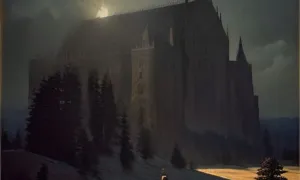
Visualizations and artistic views


The visualisations are generated by artificial intelligence and serve as inspiration.
Photos from the area
Real photos taken near the monument

Zdroj a licence jsou uvedeny u každého snímku.
Tips from visitors
No tips yet. Be the first!
Log in and add your tip.
Sources and literature
Photos: Josef Špiller / CC BY-SA 3.0 — Wikimedia Commons. The author and licence also appear when you hover over the image.
Faktickým podkladem tohoto textu byl článek na Wikipedii, jehož autory jsou přispěvatelé Wikipedie. Článek je dostupný pod licencí CC BY-SA 4.0.
Location on the map



Příběhy a pověsti
Legendy, pověsti a příběhy spjaté s touto památkou
Fotografie návštěvníků
Zatím žádné fotografie. Buďte první, kdo přidá fotografii z návštěvy!
Log in a přidejte svou fotografii nebo hodnoťte.
Za ověřenou návštěvu v aplikaci získáte víc bodů — poznáme podle GPS, že jste na místě.
Reviews and comments