






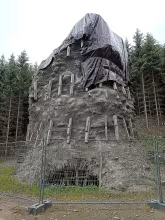
Lorenzova huť, also known as Vavřincova huť, is a historical site near Drakov in Heřmanovice, within the Moravskoslezský kraj region of the Czech Republic. Constructed around 1807, it was part of an ironworks operation focused on producing and processing raw iron. Today, Lorenzova huť stands as one of the last remnants of the once-thriving iron industry in the Jeseníky foothills. Recognized as a cultural monument, its significance lies not only in its historical value but also in its connection to the region's industrial past.
The origins of Lorenzova huť date back to around 1807 when it was constructed by the Krischové brothers. At that time, they were tenants of a bishop's furnace located at Buchbergstal (now Železná). The high furnace built here played a crucial role in iron production, reflecting industrial activities prevalent during this period. By 1822, ownership transitioned to the Harrach family through a lease agreement, marking a significant change in its administration. This site was part of broader European industrial advancements occurring in the early 19th century, which saw shifts from traditional methods to more modern practices in iron production.
Architecturally, Lorenzova huť was designed as a high furnace for iron processing. Over time, however, it fell into disrepair due to neglect and lack of maintenance. By the mid-19th century, only remnants of the structure remained, posing hazards to nearby roads. This decline reflects broader trends in industrial sites during this era, where many such structures were abandoned or repurposed.
Ownership and administration of Lorenzova huť saw notable changes over its operational years. Initially managed by the Krischové brothers under a lease from the bishop's furnace at Buchbergstal, it later came under the control of the Harrach family in 1822. Despite these administrative shifts, the site experienced a definitive decline between the late 1820s and early 1830s, eventually leading to its abandonment by 1836.
Throughout its history, Lorenzova huť witnessed several key events that underscored its industrial significance. Constructed as part of an ironworks operation in 1807, it was leased by the Harrach family in 1822. By 1836, the site had deteriorated to a few abandoned houses, and by 1853, only remnants of the furnace remained, posing hazards to nearby roads. These events highlight the challenges faced by industrial sites during this period.
Today, Lorenzova huť is recognized as a cultural monument, with preservation efforts initiated in 2005 by Spolek Přátel Vrbenska. Located near Drakov along a forest road connecting Rejvíz and Vrbno pod Pradědem, the site offers visitors a glimpse into the industrial history of the Jeseníky foothills. Its preservation is crucial for understanding the region's past iron industry and its impact on local development.
Lorenzova huť stands as a testament to the industrial heritage of the Jeseníky foothills, offering valuable insights into historical advancements in iron production. Visitors are invited to explore this site, appreciating its significance as one of the last remaining structures from an era that shaped much of modern industry.
Historical milestones
- 1807
- Construction of Lorenzova huť as part of an ironworks operation.
- 1822
- Leased by the Harrach family.
- 1836
- Site reduced to a few abandoned houses.
- 1853
- Only remnants of the furnace remained, posing hazards.
Architectural development
Lorenzova huť was built as a high furnace for iron production. Over time, it fell into disrepair due to neglect and lack of maintenance. By the mid-19th century, only remnants remained, posing hazards to nearby roads.
Historical events
Constructed around 1807 as part of an ironworks operation.
Leased by the Harrach family in 1822.
Definitive decline occurred between the late 1820s and early 1830s.
Owners
Initially owned by the Krischové brothers, who were tenants of the bishop's furnace at Buchbergstal (now Železná). In 1822, ownership passed to the Harrach family through a lease agreement. By the early 19th century, the site had fallen into disrepair and was eventually abandoned.
Points of interest
- Although primarily known for its iron production, Lorenzova huť also played a role in the region's early 19th-century shift from traditional to modern industrial practices, reflecting broader European trends of that era.
- The transition of ownership from the Krischové brothers to the Harrach family in 1822 marked a significant administrative change, highlighting the fluid nature of property and management during this period of industrial growth.
Guide
Show guide text
Welcome to Lorenzova huť, a remarkable historical site nestled near the quaint settlement of Drakov in Heřmanovice. As you stand here, imagine the rolling hills of the Jeseníky foothills stretching out before you, whispering tales of an industrious past. You're at what remains of a once-bustling ironworks operation, where raw iron was produced and processed around 1807.
Let's delve into its origins. Lorenzova huť, also known as Vavřincova huť, emerged in the early 19th century during a time when Europe was transitioning from traditional to more modern industrial practices. This site played an integral role in that shift, reflecting broader European trends of the era.
As you look around, notice the remnants of what once stood here—a testament to its historical significance. The high furnace's remains are among the few vestiges left behind. These structures invite you to ponder their past grandeur and imagine the fiery furnaces that once roared with activity. While the specific architectural details aren't documented, the very presence of these remnants speaks volumes about the site’s industrial heritage.
The story of Lorenzova huť is interwoven with notable historical figures like the Krischové brothers, who initially owned it. In 1822, the operation was leased to the Harrach family, marking a new chapter in its history. Over time, however, by 1836, the site dwindled down to just a few abandoned houses and eventually, only the remnants of the furnace remained.
One intriguing aspect of Lorenzova huť is how it encapsulates a pivotal moment in industrial evolution. While primarily known for iron production, this site also symbolizes the broader transition from traditional methods to modern industry—a reflection of Europe's dynamic 19th-century landscape.
As we conclude our journey here at Lorenzova huť, I invite you to take a moment and absorb the atmosphere that surrounds these historical remnants. Consider exploring further into the Jeseníky foothills, where more stories await discovery. Thank you for joining me on this exploration of history and heritage. Safe travels as you continue your adventure!
Businesses nearby
Do you run a restaurant, accommodation, shop, museum, rental, wellness or other visitor service near this monument? Show yourself directly to the people heading to it — this is how they will see you in the app and on the web:
Nearby
The site is located near Drakov, along a forest road connecting Rejvíz and Vrbno pod Pradědem. The surrounding area includes natural features such as the Black Opava River.
Accommodation nearby
Themed route
Tematická výletní trasa: Lorenzova huť a okolí
1. Lorenzova huť (Hamr) *Typ:* Historické místo *Proč stojí za návštěvu:* Lorenzova huť je fascinujícím připomínkou průmyslové minulosti oblasti, kde se dnes mohou návštěvníci dozvědět o historii hutnictví a těžby. Navzdory svým starobylým základům nabízí zajímavý pohled na technologické inovace, které formovaly region.
2. Řeka Černá Opava *Typ:* Přírodní vodní tok *Proč stojí za návštěvu:* Tato řeka je nejen klíčovým prvkem krajinářského rázu okolí, ale také poskytuje místo pro relaxaci a krásné krajiny. Je to ideální místnost pro piknik či prozkoumání přírody podél svých břehů, což nabízí odpočinek po návštěvě Lorenzovy huti.
3. Lesní cesta mezi Drakovem a Vrbnem pod Pradědem *Typ:* Lesní stezka *Proč stojí za návštěvu:* Tato lesní cesta nabízí jedinečné příležitosti pro procházky na vzduchu, kde můžete užít klidnou chvíli v zelené přírodě. Je to ideální místo pro cyklisty nebo pěšáky, kteří hledají krásné a relativně neporušené krajiny.
4. Rejvíz *Typ:* Místní obec s historickým významem *Proč stojí za návštěvu:* Rejvíz, známý svou historií a kulturním dědictvím, nabízí zajímavé pohledy na místní život a tradice. Je to místo, kde lze prozkoumat místní architekturu a pochopit vliv regionální historie na současné obyvatelstvo.
5. Vrbno pod Pradědem *Typ:* Místní obec s přírodním rázem *Proč stojí za návštěvu:* Tato obec je známá svou krásnou přírodou a historickými památkami. Nabízí vynikající možnosti pro turisty, kteří chtějí zaznamenat si klidnou chvíli na venkově nebo se podívat na místní kulturní atrakce.
Tato trasa nabízí kombinaci historických a přírodních zážitků, které dokonale odrážejí bohatství oblasti kolem Lorenzovy huti.
Seasonal recommendations
Jaro: In the spring season, Lorenzova huť (hamr) in Heřmanovice is particularly attractive due to its revitalizing vegetation and warm sun rays that illuminate its historic architecture. The alternating clouds create dramatic effects of light and shadow on the walls, adding a romantic touch to exploring the ruin. At this time, the vegetation may still be relatively dry, so appropriate clothing should include comfortable shoes and possibly an umbrella for irregular rain showers. Visitors might encounter a few other tourists, but it is usually not too crowded; leaving home earlier will allow you to enjoy a more peaceful tour.
Léto: In summer, Lorenzova huť (hamr) is most visited when the warm sunlight illuminates its historic structure and the pleasant weather increases comfort for long walks. During this season, the vegetation is full of life, adding color and vitality to the landscape views around the monument. Additionally, the air may be filled with the sound of birds and rustling leaves, which adds an atmospheric feel to experiencing the place. Due to a higher number of tourists, it is recommended to visit early in the morning or later in the evening to avoid peak times and long queues. Don't forget sun protection cream and plenty of drinking water.
Podzim: Autumn brings a unique atmosphere to Lorenzova huť (hamr), as shadows slowly stretch across its historic walls, and leaves on trees create colorful tapestries. This season is ideal for photography due to less sunlight presence and mild temperatures that make long walks comfortable without excessive sweating. Visitors can expect fewer tourists compared to the summer period, allowing for a more intimate experience of the monument. It's advisable to bring warm clothing and possibly an umbrella, as autumn can be changeable with sudden rain showers.
Zima: A winter visit to Lorenzova huť (hamr) offers a completely different atmosphere, where its historic walls are illuminated by soft sun rays or artificial light in the cold air. The bleak weather and possibility of snow cover add a romantic, quiet quality to the place, which is less visited than other seasons. Visitors should dress warmly with a warm coat and protective gear for their legs, such as quality shoes or socks, especially if there is snow on the ground. Opening hours may be shorter due to winter conditions, so make sure to plan your visit accordingly.
Visualizations and artistic views

Vizualizace jsou generovány umělou inteligencí a slouží jako inspirace.


Tips from visitors
No tips yet. Be the first!
Log in and add your tip.



Reviews and comments