



Luby Fortress
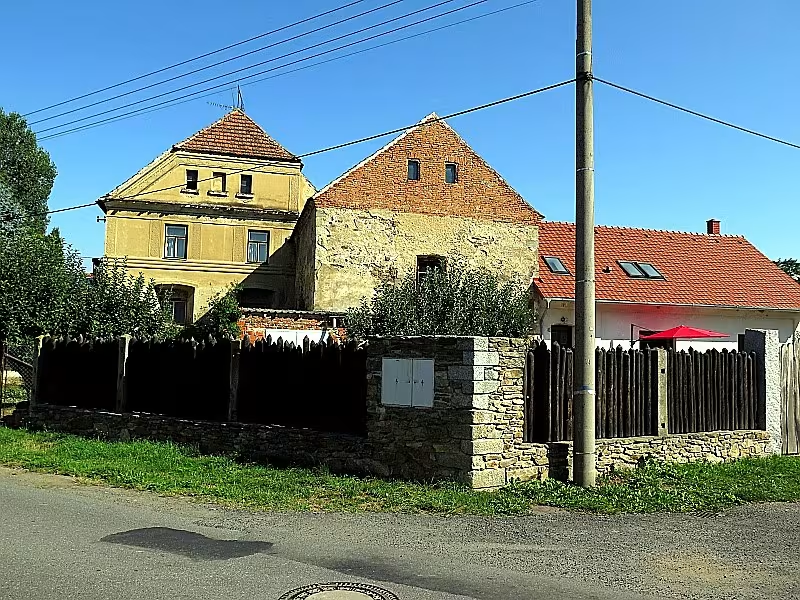
The fortress in the village Luby on the southern edge of Klatov is a former mansion from the 14th century, which was later converted into a group of family houses. The monument stands out with its original Gothic character and fragments, which are still part of the current development. The whole complex has been protected as a cultural monument since 1988.
The history of the fortress dates back to the 14th century when the village belonged to the Lub. The oldest known members of this family include Ctibor z Lub (murdered before 1316), his son Dětleb and in 1318 mentioned Milota z Lub. In 1367-1379, Kunrat and Sudivoj z Lub shared the village, who exercised the patronage right to the local church of St. Nicholas. The property was divided in such a way that Kunrat had a fortress, two cruises, and the villages of Vrhavec and Bříza, while Sudivoj had only one sail. Other members of the family were Petr z Lub (mentioned in 1390) or brothers Petr and Mikuláš, sons of Oldřich of Lub, who together bought Lomec in 1486.
The building was originally surrounded by a wall with a moat. The core of the fort was a rectangular storey building with the construction of a three-space palace, to which the courtyard was adjacent on the south side. In one of the rooms in the south part of the palace, the indoor wooden sky was used to warm up. In the southeast corner there was a tower gate with a steep portal and a trap for the drawbridge; The top floor of the tower was carrying a box. The area also included a granary. Although the gothic lining of windows and portals has disappeared, their fragments have remained in the foundations and walls of houses 10, 30, 31, 32 and 33.
The fate of the fort was closely linked to political events. After the death of Ladislav Loubski of Lub in 1544, the guardian of his minor daughter had to sell suffocated property to the city of Klatov. The city lost its fortress twice as a result of the state uprisings. For the first time in 1547-1549, it was confiscated by King Ferdinand I for the participation of the city in the uprising, but after two years the property was returned. A similar fate struck the city during the uprising in 1618-1620, when the property was taken from it and managed by the imperial speedster. In 1629, however, Ferdinand II returned the property to the city for a large debt. In 1641, the fort was stopped for a short period of time by Nábíček Haníček from Újezda.
Today, the fortress is part of the village Luby, where the modern development has partially absorbed the original Gothic masonry. The building no longer serves as a mansion, but its historical form is visible in integrated parts of walls and building fragments. The monument represents an interesting example of the gradual transformation of medieval architecture into a civil building. It is advisable to visit it to understand the historical development of local nobility and urban farming.
Historical milestones
- 1316
- The Death of the Armageddon of Lub
- 1544
- Sale of Klatovy city fortress
- 1988
- Fortress declared by protected cultural monument
Architectural development
Originally a Gothic rectangular storey building with a three-space palace and a tower gate with a drawbridge. Later, the fort was converted into a group of family houses that integrated fragments of the original masonry. Parts of the wall and fragments of gothic lining in several houses have been preserved from the original building.
Historical events
1544: The sale of the fortress of the city of Klatov for the debts of the house of the Loub; 1547: Confiscation of the property by the city of Klatov after the construction uprising; 1629: Return of property to the city of Klatov by Emperor Ferdinand II.
Owners
Vladyková z Lub (14th century - 1544), the town of Klatova (from 1544, with exceptions in the years 1547-1549 and 1618-1629), Nájek Hansel z Újezda (stopped in 1641).
Points of interest
- The former mansion of the 14th century was later converted into a group of family houses. The entire area has been protected as a cultural monument since 1988. - The building unit originally surrounded the wall with a moat. - There was a tower gate in the southeast corner with a steep portal, a trap for a drawbridge and a top-floor truck. - The fragments of gothic window and portal lining are preserved in the foundations and walls of houses 10, 30, 31, 32 and 33.
Guide
Show guide text
This text was created by artificial intelligence and has not been editorially reviewed. It may contain inaccuracies.
Welcome to the historical site Luby, a former manor that stands as a testament to the rich past of this area. You're standing in front of a beautiful building whose gothic masonry has partially disappeared under modern houses. Its architecture and atmosphere tell a story about the noble families that once inhabited this fortress.
Luby first appeared in historical records in the 14th century as the seat of the mighty aristocratic family of the Octubora of Lub. After his death in 1316, the fort went under the administration of other family members, including Children, Milota and Kunrát z Lub. This dynasty affected not only local politics, but also the development of the whole region.
Architecturally, attention should be paid to the original Gothic image that bears traces of the past. Even though it is partly switched by modern constructions, the elements of the art construction at the time can be understood here. Imagine a wall with a water moat and a tower gate with a steep portal that once protected this fort.
Key personalities associated with Luby include Oldřich Loubsky of Lub and Ladislav Loubsky of Lub. Their stories are linked to the history of this place, which was once an important center of power and governance.
The interesting thing is that the original fort was later converted into a group of family houses. This process shows the adaptability and transformation that this building has undergone over the centuries.
In 1988, the Luby Fortress was declared a protected cultural monument, which ensures its protection and allows us to feel connected to the past today. This status underlines the importance of Luby not only for local history but also for the whole cultural heritage.
Let's move over and look at the surrounding landscape. Now notice the atmosphere where every stone plate tells its story. Luby offers not only a view of history, but also an inspiration for further exploration.
Thank you for your visit to this fascinating place. We hope that this guide inspired you to think more deeply about historical events and personalities associated with Luby. If you want to explore more, many other attractions await you in the world around us.
Tips for visitors
The best time to visit is spring and autumn months, when temperate temperatures and colorful nature accompany a tour of the architecture of the former noble residence. For the best photos we recommend using the so-called golden hour before sunset, which will highlight the texture of aging walls and the atmosphere of the historical object.
When planning a trip with children we recommend you prepare a short storybook escort about the life of the nobles to make a visit for children more interesting and educational.
For your journey, wear comfortable shoes suitable for the field and plenty of drinking water. Since it is a historical object in a satisfactory condition, we recommend caution when moving around the building.
If you have more time, we recommend to visit the surrounding attractions as part of one trip, namely the town of Klatova and the church of St. Nicholas, which are located in the vicinity of the monument.
Frequently asked questions
Can the monument be visited?
Some buildings of this kind are open for guided tours, others serve another purpose or are privately owned. We have not verified whether and when this monument is open – please ask the operator.
What are the opening hours and admission?
We have not verified the opening hours or admission. Current information is published by the operator.
Where is the monument?
Location: Luby, Plzeňský kraj. The map on this page shows the exact spot.
Why is the monument protected?
It is listed in the Central List of Cultural Monuments of the Czech Republic as a cultural monument (register no. 1000156565).
Businesses nearby
Do you run a restaurant, accommodation, shop, museum, rental, wellness or other visitor service near this monument? Show yourself directly to the people heading to it — this is how they will see you in the app and on the web:
Events nearby
Zdroj akcí: otevřená data měst a obcí ČR (Národní katalog otevřených dat) a kalendář akcí Národního památkového ústavu.
Nearby
Klatovy, St. Nicholas Church.
Accommodation nearby
Themed route
1. Klatovy, city. This historic area serves as an ideal starting point for your journey. 2nd Church of St. Nicholas, sacral monument. This important building within the city is a key cultural point of the route. 3. Luby (fortress), historical monument. The main destination of the trip, which will lead you to search this interesting building.
Seasonal recommendations
Spring: In the spring season, the fortress Luby is transformed into a shining refuge where nature is revived by new life and flowering shrubs. The sun rays illuminate the roofs of the old chateau, creating a romantic atmosphere. It is advisable to visit the fort in the early afternoon when the temperature is pleasant and the crowds do not get as much. We recommend wearing clothes suitable for mild weather and not leaving a picture at home in memory of the views, which are particularly charming in bright sun.
Summer: The Luby Fortress is a popular destination for visitors looking for heat relief in shadow alleys and along ancient walls. The main summer season may increase the number of tourists, therefore it is advisable to come earlier on the day or visit the fort in the afternoon. Don't forget to wear protective sunglasses and drinking boxes so you can enjoy your visits without worrying about dehydration. Clothes should be light and light for comfort.
Autumn: In autumn the Luby fortress turns into melancholy beauty when leaves on trees acquire golden shades and the sun sets early. The atmosphere is calm and nature offers wonderful views that are ideal for photography. The best time to visit is in the early afternoon when the temperature is maintained pleasant and the crowds are less. We recommend wearing clothes suitable for colder weather and not forgetting to take an umbrella with you because autumn weather can suddenly be variable.
Winter: In winter the fortress Luby gains a calm and mysterious character. The sun sets early and long evenings provide an opportunity for relaxation in local cafes or restaurants. Hot clothes and protective shoes are necessary for comfort during the visit. Although the number of tourists is generally lower this season, restrictions may occur due to winter conditions.
Visualizations and artistic views


The visualisations are generated by artificial intelligence and serve as inspiration.
Photos from the area
Real photos taken near the monument


Zdroj a licence jsou uvedeny u každého snímku.
Tips from visitors
No tips yet. Be the first!
Log in and add your tip.
Sources and literature
Photos: Sovicka169 / CC BY-SA 4.0 — Wikimedia Commons. The author and licence also appear when you hover over the image.
Faktickým podkladem tohoto textu byl článek na Wikipedii, jehož autory jsou přispěvatelé Wikipedie. Článek je dostupný pod licencí CC BY-SA 4.0.
Location on the map




Příběhy a pověsti
Legendy, pověsti a příběhy spjaté s touto památkou

Fotografie návštěvníků
Zatím žádné fotografie. Buďte první, kdo přidá fotografii z návštěvy!
Log in a přidejte svou fotografii nebo hodnoťte.
Za ověřenou návštěvu v aplikaci získáte víc bodů — poznáme podle GPS, že jste na místě.
Reviews and comments