






malá vodní elektrárna Čeňkova pila Water structure
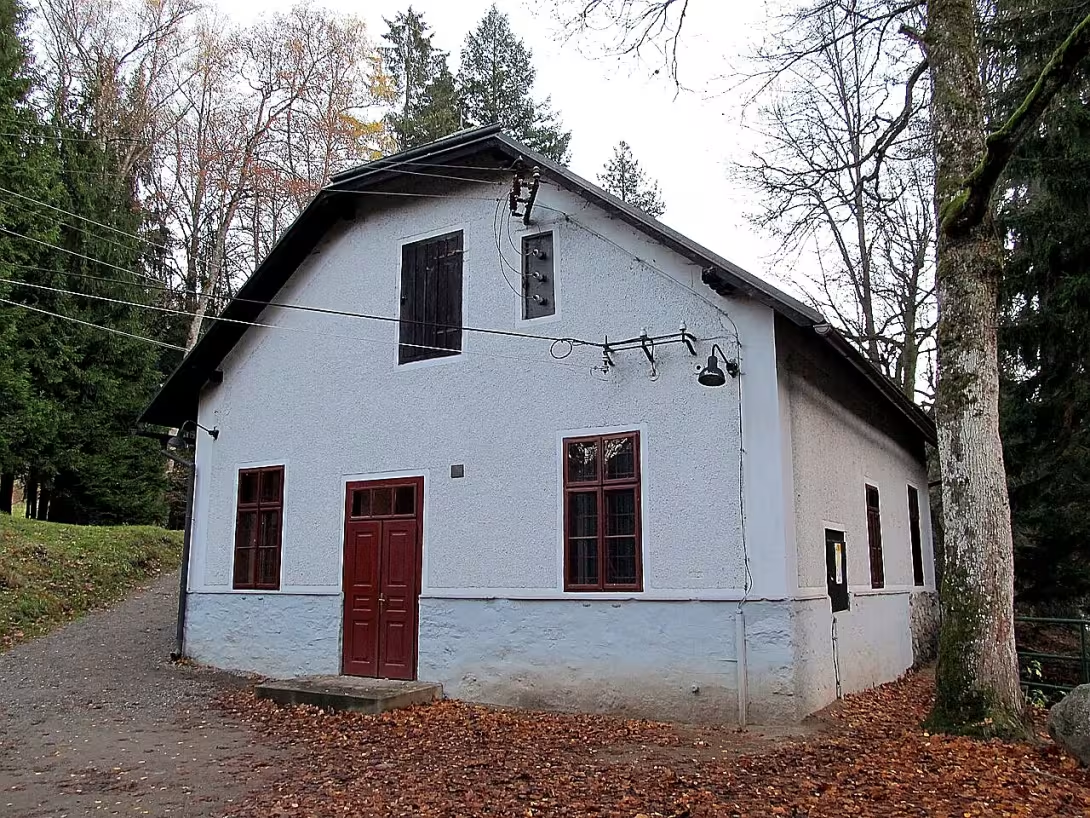
Small Water Power Plant Čenkova saw on the river The village Rejštejn is a technical work with a rich history. It was built in 1912 and since 1995 it has been protected as a cultural monument. It is an important example of early regional electrification and development of infrastructure for the use of hydroenergy.
The creation of the building dates back to the beginning of the 20th century, the period of development of technology and water structures in Czech countries. In this czasia, industrial electrification was spreading, which led to the construction of many small power plants. The construction uses the extended drive of the original Čeňek saw, indicating an innovative approach to the use of existing energy sources.
The architecture is designed to make effective use of Čechek saw drive. Although specific details of styles and materials are missing, it is clear that the design was designed to maximize performance with minimal disruption of the original saw operation. This approach reflected the trend in the integration of new technologies into existing structures.
The history of ownership and administration is not fully documented, but the publication of the building with a cultural monument in 1995 started a new era of building care. This status highlights its historical and technological value and has ensured protection for future generations.
Key milestones include construction in 1912 and subsequent registration in the register of cultural monuments in 1995. These events confirm the long-term importance of the work for the region, both in terms of technological progress and cultural heritage.
Today malá vodní elektrárna Čeňkova pila is open to the public. It is an interesting goal for all who are interested in the history of technology and regional development. The status of the cultural monument underlines its importance not only as technical works but also as part of the heritage of the municipality Rejštejn.
The visit to the plant offers a unique opportunity to explore the early stage of electrification and to understand the impact of technological progress on the development of the region. It is a monument that bears the legacy of the past and recalls the importance of innovation for the future.
Then and now
Drag the slider to compare how the landmark may have looked when it was built with the view today.
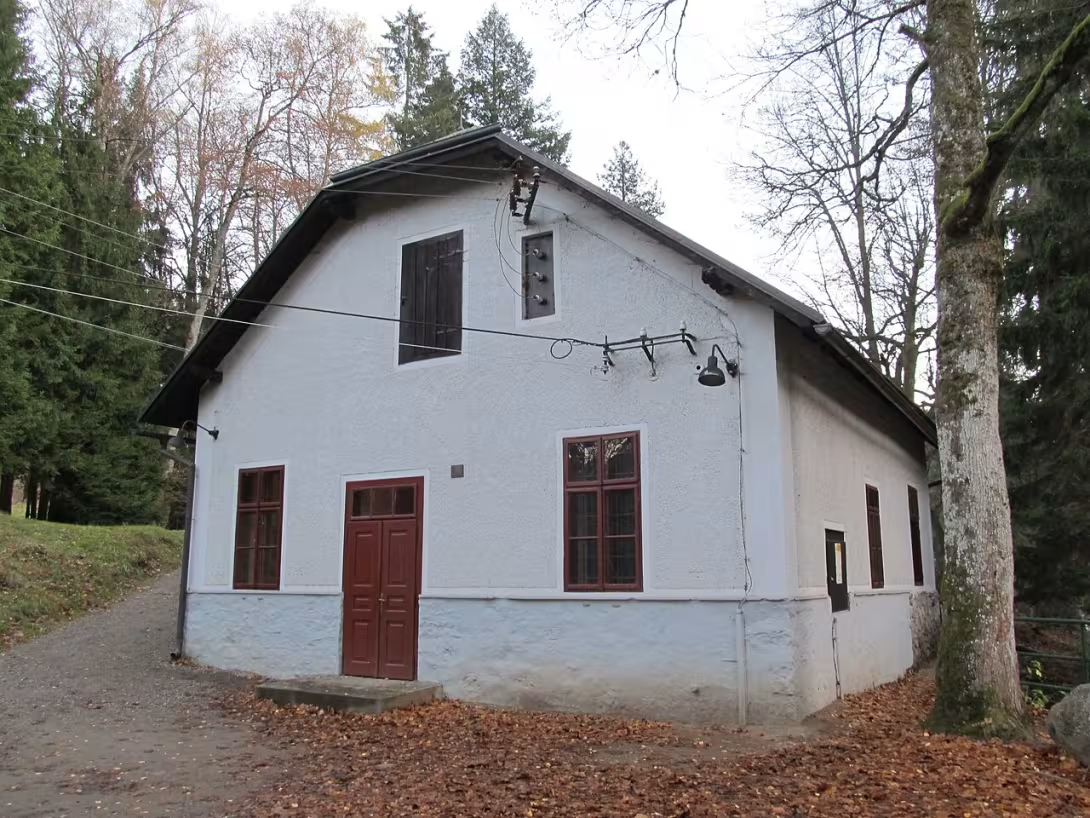
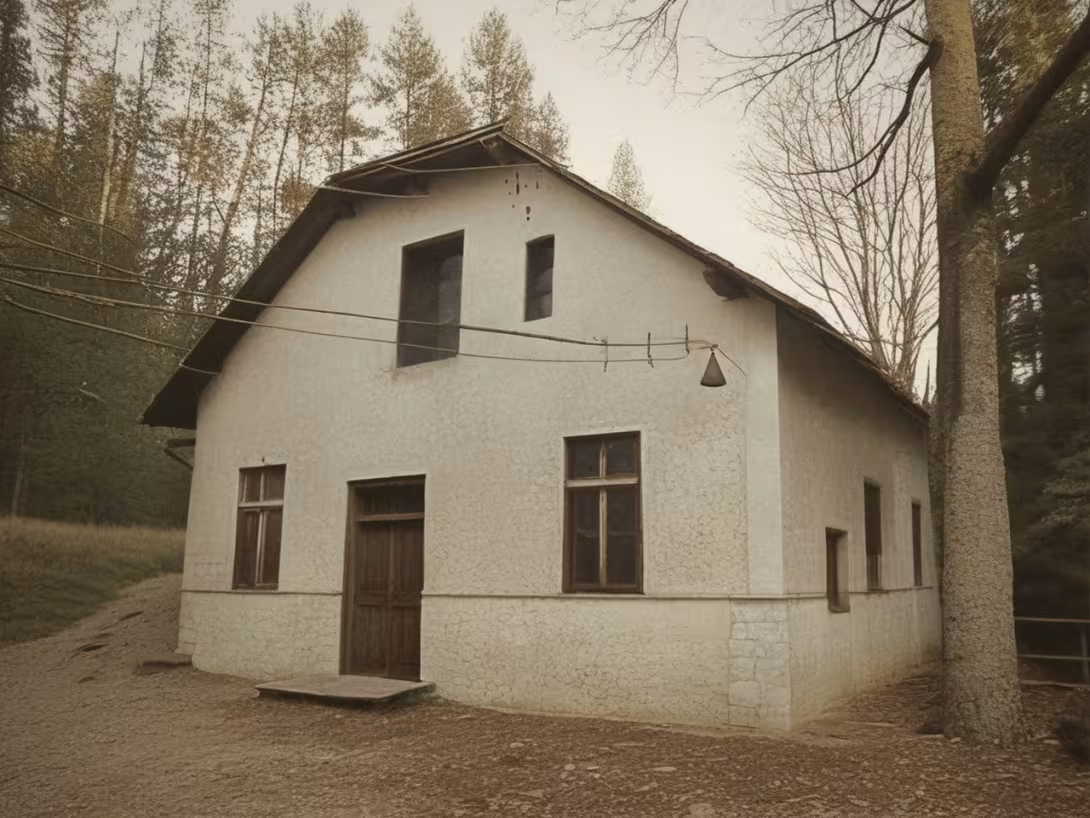
The historical appearance on the left is an AI-generated visualisation and serves as inspiration only.
Historical milestones
- 1912
- The position of a small hydropower plant on the river Vydra.
- 1995
- The power plant has become a cultural monument.
Architectural development
The construction was built in 1912 and uses the drive of the original Čechek saw. The building is built on the river Vydra near the original pillar operation.
Historical events
In 1912, the power plant was built on the river Vydra. Since 1995, the power plant has been recognised as a cultural monument.
Points of interest
- The small power plant Čenkova saw was built in 1912. Since 1995, it has been protected as a cultural monument. - It is an important example of early regional electrification and development of infrastructure for the use of hydroenergy. - The creation of the building comes from the time of the expansion of industrial electrification in the early 20th century. - Key milestones include construction in 1912 and subsequent registration in the register of cultural monuments in 1995.
Guide
Show guide text
This text was created by artificial intelligence and has not been editorially reviewed. It may contain inaccuracies.
Welcome to one of the most important technical symbols of this region. You are standing in front of the small water power plant Čeňkov saw and right now you are in a place where the untamed force of nature meets with human ingenuity. Before we take a more detailed tour, please stop for a moment and observe the surroundings. Listen to the noise of the river Vydra, which flows just past you. Feel the humidity of the air and the rhythm of the flowing water, because it is this constant movement of fluid that gives life to this place and has driven technological progress in the region for over a century. In front of your eyes is a building that at first sight can act as a simple part of the landscape, but it is actually an important witness to the times when the world around us began to change because of the invisible power of electricity.
Now let's go deeper into time and understand why this place is standing right here. To understand the importance of this construction, we must return to 1912. Imagine the time, the period of great change and technological rise. This year, this small hydropower plant was built on the river Vydra. But her history isn't just about the year of the plant. Its roots go even further, to the original operation that worked here as a saw. This power plant was not built randomly, but was located only a few dozen meters downstream from the original pillar operation, so that it could use the energy of the water that had already been delivered at this site thanks to the mill.
Notice how this building is closely connected to the water flow. The key element you see here, which is absolutely essential to understanding the whole system, is the extended drive. This water channel was not originally meant for electricity generation, but it was used to guide water to the mill. However, when it came to the possibility of using water to produce electricity, this current drive became the basis for a new era. It's a fascinating example of how people could adapt older technologies and infrastructure to the needs of the modern world. So this power plant is not just a separate object, it's part of a wider technological chain that was gradually evolving here.
Now pay attention to the architecture itself and the technical nature of this place. Although we don't know the names of the particular architects who designed this structure, we can see its purpose from its form. It's an object whose main value is its function. Feel how the building is integrated into the field and how it respects the flow of the river. When you look at the building, you can realize that each of its elements had to be designed with respect to constant contact with water and the need to transfer energy. It is a clean example of a technical building from the beginning of the twentieth century, when emphasis was placed on resistance and functionality. See how the structure floats over the water flow and is connected to the drive. This symbiosis between stone, water and construction creates a unique atmosphere where technology becomes part of the natural environment.
Maybe now you can think of who was in these areas. Although historical records did not verify the names of the builders or individual workers who kept the power plant running here in the morning, their presence in every stone block and in every detail of the construction we clearly feel. This power plant is a symbol of the entire period of industrial expansion. Imagine the people who first saw the power of the Vydra light in nearby houses or factories in 1912. They were people who were building the foundations of modern infrastructure, which we now take for granted, but which was a revolutionary advance at the time.
I want to reveal to you now one very important thing that gives this place weight. The small water power plant Čenkova saw is not just an old technical object, which simply stands by the river. Since 1995, this building has been officially protected as a cultural monument. This means that its value for all of us is recognised at a high level. This is proof that even this small, local construction can have global significance as an example of early regional electrification. It is a monument to the time when humanity began to rely more heavily on the use of hydropower and when infrastructure began to transform into complex systems that allowed us to live modern life. This power plant is living proof of how technology developed in the early last century.
When you look at this object, realize how rare it is to be able to stand right in front of such a piece of history. We often focus on large castles or cathedrals, but it is these small, functional objects such as the Čeňkov saw that tell us the most honest stories about how the life of ordinary people really changed and how the industry developed. This power plant is a small but extremely important link in the history of technological development in our region.
Now that you know the story of this place, I'll leave you with your own impressions. I suggest you continue your walk along the river and see how this historical monument has been incorporated into the current landscape. You may see yourself in a different light when you look at the drive or the building itself and understand the invisible force that has been flowing here since 1912. Thank you for spending this moment with us and for being interested in the history of this special place. We wish you a beautiful and inspiring next trip around Rejštejna. Goodbye.
Tips for visitors
The best time to visit the small hydropower plant Čeňková píl is in the spring or autumn period, when vegetation is still naturally beautiful and fewer people are there. Sunshine days are ideal for exploring this historic place.
Parking can be found near the village Rejštejn where you can leave your vehicle. For those travelling by public transport, it is important to verify the current connections and possible stops in the Rejštejn area.
When visiting, it is recommended to take protective clothing with you, because weather suggests the terrain may be wet or wet. Photos and camera to capture the beauty of this historic place are also a good idea.
For photography it is best to wait for the morning or evening light that gives the landscape magic and creates beautiful shadows. Remember also try to capture the river Vydra from different angles for the best effect.
In the vicinity of the small hydropower plant is located the historic castle Rejštejn, which is an ideal place to explore for those who like history and architecture. For families with children, this place is particularly interesting because of its legends and stories.
Businesses nearby
Do you run a restaurant, accommodation, shop, museum, rental, wellness or other visitor service near this monument? Show yourself directly to the people heading to it — this is how they will see you in the app and on the web:
Nearby
The river Vydra and the municipality Rejštejn.
Accommodation nearby
Themed route
1. the village Rejštejn, the village, The journey begins in this village, which offers a quiet environment for the start of the trip. 2. The river Vydra, the water flow, the course of the route will guide you along this stream, which forms the natural path to the destination. 3. malá vodní elektrárna Čeňkova pila, Water Works, The main destination of the trip is a unique technical monument using water power.
Seasonal recommendations
Spring in Čeňek's mill brings a fine light that is reflected in calm water and highlights the green shores of forest paths. In these months, nature wakes up, flowers along the stream bloom and birds fill the valley with their singing. We recommend arriving early in the morning when there are still few visitors and the atmosphere is quiet; It is advisable to dress in layered clothes because the weather can be variable, and not forget the fixed shoes that hold well on a moist stone. The number of tourists may increase in the late afternoon, so it is appropriate to schedule a visit before noon.
Summer in the Brussels hydropower plant is characterized by bright sunlight, which illuminates stone structures and creates a game of light and shadow on the water surface. The surrounding forests are full of green clothes and warm air attracts to pleasant walks along the river. In the main summer season there are more visitors, which is why it is reasonable to arrive at the opening, most often in the midday, and avoid crowds. We recommend light, breathable clothes, sun cap and sunscreen as well as a waterproof jacket in case of a sudden shower. In the late afternoon, the road can be slippery, so it is advisable to have firm shoes with good grip.
The autumn period in Čeňka saw offers golden leaves that are reflected in the water and creates a romantic atmosphere. The weaker sunlight and colder air underscore the historical nature of the power plant, while the forest trails are littered with fallen leaves, adding soundproofing. It is best to visit the memory in the late morning, when there is still enough light and the crowds are smaller. Get dressed in warmer layers, such as flannel shirt and jacket, and don't forget the tight shoes with good support, because autumn leaves can be slippery. The opening hours may be shorter in the afternoon, so it is good to check the current information before the trip.
Winter in the Brussels hydropower plant is characterized by a quiet, almost mystical environment where ice crystals settle on stone walls and the water surface turns into a mirror under low sun. In advent time days are short and temperatures are low, which reduces opening times and increases the need for warm clothes. We recommend arriving in the early morning hours when there is still light and the crowds are minimal; Laminated clothing, warm cap, gloves and waterproof shoes with good insulation are suitable to keep the feet dry on frozen stone. In the late afternoon, the journey may be snowy and dangerous, so it is reasonable to plan a departure before it gets dark.
Visualizations and artistic views


The visualisations are generated by artificial intelligence and serve as inspiration.
Photos from the area
Real photos taken near the monument


Zdroj a licence jsou uvedeny u každého snímku.
Tips from visitors
No tips yet. Be the first!
Log in and add your tip.
Sources and literature
Fotografie: Krabat77 / CC BY-SA 3.0 — Wikimedia Commons. The author and licence also appear when you hover over the image.
Faktickým podkladem tohoto textu byl článek na Wikipedii, jehož autory jsou přispěvatelé Wikipedie. Článek je dostupný pod licencí CC BY-SA 4.0.
Location on the map
More monuments – Rejštejn
Show all in the municipality
Příběhy a pověsti
Legendy, pověsti a příběhy spjaté s touto památkou

Fotografie návštěvníků
Zatím žádné fotografie. Buďte první, kdo přidá fotografii z návštěvy!
Přihlaste se a přidejte svou fotografii nebo hodnoťte.
Za ověřenou návštěvu v aplikaci získáte víc bodů — poznáme podle GPS, že jste na místě.
Reviews and comments