



Spaunova vila Villa
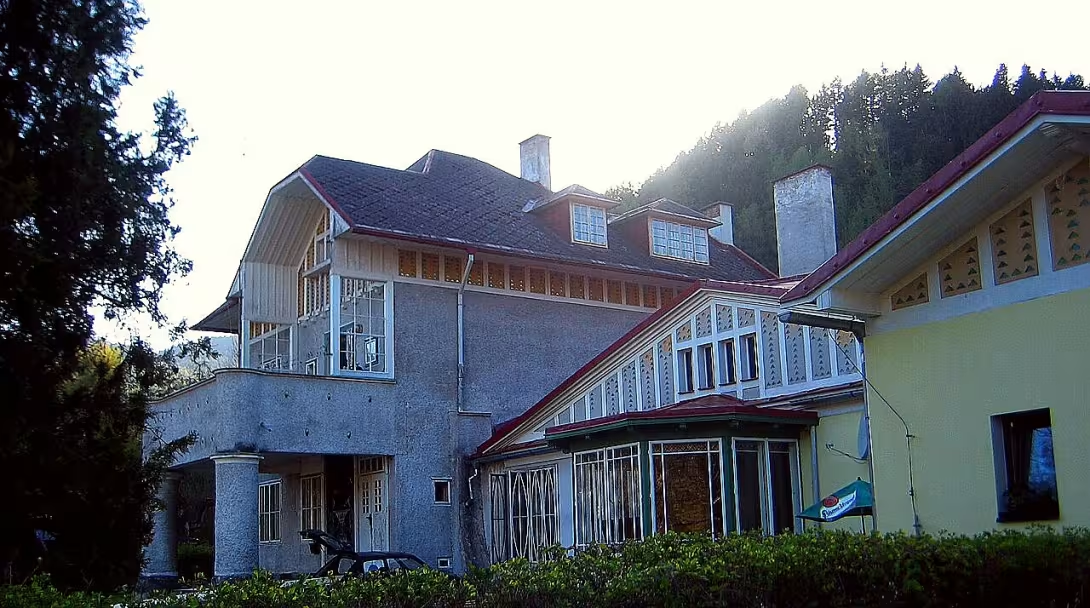
Spaunova vila in Rejštejn in Klatovsk is a representative Art Nouveau. The project was developed by the Vienna architect Leopold Bauer after 1903. The building has been protected as a cultural monument since 1958 and represents an important link between industrial business and progressive artistic sensations of the early 20th century.
The villa was established as a family residence for Maximilian von Spauna, the owner of one of the most important glass smelters in Austria-Hungary, which was located in the nearby Monastery Mill. A personal acquaintance of the owner with architect Leopold Bauer, who lived in Monasterské Mlýn in 1903, led to the construction. The design of the villa and its interior was conceived as a representative work. Part of the underground entrance hall was created by rebuilding an older building.
The construction features the style of Art Nouveau Classicism and combines elements of Vienna's geometrical Art Nouveau with links to traditional Šumava architecture. The floor plan of the building is approximately rectangular and the staircase divides it into a representative entrance hall and one-story living area. The south garden-oriented facade is complemented by a forward terrace and a distinctive rake shield with a five-part window in the attic. Architect Bauer incorporated elements of irisex glass into the plaster, which was the main product of Spaun Glass. Decorative details include oval fittings on the railings of terraces and geometric patterns of triangular tiles on the shields. The original red paint of the rafters was to refer to local folk architecture.
The interior was equipped in the spirit of the Vienna geometrical Art Nouveau. On the ground floor there was a bedroom with a bay and a bathroom covered with white and blue iris tiles. Similar glass tiles were also used to lining the fireplace in the lobby. In 1906, a coloured glass mosaic was set at the entrance by the painter and graphic artist Richard Teschner, which represents the fountain, peacock and butterfly.
Maxmilián von Spaun inhabited the villa until his death in 1909. It is buried in a cemetery in Rejštejn, where there is a tombstone designed also by Leopold Bauer. The foundry in Monasterské Mlýn, which was closely linked to the villa, ceased its activities in 1947. The original equipment of the residence has until today been preserved only in tiny remains and is known mainly from period photographs.
Currently, the villa is a private building and visitors can only admire it from the outside. The monument remains a valuable sign of close cooperation between the industrial entrepreneur and leading artists of the Vienna Art Nouveau in the early 20th century. For those interested in the history of glassmaking, it is a suitable addition to the exhibition visit in the Museum of Šumava in Kašerské Hory, where a collection of products of the Spaunov glassworks and part of the owner's library are stored.
Historical milestones
- 1903
- The opening of the villa according to the Leopold Bauer project.
- 1906
- The planting of a glass mosaic with a fountain motif by Richard Teschner.
- 1958
- The villa was declared a cultural monument.
Architectural development
The villa was built on a rectangular floor plan, with part of the entrance hall created by the reconstruction of an older ground-floor building. The exterior is decorated with elements of irisex glass, geometric patterns of tiles and a raked shield. The interior was equipped in the spirit of Vienna Art Nouveau, including a bathroom with iris tiles and a fireplace lined with glass.
Historical events
1903: Visit Leopold Bauer and start the villa project. 1906: The planting of glass mosaic by Richard Teschner. 1958: Declaration of the Villa for Cultural Heritage.
Owners
Maxmilián von Spaun (1903- 1909)
Points of interest
- The villa has been protected as a cultural monument since 1958. It represents a document linking industrial business to the artistic sensations of the early twentieth century. - The architect put pieces of iris with shiny glass in the plaster, which was the main product of the owner's glass factory. - The entrance hall is decorated with a 1906 coloured glass mosaic that displays a fountain, peacock and butterfly. - Part of the underground entrance hall was created by rebuilding an older building. - The owner of the villa is buried in the cemetery in Rejštejn, where there is a tombstone designed by the same architect who designed the villa.
Guide
Show guide text
This text was created by artificial intelligence and has not been editorially reviewed. It may contain inaccuracies.
Welcome to Rejštejn, in front of one of the most famous monuments of this area - Spaun villa. In front of you is an elegant building with a clear roof shield, which reminds you of the airiness and lightness. The villa boasts a unique design, which is also proof of artistic feeling and industrial success.
Let's dive into the history of this villa. In 1903 the construction started according to the design of Viennese architect Leopold Bauer. It was Maxmilián von Spaun, the owner of a major glass mill that wished to have a seat that would not only serve as a residential space, but also as a symbol of its business success. The villa is therefore located near the glassworks, which reflects the link between industry and art.
Take a look up at the rafters of the villa. Here you can see the elements of the Vienna geometrical Art Nouveau which the architect Leopold Bauer played into his design. The villa also refers to traditional Šumava architecture, which makes it a unique blend of modernity and tradition.
The entrance hall of the villa is decorated with a coloured glass mosaic with a fountain motif by Richard Teschner. This detail was completed in 1906 and still draws attention to its beauty and complexity.
Maxmilián von Spaun, owner of the glassworks, and architect Leopold Bauer are key personalities associated with this monument. Their cooperation led to the creation of a unique masterpiece.
The interesting thing is that pieces of iris with shiny glass - the main product of the owner's glassworks - were inserted into the plastered walls of the villa. This detail does not only decorate the interior, but also resembles the link of the glassworks on this site.
In 1958 the villa was declared a cultural monument and has since been protected as an important historical object. It represents a document linking industrial business to the artistic sensations of the early twentieth century.
Look around and enjoy the atmosphere of this masterpiece. We are preparing you for the next part of your visit, where we will introduce you to other attractions of Rejštejna. Thank you for your concern and we hope you like it here.
Tips for visitors
The best time to visit is late spring or the beginning of autumn, when surrounding Šumava nature is the most photogenic and weather wishes to walk along the Otava river. You can avoid high-end summer spikes.
We recommend fixed shoes for movement around the villa and in adjacent terrain. Don't forget to pack your camera because Art Nouveau details of the villa and its facade will excel best with soft morning or afternoon light.
In the nearby area within 30 minutes of the trip you can visit the Monasterské Mlýn, explore exposition in the Museum of Šumava in Kašerské Hory or walk along the picturesque river Otava.
For families with children, the location is suitable as a starting point for easy walks in nature. We recommend to combine a tour of the villa with a visit to the museum, which offers interesting stimuli even for younger visitors.
Frequently asked questions
Can the monument be visited?
Some buildings of this kind are open for guided tours, others serve another purpose or are privately owned. We have not verified whether and when this monument is open – please ask the operator.
What are the opening hours and admission?
We have not verified the opening hours or admission. Current information is published by the operator.
Where is the monument?
Location: Rejštejn, Plzeňský kraj. The map on this page shows the exact spot.
Why is the monument protected?
It is listed in the Central List of Cultural Monuments of the Czech Republic as a cultural monument (register no. 1000139581).
Businesses nearby
Do you run a restaurant, accommodation, shop, museum, rental, wellness or other visitor service near this monument? Show yourself directly to the people heading to it — this is how they will see you in the app and on the web:
Nearby
Klášterský Mlýn, Muzeum Šumavy v Kašperských Horách, řeka Otava.
Accommodation nearby
Themed route
1. Museum of Šumava in Kašimské Hory (museum) - Here you will find out about the history and nature of the entire region. 2. Monastic Mill (Mill) - Historical building, which represents the old water management in this area. 3. Spaunova vila (villa) - The main destination of the trip, which will capture its beautiful architecture and interior equipment. 4. river Otava (river) - An ideal place for relaxing and walking in nature along the flow of water.
Seasonal recommendations
Spring: In the spring season Spaunova vila is surrounded by flowering gardens that provide a live color shine instead. Sun rays illuminate architecture and give the stones a gentle tone. This is the perfect time to visit, because you will avoid summer crowds. It is recommended to bring light clothes with the possibility of adding layers to cooler noon and morning. The best time to visit is in the afternoon when the sun lights up everything.
Summer: Summer brings long days full of light and heat, causing Spaunova vila to gain beautiful colors. Nature is in full bloom, and gardens are the most beautiful. Days can be very hot, so it is recommended to visit early morning or in the shade of late afternoon. Bring with you sunglasses and UV protection cream. In the main summer season you can expect more visitors, so it is good to come early.
Autumn: Autumn offers a calm atmosphere with fine colour shades of leaves and sunlight. The gardens turn into yellow, orange and red, giving Spaun's villa a unique beauty. This is the perfect time to visit if you are looking for a place without big crowds. It is recommended to bring clothes suitable for colder autumn days and in the morning. The best time to visit is in the afternoon when the sun still lights up the garden.
Winter: In winter, Spaunova vila is transformed into a place with a quiet and quiet atmosphere. The gardens are without leaves, which allows you to see architectural details of the building. The sun's rays light the stones in fine light. In winter the opening time is shorter and visitors are rare, so it is advisable to come early to enjoy places without other people. Bring warm clothes and maybe a protective cover for your feet if the weather is freezing. The best time to visit is in the shade of the afternoon, when the sun lights everything around.
Visualizations and artistic views


The visualisations are generated by artificial intelligence and serve as inspiration.
Photos from the area
Real photos taken near the monument

Zdroj a licence jsou uvedeny u každého snímku.
Tips from visitors
No tips yet. Be the first!
Log in and add your tip.
Sources and literature
Photos: Jiří Novák / CC BY-SA 3.0 — Wikimedia Commons. The author and licence also appear when you hover over the image.
Faktickým podkladem tohoto textu byl článek na Wikipedii, jehož autory jsou přispěvatelé Wikipedie. Článek je dostupný pod licencí CC BY-SA 4.0.
Location on the map



Příběhy a pověsti
Legendy, pověsti a příběhy spjaté s touto památkou
Fotografie návštěvníků
Zatím žádné fotografie. Buďte první, kdo přidá fotografii z návštěvy!
Log in a přidejte svou fotografii nebo hodnoťte.
Za ověřenou návštěvu v aplikaci získáte víc bodů — poznáme podle GPS, že jste na místě.
Reviews and comments