



Radkovská pec Building
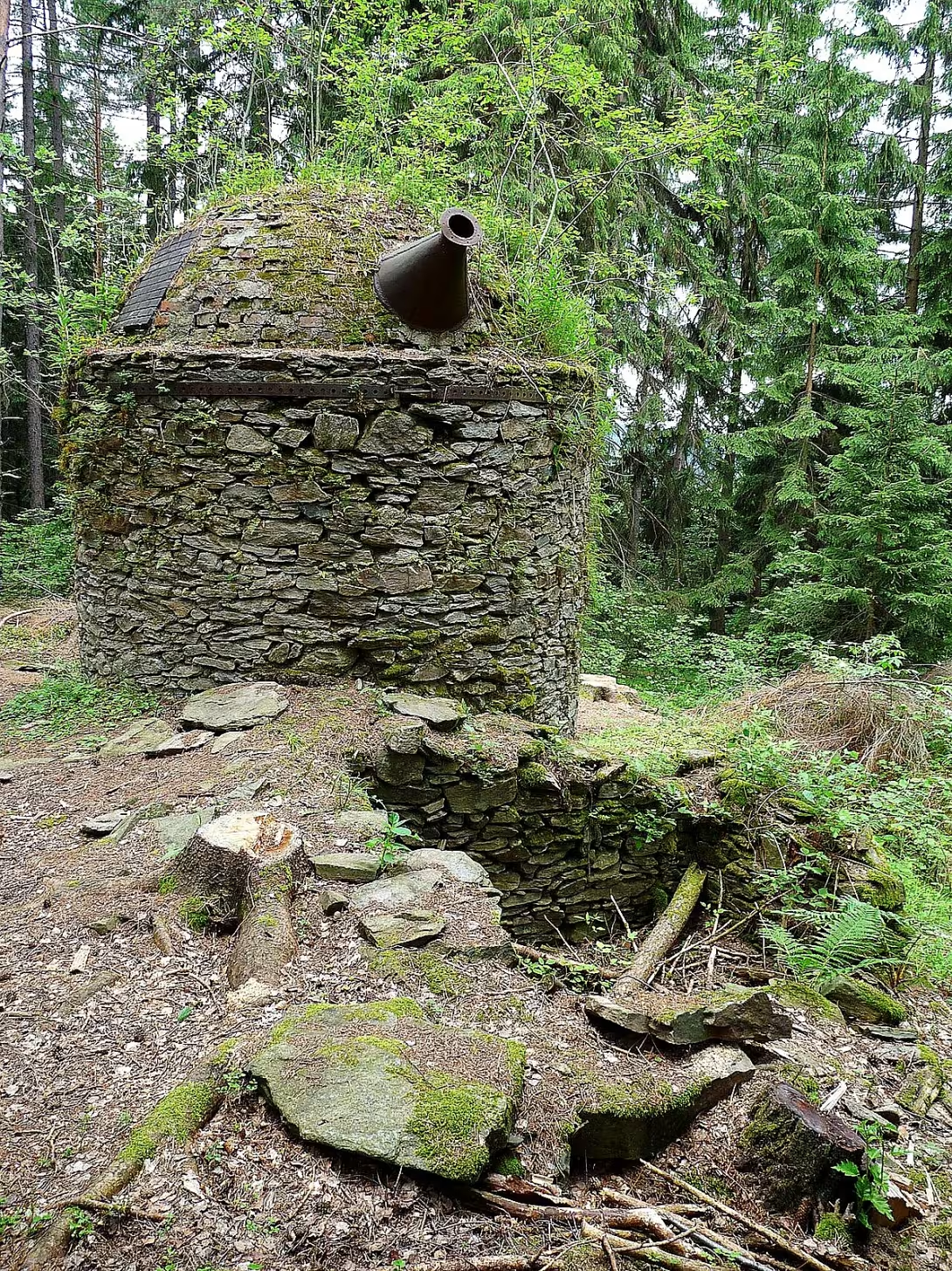
Radkovská pec is a stone building in the forest near Big Radkov, also known as Smolná. It is remarkable for its technical value and unclear purpose. It is located north of the green and blue marked tourist trails between Little and Big Radkov.
This building is a technical monument from the beginning of the 20th century. It has a circular plan with an outer circumference of 11,2 m and a height of 3,6 m The walls are 47 cm wide and are finished with dome. In the vicinity there are remnants of several other buildings, perhaps peeling pools.
According to tradition, it was built by a barber from Vienna who married into the region. However, it is not known whether he brought plans for the construction and manufacture of cosmetics with him or whether he obtained them later. He may have had business ties with a businessman from Vienna, who gave him only building plans, but not manufacturing plans.
Another version of the furnace is that it was interrupted by World War I events. Another version admits that there were building errors due to a misunderstanding of the plan or that the plans themselves contained errors. In any case, there is no evidence that the furnace has ever been operational.
The furnace is remarkable by its architecture and technical implementation. Its circular plan and dome-ended walls make it a unique building in the forest near Big Radkov. Its building material is stone, which is another interesting thing.
The owner of the kiln is the municipality Rejštejn. Her fate is unclear, but it is known to be a technical monument. It is currently accessible for tourists who can reach it by green and blue marked tourist path.
Overall, Radkovská pec is a remarkable building worth visiting. Its unclear purpose and technical design makes it an interesting and unique monument.
Historical milestones
- around 1900
- _
- 1914
- World War I
- 20th century
- The furnace has been completed
- 20th century
- The furnace was built
- present
- Pec is accessible for tourists
Architectural development
The construction is a technical monument. It is said that the oven was built by a barber from Vienna, who married himself to the region, but it is not known whether he has brought plans for the construction and manufacture of cosmetics with him or whether he has obtained them later. It is possible that he had business ties with a businessman from Vienna who handed him only building plans, but not production plans, and could be a fraud.
Points of interest
- The furnace is remarkable for its technical value and unclear purpose. - She's remarkable for her architecture and engineering. Her building material is stone. - The owner of the kiln is the municipality Rejštejn. - The furnace is accessible to tourists.
Guide
Show guide text
This text was created by artificial intelligence and has not been editorially reviewed. It may contain inaccuracies.
Welcome to one of the most interesting and mysterious buildings in the area. You're standing in front of the Radkov furnace. If you came here on a green or blue-marked hiking path that leads you between the villages of Little and Big Radkov, you probably noticed this building from a distance, as it stands in the landscape north of this route. Now that you're with her directly, pay attention to her massive and unusual form. In front of your eyes is a stone structure that acts very firmly, almost indestructible, as if it were part of the very ground on which it stands. Before you go any further, I suggest you stop and just feel in silence the atmosphere of this place where the human work is connected to nature.
Now let's look deeper into time and try to understand where this building came from. Even if we don't know the names of the particular creators or the names of the architects who designed this project, we can go back to the time it was made thanks to historical records. This furnace was built in the early twentieth century, probably around a thousand nine hundred. It's a time of great change, a time when the world was changing rapidly, when technology was developing, and when people were trying to control the forces of nature with new machines and procedures. This building was completed during the twentieth century and stood at a time when the world was preparing for major shocks, as was the First World War in a thousand nine hundred fourteen. Although the war took place in other parts of the world, its shadow touched every corner of human existence at that time. However, this furnace remains a symbol of the time of technical progress and human effort to create something functional and lasting.
Now pay attention to the architecture itself and to what you're seeing right in front of you right now. Look at her shape. It's not a building with sharp corners or complex lines. It is a building with a circular plan, which gives it a very harmonious and balanced look. If you started measuring its outer circumference, you would find that it is more than 11 meters, exactly 11.2 meters. Its height is three meters and sixty centimeters, which makes it a structure that is compact, but also looks noble. Notice the thickness of its walls. They're incredibly strong, because they're four-seven centimeters wide. This mass was obviously deliberate, probably to withstand the high temperatures or the great pressures that could be applied inside. The whole building is finished with dome, thus it has the shape of a hemisphere, which is technically a very demanding and elegant way of closing such circular construction. This whole object is made of stone, which is a material that dominates here and which gives it its unmistakable texture and weight.
If you look around now, you'll notice that this furnace is not standing alone in the void. In the vicinity you can see the remains or perhaps just the foundation stones of several other structures. These remains raise further questions. Could it have been part of a larger whole? Perhaps the peeling pools that would be closely related to the original purpose of the furnace. This link would suggest that there has been some more complex technological processing of raw materials in the past.
And this is where we come to the greatest mystery of this place. Although Radkovská pec is technically very advanced and its implementation is at a high level, no one knows for certain what it was used for. What was its real purpose? Was it an industrial process, chemical production, or maybe something else that people can't easily name anymore? This uncertainty is what makes this place so fascinating. It's a technical monument that tells us something about its ability to resist time, but it also tells us something about its true nature. It's like an unfinished sentence in history waiting for an explanation.
This building belongs to the village Rejštejn and is now accessible to all interested people in history and technology, as well as to all of you who went for a walk. It's a place that encourages you to think and observe the details.
I hope that this view of Radkovské kiln enriched you and helped you better imagine the world that existed here over a hundred years ago. Don't forget to look at the other details of the landscape as you travel around again, which can tell you their own hidden stories. I wish you a beautiful and peaceful journey along your paths. Goodbye.
Tips for visitors
The best time to visit is autumn or spring, when the forest nearby offers the most beautiful colors and pleasant atmosphere.
The location is available by car and by public transport; Check the current connection in the search engine.
In the way we recommend taking comfortable shoes suitable for the forest and plenty of drinking water.
For the best photos we recommend morning or late afternoon light that highlights the texture of stone walls and the circular shape of the building.
In the surrounding area you can walk through the forest, which is also ideal for families with children who can observe old stone architecture in nature.
Frequently asked questions
Can the monument be visited?
The building is in use (offices, a school, shops and the like). The interior is generally accessible only during operating hours and tours are not usually offered; we have not verified the details. You can see the exterior from the street.
Where is the monument?
Location: Rejštejn. The map on this page shows the exact spot.
Why is the monument protected?
It is listed in the Central List of Cultural Monuments of the Czech Republic as a cultural monument (register no. 1654191516).
Businesses nearby
Do you run a restaurant, accommodation, shop, museum, rental, wellness or other visitor service near this monument? Show yourself directly to the people heading to it — this is how they will see you in the app and on the web:
Events nearby
Zdroj akcí: otevřená data měst a obcí ČR (Národní katalog otevřených dat) a kalendář akcí Národního památkového ústavu.
Nearby
les
Accommodation nearby
Themed route
Thematic cruise route around Radkov kiln
1. Radkovská pec (building) Type: Historical building Why is it worth a visit: This ancient stone building is one of the oldest and best preserved wood-burning furnaces in Bohemia. It is an ideal place for those who like the history of industry and technology.
2. Forest trail around Radkov kiln Type: Walking path Why is it worth a visit: A short walk in the surrounding forest offers an opportunity to relax and enjoy the silence of nature. It's an ideal way to bury yourself in peace and rest after visiting a historic building.
3. Forest group of trees Type: Natural attractions in the forest environment Why is it worth visiting: This group of old trees is not only a beautiful example of nature, but also provides shelter for many species of birds and other animals. It's an ideal place for nature lovers and photographers.
4. Forest Circle Type: Natural area in forest Why is worth a visit: This circle of planted trees is not only visually engaging, but also offers the possibility for a short meditation and reflection in a quiet atmosphere. It's a place that inspires thoughts about the cycle of life.
5. Forest Spring Type: Spring in forest environment Why is worth a visit: This natural spring is not only the origin of fresh water but also offers the possibility for a short pit stop. It's a place full of peace and harmony with nature.
This route combines the historical element of Radkov kiln with the natural surroundings of the forest, making it ideal for those seeking a balanced cruise experience.
Seasonal recommendations
Spring: When spring season comes, the surroundings of Radkovska kiln in Rejštejn are alive thanks to the first flowers and fresh air. The light is fine at this time and does not shine, which is ideal for observing tiny elements of the old building. I recommend you take several layers of clothing because the wounds are usually cold, but the afternoon can be nice and warm. The best time to walk around the building is in the morning when nature is most active.
Summer: In the summer months the area is full of thick green leaves and the sun hits the roof of the building directly and strongly. The mood is alive and warm, which accompanies very long days. It is best to wear light and breathable clothes for a visit. If you're planning on staying out longer, I suggest you wear a headgear, because it can get pretty hot in the morning.
Autumn: Autumn brings gold and brown to the region, which excel beautifully at the historic building. The fog often appears in the morning, which gives the place a mysterious mood. It's good to have a waterproof jacket and warmer clothes with you because the weather can change quickly. The best place to visit is in the afternoon when the sun shines low and colored leaves.
Winter: Winter time turns the surroundings into a quiet and peaceful landscape, often covered with snow or freeze. The day is short and the light is cold, which highlights the shapes of the building in the background of bare trees. It is necessary to take a very warm jacket, firm shoes and gloves to make you cold not surprised. The best time for observation is around noon, when the light is the most.
Visualizations and artistic views

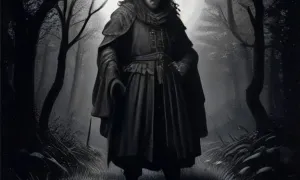
The visualisations are generated by artificial intelligence and serve as inspiration.
Tips from visitors
No tips yet. Be the first!
Log in and add your tip.
Sources and literature
Photos: Czeva / CC BY-SA 3.0 — Wikimedia Commons. The author and licence also appear when you hover over the image.
Faktickým podkladem tohoto textu byl článek na Wikipedii, jehož autory jsou přispěvatelé Wikipedie. Článek je dostupný pod licencí CC BY-SA 4.0.
Location on the map



Příběhy a pověsti
Legendy, pověsti a příběhy spjaté s touto památkou
Fotografie návštěvníků
Zatím žádné fotografie. Buďte první, kdo přidá fotografii z návštěvy!
Log in a přidejte svou fotografii nebo hodnoťte.
Za ověřenou návštěvu v aplikaci získáte víc bodů — poznáme podle GPS, že jste na místě.
Reviews and comments