






Malý Buquoyský palác Palace
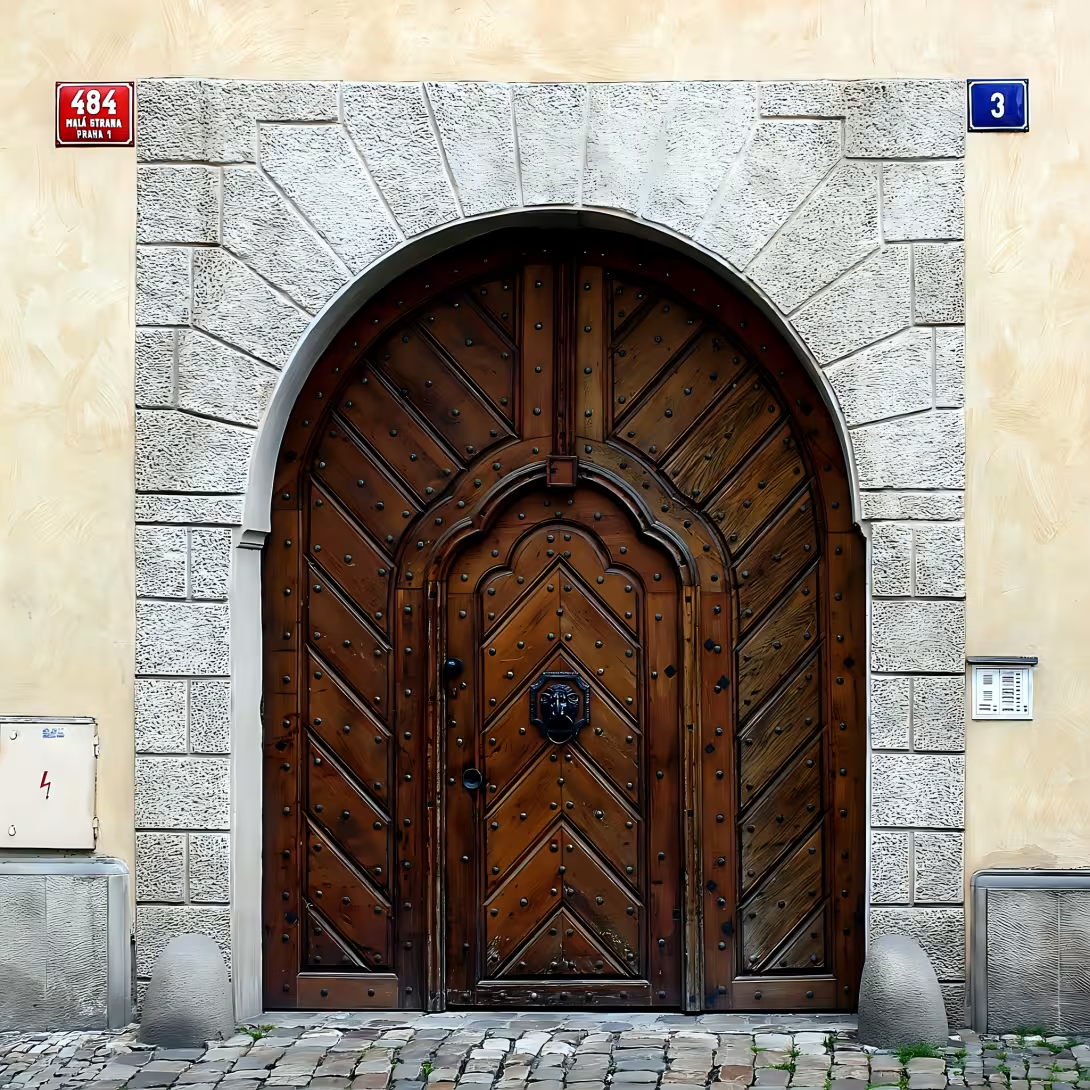
Little Buquoys The palace is a royal palace in the historical part of Prague Malá Strana. This architectural gem, which was originally built in 1598 as the garden house of Melchior Gniesen, has experienced many changes in ownership and significant changes for centuries. Today it stands next to its larger counterpart in Grand Prior Square, which is an integral part of the cultural heritage protected since 1964. The rich history of the palace is intertwined with important Czech families such as Rederni, Černín z Chudenic, Vraždův z Kunvaldu and Buquoyové, which makes it an important landmark in Prague.
The origin of the Little Buquoy Palace dates back to 1598, when the Chancellor of the Maltese Order Melchior Gniesen commissioned its construction as a garden house. This period was characterized by the flourishing of Renaissance art and architecture throughout Europe, which influenced the structural elements of the palace. The late Renaissance style is evident in its initial architectural properties. After the Battle of White Mountain, the property changed hands when it was confiscated from Kryštof z Redernu and acquired Černín z Chudenic. Then, between 1621 and 1721, the Order of Malta used the palace as a graduate, a place for training its members.
Architecturally, in the 18th century, when the little Buquoy Palace was built by Vraždův z Kunvaldu, it underwent significant changes. This transformation presented remarkable features such as the monumental staircase decorated with plastic plastics created by the Inegation Platzers. The connection of the palace to its larger counterpart in 1816 created an integrated architectural complex which increased its historical and aesthetic importance.
During his history he saw Little Buquoys Palace of various owners who left their mark on the property. After serving as a graduate of the Order of Malta, he became part of the property Vraždův z Kunvaldu in the 18th century. In 1816, the palace was built by the Buquoy family, which connects it to a larger Buquoy palace nearby. The combination of these two structures not only integrated them architecturally, but also symbolized their common historical path.
The Palace was a silent witness to many events and changes over the centuries. His Baroque reconstruction in the 18th century added layers of artistic complexity and its integration with the larger Buquoy Palace in 1816 meant an important architectural milestone. In recent history, after World War II, the French embassy has leased the palace since its confiscation in 1945, adding an international dimension to its storied past.
Today, Little Buquoy remains The palace is evidenced by rich cultural tapestry and historical evolution of Prague. Visitors can appreciate its architectural beauty and immerse themselves in its layered history, which reflects the wider socio-political changes that have shaped Bohemia for centuries. The Palace is accessible to those who are interested in discovering Prague's heritage and offer information about the lives of the families that once occupied it and about its artistic transformations.
Little Buquoys The Palace is a remarkable example of Renaissance and Baroque architecture, embodying historical stories of its various owners and their times. Its preservation as part of the cultural heritage ensures that future generations can continue to explore and value this architectural treasure. Visitors are invited to experience first-hand elegance and history encapsulated inside their walls, making it a must-see destination in Prague's Little District Party.
Then and now
Drag the slider to compare how the landmark may have looked when it was built with the view today.
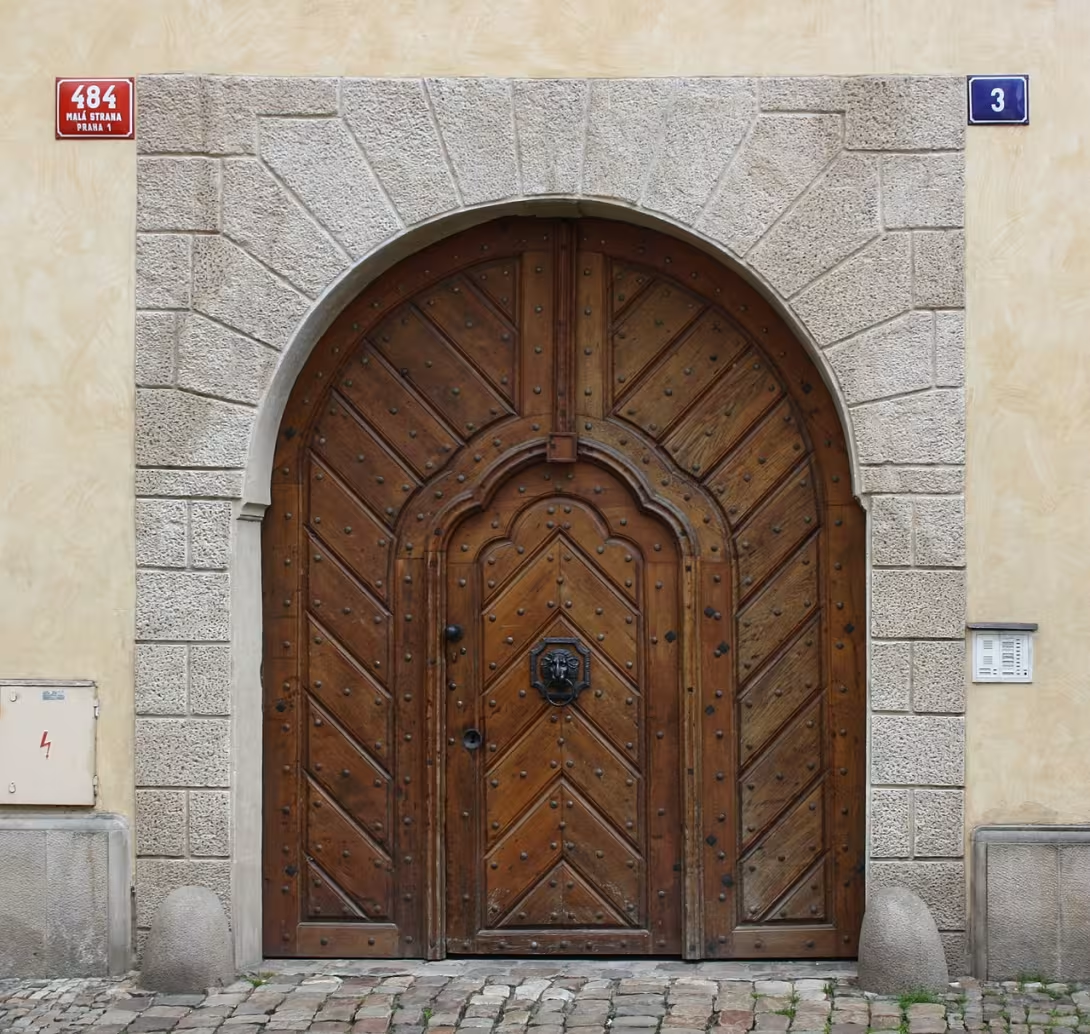
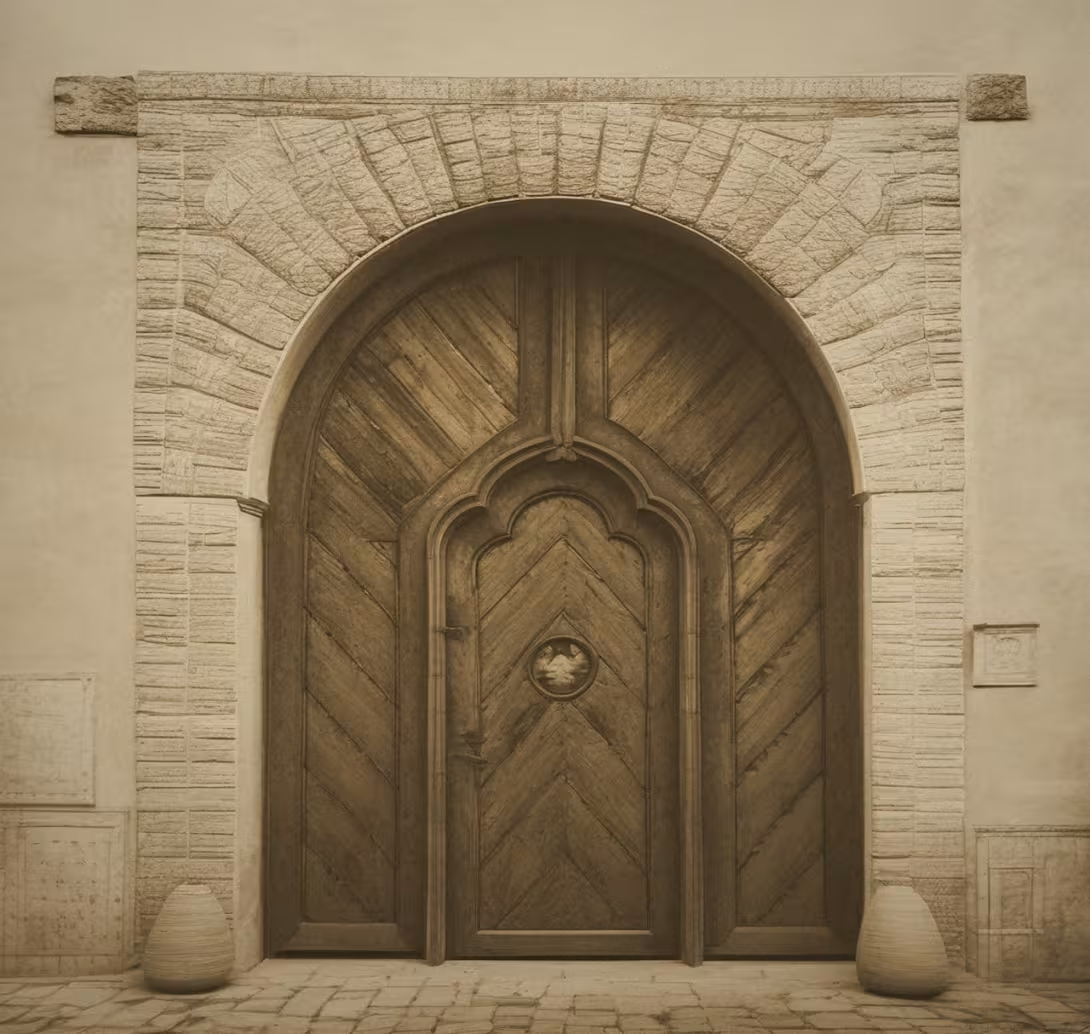
The historical appearance on the left is an AI-generated visualisation and serves as inspiration only.
Historical milestones
- 1598
- Melchior Gniesen construction as a garden house.
- 1621
- He became a graduate of the Maltese Order.
- 1816
- Connected to a larger Buquoy Palace.
Architectural development
Initially built in late Renaissance style, Malý Buquoyský palác has undergone significant changes over centuries. In the 18th century it was reconstructed by Vraždův z Kunvaldu, where there is a monumental staircase with plastic plastics from the Ignac Platzer workshop. The palace was connected to its larger counterpart in 1816, which formed an integrated architectural complex.
Historical events
1598: Melchior Gniesen construction as a garden house.
1621-1721: Served as a graduate of the Maltese Order.
18th century: baroque reconstruction with remarkable features such as monumental staircase.
1816: Connection to the larger Buquoy Palace.
Owners
Melchior Gniesen z Kobachu
Post- White Mountain Defeat: Confiscation and Purchase by Cernín of Chudenice
1621-1721: Maltese knights
18th century: Vraždův z Kunvaldu
1816: Buquoyové
Points of interest
- Even though he was Little Buquoy The palace was recognised primarily for its architectural beauty, served as a graduate between 1621 and 1721, where members of the Order of Malta were trained, reflecting its multilateral historical role.
- Baroque reconstruction of the palace in the 18th century presented a monumental staircase with plastic plastics from the Ignac Platzer workshop, presenting art crafts of the era and attention to detail.
- In an interesting turn of history, after World War II, the French embassy began to rent out the Little Buquoy Palace in 1945. This international dimension adds a layer of diplomatic importance to its history.
- integration with the larger Buquoy Palace in 1816 not only integrated them architecturally, but also symbolized their common historical path, which represents an important milestone in Prague's architectural development.
- Despite the Kryštof z Redernu confiscation after the Battle of the White Mountain, Little Buquoys The Palace remains the central point for major Czech families such as Černín z Chudenic and later Vraždův z Kunvaldu, which has increased its lasting importance in local history.
Guide
This guide is narrated by a synthetic voice generated by artificial intelligence.
Show guide text
This text was created by artificial intelligence and has not been editorially reviewed. It may contain inaccuracies.
Welcome to the charming streets of Prague's Little Party district, where you now stand before the charming Little Buquoy Palace. This gem style invites you to a world where history and architecture intertwine elegantly.
Imagine a step back in time until 1598 when Melchior Gniesen z Kobachu represented this elegant garden house. It nestled here in the midst of the lively energy of Prague, began its journey as a private retreat, reflecting the tastes and desires of its creator. As you look at his facade, consider how the century has evolved, adapted to various transformations while maintaining its historical attraction.
The architecture of the palace is an open book for those who want to read it. Note the harmonious mixture of Renaissance elements that speak until art and craft flourished. While specific architectural details are not documented here, take a moment to appreciate the symmetry and elegance that defines this structure. The way light dances through its surfaces suggests untold stories, invites you to further explore.
During his history he played Little Buquoys The palace of the host of many influential personalities. In 1621 she turned into a graduate of the Maltese Order, which was his role until 1721. This period meant an important chapter in his history because the members of this noble order were trained inside these walls. Figures such as Kryštof z Redernu and Černín z Chudenic are woven into its narrative, each leaving an indelible mark on its reference.
An interesting aspect of the palace is the Baroque reconstruction of the 18th century. This transformation added layers to his character, mixing new styles with his original Renaissance roots. The result was a palatial set which not only excelled in the Mala Strana, but also deeply connected with its larger counterpart at the Grand Prior Square.
As you stand here, let your imagination wander the halls of time. Consider how this palace was more than just a building, it was a silent witness to history, customization and development while preserving its essence. Every stone tells a story, every corner has secrets waiting to be discovered.
We now invite you to further explore this historic neighborhood where every turn reveals another piece of Prague's rich tapestry. Thank you for joining us on this journey of time in Little Buquoy Palace. Let your visit arouse curiosity and wonder as you dive deeper into the heart of Prague. Safe ways to discover more hidden gems in this charming city!
Tips for visitors
The best time to visit Malý Buquoyský palác is at the end of spring or early autumn when the weather is pleasant, allowing you to fully appreciate its Renaissance architecture without crowds peak tourist season. During these months, the gardens surrounding the palace are particularly beautiful and provide a peaceful background for your visit.
For transport Malý Buquoyský palác is easily accessible by public transport or by car. If driving, there are parking options available in the surrounding area, although it is advisable to check local resources for availability as the spaces can be limited due to the popularity of the area. Public transit users will find several bus and tram lines that serve the district of Mala Strana, so it is advisable to get to the palace without needing a car.
When visiting, consider with you comfortable walking shoes as you wish to explore both the palace grounds and the surrounding attractions on foot. A camera is recommended to capture stunning architecture and picturesque view of Prague Castle in the distance. In addition, wearing a light jacket or sweater can be useful due to variable weather conditions, especially during transition periods.
Photography enthusiasts will find several places around Malý Buquoyský palác ideal for capturing their beauty. The best lighting is usually found in the morning when the sunlight gently illuminates the facade. The gardens offer picturesque views and are ideal for photography with historical background. Keep in mind all restrictions on photos that may be introduced.
As far as nearby attractions within 30 minutes, visitors can explore the larger Buquoy Palace, which is nearby and offers further insights into the rich architectural history of Prague. The area around Mala Side also provides a number of cafes and shops for a peaceful walk after your visit to the palace.
For families with children, Malý Buquoyský palác can be a pleasant trip because it offers both historical interests and beautiful gardens that are great for exploring. Let's take some snacks or a picnic with us if you're planning on spending time in the garden. Moreover, involving your children with stories about the history of the palace can make a visit interactive and unforgettable.
Businesses nearby
Do you run a restaurant, accommodation, shop, museum, rental, wellness or other visitor service near this monument? Show yourself directly to the people heading to it — this is how they will see you in the app and on the web:
Events nearby

Zdroj akcí: otevřená data měst a obcí ČR (Národní katalog otevřených dat) a kalendář akcí Národního památkového ústavu.
Nearby
The area is located on Malá Strana, is famous for its historical architecture and proximity to Prague Castle. In the vicinity there is a larger Buquoy Palace, which forms an important cultural place.
Accommodation nearby
Trips and activities nearby
Guided tours, tickets and activities nearby from GetYourGuide
Affiliate link: if you buy from the partner, we may receive a commission. The price for you does not change.
Search tours and activities →Themed route
Thematic cruise route: Malý Buquoyský palác and surroundings
1.Malý Buquoyský palác (Palace) - Type: Historical Palace - Proc stands behind the wall: This elegant baroque thumb is known for its architectural and beautiful interior, which gives away the rich history of the Buquoys family. This means that it may become part of a project to be carried out and that it will become part of the project.
2. St. Wenceslas Church (Church) - Type: Historical church - Stand for filling: Located on the Králové Náměstí Králové, this Baroque church is determined by the world's beautiful architecture and importance for smaller comunita. It is an ideal place for those to be appreciating historical building elements and peaceful products.
3. Royal Palace (Palace) - Type: Historical Palace - For reasons of difficulty: Even if it is a larger structure not Malý Buquoyský palác, the Royal Palace offers on the rich history and architecture of Praha. From another legal point of view, Little Strané should be covered by those intended for all other undertakings.
4. King's Tower (Tower) - Type: Historical tower - Stand for filling: It is located on the Králové Náměstí, which is written as a one-way value on the shallow total history of Prague. It is an ideal place for those who have an impact on the prospective right to the area and are architectural products.
This route offers a compensatory approach to the history and architecture of the Small Party, with the aim of cultural monuments, which are up to the rich example.
Seasonal recommendations
Spring: A visit to the Little Buquoy Palace in the spring possible acquisition of one pod in Prague, where the Green Event differs from the historical plan. Trees and shrubs count the quantities to be used in the production of new products. Sunshine Spring Days improve, which are architectural decals. The entrants should be submitted and certain measures that could be taken could be implemented. The amendment shall state that it is not necessary for this Regulation to apply in order to ensure that all conditions are met.
Summer: Summer in the Little Buquoy Palace is a period of life and activity. The sunny days that consist of the architectural department, providing ideal support for photographs. For years there is a fingernail, especially in the high summer season, so support early in the morning to avoid the crowd and get a national tour. The dark round is persistent, along with a sun border such as keyboards and protective cream care. The visitors can use green pebbles around the palace for relaxation under the tent.
Autumn: In autumn Malý Buquoyský palác acquired a melancholy and calm character when the leaves fall and create a color supply around. A sunny change in the state of empowerment of good visibility of architecture, but the length may be common, so it is advisable to take the rain equipment. The atmosphere is calm and orders its own services in the palace without any residual crowds. The best time for determination is given to cold days when fewer people gather and they may have good prospects.
Winter: The Winter Difficulty of the Little Buquoy Palace encourages a historic monument under a cooked snow or glacier, which is supposed to be a romantic and mysterious feeling. Sunny days provided by beautiful musculature with long existing ones, which can lead to architectural details. The breakdown from other undertakings indicates what they are and what an agreement can be reached that applies to all enterprises. A warm round with a cold mark is a persistent, beekeeping hat and umbrella, if winter can mortify in the rain. Intense using key profiles without these pressures.
Visualizations and artistic views


The visualisations are generated by artificial intelligence and serve as inspiration.
Photos from the area
Real photos taken near the monument


Zdroj a licence jsou uvedeny u každého snímku.
Tips from visitors
No tips yet. Be the first!
Log in and add your tip.
Sources and literature
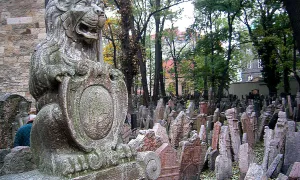
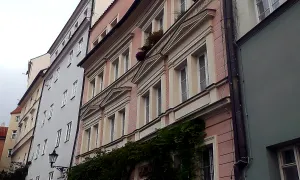
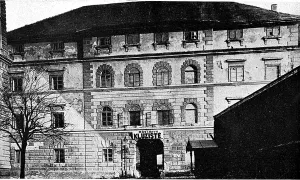
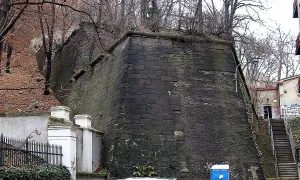
Photos: VitVit / CC BY-SA 3.0, rozlišení zvýšeno umělou inteligencí — Wikimedia Commons. The author and licence also appear when you hover over the image.
Faktickým podkladem tohoto textu byl článek na Wikipedii, jehož autory jsou přispěvatelé Wikipedie. Článek je dostupný pod licencí CC BY-SA 4.0.
Location on the map
Příběhy a pověsti
Legendy, pověsti a příběhy spjaté s touto památkou
Fotografie návštěvníků
Zatím žádné fotografie. Buďte první, kdo přidá fotografii z návštěvy!
Log in a přidejte svou fotografii nebo hodnoťte.
Za ověřenou návštěvu v aplikaci získáte víc bodů — poznáme podle GPS, že jste na místě.
Reviews and comments