






Masarykova chata Mountain cottage
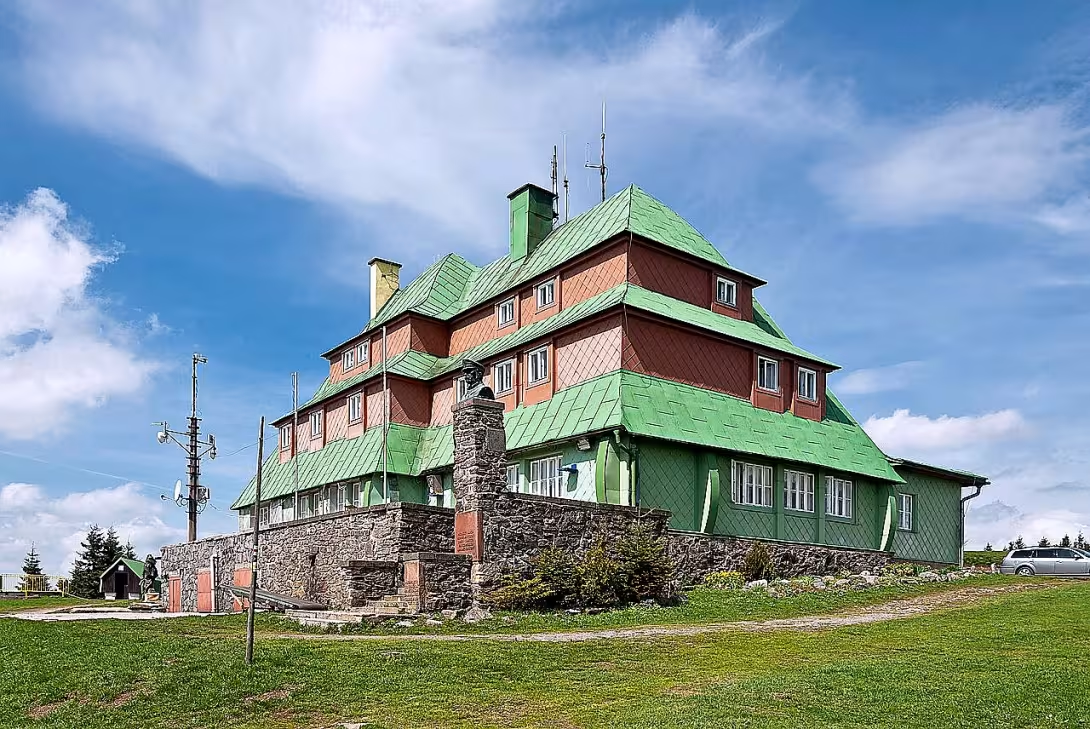
Masarykova chata, also known as Chata Šerlich, is a notable mountain hut located in the Orlické Mountains near the Czech-Polish border. Situated at an elevation of 1,019 meters, this historic site lies close to Deštné v Orlických horách and serves as a key tourist attraction in the region. Constructed between 1924 and 1925 by Klub československých turistů from Hradec Králové, it has been recognized as a cultural monument since 1958 due to its architectural significance and historical relevance.
The origins of Masarykova chata trace back to the early 20th century when Jindřich Štemberka, an advocate for tourism in the Orlické Mountains and a member of the Český zemský sněm, proposed its construction. The hut was built on the site of a former settlement known as Šerlich (Scherlichgraben), dating back to the late 17th century. Architect Bohuslav Fuchs designed the structure, and František Capoušek from Hradec Králové oversaw its construction. The foundation stone was laid on June 14, 1924, by Jiří Guth-Jarkovský, then president of Klub československých turistů. This project marked a significant development in the region's tourism infrastructure during a period when Czechoslovak nationalism was burgeoning following World War I.
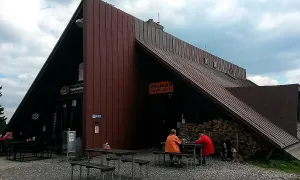
Architecturally, Masarykova chata features a two-story rectangular design with a projecting terrace on the ground floor. The building has gabled roofs on the lower floors and a mansard roof on the upper level, all covered with sheet metal shaped like square templates. Originally shingled, the roof was later replaced with metal sheets. The structure stands on a stone base, enhancing its robust appearance.
Throughout its history, Masarykova chata has witnessed several key events. In 1935, a meteorological station was established at the site, and a bust of T.G. Masaryk by Leoš Kubíček was unveiled. During World War II, from October 1938 to May 1945, the hut fell under German occupation. It served as accommodation for families of Nazi officials and functioned as a recuperation center for injured pilots and a headquarters for Hitlerjugend. Despite an attempt by a German Freikorps unit to set it ablaze in September 1938, the hut remained intact.
The interior of Masarykova chata is adorned with notable artistic elements. A wooden carving by Josef Kubíček, featuring the emblem of Hradec Králové and the Club of Czech Tourists, stands prominently within the building. Additionally, a bas-relief by Ludvík Goebel depicts a bearded mountaineer known as Rampušák, considered a good spirit of the mountains.
Today, Masarykova chata remains accessible to visitors through various means. A road constructed in 1935 connects Deštné v Orlických horách to Šerlišského sedla, with a large parking area nearby. The hut is also reachable by bus from the stop "Deštné v Orlických horách, Šerlich, Masaryková chata," located approximately 200 meters away. For those interested in hiking, several trails lead to the hut, including routes marked by blue and red signs, as well as a yellow trail from Deštné v Orlických horách. Additionally, a cycle path numbered 4071 passes near the site.
Masarykova chata offers more than just historical intrigue; it provides stunning views of the surrounding natural reserves, Bukačka on the Czech side and Topielisko - Czarne Bagno across the border in Poland. Its rich history and architectural charm make it a worthwhile destination for anyone interested in exploring the cultural heritage and scenic beauty of the Orlické Mountains. Visitors are invited to experience this remarkable site and immerse themselves in its storied past.
Then and now
Drag the slider to compare how the landmark may have looked when it was built with the view today.
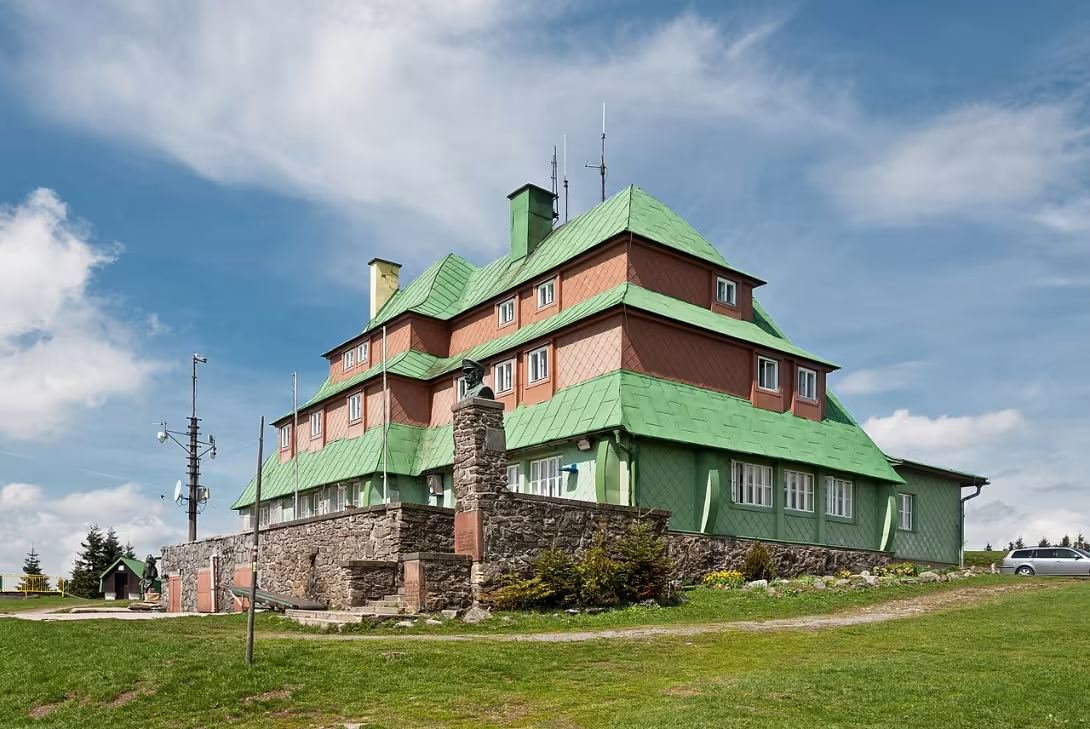

The historical appearance on the left is an AI-generated visualisation and serves as inspiration only.
Historical milestones
- 1924
- The foundation stone of Masarykova chata was laid by Jiří Guth-Jarkovský.
- 1935
- A meteorological station was established at the hut.
- 1938
- The hut was unsuccessfully attempted to be set on fire by a German Freikorps unit.
Architectural development
Masarykova chata features a two-story rectangular structure with a projecting terrace on the ground floor. The roof is gabled in the lower floors and mansard in the upper, covered with sheet metal shaped like square templates. Originally shingled, it was later covered with metal sheets. The building stands on a stone base.
Historical events
In 1935, a meteorological station was established at the hut, and a bust of T.G. Masaryk by Leoš Kubíček was unveiled.
During World War II, from October 1938 to May 1945, the hut was occupied by German forces and used as an accommodation for families of Nazi officials.
Points of interest
- The construction of Masarykova chata was proposed by Jindřich Štemberka, who was not only an advocate for tourism but also served as a member of the Český zemský sněm, highlighting its political as well as cultural significance.
- During World War II, the hut was used by Nazi officials and functioned as a recuperation center for injured pilots, illustrating how it became entangled in wartime activities despite an attempt to destroy it by German forces in 1938.
- The building features artistic elements such as a wooden carving by Josef Kubíček that includes the emblem of Hradec Králové and a bas-relief by Ludvík Goebel depicting Rampušák, a mythical mountain spirit, reflecting local folklore within its interior design.
- In 1935, a meteorological station was established at Masarykova chata, marking it as an important site for scientific observation in the Orlické Mountains and enhancing its role beyond just tourism and recreation.
- The foundation stone of the hut was laid by Jiří Guth-Jarkovský, who was then president of Klub československých turistů, indicating the importance of this organization in promoting Czechoslovak nationalism through infrastructure projects post-World War I.
Guide
This guide is narrated by a synthetic voice generated by artificial intelligence.
Show guide text
This text was created by artificial intelligence and has not been editorially reviewed. It may contain inaccuracies.
Masaryk Chata, also called Chata Šerlich, stands below the Šerlich peak in the Orlické Mountains. It is located at an altitude of 1019 meters, close to the border with Poland, about three and a half kilometers northeast of Deštné v Orlických horách. Since 1958 it has been a cultural monument. Nearby is the Bukačka primeval forest nature reserve.
The chata was built on the site of the former settlement Šerlich, founded at the turn of the 17th and 18th centuries. The idea for its construction came from Heinrich Štemberka, a promoter of tourism in the Orlické Mountains and a member of the Bohemian Land Diet. It was built by the Club of Czechoslovak Tourists from Hradec Králové in 1924 and 1925 according to the design of architect Bohuslav Fuchs. The foundation stone was laid on June 14, 1924 in the presence of the club's chairman Jiří Guth-Jarkovský, and a metal box containing period documents was sealed into the foundation. Stone and other materials were prepared at the Šerlišský Mill sawmill, from where they were transported up by horse-drawn carts. The chata opened on September 27, 1925 under the patronage of Alois Jirásek. The construction cost 967 thousand crowns.
In 1935 a meteorological station was established there and a bust of Masaryk by sculptor Leoš Kubíček was unveiled. Its fate mirrored the history of the country: after 1938 it disappeared, in 1949 a new one was created, in 1953 it was removed again, in 1968 it was returned, and between 1972 and 1990 it lay in storage. Then it returned to its place.
In September 1938 armed members of the German Freikorps attempted to set the chata on fire, but failed. During the war the chata served the families of Nazi leaders, wounded pilots recovered there, and it was also home to a Hitler Youth center. On May 10, 1945 it was liberated by the Red Army. After the war it regained its original name. In the nineteen fifties it was renamed, and another name change came in 1968. Since 1990 it has borne the name Masaryk Chata again.
The building stands on a stone base. The floors are stepped and narrow upward. At the top is a hip roof with dormer windows in the shape of an ox eye. The original shingles were later replaced by sheet metal, and the entire chata is clad with sheet metal in the form of square templates.
Inside, wood predominates. In the middle of the dining room stands a massive pillar with wood carving by Josef Kubíček, the brother of Leoš. On one side it bears the coat of arms of Hradec Králové, a lion with the letter G, on the other the Tree of Life with the emblem of the Club of Czech Tourists. Under the ceiling is a bas relief of a bearded mountaineer by Ludvík Goebel from 1941. Later people began to see Rampušák in it, the good spirit of the mountains.
Tips for visitors
The best time to visit Masarykova chata is during late spring to early autumn, specifically from May to October. This period offers pleasant weather conditions ideal for hiking and enjoying the scenic views of the Orlické Mountains. The trails are less crowded compared to peak summer months, making it a perfect time for nature enthusiasts seeking tranquility.
When visiting Masarykova chata, bring appropriate hiking gear including sturdy footwear, weather-appropriate clothing, and a backpack with essentials like water, snacks, and a first-aid kit. Given the mountainous terrain, it's also wise to carry a map or GPS device for navigation. For photography enthusiasts, early morning is ideal as the soft light enhances the natural beauty of the landscape.
For families with children, Masarykova chata offers an engaging experience with its picturesque surroundings and nearby trails suitable for all ages. Ensure that children are equipped with comfortable clothing and footwear to enjoy the outdoor activities.
Frequently asked questions
Can the monument be visited?
We have not verified whether this monument is accessible. Please ask the owner or operator, or the local municipal office.
Where is the monument?
Location: Deštné v Orlických horách, Královéhradecký kraj. The map on this page shows the exact spot.
Why is the monument protected?
It is listed in the Central List of Cultural Monuments of the Czech Republic as a cultural monument (register no. 1000128939).
Businesses nearby
Do you run a restaurant, accommodation, shop, museum, rental, wellness or other visitor service near this monument? Show yourself directly to the people heading to it — this is how they will see you in the app and on the web:
Nearby
Nearby is the natural reserve Bukačka, and across the border lies the Polish nature reserve Topielisko - Czarne Bagno. The area offers scenic views and hiking opportunities.
Accommodation nearby
Themed route
Thematic Hiking Trail: Masarykova Chata and Surrounding Natural Reserves
1. Masarykova Chata (Hilltop Mountain Hut)
Type: Mountain Hut
Why Visit: Begin your adventure at this iconic mountain hut, offering stunning panoramic views of the Orlické Mountains. It serves as a perfect starting point for exploring the surrounding natural beauty and provides essential amenities for hikers.
2. Natural Reserve Bukačka
Type: Natural Reserve
Why Visit: Located nearby Masarykova Chata, this reserve is renowned for its diverse flora and fauna. Hiking here offers a serene experience through lush forests and picturesque landscapes, making it an ideal spot for nature enthusiasts.
3. Topielisko - Czarne Bagno (Cross-Border Nature Reserve)
Type: Cross-Border Natural Reserve
Why Visit: Venture across the border into this Polish reserve to discover unique wetland ecosystems teeming with wildlife. The area is perfect for bird watching and exploring trails that highlight the rich biodiversity of the region.
4. Return Path through Bukačka
Type: Scenic Trail
Why Visit: As you make your way back, retrace your steps through Bukačka to enjoy different perspectives of its natural beauty. This path offers a peaceful conclusion to your hike, allowing for reflection and appreciation of the day's journey.
5. Masarykova Chata (Return)
Type: Mountain Hut
Why Visit: Conclude your excursion at Masarykova Chata, where you can relax and reflect on the stunning landscapes explored during your hike. The hut provides a cozy setting to unwind with local refreshments before heading back.
This trail offers an immersive experience into the natural wonders of the Orlické Mountains, combining breathtaking views with rich biodiversity.
Seasonal recommendations
Spring: Visiting Masarykova chata during spring offers a rejuvenating experience as the Orlické hory come alive with blooming wildflowers and lush greenery. The landscape is bathed in soft, dappled sunlight that enhances the natural beauty of the surroundings. This time of year sees fewer visitors compared to summer, allowing for a more tranquil exploration of both the chata and its environs. It's advisable to wear layers as temperatures can vary significantly throughout the day; mornings might be cool while afternoons become pleasantly warm. Bringing along comfortable walking shoes is essential, as spring often brings rain showers that transform the trails into refreshing pathways.
Summer: Summer at Masarykova chata is characterized by vibrant green landscapes and extended daylight hours, making it an ideal time for hiking and outdoor activities. The area becomes a popular destination during this season, so expect larger crowds, especially in peak holiday periods. To avoid long waits and enjoy the serenity of nature, consider visiting early in the morning or later in the afternoon when many tourists are less likely to be present. Dressing in light, breathable clothing is recommended, along with sun protection such as hats and sunscreen. Staying hydrated is crucial, especially on warmer days.
Autumn: Autumn transforms Masarykova chata into a picturesque setting with its rich tapestry of reds, oranges, and yellows. The cooler temperatures make for comfortable hiking conditions, and the shorter days add a cozy charm to the area. This season attracts nature enthusiasts keen to witness the foliage change, so while crowds are moderate, it's wise to plan your visit during weekdays if possible. Layered clothing is advisable as mornings can be chilly, warming up significantly by midday. Carrying a light jacket or sweater will ensure comfort throughout your exploration.
Winter: In winter, Masarykova chata offers a magical experience with snow-covered peaks and crisp mountain air. The area becomes quieter, providing an intimate atmosphere for those looking to escape the hustle of city life. Dressing warmly in insulated layers is essential, along with wearing waterproof boots to navigate snowy paths safely. Visiting during daylight hours is recommended as temperatures drop significantly after sunset, ensuring a safe and enjoyable experience amidst the winter wonderland.
Visualizations and artistic views


The visualisations are generated by artificial intelligence and serve as inspiration.
Photos from the area
Real photos taken near the monument

Zdroj a licence jsou uvedeny u každého snímku.
View from the area
This animation was generated by artificial intelligence from a real photograph of the surroundings. The motion and details are not real footage of the location.
Tips from visitors
No tips yet. Be the first!
Log in and add your tip.
Sources and literature
Photos: Jacek Halicki / CC BY-SA 4.0 — Wikimedia Commons. The author and licence also appear when you hover over the image.
Faktickým podkladem tohoto textu byl článek na Wikipedii, jehož autory jsou přispěvatelé Wikipedie. Článek je dostupný pod licencí CC BY-SA 4.0.
Location on the map


Příběhy a pověsti
Legendy, pověsti a příběhy spjaté s touto památkou

Fotografie návštěvníků
Zatím žádné fotografie. Buďte první, kdo přidá fotografii z návštěvy!
Log in a přidejte svou fotografii nebo hodnoťte.
Za ověřenou návštěvu v aplikaci získáte víc bodů — poznáme podle GPS, že jste na místě.
Reviews and comments