



Kostel svaté Máří Magdaleny Church
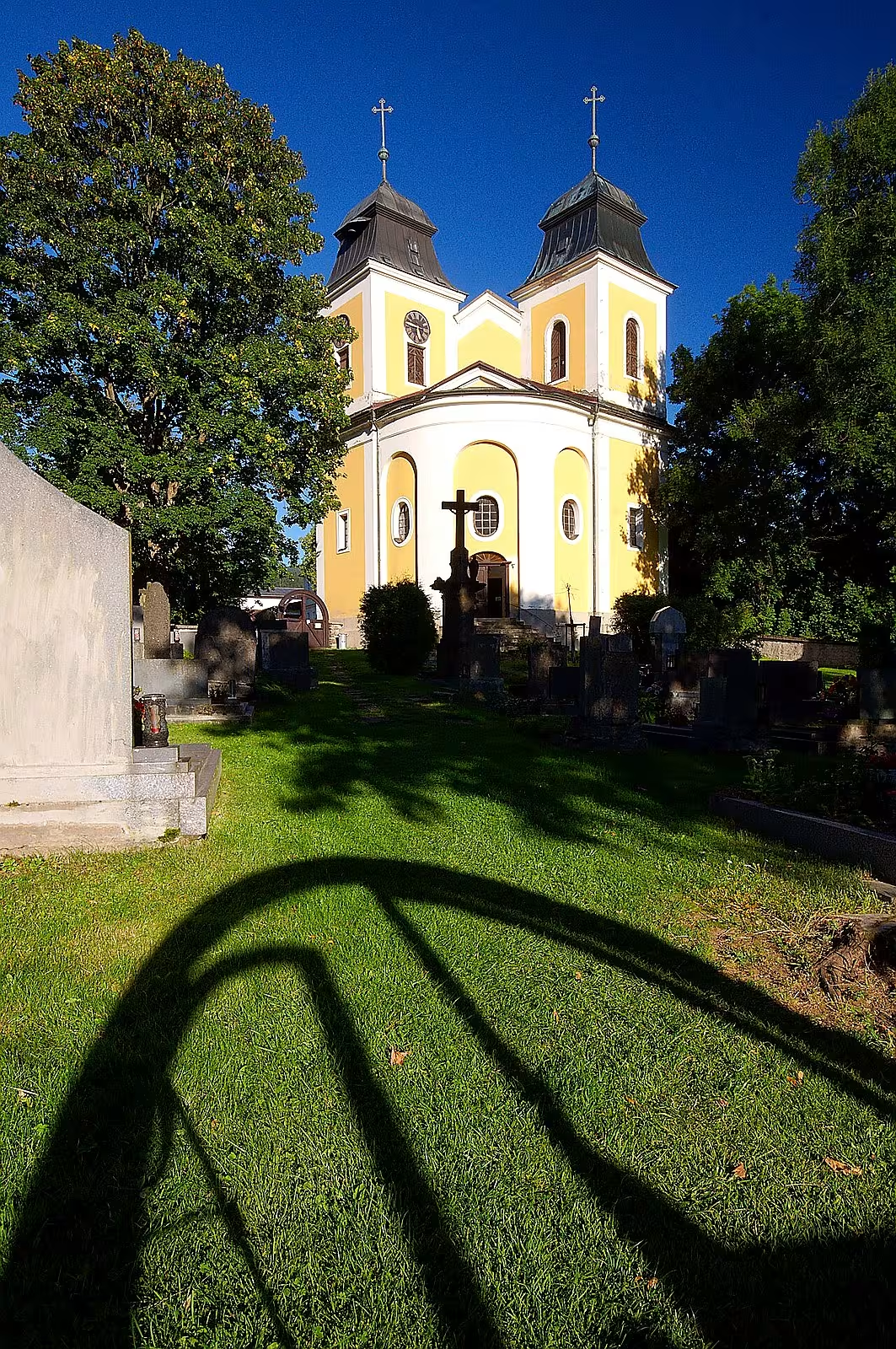
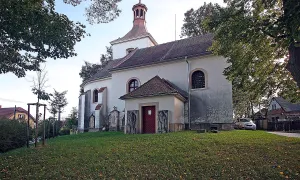
Kostel svaté Máří Magdaleny is a baroque sacral building built in the years 1723 to 1725. The building is protected as a cultural monument of the Czech Republic. It is attributed to the important architect Jan Blazej Santinimu-Aichel and represents a remarkable example of a late baroque with elements of geometry.
The history of the place goes deep into the Middle Ages. The village was founded before 1350 and already before 1362 there was a parish village, which belonged to the tankers from the monastery of St. Pole near Třebechovice. The original Gothic church in the 18th century replaced the new building. The development of the estate under the administration of the House of Lords of Kolowrat led to this move, which was acquired in 1676 for Count František Karl I. Libstejnský of Kolowrat. The actual construction of the Baroque temple was initiated by Count František Karel II. Libštejnský z Kolowrat.
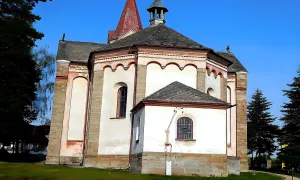
The architectural solution bears the characters of Santini's manuscript, although direct archive documentation of the authorship is missing. The construction is characterized by a deep layout with two pointy prismatic towers in the west front. Among them there is a convex disabled portico divided by blind arcades. The interior is flat-ceiling and includes a two-story circle on the pillars. The presbytery has an inside plan of hexagon, while the outside is right-handed. The object is characterised by reduced, linear textures with smooth facades that reflect Santini's rationally playful geometry.
The interior is supplemented by sculptures decoration of the main altar from J. Hartmanna from the 18th century and two side table altars from the first half of the 18th century. Visitors can also see a pulpit with figural reliefs, organ from 1729, Baroque stone baptist and paintings of the Cross Road. In the immediate vicinity of the monument is the statue of the Virgin Mary with Saint Joseph, Jáchym and Anna from 1781.
The importance of the church is closely linked to the history of the region, in particular to the era of luxury baroque glass production, the so-called Colorado crystal. The important painter of glass and porcelain Ignác Preissler also worked in these services. The merger of aristocratic representation, artistic craft and architecture makes this sacral building valuable proof of Baroque culture in the Orlich Mountains.
Thanks to its geometrical concept and historical connection with the family of Kolowrats, this complex offers insight into the construction culture of the 18th century. Visiting the church of St. Mary Magdalena is an opportunity to recognize the work, which, despite a centuries-old distance, remains a testament to masterwork with space and shape.
Then and now
Drag the slider to compare how the landmark may have looked when it was built with the view today.
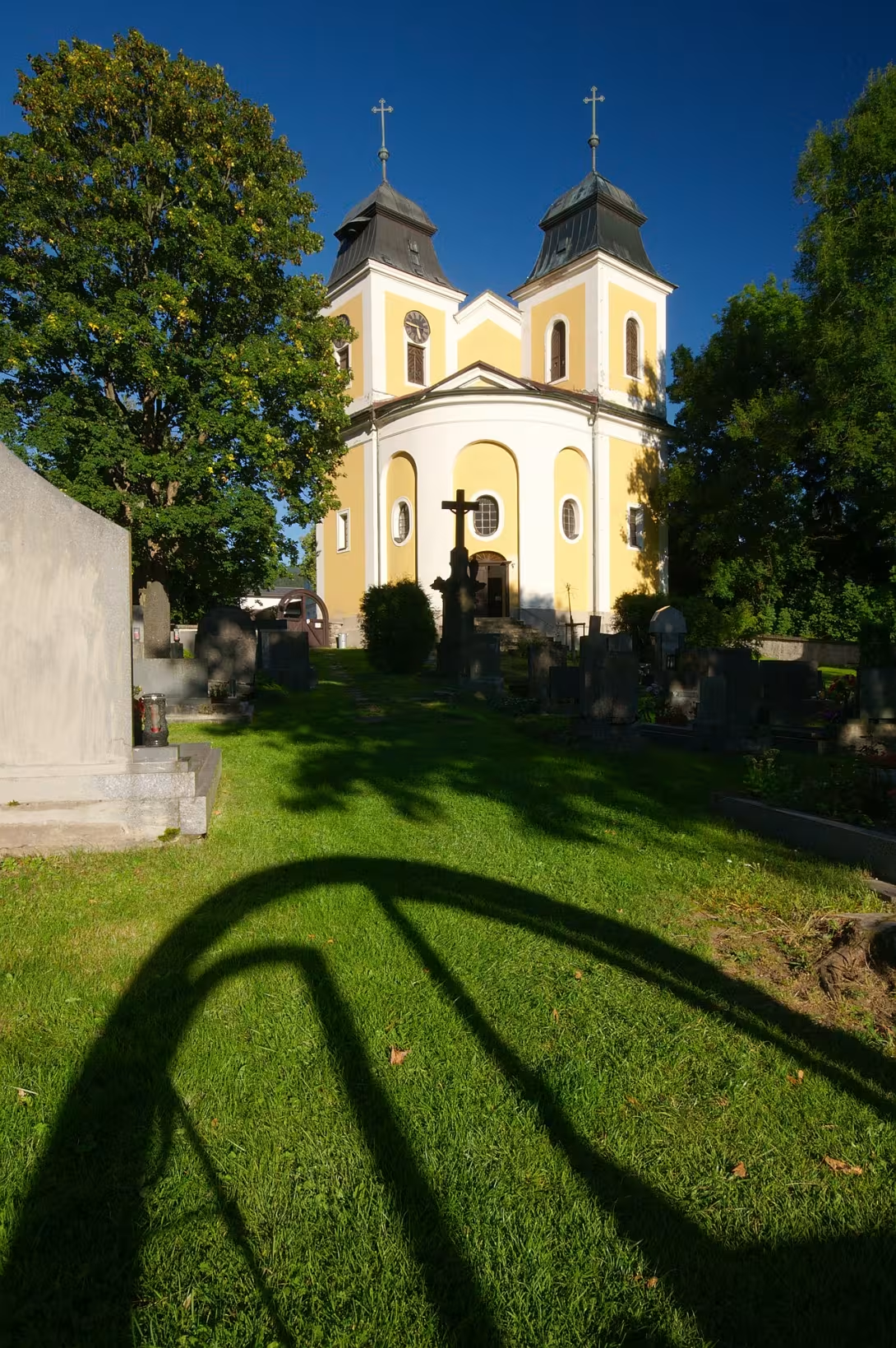

The historical appearance on the left is an AI-generated visualisation and serves as inspiration only.
Historical milestones
- before 1350
- Establishment of the municipality Deštné v Orlických horách.
- 1676
- Obtaining the manor by the house of the lords of the Kolowrat.
- 1723-1725
- Construction of the Baroque church of St. Mary Magdalena.
- 1729
- Installation of organ in the church interior.
- 1781
- The creation of the sculpture of the Virgin Mary with saints around the church.
Architectural development
The original Gothic church was replaced by a Baroque new building in the 1920s. The interior is a flat-ceiling with a two-story circle on the pillars. The presbytery has a hexagonal plan in the interior, while the outside has a right-hand look.
Historical events
1362: First written mention of the parish village. 1723-1725: Construction of a Baroque church on the site of an older Gothic building.
Owners
Lords of Kolowrat (since 1676)
Points of interest
- The church was built between 1723 and 1725 and is protected as a cultural monument of the Czech Republic. - The architecture of the building shows signs of the manuscript of Jan Blazej Santini-Aichel, although direct archive documentation of the authorship is missing. - The presbytery of the church has an inside plan of hexagon, while the outside is right-handed. - The interior includes an organ from 1729, a Baroque stone baptizer and sculpture decoration of the main altar by J. Hartmanna. - The importance of the church is related to the history of the production of luxury baroque glass, the so-called Colorado crystal.
Guide
Show guide text
This text was created by artificial intelligence and has not been editorially reviewed. It may contain inaccuracies.
Welcome to the Rain Mountain. Right now, standing right in front of this impressive body of St. Mary Magdalena's Church, let yourself stop and soak up the atmosphere of this place for a moment. Feel the effect of this baroque building, which stands above the surroundings. It's not just a building made of stone and mortar; He's a monumental witness to history who carries the soul of the entire region. Look at its overall scope. Even when you're outside, just by looking at its structure, you can feel the depth and complexity that awaits you as you enter its space. Feel the calm that rules here, and the nobility that makes you look up to heaven.
To understand why this church is standing right here and why it is so special, we need to go back deep into the past together. The village Deštné v Orlických horách itself has its roots dating back to the dark centuries, as its foundation can date back to the 14th century. For centuries, this country has been home to many generations, but a fundamental turning point in its history occurred in the year sixteen-seventy-six, when the estate became the property of the mighty House of Lords of the Kolowrat. It is these nobles who have become guardians of this place and their influence and ambition are reflected in every detail of the surrounding countryside. Before this Baroque church, which you see before you, there was an original Gothic temple, which was mentioned in the 14th century. With time, however, the old Gothic building stopped responding to the needs of the time and the nobility that the locals and nobles wanted. So there was a decision that changed the face of the entire rainy. Between 17 and 27, twenty-five, this present Baroque building was built, which was to be a symbol of a new era and an expression of deep faith.
Now pay attention to the architecture itself. Look at its shapes and how it integrates into the surrounding space. Although we cannot rely on any archive report that clearly confirms the name of the creator, the architecture of this place speaks in a very clear and strong voice. All the characters you see here point to the manuscript of Master John Blazej Santini-Aichel. His style is almost undoubtedly recognizable in this construction. It's a style that works with depth, geometric precision, and uses space in such a way that the building immediately consumes you. Notice how the church decomposes. Its depth disposition creates a sense of constant movement and space. And now think about what is absolutely fascinating for Baroque architecture - the game of inner and outer shapes. If you went inside the church later, you would have come across a geometric unique. The presbytery of the church has a hexagon plan inside. This is a fascinating detail that points to the builder's championship. But watch out, that's the beauty and mystery of the baroque - what you see from the outside may not be exactly what you find inside. From the outside, the construction works differently than its inner, hexagon geometric base. This dialogue between the external appearance and the internal structure is exactly what makes this church such an extraordinary work.
This magnificent project was not possible without strong will and significant financial support. The main mover of this whole building was Count František Karel II. Libštejnský z Kolowrat. He was a man who saw not only the religious center in this place, but also the symbol of his power and devotion. Thanks to his order, this baroque gem could be created, which is still astonishing. In the history of this place, however, it is not only noble families that are concerned. Names like Ignác Preissler or J. Hartmann are also closely linked to the history of this region and to this sacred place. Feel also that the church was not only a building but a living organism that evolved. In the year seventeen-twenty-nine, the organ settled in its interior, which gave the place sound dimension and spiritual depth. And a few decades later, in the year seventeenth and ninety-one, the statue of the Virgin Mary and the saints was created around the church, which gave the whole place another layer of beauty and religious significance.
And now I want to tell you one thing that still raises questions and deep fascination in this place. Although the architecture of the church is so undoubtedly linked to Jan Blazej Santinim-Aichel, the archives still lack direct, unshakable proof of his authorship. It's like architecture itself is the only evidence we have left. However, this lack of paper confirmation does not mean that the secret is solved. On the contrary, it gives this place a touch of mysticism. You're standing in front of a piece that's basically code. Every detail, every line and every angle tries to say something about their creator, but at the same time, they keep their secrets. It's a fascinating battle between what we can prove and what history allows us to know. It is precisely this uncertainty that makes the church of St. Mary Magdalena a place that must fascinate you constantly and to which you will want to return.
Now that you have a basic idea of what's in front of your eyes, I suggest you continue your search. Let the atmosphere of this place drift. Look at the details that architecture offers you, and see the silence and history that hangs in every corner. Kostel svaté Máří Magdaleny is protected as a cultural monument of the Czech Republic, and that is no way. It's a treasure that deserves your full attention and respect. Thank you for spending this moment with us. I wish you a beautiful and inspirational further journey along the historic trail of the Rainy in the Orlich Mountains.
Tips for visitors
The best time to visit is late spring or early autumn, when the weather in the Deštenské Hornatina is stable and surrounding nature offers beautiful colour scenery. In the summer months it is more pleasant here than in the lowlands, which you will appreciate during the tour of Baroque architecture.
You can reach the village Deštné v Orlických horách by car and public transport. I recommend that you check the exact connection in the current connection search engine.
To visit, pack fixed shoes if you plan to climb the surrounding area. Kostel svaté Máří Magdaleny is a great object for photographers; The best light to capture the baroque details of the facade is in the morning when the sun lights up the facade.
In the vicinity you can take a trip on the side of the Little Rain, which offers beautiful views. For families with children the location is ideal for easy walks in nature and exploring history right in the village Deštné v Orlických horách, where there is enough room for children to move.
Frequently asked questions
Can the monument be visited?
Religious buildings are usually open mainly during services; at other times a visit is normally arranged with the parish or the operator. We have not verified specific times.
Where is the monument?
Location: Deštné v Orlických horách, Královéhradecký kraj. The map on this page shows the exact spot.
Why is the monument protected?
It is listed in the Central List of Cultural Monuments of the Czech Republic as a cultural monument (register no. 1000134497).
Businesses nearby
Do you run a restaurant, accommodation, shop, museum, rental, wellness or other visitor service near this monument? Show yourself directly to the people heading to it — this is how they will see you in the app and on the web:
Nearby
The village of Deštné v Orlických horách, the side of the Little Rain, the rainy mountain.
Accommodation nearby
Themed route
1. Municipality of Deštné v Orlických horách (village): The starting point of the road where you can perceive the calm atmosphere of the mountain residence. 2. Kostel svaté Máří Magdaleny (church): The main destination of the visit, which will capture its architecture and spiritual significance. 3. Side of the Little Rain (natural area): A place for hiking and relaxation in nature with beautiful views. 4. Rain Hornatina (mountain area): Space for exploring the specific landscape and terrain of this part of the Orlické Mountains.
Seasonal recommendations
Spring brings around the church the awakening nature and fresh green color of the surrounding vegetation. The lighting is soft in this period, which beautifully highlights the details of the building without sharp shadows. For a visit it is advisable to choose layered clothes because mountain weather can be unpredictable. The best time for a tour is in the morning when there is the most calm and the least number of people.
In the summer months, the atmosphere is alive and the surrounding area is full of rich vegetation. Strong sunlight creates clear contrasts that better excel in the high summer season. Due to the increased traffic, we recommend arriving as early as possible in the morning to avoid the largest crowds of tourists. Dress lightly and don't forget enough water for possible walks around.
Autumn visit offers a nostalgic atmosphere where the landscape is colored in golden and orange shades. The morning fog in the Orlich Mountains gives the place mystery and peace. It is ideal to visit a monument in the afternoon when the light is low and warm. Prepare waterproof shoes and warmer clothing because humidity and cold during this period can be pronounced.
Zimą works in a snowy environment in a very quiet and majestic way. A short day and frosty temperatures create a specific, yet noble mood. It is necessary to have very warm clothes and shoes with good grip due to snow or ice surface. Always check the current opening times before visiting, which are usually shorter in winter.
Visualizations and artistic views


The visualisations are generated by artificial intelligence and serve as inspiration.
Photos from the area
Real photos taken near the monument


Zdroj a licence jsou uvedeny u každého snímku.
Tips from visitors
No tips yet. Be the first!
Log in and add your tip.
Sources and literature
Photos: Jiří Komárek / CC BY-SA 4.0 — Wikimedia Commons. The author and licence also appear when you hover over the image.
Faktickým podkladem tohoto textu byl článek na Wikipedii, jehož autory jsou přispěvatelé Wikipedie. Článek je dostupný pod licencí CC BY-SA 4.0.
Location on the map


Příběhy a pověsti
Legendy, pověsti a příběhy spjaté s touto památkou
Fotografie návštěvníků
Zatím žádné fotografie. Buďte první, kdo přidá fotografii z návštěvy!
Log in a přidejte svou fotografii nebo hodnoťte.
Za ověřenou návštěvu v aplikaci získáte víc bodů — poznáme podle GPS, že jste na místě.
Reviews and comments