



Měkké doly Mine
Měkké doly are archaeological sites located in the forest area between the station Zlaté Hory and the lark stream, close to the state border with Poland. This site is known for its remains of soft mining from the 16th century when gold was extracted in underground works. Měkké doly is a part of the Zlatohora mining teaching trail and protected as a cultural monument.
The history of soft mines is closely linked to gold mining in the Golden Mountains, which has changed over the years according to technical progress and external events. After a period of downturn in the 15th century, when mining was disrupted by water inflows and insufficient pumping methods, the miners turned to the original river paddy. At the turn of the 15th and 16th centuries, the upper parts of the rice pits were harvested, which led to the miners having to go deep. In underground works, equipped with waterproof machines, golden-bearing streams were found covered with sediment of glacial origin.
In 1550 Bishop Baltazar z Promnitz gave a rake draining stol Three kings to help with the water supply problem. It was referred to as one of the longest of its time and its cost covered the gold obtained during the stamping. The hill was supposed to reach the Soft Cells mine, which took place in 1600. In this mine, in 1591 and 1890, two gold lounges weighing 1.39 and 1.78 kg were found, which were donated to Emperor Rudolf II.
Mining in the soft cess mine was completed in 1609 due to the water flow. Mining on other soft mines continued until the 30-year war, but subsequent events such as plague, witch trials and other military conflicts led to the decline of mining in the Golden Mountains. In the 18th century more copper was extracted than gold and the mining waters produced vitriol. Mining privileges were abolished by Maria Terezia in 1752, which meant the end of mining in this area.
After World War II, gold and polymetallic ores were recovered, which ended in 1993. Today, the Měkké doly is a protected archaeological site, which is part of the Zlatohora mining teaching trail and attracts people interested in the history of mining.
Měkké doly is an important monument not only because of its archaeological potential, but also as a testament to technical innovations and economic changes in mining. For visitors, they offer an opportunity to explore the history of gold mining and to understand how technology and society evolved over the centuries.
The monument is now accessible and offers valuable insight into the past. It is a place that is worth visiting for every quitter who is interested in the history of mining and technical progress in Europe.
Historical milestones
- 1550
- The railing of the three kings' drainpipe.
- 1609
- The flow of water and the end of mining in the Soft Cice Mine.
Historical events
- 1550
- For Bishop Balthazar of Promnitz was advised the draining line of the Three Kings.
- 1609
- There was a flow of water, and mining in the Soft Cice mine was finished.
Points of interest
- Měkké doly are archaeological sites located in the forest area between the station Zlaté Hory and the lark creek, close to the state border with Poland. - This site is known for its remains of the 16th century soft mining where gold was extracted in underground works. - In 1550, Bishop Baltazar z Promnitz gave a rake draining stol Three kings to help with the water supply problem. - In the years 1591 and 1890, two gold lounges weighing 1.39 and 1.78 kg were found in the Soft Cages Mine, which were donated to Emperor Rudolf II. - After World War II, gold and polymetallic ores were recovered, which ended in 1993.
Guide
Show guide text
This text was created by artificial intelligence and has not been editorially reviewed. It may contain inaccuracies.
Welcome to the Golden Mountains! You are standing right in front of a fascinating archaeological site known as Měkké doly, a hidden pearl between the green forest area, which stretches from the station Zlaté Hory to the lark creek. These places will invite you to the past where gold mining was the life of the locals. Before you see the pass between trees and narrow paths that will welcome you to the world of the 16th century.
Let's dive into the history of soft mines. In 1550 Bishop Baltazar z Promnitz set off the drains of the Three Kings, which was the first step towards the development of mining in this area. Měkké doly has become a key place for gold mining, where lower workers have tried to extract valuable ores in underground works. This activity continued until 1609, when mining was completed after the water procession.
Take a look up at the remains of the draining stacks that show the complexity and engineering skills of the workers at the time. Notice the striped walls and narrow corridors that invite you to the idea of hard work that was going on here. These elements are part of the Zlatohora mining teaching trail and protected as a cultural monument.
Among the key figures associated with the Soft Mines is Bishop Baltazar z Promnitz who initiated this mining activity. His decision opened the way for further development of mines and brought prosperity to this area.
The location of soft mines is interesting, which are close to the state border with Poland. This site thus served as a link between cultures and the history of both countries. Notice how nature and history together in this part of the Golden Mountains form a unique whole.
Now that you have immersed yourself in the past of the soft mines, I can invite you to explore other parts of the Zlatohora mining trail. Every step here is like a page from a history book waiting to be read.
Thank you for your visit to the soft mines. I hope this guide inspired you to explore and appreciate the rich history of the Golden Mountains. Have a nice day!
Tips for visitors
For the best experience we recommend a visit in the spring or autumn period. In these times the forest is less dense, which allows better field orientation and better view of historical mining tracks. The soft light in the morning or evening beautifully highlights the shapes of the old dug places.
Transport to the place is possible by car and by public transport; Please check the current connection in the traffic controller.
Since you are in the forest area, it is necessary to bring with you firm and waterproof shoes. We also recommend carrying water and possibly a map for easier orientation in nature.
The most interesting moments for lovers of photography are when the sun's rays penetrate through trees and create a game of light and shadow on archaeological remains. Focus on the details of the surface of the earth that tell us about the ancient mining process.
For families with children, walking through the forest in the footsteps of history can be an interesting adventure activity. However, it is important to take care of safety and to keep children close to each other because of uneven terrain in the forest area.
Frequently asked questions
Can the monument be visited?
This is a technical monument. Some are open as exhibitions, others are out of use or on private land. We have not verified whether this one is accessible.
What are the opening hours and admission?
We have not verified the opening hours or admission. Current information is published by the operator.
Where is the monument?
Location: Zlaté Hory. The map on this page shows the exact spot.
Why is the monument protected?
It is listed in the Central List of Cultural Monuments of the Czech Republic as a cultural monument (register no. 1000149436).
Businesses nearby
Do you run a restaurant, accommodation, shop, museum, rental, wellness or other visitor service near this monument? Show yourself directly to the people heading to it — this is how they will see you in the app and on the web:
Nearby
🏰 Historic sites (102)
- Městské hornické muzeum 1.6 km +420584425329 web
- Pętla Leśna 3.1 km
- Leuchtenstein 3.2 km
- Edelstein 3.8 km
- Edelštejn 3.9 km
- Cześć poległym za ojczyznę 1939-1945 4.2 km
- pomník obětem 1. světové války 4.2 km
- Głuchołazy Zdrój 4.3 km
- Dawna skocznia narciarska Seiffentalschanze z 1932 roku 5.3 km
- Konrad Habel Platz 5.3 km
- kaple Dušičková 5.9 km
- kaple Bolestné Panny Marie 5.9 km
- Pomník padlým v 1. světové válce 6.3 km
- Tkalcovna na Rejvízu 6.7 km 420 603 249 551
- Muzeum tkalcovství 6.7 km
- Památník obětem 1. světové války 7.6 km
- Muzeum 7.9 km
- socha Panny Marie 7.9 km
- hornický pomník 8.0 km
- Koberštejn 8.3 km
🍽️ Restaurants and dining (117)
- Bar Herna Nonstop 1.4 km Palackého 68
- U Radnice 1.5 km Náměstí Svobody 40 +420584425630 web
- Bufet Lukas 1.5 km Náměstí Svobody 28
- Hostinec Koruna 1.6 km Náměstí Svobody 23
- Pivní bar Lyra 1.6 km Náměstí Svobody 22
- U Barona 1.7 km
- U Barona 1.7 km Wolkerova
- Sokolovna - Zámeček 1.7 km Sokolská
- Hotel Praděd Thamm 2.0 km
- Zlatokopecké sruby 2.0 km
- Picolo 2.4 km Krnovská
- Kawiarnia ParKula 3.5 km Parkowa 10
- Zajazd Zagroda 3.5 km +48774391383 web
- Włoski Smak 3.8 km web
- Ziemniaczana Kopa 4.0 km +48601225990
- Hotýlek U Pekina 4.0 km +420 721 335 365 web
- V Gruntě 4.1 km +420 584 45 30 33 web
- Amorek 4.1 km Aleja Jana Pawła II 37 +48 774396277
- Občerstvení Mýtinka 4.8 km
- Školní jídelna 5.0 km
🏨 Accommodation (88)
- Penzion a restaurace U Horáků 1.2 km 584 425 981 web
- Hotel Minerál 1.3 km Polská 392 +420737241321 web
- Penzion Modrý zvonek 1.5 km Náměstí Svobody 88
- Aspen 1.9 km web
- Hotel Praděd Thamm 2.0 km +420 730 155 166 web
- Agroturystyka Oberówka 2.3 km +48605053390 web
- Středisko Doubrava 2.5 km Ondřejovice 53 +420732639352
- Zapomniany Zdrój 3.5 km web
- Hotýlek U Pekina 4.0 km +420 721 335 365 web
- Gościniec Pod Bukiem 4.0 km
- Pokoje Gościnne Pod Sosnami 4.0 km +48785251930
- u Agnieszki 4.1 km
- V Gruntě 4.1 km +420 584 453 033 web
- Skowronek 4.1 km Generała Władysława Andersa web
- Sudety 4.2 km Aleja Jana Pawła II 25 web
- Ziemowit 4.4 km
- Banderoza 4.6 km web
- Ośrodek Wczasowo-Wypoczynkowy „Ruch” 4.7 km Generała Władysława Andersa
- Złota Dolina 6.1 km +48 77 887 21 55; +48 77 439 75 53; +48 794 043 500 web
- Roubenky - Horní údolí 6.1 km
🚲 Rentals and sport (22)
- Sport Ivan 1.5 km Náměstí Svobody 87 +420584425503
- Sportservis Tomšů 5.0 km +420 775 608 705 web
- Hala sportowa 5.2 km Marii Curie-Skłodowskiej 32
- Lanový park 10.8 km
- Na Smrťáku 12.2 km
- Woox - Sport Outlet 12.8 km
- Sportisimo 12.8 km
- Tenisový klub Jeseník 12.8 km
- FIT:KO Jeseník 13.1 km +420 737 258 707 web
- OTOSPORT 1993 s.r.o. - Jeseník 13.1 km Sadová 881 +420 77 723 1230 web
- Velosport 13.1 km Školní +420 584 401 160
- Woox 13.1 km web
- Sportmax 13.2 km
- Sport 2000 13.2 km +420 603 272 053 web
- JeseníkyTour.eu 13.2 km +420 732 277 135 web
- ARDON workwear & outdoor 13.2 km nám. Svobody 831/21 web
- kilpi 13.3 km Gogolova 92/2
- Sport servis Tomšů 13.3 km +420 776 608 706 web
- Bazén 13.7 km
- Jesenické koupaliště 13.8 km
🥾 Hiking and nature (284)
- Kamień Wisielczy 1.5 km
- Skalna Góra 1.8 km
- Hornická osada 2.0 km
- Tylna Kopa 2.1 km
- Zlatokopecký skanzen - Zlatorudné mlýny 2.3 km +420 588 884 618 web
- Ovčácký vrch 2.8 km
- Zapora Jarnołtówek 2.8 km
- Średnia Kopa 2.9 km
- Plešivec 3.0 km
- Studnia Jakuba 3.0 km
- Czapka 3.3 km
- Przednia Kopa 3.5 km
- Solanková věž 3.6 km
- Zadní vrch 3.6 km
- Źródło Wiktorii 3.7 km
- Złote Ścieżki Singletrack Głuchołazy 3.8 km
- Źródło Juvenia 3.9 km
- Zámecký vrch 3.9 km
- Sztolnia Cygańska 3.9 km web
- Biskupská kupa 3.9 km
Accommodation nearby
Themed route
Thematic cruise route to Golden Hors
1. Měkké doly (archaeological site)
Type: Archaeological site
Měkké doly is a unique archaeological site that shows the history of mining and life in the area. You will visit exposed layers of rock with the discovery of ancient instruments and objects, which provides a view of the past of the civilizations that inhabited this site.
2.Zlaté Hory (municipality)
Type: Local centre
The village Zlaté Hory offers an overview of today's life in the region and its historical context. Explore local shops, restaurants or cafés that allow you to know the cultural aspects of this place.
3. Memorial Forest
Type: Forest area
Not far from the Golden Hor there is a memorable forest where you can explore the natural environment and relax your mind. It is an ideal place for short walks or picnics in peace.
4. St. John of Nepomuk Chapel
Type: Religious monument
The chapel is a small but interesting place with historical and spiritual value. Its architecture and quiet environment offer an opportunity to relax and reflex.
5. Local Markets
Type: Cultural event
Join the local market if it is active in your visiting time. Here you can see and buy local products or works of art, which will help you better understand local culture and customs.
This route offers a combination of historical discoveries, natural views and cultural experiences in the Golden Mountain area.
Seasonal recommendations
Spring: In spring, Měkké doly appears in its most beautiful glow, when new life begins in nature around an archaeological site. Flowers and trees surround the path to the mine shafts with their pink and white colors, adding a slight odor to the air. The sun's rays penetrate through the mists that often appear in this period, and provide a breathtaking contrast between the light landscape and the darkness of the mine deepening. For a visit it is advisable to take with you clothes for variable weather, because the morning can be colder while the afternoon can start to warm. It is an ideal time to visit when nature is in full force and crowds are usually mild.
Summer: Summer brings warm sunshine to Měkké doly, which illuminates archaeological shafts and surrounding landscape. At this time, the best conditions are for long walks around the site when nature is in full bloom and the sound of birds mingle with the quiet distance. The warm day attracts more visitors, so for the best experience we resist visiting in the early morning or late afternoon. Don't forget to wear protective sunglasses and enough drinking, because temperatures can be high. Short gloves and hat are also useful for sun protection.
Autumn: In autumn, Měkké doly turns into light and shadow when leaves on trees turn into living shades. This image effect creates a breathtaking atmosphere around an archaeological site that is illuminated by sunlight bursting through the leaves. Nature around offers quiet and quiet surroundings, making it easier to walk around in historical places. In this period, the crowds are shrinking, allowing a better visit. Clothing for variable weather is necessary because temperatures can be cold in the morning and evening, while the afternoon can be moderate in heat.
Winter: Winter visit to the Soft Mine offers a unique view of the archaeological sites under the snow cover. At this time the landscape is controlled by peace and quiet, which increases the atmosphere of mysticism around mine shafts. Sun rays are projected into the snow cover, creating breathtaking light effects. Visiting mode is the most peaceful during winter, which allows a focused tour without crowd influence. It is important to bring warm clothes, protective shoes and perhaps a board or ski knives for better movement on the snow terrain. This time of year is ideal for those who are looking for quiet and introspective experiences.
Visualizations and artistic views

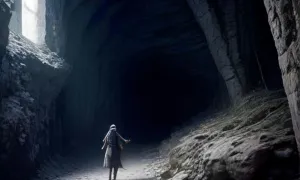
The visualisations are generated by artificial intelligence and serve as inspiration.
Tips from visitors
No tips yet. Be the first!
Log in and add your tip.
Sources and literature
Faktickým podkladem tohoto textu byl článek na Wikipedii, jehož autory jsou přispěvatelé Wikipedie. Článek je dostupný pod licencí CC BY-SA 4.0.
Location on the map

Příběhy a pověsti
Legendy, pověsti a příběhy spjaté s touto památkou
Fotografie návštěvníků
Zatím žádné fotografie. Buďte první, kdo přidá fotografii z návštěvy!
Log in a přidejte svou fotografii nebo hodnoťte.
Za ověřenou návštěvu v aplikaci získáte víc bodů — poznáme podle GPS, že jste na místě.
Reviews and comments