






městské opevnění v Plané Town walls
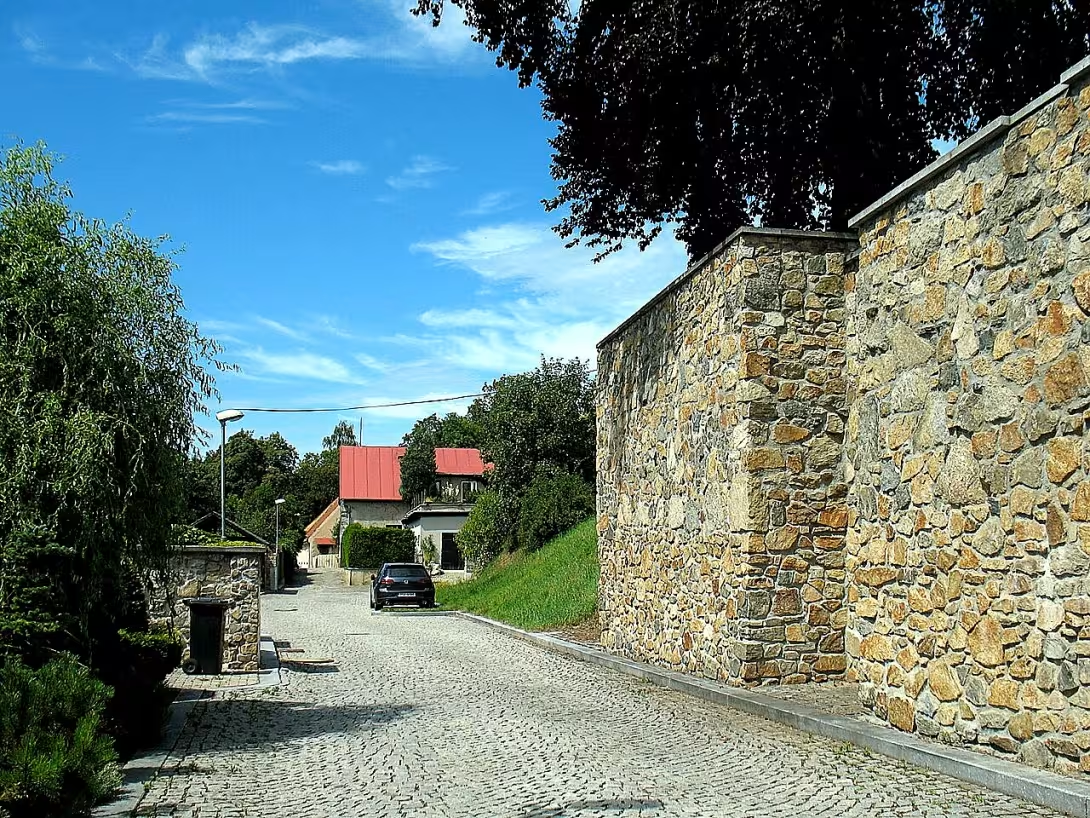
The town fortification in Plana, located in the district of Tachov in Pilsen region, represents a fascinating part of medieval walls. This defence system, created in the second half of the 14th century, protected the city from three sides using natural slopes and artificial structures. Today the walls are partially preserved, with the most significant sections located in the southern part of the city near the Church of the Assumption of the Virgin Mary. This monument has great historical value and reminds of the development of urban infrastructure in Czech countries during the Middle Ages.
The history of the town of Plana dates back to the earlier settlement around St. Peter and Paul's church. The founder is traditionally Dobrohost z Plané, whose name is associated with 1343. The city was an important location in 1373 when it was granted Pilsen City Law. The city changed its owners in the following decades: from 1407 it belonged to the men of Elsterberk, in 1433 it passed from Žeberk to Plansky and since 1517 it was owned by Šlikové. This variability reflects the dynamics of power and ownership in the region during the Middle Ages.
Architecturally, the city's fortifications are characterized by walls whose remains now have a maximum thickness of one metre. The soil was used as a binding agent between the stones. Key shooting sites, added to the system in the second half of the 15th century, are well preserved at house No. 127. The original gates and towers are no longer preserved; For example, the Lower Gate was destroyed in 1805. The castle was previously filled with moat and moat, which can still be observed at the Church of the Assumption of the Virgin Mary.
The ownership of Plana has undergone some significant changes. After the Dobrohost of Plana, the inspection went to the gentlemen of Elsterberk, then to Planští ze Žeberka and finally to Šliky, which reflected the normal practice of transferring property through marriage or inheritance rights. These families played a key role in the administration and development of the city, affecting its history and architecture.
The interesting thing is that some elements of the wall were swallowed up by a new building or replaced by modern walls. Although the gates and towers were no longer preserved, the remnants of the wall at the Church of the Assumption of the Virgin Mary still resemble their original purpose. These elements are evidence of the historic struggle for defence and construction of the city.
Today městské opevnění v Plané is protected as a cultural monument, making it a valuable location for visitors. Although the walls are only partially preserved, their historical significance and architectural features attract interested people in the Middle Ages. Visiting these places offers a unique view of the past, which shaped the current landscape and the culture of Plana.
The city fortification in Plana is not only a witness to history, but also a reminder of the importance of protecting cultural heritage. Visiting this monument offers valuable insight into the past and inspiration to recognize the value of historical sites in our current world.
Then and now
Drag the slider to compare how the landmark may have looked when it was built with the view today.
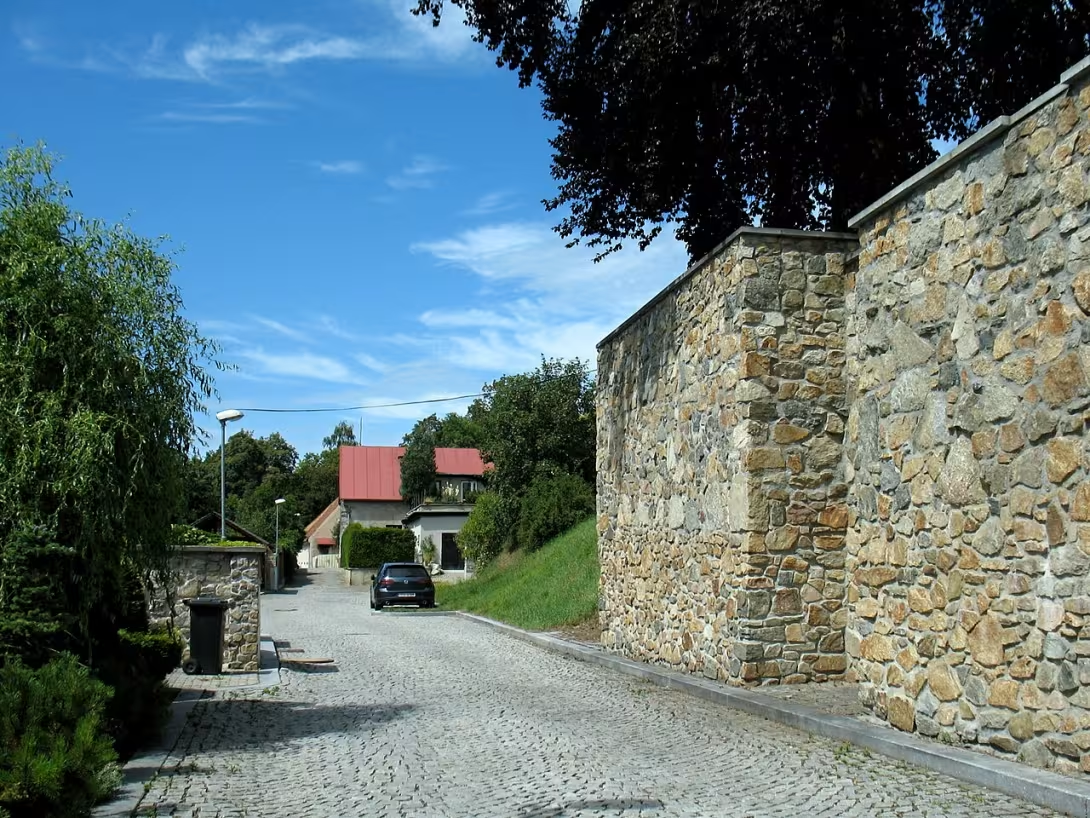
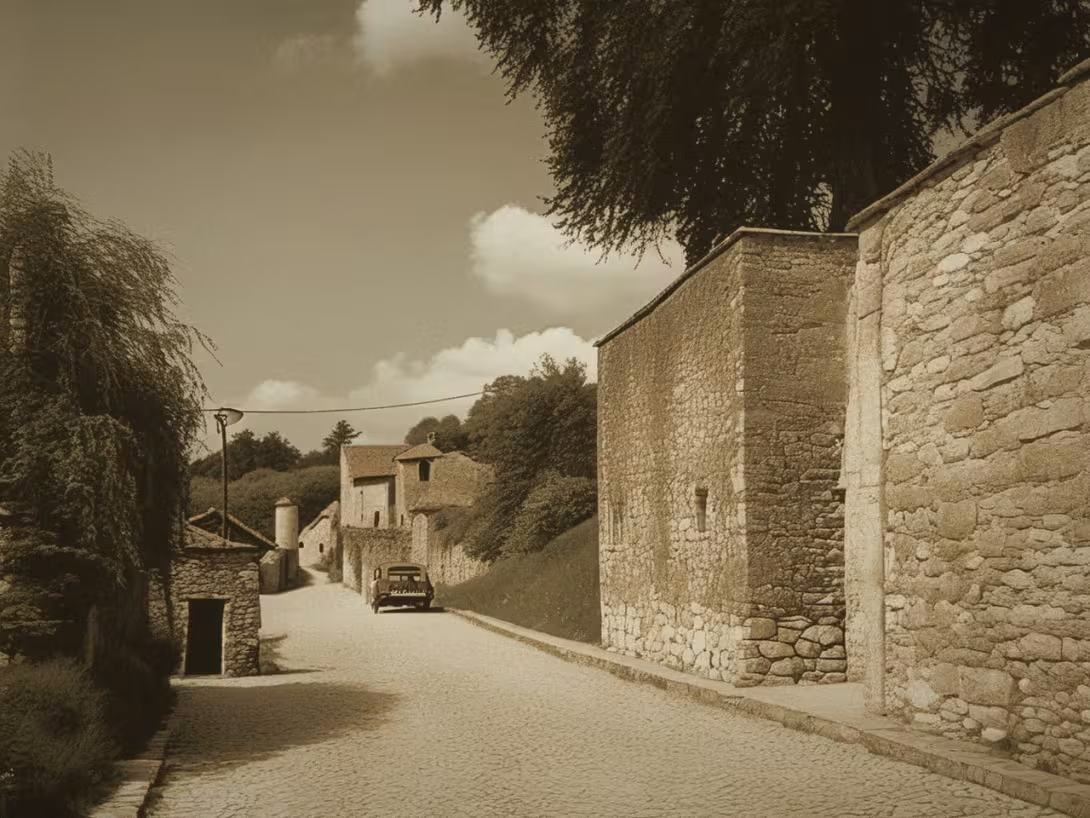
The historical appearance on the left is an AI-generated visualisation and serves as inspiration only.
Historical milestones
- 1343
- The mention of Dobyhost of Plana as a traditional founder.
- 1373
- Grant of Pilsen City Law.
- 1407
- The plan was being held by páni z Elsterberka.
- 1433
- The city was owned by Planští ze Žeberka.
- 1517
- The city went into the hands of the Šliks.
- 1805
- The demise of the lower gate.
Architectural development
The wall was as strong as 1.5 meters in its base and was often only connected with clay. In the second half of the 15th century, key gun holes were added to the system. Some parts were later absorbed by modern buildings.
Historical events
In 1373 the city was granted Pilsen city law. In 1805, the doors of the Lower Gate were closed.
Owners
Traditionally Dobrohost z Plané (1343), since 1407 páni z Elsterberka, in 1433 Planští ze Žeberka, since 1517 Šlikové.
Points of interest
- The defense system protected the city from three sides using natural slopes and artificial structures. - As a binding agent between the stones of the walls, clay was used. - The Lower Gate was destroyed in 1805. - Some elements of the wall have been absorbed by a new building or replaced by modern walls.
Guide
Show guide text
This text was created by artificial intelligence and has not been editorially reviewed. It may contain inaccuracies.
Welcome to Plana. You are standing before something that once determined the fate of this place, the remnants of the urban fortifications that form a silent mark after a long time, when the security of every citizen was a matter of survival. Perhaps at first glance, these stone sections seem like mere fragments of the past, but try to look at them differently. Imagine them as a solid boundary that separated the city's safe inner world from the danger of the outside world. Feel this atmosphere of peace, which today accompanies these ruins, and remember that it was here, in this place, that the various destinies, the mighty lords and the people seeking protection, clash.
Now let's go back to the past together to understand why these walls began to appear in the landscape. The entire history of this defense system dates back to the second half of the 14th century. At that time, the need to protect the city was becoming more urgent. If we want to look at the roots themselves, we have to mention the year 13 hundred and forty-three. It was at that time that the name Dobrohoste of Plana appeared in the documents, which is considered the traditional founder and figure that laid the foundations for the future importance of this city. Building walls was not only a matter of stone, but above all a matter of strategic decision. The city became an important centre, and in 13 hundred and seventy-three it was granted Pilsen City Law, which meant another rise and the need to have solid and reliable protective walls. These walls were not just a common fence, but a complex system that protected the city from three sides.
Now pay attention to what you see right in front of you and what you should be looking for next time you look at these remains. Even though we see only parts of it today, the original defense system was extremely sophisticated. It wasn't just about the walls. Part of the whole scheme was the gates that controlled the entrance to the city, the towers that served as observation rooms, and the moat supplemented by a boulder. Notice how the defense was using not only human work, but also what nature offered. The defensive system used natural slopes of the terrain in a clever way, which connected with artificial structures. It created an insurmountable obstacle for anyone who tried to invade the city. Now if you look at the very structure of these preserved sections, you might notice an interesting detail. As a binder between individual stones, not only was calcium mortar used, as is often the custom, but also ordinary clay. This simple but effective method of bonding materials was typical of the construction industry at the time and gives these residues their specific character.
Today, the most significant preserved parts of the walls are mainly in the southern part of the city. If you go in this direction, you'll find their sections near the Church of the Assumption of the Virgin Mary. It is in this area that you can best perceive the connection between the spiritual life of the city and its physical protection. But it is important to remember that the image we see today is just a fragment of something much bigger. Time and progressive modernization had a great influence on the walls. Some parts of the original fortification were gradually absorbed by the new construction. See how old stones intersect with houses and walls today? This is proof of how the city of Planá has constantly grown and adapted to new times, often at the expense of its old defence elements.
But this whole history is not just about stones and dirt, but especially about people who saw their certainty in these walls. Planá passed through the hands of many powerful families who owned and determined its direction. After the founding years of Dobrovost, in the year fourteen hundred and seven, the city came to the hands of the masters of Elsterberk. Later, in the year fourteen hundred thirty-three, the Planští ze Žeberka was ruled here. Each of these families has left a trail in the history of the city, even if it may not appear at first glance directly on these particular ruins. Another important figure in the history of ownership was the House of Šlik, who joined the city in 1517. Each era brought new needs, new ways of administration and, of course, new challenges for maintaining city walls.
If you are looking for something that really surprises you or makes you think, focus on the fate of some of the gates. You may imagine that all the gates were preserved in some form, but reality was different. There was also, for example, the Lower Gate, which was an important part of the whole system. But it has disappeared over time. The exact date of its demise is recorded in chronicles as year one thousand eight hundred and five. It's a fascinating notion that there was once another gate that was the key to entering the city, and there was no trace of it today. This reminds us how fragile the monument is and how quickly the face of the place we consider eternal can change.
Now that you've been through basic history and understood the importance of these walls, I suggest you continue your walk. Take a look at the rest of the city and try to find traces of the ancient, protected Plana in every street, every older house. You may encounter other stone fragments or sections of walls that are merely silent witnesses of ancient times. Remember to stop at the Church of the Assumption of the Virgin Mary, where the remnants of the walls are best visible. Thank you for joining us on this short journey through time. We wish you a pleasant continuation in discovering the secrets of this historic city.
Tips for visitors
The best time to visit the city fortification in Plana is during spring and autumn, when the weather is best favourable for walking and photography. During these months you can enjoy quiet moments in the atmosphere of ancient walls without having to carry the heat of the summer sun.
Parking can be found in the vicinity of Plana. Transport to the city can be carried out by car or public transport, with specific connections and routes to be verified in the current route search engine. The city fortification is available, so the road from the city centre will not be too long.
When visiting, take with you suitable shoes and clothes for walking on rocks. It is also good to wear a camera if you are interested in photographing historical monuments in different light conditions. Don't forget to bring an umbrella and umbrella for any weather changes.
For photography are the best places on the fortification itself, where you can capture a panoramic view of the surroundings. The best light for photography is yesterday and in the evening when the sun illuminates the walls from an angle and shading adds drama to the images.
In the vicinity of the city fortification there are several other interesting sights that you can see. The Church of St. Peter and Paul and the Church of the Assumption of the Virgin Mary are ideal for those interested in the architectural and spiritual history of the region. Plansky Castle and Castle also offer wealth of history and a beautiful view of the city of Planá.
Businesses nearby
Do you run a restaurant, accommodation, shop, museum, rental, wellness or other visitor service near this monument? Show yourself directly to the people heading to it — this is how they will see you in the app and on the web:
Nearby
Church of St. Peter and Paul, Church of the Assumption of the Virgin Mary, castle and castle in Plansky.
Accommodation nearby
Themed route
1. Plansky castle, castle. Historical building representing an important point in the area. 2. Lock, lock. An architectural object located near the castle. 3. City fortification in Plana (walls), city fortification. The main destination of the trip shows the ancient protection of the village. 4. Church of St. Peter and Paul, church. Significant sacral monument within the location. 5. Church of the Assumption of the Virgin Mary, church. An important religious object in the village.
Seasonal recommendations
Spring: In the spring season městské opevnění v Plané offers a unique atmosphere where the sun rays illuminate green nature around the wall. Flowers and young tree leaves provide the landscape with livelihood and color, creating an ideal environment for relaxation on the outside. At this time it is recommended to visit the memory early in the morning or late in the afternoon to avoid the middle of the day when the temperature may be more pronounced and the attendance rate higher. The good thing is to bring light clothes and a tie or a jacket for a cooler morning and evening.
Summer: For years, městské opevnění v Plané becomes a popular destination for visitors looking for shelter in front of a sunny garden. Long days and warm weather allow a long time to explore historical rooms and parks around the walls. This season it is advisable to come early in the morning or late in the afternoon to avoid the biggest crowds. Remember the sun protection - cream with high SPF, hat and light clothes are essential elements for a comfortable visit.
Autumn: In autumn months, městské opevnění v Plané offers a special atmosphere when tree leaves turn into different shades and the sun sets early. This season is ideal for romantic walks or photography, especially in months with fewer visitors as October. Due to colder temperatures, it is recommended to wear layered clothing and possibly a blanket or coat. Visit the memory in the early afternoon time to enjoy the sunny moments before the arrival of cooler evenings.
Winter: The winter period of the city fortification in Plana offers a peaceful and slightly magical atmosphere when snow covers the walls and surroundings. Short days and cold weather create unique conditions for a visit that is often less visited than in other seasons. It is advisable to come to memory early in the morning when the temperature is not so low and the sun rays can illuminate the snow cover. Remember warm clothes - fur, blanket or coat, gloves and hat are essential for a comfortable visit in cold months.
Visualizations and artistic views


The visualisations are generated by artificial intelligence and serve as inspiration.
Photos from the area
Real photos taken near the monument


Zdroj a licence jsou uvedeny u každého snímku.
Tips from visitors
No tips yet. Be the first!
Log in and add your tip.
Sources and literature
Fotografie: Marie Čcheidzeová / CC BY-SA 4.0 — Wikimedia Commons. The author and licence also appear when you hover over the image.
Faktickým podkladem tohoto textu byl článek na Wikipedii, jehož autory jsou přispěvatelé Wikipedie. Článek je dostupný pod licencí CC BY-SA 4.0.
Location on the map
More monuments – Planá
Show all in the municipality
Příběhy a pověsti
Legendy, pověsti a příběhy spjaté s touto památkou

Fotografie návštěvníků
Zatím žádné fotografie. Buďte první, kdo přidá fotografii z návštěvy!
Přihlaste se a přidejte svou fotografii nebo hodnoťte.
Za ověřenou návštěvu v aplikaci získáte víc bodů — poznáme podle GPS, že jste na místě.
Reviews and comments