



Kostel svatých Petra a Pavla (Planá) Church
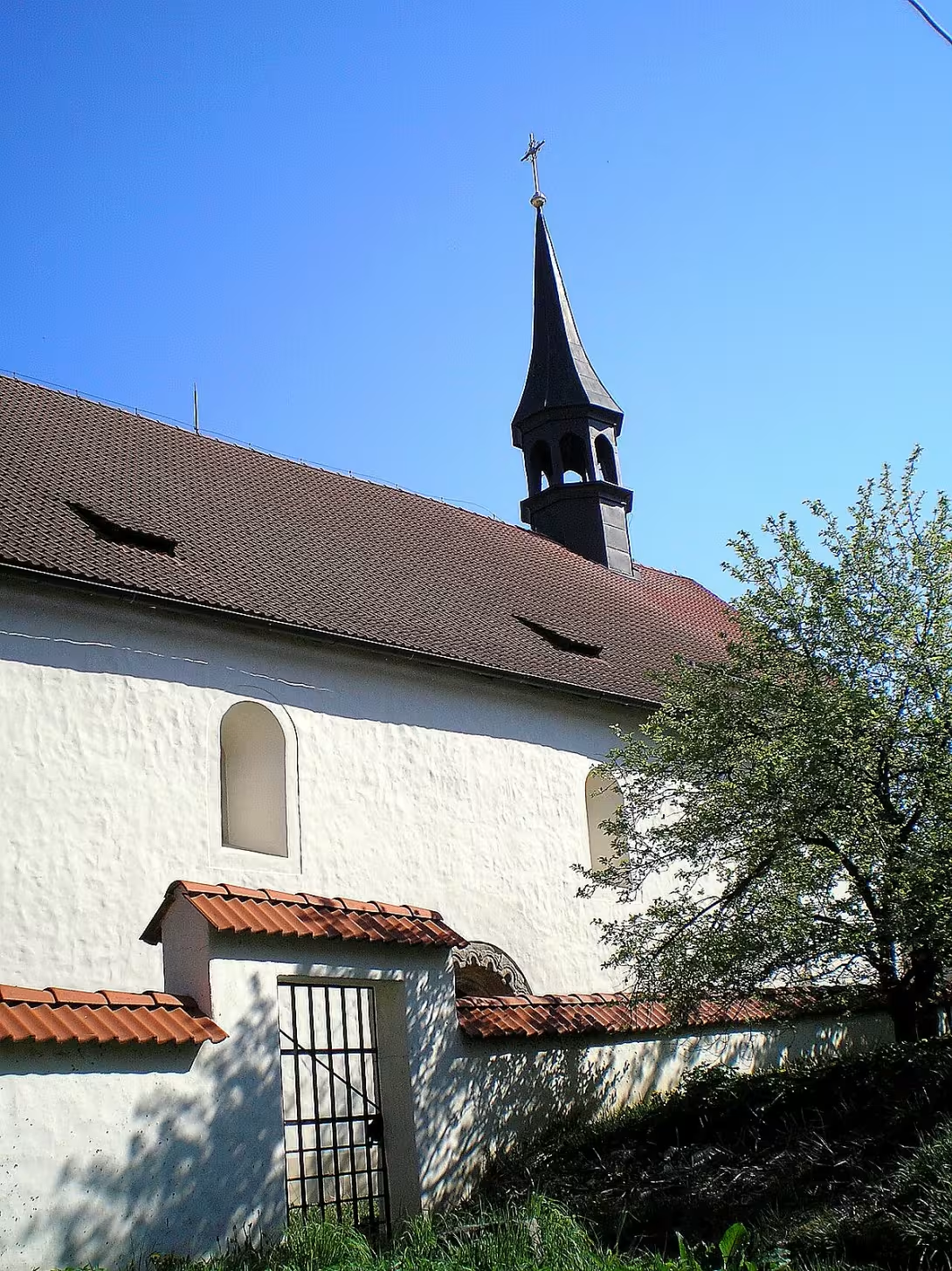
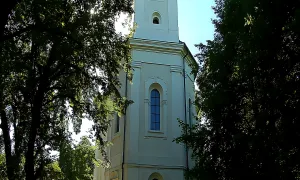
The Church of Saints Peter and Paul in Planá is the oldest preserved monument in the town. It stands on a gentle slope about 0.5 km east of Svobody Square. This historical edifice blends Romanesque and Gothic architectural styles, originating from its construction over a Slavic burial ground around the early 13th century. Today, it serves as both a testament to Planá's rich history and a gallery for cultural and social events.
The church’s origins are deeply rooted in Bohemia during the early 13th century, a period marked by consolidation under the Přemyslid dynasty. This era saw significant architectural activity influenced by Romanesque and emerging Gothic styles across Europe. Although specific details about its construction remain undocumented, archaeological research conducted around 1980 suggests it was established at this time. It is believed to have been built on a site inhabited since the 10th-11th centuries, initially serving as a Slavic burial ground.
Architecturally, the Church of Saints Peter and Paul began with Romanesque elements such as a semi-circular portal and an eastern window in the presbytery. As it transitioned into the Gothic period during the 13th century, notable additions included a triumphal arch and wall paintings within the church. In the late 14th century, a now-lost octagonal bell tower was constructed on the north side of the presbytery. Despite undergoing Baroque modifications in 1675, which involved repairs while retaining its original masonry, the church maintained much of its historical architectural integrity.
Throughout its history, the Church of Saints Peter and Paul has experienced several dramatic changes. During the Thirty Years' War, it was destroyed by fire along with its surrounding suburb. However, it underwent significant restoration in 1675, incorporating Baroque elements while preserving its original masonry. By 1787, under Emperor Joseph II's reforms, the church was secularized and repurposed as a barn. These events highlight the resilience of this monument through various historical upheavals.
Today, after extensive reconstruction at the end of the 20th century, the Church of Saints Peter and Paul stands as a multifunctional cultural space. Its current state includes a single-nave rectangular structure with a narrower presbytery on one side, featuring remnants of its rich architectural history such as the preserved semi-circular portal and medieval wall paintings. The church is now accessible to visitors who can explore its historical significance while enjoying contemporary cultural events.
Visiting the Church of Saints Peter and Paul offers an opportunity to connect with Planá's storied past. Its transformation from a sacred space to a vibrant cultural venue underscores its enduring relevance in the community. This monument not only reflects architectural evolution over centuries but also serves as a living testament to the town’s resilience and adaptability, inviting all interested in history and culture to explore its rich heritage.
Then and now
Drag the slider to compare how the landmark may have looked when it was built with the view today.
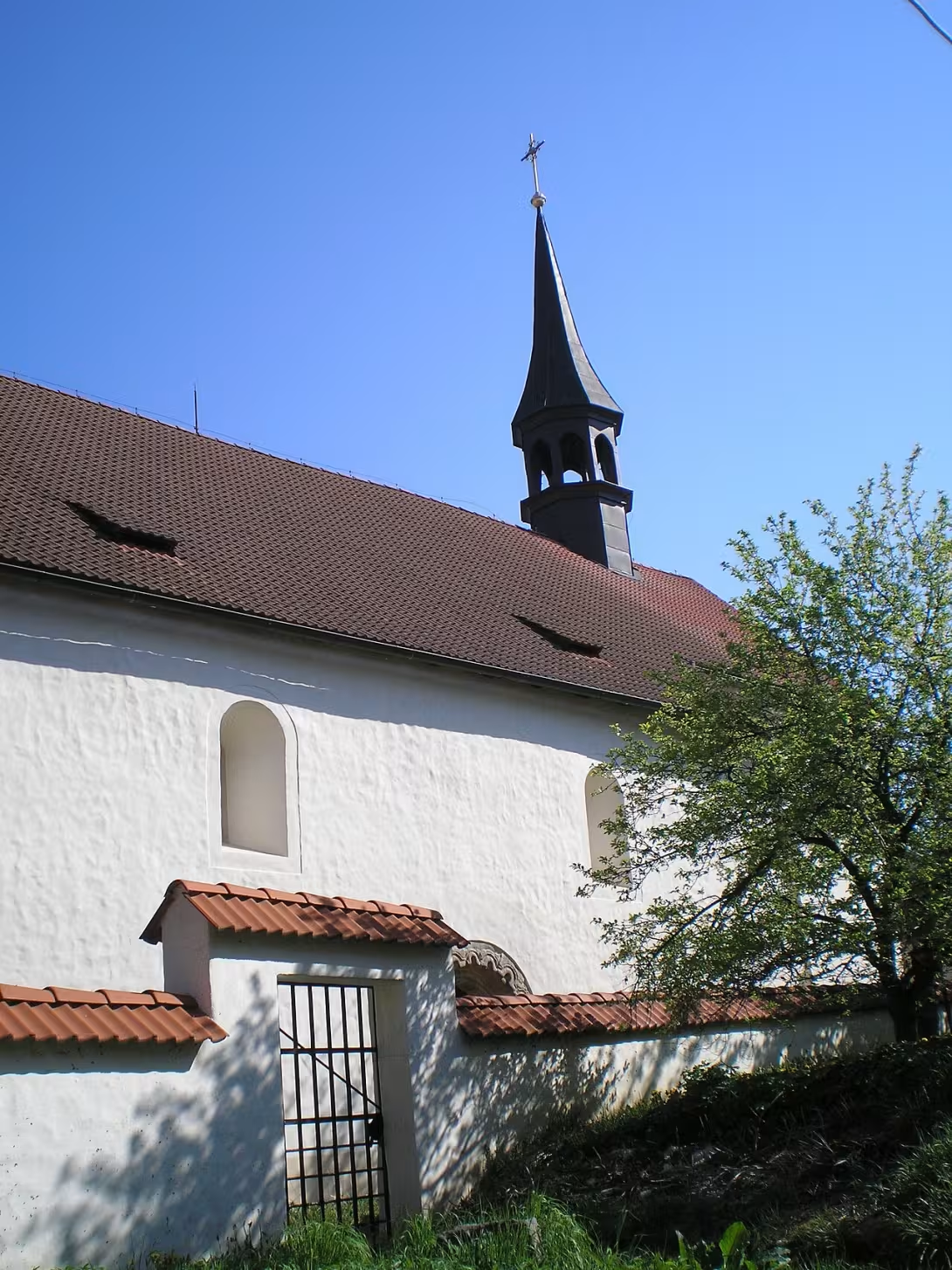
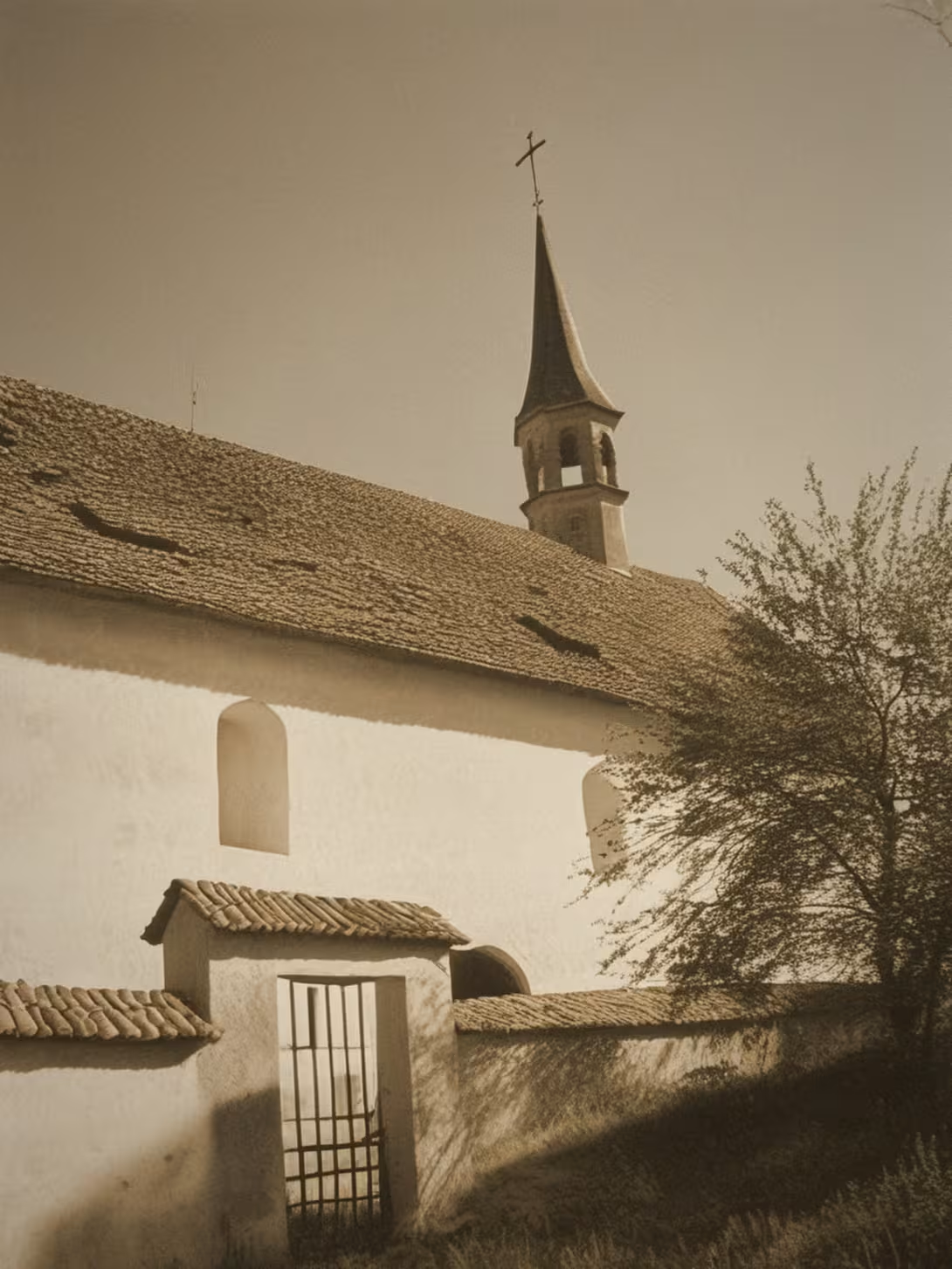
The historical appearance on the left is an AI-generated visualisation and serves as inspiration only.
Historical milestones
- 1980
- Archaeological research dated the foundation of the church to the early 13th century.
- 1675
- The church was repaired and Baroque elements were added.
- 1787
- The church was secularized under Emperor Joseph II's reforms.
Architectural development
The Church of Saints Peter and Paul began with Romanesque elements such as a semi-circular portal and an eastern window in the presbytery. In the 13th century, it saw Gothic influences with the addition of a triumphal arch and wall paintings. A now-lost octagonal bell tower was added to the north side of the presbytery in the late 14th century. The church underwent significant reconstruction at the end of the 20th century.
Historical events
The church was likely constructed in the early 13th century, transitioning from Romanesque to Gothic styles.
During the Thirty Years' War, the church burned down along with its surrounding suburb.
In 1675, it underwent repairs and Baroque modifications while retaining its original masonry.
By 1787, under Emperor Joseph II's reforms, the church was secularized and repurposed as a barn.
Points of interest
- The Church of Saints Peter and Paul was originally built on a Slavic burial ground from the 10th to 11th centuries, suggesting that its location has been significant for sacred purposes long before it became a Christian church.
- Despite suffering destruction during the Thirty Years' War, the church's resilience is highlighted by its restoration in 1675, which incorporated Baroque elements while preserving much of its original Romanesque and Gothic architecture.
- In an unusual twist of fate, the church was secularized under Emperor Joseph II’s reforms in 1787 and repurposed as a barn, reflecting the broader trend of religious suppression during that era but also showcasing its adaptability to changing societal roles.
- The now-lost octagonal bell tower, constructed in the late 14th century on the north side of the presbytery, is an intriguing architectural feature whose absence adds mystery and curiosity about the church's historical appearance.
- Today, the Church of Saints Peter and Paul serves as a multifunctional cultural space, hosting contemporary events while preserving medieval wall paintings and Romanesque portals, thus blending its rich history with modern community life.
Guide
This guide is narrated by a synthetic voice generated by artificial intelligence.
Show guide text
This text was created by artificial intelligence and has not been editorially reviewed. It may contain inaccuracies.
Welcome to the historic Church of Saints Peter and Paul in Planá, a remarkable testament to architectural evolution and historical depth. As you stand here on this gentle slope about half a kilometer east of Svobody Square, take a moment to soak in the serene ambiance that surrounds this oldest preserved monument in the town.
The story of this church begins with its foundations laid in the early 13th century over what was once a Slavic burial ground dating back to the 10th and 11th centuries. This suggests that the site has long been considered sacred, even before it embraced Christianity. Over time, the structure has witnessed significant transformations, from its original Romanesque roots to Gothic influences, reflecting the dynamic history of Planá.
As you gaze upon the church, notice how the architectural styles blend harmoniously. The Romanesque elements are evident in the sturdy construction and rounded arches, while the Gothic style is visible through pointed arches and intricate details that add a layer of elegance to the structure. This fusion not only tells a story of artistic evolution but also speaks to the resilience of this sacred site.
Throughout its history, the church has served various purposes and endured numerous challenges. In 1675, it underwent repairs during which Baroque elements were added, enriching its architectural narrative. However, it faced significant adversity during the Thirty Years' War when it suffered destruction, only to rise again with renewed vigor. The secularization in 1787 under Emperor Joseph II's reforms marked another pivotal moment in its history.
While many details about the architects and specific historical figures remain shrouded in mystery, the church itself is a repository of stories waiting to be discovered. It’s fascinating to think that beneath your feet lies a Slavic burial ground, a silent witness to centuries of human activity and spiritual significance.
Today, this historic monument functions as a gallery, inviting visitors like you to explore its rich tapestry of history and artistry. As you continue your journey through Planá, allow yourself to be drawn into the layers of time encapsulated within these walls. Each step is an opportunity to connect with the past and appreciate the enduring legacy of this remarkable church.
Thank you for joining us on this exploration. We hope you carry forward the stories and impressions from this visit as you continue to uncover more treasures in Planá. Safe travels, and may your journey be filled with discovery!
Frequently asked questions
Can the monument be visited?
Religious buildings are usually open mainly during services; at other times a visit is normally arranged with the parish or the operator. We have not verified specific times.
Where is the monument?
Location: Bezdružická 937, Planá, Plzeňský kraj. The map on this page shows the exact spot.
Why is the monument protected?
It is listed in the Central List of Cultural Monuments of the Czech Republic as a cultural monument (register no. 25200/4-1840).
Businesses nearby
Do you run a restaurant, accommodation, shop, museum, rental, wellness or other visitor service near this monument? Show yourself directly to the people heading to it — this is how they will see you in the app and on the web:
Accommodation nearby
Themed route
Thematic Tour Plan: Kostel svatých Petra a Pavla (Planá)
1. Kostel svatých Petra a Pavla (Planá) - Church Begin your journey at the heart of this tour, the stunning Kostel svatých Petra a Pavla in Planá. This church is renowned for its beautiful Baroque architecture and rich history dating back to the 18th century. It's a must-visit for anyone interested in religious art and historical architecture.
2. Obecní úřad Planá - Town Hall A short walk from the church, visit the Obecní úřad Planá. This town hall is an architectural gem that reflects the local history and governance of Planá. It's worth exploring for its well-preserved structure and insights into the civic life of this charming town.
3. Náměstí Míru - Peace Square Continue your exploration to Náměstí Míru, a central square that offers a glimpse into the daily life and community spirit of Planá. The square is often surrounded by local shops and cafes, providing an ideal spot for relaxation and people-watching.
4. Památník padlým - War Memorial Nearby, you'll find the poignant Památník padlým, a memorial dedicated to those who lost their lives in wars. This site is significant for its historical value and serves as a place of reflection and remembrance for visitors.
5. Kostel svatých Petra a Pavla - Church Interior Conclude your tour by revisiting the Kostel svatých Petra a Pavla to explore its interior further, if time permits. Delve into its impressive frescoes, altars, and historical artifacts that offer deeper insight into its cultural and religious significance.
This thematic route provides a comprehensive experience of Planá's heritage, focusing on key sites within the town itself.
Seasonal recommendations
Spring: Visiting the Church of Saints Peter and Paul during spring offers a unique experience as nature awakens around Planá, providing lush greenery and vibrant wildflowers that enhance the church's historical beauty. The soft light filtering through budding trees creates an ethereal atmosphere ideal for photography enthusiasts. As temperatures begin to rise, visitors should wear layers to accommodate fluctuating weather conditions. While crowds are generally manageable, arriving early in the morning can ensure a peaceful exploration of this splendid site.
Summer: In summer, the Church of Saints Peter and Paul is bathed in warm sunlight that highlights its architectural details, making it an excellent time for those who appreciate historical architecture. The surrounding landscape blooms with vibrant colors, adding to the picturesque setting. Summer attracts more visitors due to pleasant weather, so it's advisable to arrive early or visit during weekdays to avoid larger crowds. Comfortable walking shoes and light clothing are recommended, along with sunscreen and a hat to protect from the sun.
Autumn: Autumn transforms Planá into a tapestry of reds, oranges, and yellows, providing a stunning backdrop for the Church of Saints Peter and Paul. The cooler temperatures make it an ideal time for leisurely walks around the church grounds, enjoying the crisp air and vibrant foliage. During this season, visitors can expect fewer crowds, allowing for a more intimate experience with the site's history and architecture. Layered clothing is recommended to adapt to varying weather conditions throughout the day.
Winter: Winter at the Church of Saints Peter and Paul offers a serene and magical atmosphere as snow blankets the landscape around Planá, creating a picturesque setting that enhances the church’s historical charm. The shorter days mean visiting hours are reduced, so planning your visit in advance is crucial. While the site may see fewer visitors due to colder weather, it's important to dress warmly with layers, including thermal wear and waterproof outer garments. An early arrival ensures you make the most of the limited daylight for exploring this enchanting winter wonderland.
Visualizations and artistic views


The visualisations are generated by artificial intelligence and serve as inspiration.
Photos from the area
Real photos taken near the monument


Zdroj a licence jsou uvedeny u každého snímku.
Tips from visitors
No tips yet. Be the first!
Log in and add your tip.
Sources and literature
Photos: Original uploader was HonzaXJ at cs.wikipedia / Public domain — Wikimedia Commons. The author and licence also appear when you hover over the image.
Faktickým podkladem tohoto textu byl článek na Wikipedii, jehož autory jsou přispěvatelé Wikipedie. Článek je dostupný pod licencí CC BY-SA 4.0.
Location on the map

Příběhy a pověsti
Legendy, pověsti a příběhy spjaté s touto památkou

Fotografie návštěvníků
Zatím žádné fotografie. Buďte první, kdo přidá fotografii z návštěvy!
Log in a přidejte svou fotografii nebo hodnoťte.
Za ověřenou návštěvu v aplikaci získáte víc bodů — poznáme podle GPS, že jste na místě.
Reviews and comments