



Městské opevnění ve Stříbře Town walls
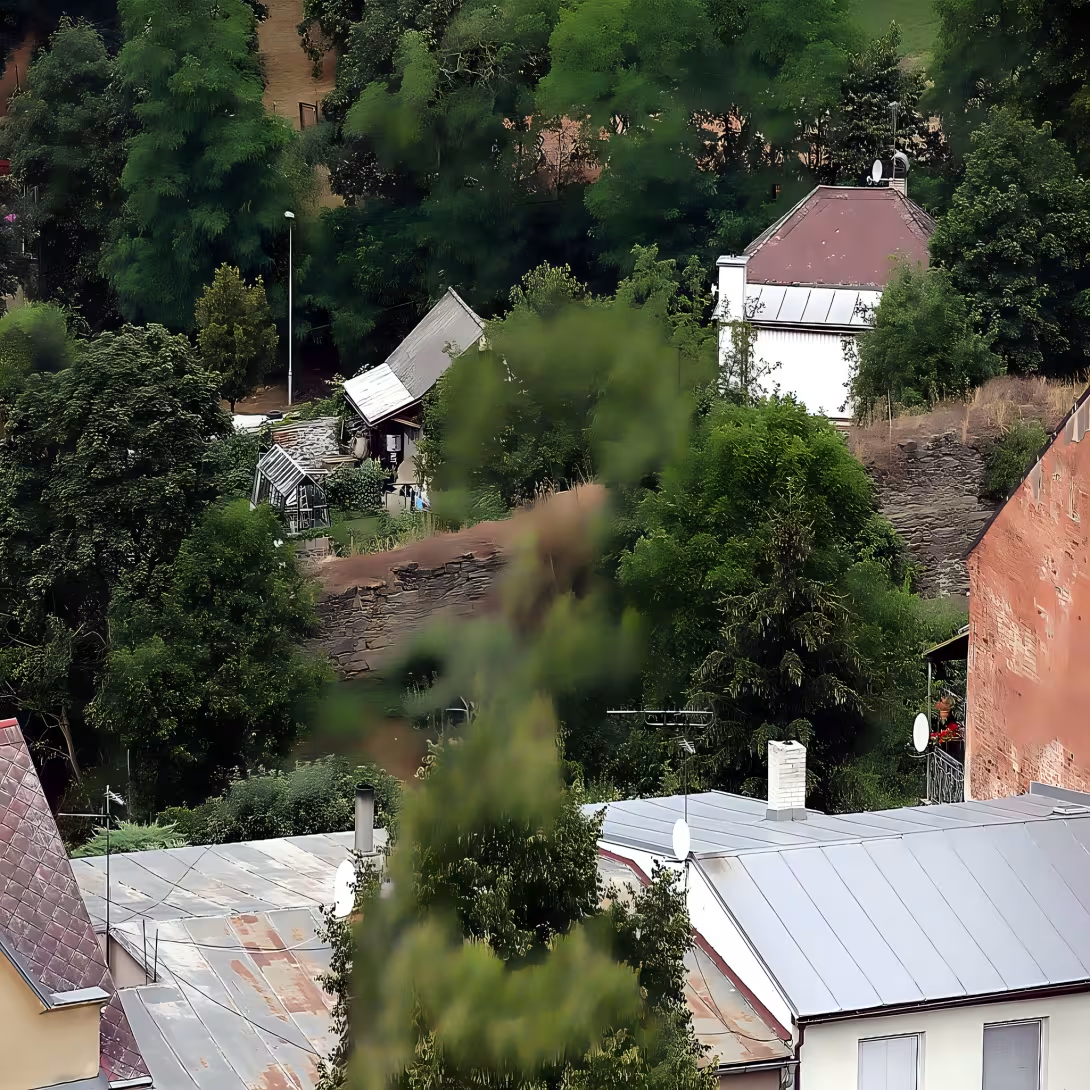
Městské opevnění ve Stříbře in Tachov district consists of partially preserved medieval walls from the mid-13th century. This cultural monument is important in its role in defending the city during the Hussite wars. There are still sections of walls, towers and gates in the historical centre and in the Lower Town.
The fortification was created in the middle of the 13th century when King Václav I. founded the city in the place of the older mining settlement. Probably there was also the first fortification of the Lower Town. His walls are very thick in some places, which suggests the importance of this silver mining section. In the troubled end of the 14th century, the city's strength was strengthened.
The inner city has approximately a circular plan of about 12 hectares. The course of the walls was determined by the terrain boundaries of the Mje valley in the south and east and the valley of the Těchlovický creek in the north and northeast. Most of the preserved parts of the inner city lead just along the edges of the terrain, which is why the original moat and park are mostly missing. In the west, however, traces of the ditch are visible. In the southwest there is a two-metre thick wall on the outboard of the trench. These masonry include Žizkov's bastion with rectangular firing holes, which had originally carved lining. The width of the walls is approximately 200 centimeters. In the western section, the base is over two metres wide and the upper part is 170 centimetres wide. A wall of about 210 centimeters thick is preserved in the Lower Town.
During the Hussite wars, the city stood on the side of Emperor Zikmund. The military captain Jan Havonec of Švamberg maintained a crew of 200 militants here. Stříbro resisted the attempt to conquer Jan Zizkou, but in 1426 the city was dominated by Přibík z Klenové with the support of Jan Zlastlik's troops from Svoshín. A year later, the city successfully defended the Crusader's army, even though the walls damaged the siege cannons. In the first half of the 16th century, repairs were carried out on the walls, such as roofing, plastering or grafting on the rolls. Since the beginning of the 19th century, the fortifications were gradually torn down and the stones were used to build houses. The lower gate was demolished in 1839 and the upper gate in 1877.
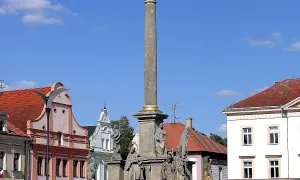
The remains of the fortifications are today protected as a cultural monument. Among the most significant elements are the Renaissance passageway tower at the bridge over the Man, built in 1555-1560 by the builder Benedict Volch of Ferrol. The tower stands at the road bridge, which is a separate monument with the statue of St. John Nepomuk from 1721 by Lazarus Widmann. In Lower Town you can see Koubka's goal. Its ground floor dates back to the 1930s and the passage is 290 centimetres wide. The other preserved parts are a torso half-circle tower north of the square and a bastion in Pilsen Street.
Městské opevnění ve Stříbře offers a view of the medieval architecture and history of the mining town. He's an important witness to the past worth visiting.
Historical milestones
- 1426
- Conquest of Hussite City
- 1427
- Defence of the city before the Crusader army
- 1839
- Lower Gate demolition
- 1877
- Upper gate demolition
Architectural development
The original walls come from the Middle Ages and were later modified, for example in the first half of the 16th century there was roofing and plastering of walls. During the nineteenth century, the fortifications were partially demolished for the use of stone in building houses. The current state consists of fragments of walls, torza towers and Renaissance passageway tower.
Historical events
In 1426 the city was conquered by the Hussite, in 1427 it resisted the Crusader's army and in the nineteenth century the fortifications were gradually torn down.
Points of interest
- Partly preserved medieval walls come from the mid-13th century. - Fortification was important in its role in defending the city during the Hussite wars. - The inner city has approximately a circular plan of about 12 hectares. - The Renaissance passageway tower at the bridge via the Mizi built in 1555- 1560 Benedict Volch from Ferrol. - Koubka's gate in Lower Town dates back to the 1930s and its passage is 290 centimeters wide.
Guide
Show guide text
This text was created by artificial intelligence and has not been editorially reviewed. It may contain inaccuracies.
Welcome to the historic centre of Silver, where you are standing in front of parts of the city fortification, which testify to the rich past of this area. In front of you, there are sections of ancient walls, towers and basins that still tell stories of courage and defense. When you're standing here for the first time, you feel like you've gone into the past, where every stone angle has its own story.
Městské opevnění ve Stříbře dates back to the mid thirteenth century. It was built to protect the inhabitants and wealth of the city, which was an important center for mining and silver trade. Over the centuries, the wall system has evolved and adapted to match new military technologies and political changes. During the Hussite wars, these walls played a key role in defending the city against attacks.
Look up and notice how different sections of the walls have been preserved here. You can see the older parts of the walls with their simple architecture, which shows the period techniques of the construction. Note also the towers and basins that stand still today as witnesses of earlier times. These elements add additional depth and historical value to the site.
One of the key moments in the history of this place is 1426 when the Hussites conquered Stříbro. The following year, in 1427, the city had to defend itself against the attack of the Crusader army. These events point to the strategic importance of Silver and its fortification during the Hussite wars.
The interesting thing is that despite the destruction of some important elements such as the Lower Gate in 1839 and the Upper Gate in 1877, many of the historic atmosphere still persists here. The inner city has an interesting circular plan of about twelve hectares, which gives the place a unique structure.
We will now invite you to further explore. Walk past these ancient walls and look at the details that you can only realize closely. Every stone has a story, every tower talks about a past that you can explore.
Thank you for your visit and we hope you will find yourself here with the upcoming discovery of the history and beauty of the city Stříbro.
Tips for visitors
For the best experience we recommend a visit in spring months or autumn when the weather is more pleasant for walking along the walls. For photography are ideal late afternoon hours when the sun creates interesting shadows on historical stones and highlights the structure of walls.
The location is easily accessible by car and public transport. Check the current traffic connection in internet search engines.
Due to the uneven terrain for some parts of the walls we recommend shoes with good grip. For families with children a walk around the walls is a great way to show history in motion. Don't forget to bring the drinking water and possibly a snack.
When visiting walls you can use the proximity of other attractions. We recommend to visit the Minorite monastery or explore the road bridge with the tower and statue of St. John Nepomuk, located in close proximity.
Frequently asked questions
Can the monument be visited?
This is a structure in a public space that can usually be seen from outside free of charge. We have not verified that this particular one is freely accessible.
Where is the monument?
Location: Stříbro, Plzeňský kraj. The map on this page shows the exact spot.
Why is the monument protected?
It is listed in the Central List of Cultural Monuments of the Czech Republic as a cultural monument (register no. 1000146926).
Businesses nearby
Do you run a restaurant, accommodation, shop, museum, rental, wellness or other visitor service near this monument? Show yourself directly to the people heading to it — this is how they will see you in the app and on the web:
Events nearby
Zdroj akcí: otevřená data měst a obcí ČR (Národní katalog otevřených dat) a kalendář akcí Národního památkového ústavu.
Nearby
Minorite monastery, road bridge with tower and statue of St. John Nepomuk.
Accommodation nearby
Trips and activities nearby
Guided tours, tickets and activities nearby from GetYourGuide
Affiliate link: if you buy from the partner, we may receive a commission. The price for you does not change.
Search tours and activities →Themed route
Thematic cruise route in Silver
1. City fortification in Silver (walls) * Type: Historical landmark * Visit the city fortification in Silver, which is the most significant reminder of the history and defence systems of the early modern era. The walls are an ideal place for understanding the spirit of the past and architecture that protected this important city.
2. Minorite monastery * Type: Historical religious building * After exploring the wall, visit the Minorite monastery, which is not only a beautiful example of Gothic architecture, but also an important cultural and historical centre. The monastery offers a view of the city's rich past and its religious traditions.
3. Road bridge with tower * Type: Historical construction * The following step of the route is a road bridge with a tower which served as a key passage and defence device. This structure represents the technical skill of past builders and their ability to integrate function with architectural beauty.
4. Statue of St. John Nepomuk * Type: Art statue * Take a trip at the statue of St. John Nepomuk, which is not only a symbolic place for pilgrims, but also a beautiful work of art. The statue resembles the history and culture of the region, embodies faith and traditions of the people.
This route offers you a deep insight into the history and culture of Silver through its most important monuments.
Seasonal recommendations
In spring, city walls wake up with nature. Around the stone walls, the trees begin to bloom and everything turns green, creating an optimistic atmosphere. The lighting is delicate and ideal for observing the details of the construction. We recommend wearing layered clothes because the morning cold can be tenacious while the afternoon will be pleasant. The journey is calmer at this time, which allows for a comfortable survey without large groups of people.
Summer months bring the most sunny days and intense colors. The walls in the sunlight are monumental and the surrounding vegetation is in full bloom. Due to a higher number of visitors it is best to arrive first morning or just before sunset when temperatures are lower and light is golden. Don't forget the headgear and plenty of fluids, because in open places it can be hot in this period.
The autumn season is characterized by a misty morning clock and variable leaf colors that create a nostalgic atmosphere around historical walls. The sun is lower, which creates interesting shadows on the uneven surface of the walls. It is advisable to prepare waterproof shoes and a warmer jacket because humidity and cooler air can be felt. The best time to visit is in the morning when the light is most stable.
In winter, the fortifications are very raw and peaceful, especially if everything is covered with snow or frost. The landscape is rather quiet and desolate in this period, which offers a sense of isolation from the daily rush. The necessity is very warm and wind-resistant clothing, because stone structures can be in the surrounding area cold. In advent time or during freezing days, count on shorter light time and possible access restrictions.
Visualizations and artistic views


The visualisations are generated by artificial intelligence and serve as inspiration.
Photos from the area
Real photos taken near the monument

Zdroj a licence jsou uvedeny u každého snímku.
Tips from visitors
No tips yet. Be the first!
Log in and add your tip.
Sources and literature
Photos: MartinVeselka / CC BY-SA 4.0, rozlišení zvýšeno umělou inteligencí — Wikimedia Commons. The author and licence also appear when you hover over the image.
Faktickým podkladem tohoto textu byl článek na Wikipedii, jehož autory jsou přispěvatelé Wikipedie. Článek je dostupný pod licencí CC BY-SA 4.0.
Location on the map

Příběhy a pověsti
Legendy, pověsti a příběhy spjaté s touto památkou

Fotografie návštěvníků
Zatím žádné fotografie. Buďte první, kdo přidá fotografii z návštěvy!
Log in a přidejte svou fotografii nebo hodnoťte.
Za ověřenou návštěvu v aplikaci získáte víc bodů — poznáme podle GPS, že jste na místě.
Reviews and comments