



Mlýn v Uhříněvsi Water mill
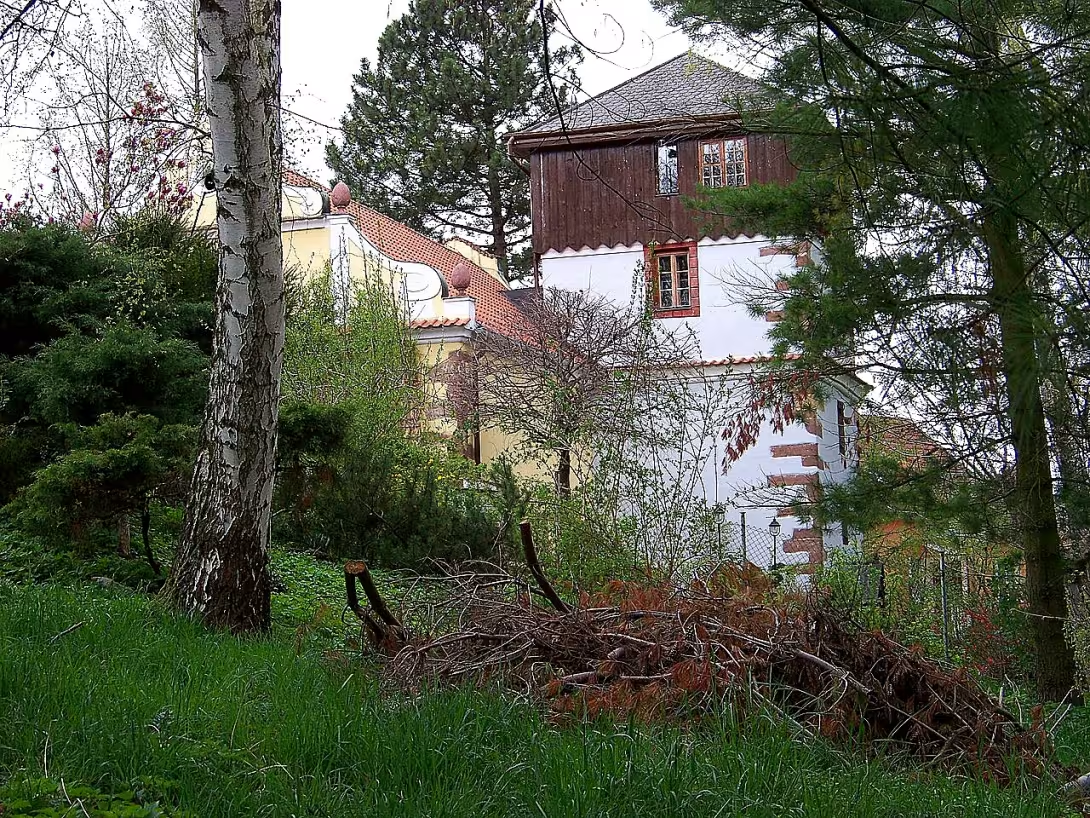
Mlýn v Uhříněvsi is a renaissance water building on the River River. The oldest part of the complex is the tower from the second half of the 16th century. The building is protected as a cultural monument of the Czech Republic.
The dominant feature of the complex is the prism tower, probably from the second half of the 16th century, which originally served as a water factory. Around 1591 it was undermined for the result of the drive and the location of the water wheel. That's when the mill was built.
The original Renaissance ground floor building has a two-story volt shield with cones. The three-story prism tower is embedded in the mill. Its lower two floors are walled with a stone corner bossa and separated by a continuous stucco ledge, while the third floor consists of a woodwork. In the interior, there were crosses with nails and rolled arches with sections. In the mill is preserved black kitchen with fireplace, which is decorated with stone cracorca consoles. On the eastern shield and both facades you can see the stone lining of the windows.
After a 30-year war, the complex was baroque and a wooden superstructure was added to the tower. In 1727 a stool beam was placed in the building, on which he survived this year. The mill performed its function until the beginning of the First World War, then only the milling of scrap. Since the 1950s, the building has been used for living. Between the 1960s and 1990s, a gradual reconstruction was carried out by the owner, academic architect Pavel Pirkl.
The interior of the mill and the water wheel torsion drive remained in the area, although the outside wheel was no longer preserved.
The Mlýn v Uhříněvsi stands north of the Pond of Náblomač, between the streets of the Old Mill and the Behind the Puddle. The monument represents a rare example of a preserved water mill with unique architectural details from various epoch. The site is worth visiting for a better understanding of the historical development of water management in this location.
Historical milestones
- 1591
- Digging the tower for the outcome of the drive and adding the mill building.
- 1727
- A summer on the mill's stool.
- 1950
- The start of using the mill to live.
Architectural development
The original Renaissance ground floor building has a volute shield with cones. After the 30-year war, the complex was baroque and the tower acquired a wooden superstructure. In the second half of the 20th century, extensive reconstruction took place in the hands of architect Pavel Pirkl.
Historical events
In 1591, the tower was adapted for the result of the drive, in 1727 it was located a year-old beam and since the 1950s the building has been used for housing.
Points of interest
- The oldest part of the complex is the tower from the second half of the 16th century, which originally served as a water plant. - The original Renaissance building has a two-story volt shield with cones. - In the mill is preserved black kitchen with fireplace, which is decorated with stone cracorns. - In 1727 a stool beam was placed in the building, on which he survived this year. - The mill performed its function until the beginning of World War I, then only the grinding of scrap.
Guide
Show guide text
This text was created by artificial intelligence and has not been editorially reviewed. It may contain inaccuracies.
Welcome to the Heternives. Stop for a moment, take a breath and feel the atmosphere of this place. You are standing right in front of the historic water mill, which is a silent witness to centuries of transformation in this area. In front of you, there is a structure that combines practical function with architectural beauty in its form, and it is all helped by the proximity of the Roman creek, whose water once powered the mill wheels and brought life and work here. The first impression of this complex is the impression of stability and history, which carries the traces of several different ages.
Let us now look together at how this space was created and what its historical context is. If you look at the total composition of the complex, you will notice that it is not uniform, but it consists of several parts. The oldest of them is the prism tower, which dates back to the second half of the 16th century. It's fascinating to realize that this tower wasn't originally used to grinding grain. It was built as a water plant, which was a key part of the infrastructure at the time to secure water supplies. The break in the history of this place occurred in the year one thousand five hundred ninety-one. It was this year that there was a fundamental change when the tower was undermined in order to be able to bring out the drive, i.e. the water supply channel, and the mill building itself was added to the tower. By this step the water plant became a full-fledged mill complex, which began to serve the community in Uhranev.
Now pay attention to the architecture you see right in front of you. Look up at the front of the building. Note the characteristic two-story volt shield, which is decorated with cones. This element is typical of Renaissance style and gives the building a noble, almost castle-like look. The Renaissance brought here order and aesthetics to balance the hard work that took place inside the mill. But the building was constantly developing its face. After the devastating experiences of the Thirty Years' War, the construction has undergone baroque modifications. The Baroque brought new details into the mill and transformed some of the original Renaissance elements, creating the interesting hybrid you admire today. The whole project and its modifications are followed by architect Pavel Pirkl, who helped shape this unique object.
Now, if we could go inside in our thoughts, you would see a completely different world. The interior of the mill is a real treasure for anyone who loves old craft and history. The original mill system was preserved in the premises, which reminds us how complex and fascinating the mechanical processing of grain was in the days before electrification. Note if you have the opportunity to look inside, cross vaults and historical stone linings that give space a sense of monumental and endurance. These elements are not only an ornament, but they show the high quality of the construction and that the mill should be a construction for generations.
One of the most fascinating places in the interior is the mill where the so-called black kitchen is located. It's a space where there used to be cooking on an open fire, and smoke escaped naturally, giving these rooms their specific feel and color. In this kitchen there is a fireplace, which is decorated with stone cracorns. Cracorns are special types of stone elements that provide stability and aesthetic detail. Imagine the hustle and bustle here, the smell of fresh bread and the noise of the mill wheel, which mixed with the cracking of wood in the fireplace.
And now I'm going to lead you to one interesting thing that's hidden in the mill like a small time code. If you could get to the mill's stool beam, you would find a thousand seven hundred twenty-seven engraved years ago. This beam is not only a structural element, but it serves as a historical document that tells us exactly when one of the major stages of modifications or repairs of the mill took place. It's kind of a silent signature of builders from that time that survived centuries and today tells us about the continuity of work in this place.
However, the history of the mill has not only its industrial and architectural side, but also its human side. After centuries of grinding grain and operation as a water mill came the time of change. Since the mid-twentieth century, namely the year one thousand nine hundred fifty, the mill has ceased to be used for its original purpose. The building was adapted for housing. It's fascinating to think how space once full of dust, noisy machinery and hard work turned into a home, a place of peace and privacy. This change of function has helped to preserve the building for the next generation, even though it no longer fulfils its original role in the economy of the village.
Now if you look at the whole structure again, try to connect all these pieces together. From the 16th century waterworks, to the Renaissance volute shield with cones, to baroque treatments, to today's use. Mlýn v Uhříněvsi is not just a building made of stone and wood, it is a layered story about human ingenity, about the ability to adapt to the times and respect for the natural resources, which in this case is the Roman stream.
Now all that remains is for you to look at everything in peace with your own eyes. Walk around the building, feel the texture of the stone, look again at the details of the shield and try to imagine what the mill looked like in the year one thousand five hundred ninety-one, when the crop was first ground here. I hope this short trip to history has helped you better understand the value of this place.
Thank you for your attention, and I wish you a pleasant ongoing tour of the Hořinev. You can now put your headphones down and be inspired by the silence and beauty of this historic area. Goodbye.
Tips for visitors
The best time to visit is in the morning or late afternoon when the light is softer and the surrounding nature calmer. In the summer months, the proximity of the water offers a pleasant shade and pleasant air for walks.
We recommend to bring comfortable shoes for nature walks. The most suitable places for photography are at the stream of the Roman creek, especially in the golden watches, when the glare of water is beautifully reflected into the historical building.
In the area you can explore the Pond of Náblámač, which is an ideal destination for families with children who want to enjoy outdoor activities by the water. The whole area around the mill offers a peaceful atmosphere for family moments.
Frequently asked questions
Can the monument be visited?
This is a technical monument. Some are open as exhibitions, others are out of use or on private land. We have not verified whether this one is accessible.
What are the opening hours and admission?
We have not verified the opening hours or admission. Current information is published by the operator.
Where is the monument?
Location: Uhříněves, Hlavní město Praha. The map on this page shows the exact spot.
Why is the monument protected?
It is listed in the Central List of Cultural Monuments of the Czech Republic as a cultural monument (register no. 1000156915).
Businesses nearby
Do you run a restaurant, accommodation, shop, museum, rental, wellness or other visitor service near this monument? Show yourself directly to the people heading to it — this is how they will see you in the app and on the web:
Events nearby
Zdroj akcí: otevřená data měst a obcí ČR (Národní katalog otevřených dat) a kalendář akcí Národního památkového ústavu.
Nearby
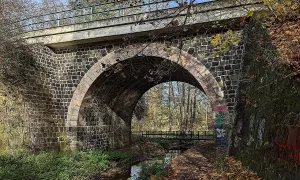
Rybník Nadýmač a tok Říčanského potoka.
Accommodation nearby
Trips and activities nearby
Guided tours, tickets and activities nearby from GetYourGuide
Affiliate link: if you buy from the partner, we may receive a commission. The price for you does not change.
Search tours and activities →Themed route
1. Pond Bitter (water surface): A quiet place to start walking and watching water level. 2. Greek stream (water flow): A path along the river trough that offers a pleasant environment and leads directly to the goal. 3. Mlýn v Uhříněvsi (historical monument): Top of the trip where one can admire the unique construction and its history.
Seasonal recommendations
In spring the mill will surround fresh greenery and flowering gardens that bring a feeling of renewal to the surroundings. Soft spring light highlights the details of the historical facade and the waking nature creates a fresh atmosphere. We recommend to dress in layered clothes because the weather is usually unstable, and plan a visit in the morning when the air is the cleanest.
The summer season brings rich green trees and intense sun, which creates deep shadows in the corners of the building. The atmosphere is full of energy and life, making the monument a pleasant destination for a short trip. Due to the increased attendance in the main summer season, come first thing in the morning to avoid the biggest crowds and heat. Don't forget light clothes and plenty of fluids.
In autumn, the landscape around the mill turns into golden and brown tones, while morning fog gives the place a mysterious and melancholy touch. It is the perfect time for photography thanks to warm evening lighting that falls beautifully on the old wall. Due to the humidity of the terrain, choose waterproof shoes and a warm jacket.
In winter, the monument works calmly and sharply, especially if it is covered by a layer of snow. The atmosphere is quiet and stopped in time, which is especially known in advent time when the place gains cosy character.
Visualizations and artistic views


The visualisations are generated by artificial intelligence and serve as inspiration.
Photos from the area
Real photos taken near the monument


Zdroj a licence jsou uvedeny u každého snímku.
Tips from visitors
No tips yet. Be the first!
Log in and add your tip.
Sources and literature
Photos: ŠJů / CC BY-SA 3.0 — Wikimedia Commons. The author and licence also appear when you hover over the image.
Faktickým podkladem tohoto textu byl článek na Wikipedii, jehož autory jsou přispěvatelé Wikipedie. Článek je dostupný pod licencí CC BY-SA 4.0.
Location on the map

Příběhy a pověsti
Legendy, pověsti a příběhy spjaté s touto památkou
Fotografie návštěvníků
Zatím žádné fotografie. Buďte první, kdo přidá fotografii z návštěvy!
Log in a přidejte svou fotografii nebo hodnoťte.
Za ověřenou návštěvu v aplikaci získáte víc bodů — poznáme podle GPS, že jste na místě.
Reviews and comments