



Müllerova vila Villa
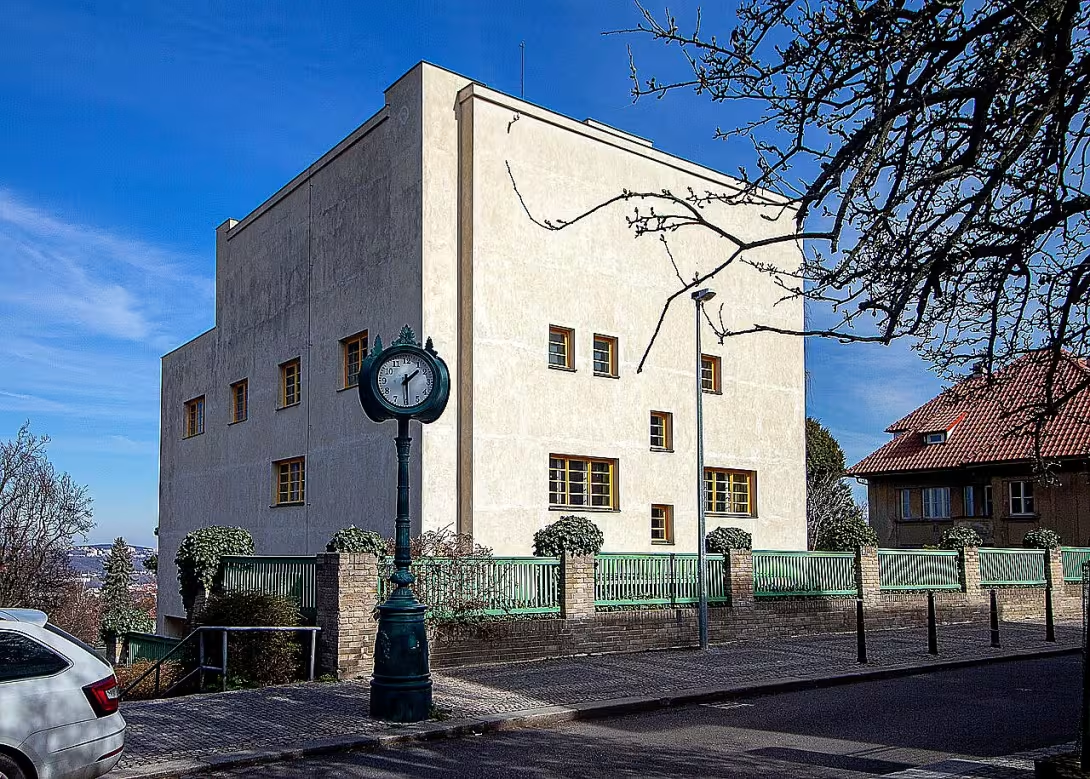
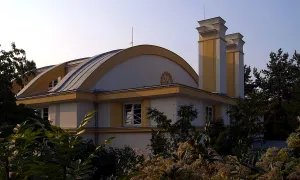
Müllerova Vila, located in Prague's Střešovice district, is a Modernist villa designed by Adolf Loos and completed in 1930. This architectural masterpiece embodies early modernist principles through its innovative use of space and materials, making it a significant cultural monument in the Czech Republic. The villa stands as an iconic example of functionalism, reflecting both historical and artistic significance.
Commissioned by František Müller, an engineer and co-owner of the Kapsa-Müller construction company, which specialized in reinforced concrete techniques, the project was brought to fruition through a collaboration between Adolf Loos and architect Karel Lhota. This partnership occurred due to Loos' declining health and resulted in a structure celebrating his 60th birthday, marking an important phase in modernist architecture.
Architecturally, Müllerova Vila is renowned for its application of the Raumplan concept, emphasizing fluid spatial design over traditional floor divisions. The villa's reinforced concrete skeleton supports varying room heights and sizes, each tailored to specific functions and interconnected through a continuous flow of space. This approach reflects Loos' belief in designing spaces rather than conventional floor plans or facades. Externally, the villa features a stark white cubic facade that aligns with Loos’ theory from his 1908 essay "Ornament and Crime," which criticized decorated surfaces. Inside, however, it contrasts with its lavish decoration of comfortable furniture and luxurious materials like marble, wood, and silk.
Ownership of Müllerova Vila has seen dramatic changes over time. Initially inhabited by František and Milada Müller for eighteen years, the villa was nationalized in 1948 following the communist coup. After Milada Müllerová's death in 1968, key elements were acquired by the Museum of Applied Arts and the National Gallery, leading to its designation as a Cultural Monument of the Czechoslovak Republic. Under communist rule, it served various functions, including storage and library space for the Institute of Marxism–Leninism. Following the Velvet Revolution in 1989, the property was returned to Müller's daughter, Eva Maternová, who sold it to the City of Prague in 1995. Since then, the city has managed the villa through the Museum of the City of Prague, overseeing its restoration and reopening as a museum in 2000.
Müllerova Vila is not only an architectural landmark but also a subject of scholarly interest. Architectural historian Beatriz Colomina explored themes of space and sexuality within the structure in her work "Sexuality and Space" (1992). She analyzed Loos' design choices, such as opaque windows and raised sitting areas, suggesting they create a dynamic interplay between public and private spaces, power, and control.
Today, Müllerova Vila stands as an important cultural site open to visitors interested in modernist architecture. However, it is currently closed for renovation from February 2025 until at least April 2026. The villa's historical significance, architectural innovation, and the stories of its inhabitants make it a compelling destination for those exploring Prague’s rich architectural heritage.
Müllerova Vila offers more than just an architectural experience; it provides insight into the cultural shifts and artistic movements that shaped early 20th-century Europe. Visitors are invited to explore this remarkable site upon its reopening, where they can appreciate both its historical context and enduring legacy in modernist design.
Then and now
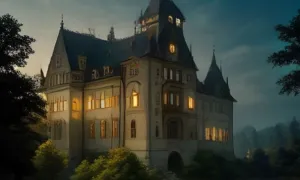
Drag the slider to compare how the landmark may have looked when it was built with the view today.
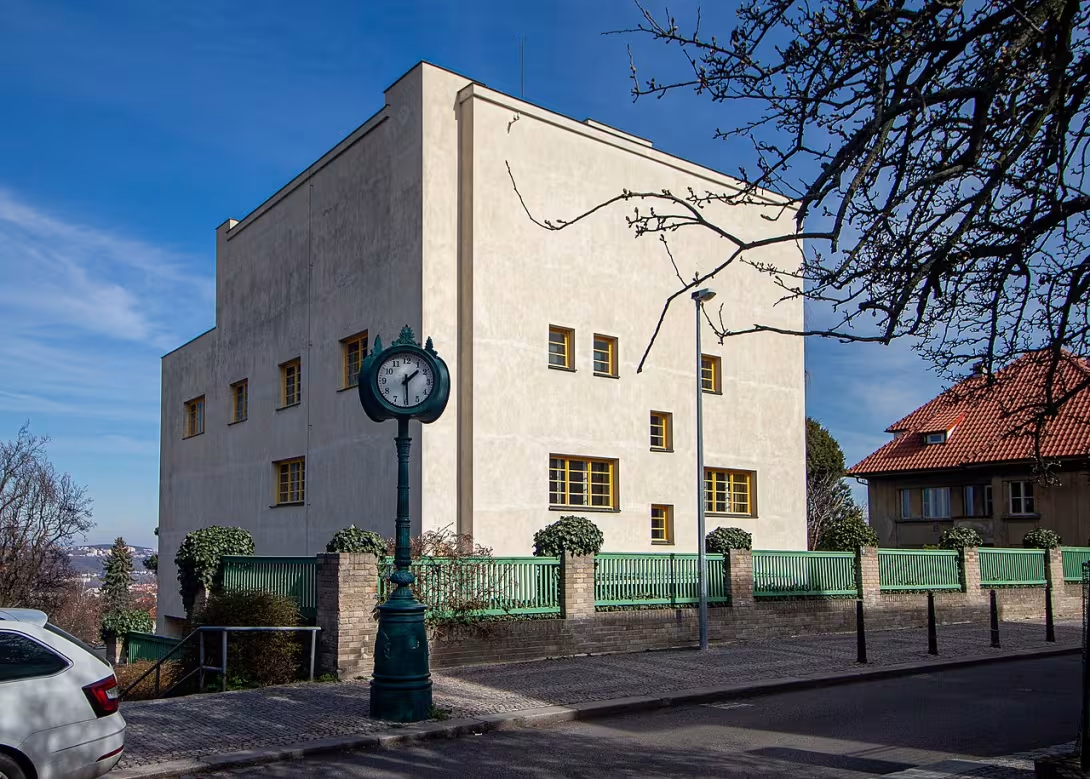
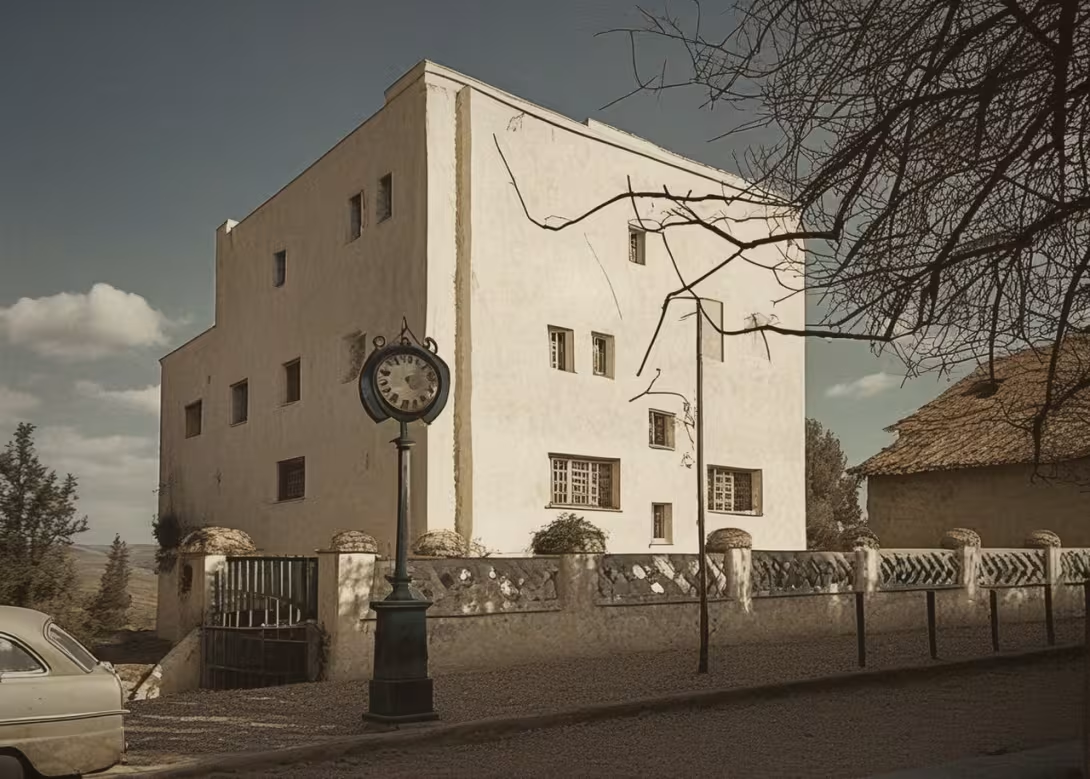
The historical appearance on the left is an AI-generated visualisation and serves as inspiration only.
Historical milestones
- 1928
- Construction of Müllerova vila began.
- 1930
- Completion of Müllerova vila's construction.
- 1948
- The villa was nationalized following the communist coup.
- 1995
- Museum of the City of Prague took over management and initiated restoration.
Architectural development
Müllerova vila showcases the 'Raumplan' concept by Adolf Loos, where spaces are designed as interconnected volumes rather than traditional floors. Built with a reinforced concrete skeleton, it reflects functionalist principles and innovative spatial design. The villa underwent significant restoration in 2000 to preserve its architectural integrity.
Historical events
1928-1930: Construction completed under architects Adolf Loos and Karel Lhota.
1948: The villa was nationalized after the communist coup.
1995: The city of Prague took over management, leading to restoration efforts.
2025: The villa is closed for reconstruction.
Owners
Originally built for František Müller, the villa was nationalized after the communist takeover in 1948. Following the Velvet Revolution, the city of Prague purchased the property from Müller's heirs and restored it to its original state. It is now managed by the Museum of the City of Prague.
Points of interest
- Although Adolf Loos is credited with the design of Müllerova Vila, it was completed in collaboration with Karel Lhota due to Loos' declining health, marking a unique partnership that influenced its final form.
- The concept of Raumplan used in Müllerova Vila emphasizes fluid spatial arrangements over traditional floor divisions, showcasing Adolf Loos’ innovative approach to architecture that focuses on designing spaces rather than conventional facades or plans.
- Despite its stark white exterior aligning with Loos' theory from his essay "Ornament and Crime," the interior of Müllerova Vila is richly decorated with luxurious materials like marble, wood, and silk, creating a striking contrast between its outer simplicity and inner opulence.
- After being nationalized in 1948 following the communist coup, Müllerova Vila served various purposes under communist rule, including as storage and library space for the Institute of Marxism–Leninism, reflecting the shifting political landscape of Czechoslovakia during that era.
- Architectural historian Beatriz Colomina explored themes of power dynamics within Müllerova Vila in her work "Sexuality and Space," analyzing how Loos’ design choices like opaque windows and raised sitting areas contribute to a complex interplay between public and private spaces.
Guide
This guide is narrated by a synthetic voice generated by artificial intelligence.
Show guide text
This text was created by artificial intelligence and has not been editorially reviewed. It may contain inaccuracies.
Müller Villa, which is also called Loos Villa, is a luxurious functionalist building in Prague's Střešovice district. It stands on Nad Hradním vodojemem street and is sometimes mistakenly attributed to Ořechovka. Today it belongs to the international catalog of Iconic Houses. This catalog brings together exceptional houses and studios of the twentieth century that are open to the public as museums.
The villa was built between 1928 and 1930 for František Müller, director of the construction company Müller and Kapsa. It was designed by architect Adolf Loos and the construction was overseen by builder Karel Lhota. At the same time, Ludwig Mies van der Rohe was building the Villa Tugendhat in Brno.
The house embodies functionalist ideas, but above all it applies Loos's theory of spatial planning, which he himself called raumplan. Space here is not divided into floors, but into rooms of varying heights and sizes according to their purpose. The individual levels interweave and connect with each other. The supporting structure is made of reinforced concrete framework.
Loos explained his approach in Plzen in 1930 like this. He does not design floor plans, façades or sections, but rather spaces. He knows neither ground floor nor first floor, only continuous rooms, hallways and terraces. Each space needs a different height, after all a dining room is higher than a pantry. Art, according to him, consists in connecting spaces in such a way that moving between them is inconspicuous and at the same time functional. He added that he had succeeded best so far precisely in the house of Doctor Müller.
After the communist coup in 1948, the house was nationalized. Doctor Müller's widow, Milada Müllerová, was left with the use of only two rooms. State institutions were housed in the others, including the State Pedagogical Publishing House. Milada Müllerová tried to save as much as possible from the art collections and furniture. Whatever she did not give to friends, she at least sold. Thanks to this, after the fall of the regime, most of the items returned to their rightful places.
After the Velvet Revolution, the city of Prague bought the villa from the heirs. According to surviving photographs, they had it restored and opened to the public as faithfully as possible. In 1995 it was taken over by the Museum of the City of Prague for management and restoration was completed in the year 2000.
Loos designed another house for the Müllers, an all-wooden one, intended for their daughter Eva. According to surviving plans, a full-size model of it was to be built in the grounds of the National Technical Museum. Students of the Faculty of Architecture at the Czech Technical University were to build it under the direction of Václav Girsa. The house without a basement was to have a living room with kitchen on the ground floor and two small bedrooms and a bathroom on the first floor.
Tips for visitors
The best time to visit Müllerova vila, also known as Loosova vila, is during the late spring or early autumn months. During these times, the weather is typically mild and pleasant, making it ideal for exploring both the villa's interior and its surrounding green spaces. Additionally, visiting outside of peak tourist seasons can provide a more tranquil experience, allowing you to appreciate the architectural details without large crowds.
It is advisable to use public transportation or park in nearby areas and walk to the villa. The area is well-served by trams and buses, making it convenient for visitors who prefer not to drive.
When visiting Müllerova vila, consider bringing comfortable walking shoes as you may want to explore the surrounding green spaces or walk from nearby public transport stops. A camera is also recommended, especially if you are interested in photography, as there are several picturesque spots around the villa that offer excellent lighting conditions during golden hours—early morning and late afternoon.
For families with children visiting Müllerova vila, it's a good idea to plan for some downtime after exploring the villa. The nearby green spaces provide a great opportunity for kids to run around and enjoy nature. Additionally, consider bringing snacks or planning for a meal at one of the local cafes in Střešovice, which are within walking distance and offer family-friendly options.
Photography enthusiasts will find Müllerova vila's exterior particularly striking during the golden hours when the light is soft and warm. The villa's unique architectural features are best captured from the front or side angles where shadows play across its surfaces. Inside, natural lighting through large windows can create beautiful interior shots, especially in rooms with high ceilings.
In terms of nearby attractions within a 30-minute walk or short public transport ride, visitors can explore Hradčany Castle and other historical sites that offer a glimpse into Prague's rich history. The blend of modern architecture and green spaces around the villa also provides numerous opportunities for leisurely walks and photo sessions.
Frequently asked questions
Can the monument be visited?
Some buildings of this kind are open for guided tours, others serve another purpose or are privately owned. We have not verified whether and when this monument is open – please ask the operator. According to the heritage register restoration is under way, so access may be restricted.
What are the opening hours and admission?
We have not verified the opening hours or admission. Current information is published by the operator. Official website: https://www.muzeumprahy.cz/en/visit-villa-muller/
Where is the monument?
Location: Nad hradním vodojemem 642/14, Střešovice, Praha, Hlavní město Praha. The map on this page shows the exact spot.
Why is the monument protected?
It is listed in the Central List of Cultural Monuments of the Czech Republic as a national cultural monument (register no. 183).
Businesses nearby
Do you run a restaurant, accommodation, shop, museum, rental, wellness or other visitor service near this monument? Show yourself directly to the people heading to it — this is how they will see you in the app and on the web:
Events nearby

Zdroj akcí: otevřená data měst a obcí ČR (Národní katalog otevřených dat) a kalendář akcí Národního památkového ústavu.
Nearby
Located in Prague's Střešovice district, the villa is near historical sites like Hradčany Castle. The area features a mix of modern architecture and green spaces.
Accommodation nearby
Trips and activities nearby
Guided tours, tickets and activities nearby from GetYourGuide
Affiliate link: if you buy from the partner, we may receive a commission. The price for you does not change.
Search tours and activities →Themed route
Thematic Walking Tour: Střešovice District
1. Müllerova Vila - Type: Villa - Why Visit: Begin your tour at Müllerova Vila, a stunning example of early 20th-century architecture in Prague's vibrant Střešovice district. This villa offers a glimpse into the elegant residential designs of its time and serves as a cultural landmark within the area.
2. Střešovické nádraží (Střešovice Station) - Type: Train Station - Why Visit: A short walk from Müllerova Vila, Střešovické nádraží is an architectural gem with its Art Nouveau design. It's a perfect spot to appreciate the blend of historical and modern elements that characterize the district.
3. Střešovice Park - Type: Public Park - Why Visit: Located nearby, Střešovice Park offers lush greenery and open spaces ideal for relaxation after exploring architectural sites. It's a great place to enjoy nature amidst the urban environment of Prague.
4. Střešovické náměstí (Střešovice Square) - Type: Public Square - Why Visit: Conclude your tour at Střešovické náměstí, a lively square that captures the essence of local life. Surrounded by cafes and shops, it's an excellent spot to reflect on your visit or enjoy a coffee while taking in the vibrant atmosphere.
This thematic tour highlights the unique architectural and cultural offerings of Prague’s Střešovice district, providing a balanced experience of history, design, and leisure.
Seasonal recommendations
Spring: Visiting Müllerova vila during the spring offers a unique experience as nature begins to bloom around Střešovice, providing a picturesque backdrop for exploring the villa amidst re-construction activities. The soft morning light and longer daylight hours create an ideal atmosphere for photography enthusiasts. With fewer visitors compared to summer, it's a great time to enjoy the tranquility of Prague's outskirts while avoiding large crowds. Practical advice includes wearing comfortable shoes for walking on uneven paths and carrying a light jacket as temperatures can be variable.
Summer: The summer months at Müllerova vila are characterized by vibrant greenery and warm weather, making it an ideal time for outdoor activities in Střešovice. However, this is also the peak tourist season, so expect larger crowds, especially on weekends. To make the most of your visit, consider arriving early to enjoy a more peaceful exploration before the day heats up. Dressing in light, breathable clothing and wearing sunscreen are essential for comfort. Don't forget to stay hydrated, as the summer sun can be quite intense.
Autumn: Autumn brings a stunning transformation to Müllerova vila with vibrant foliage that paints Střešovice in warm hues of red, orange, and yellow. The cooler temperatures provide a comfortable environment for walking around the villa and enjoying the scenic views without the summer heat. This season also sees fewer tourists, allowing for a more relaxed visit. Layered clothing is recommended to adapt to changing weather conditions throughout the day. Don't miss the opportunity to capture breathtaking photos of the villa surrounded by autumn colors.
Winter: Winter at Müllerova vila offers a serene and magical atmosphere as Střešovice transforms under a blanket of snow, creating a picturesque winter wonderland around the historic site. Dress warmly in layers, including thermal wear and waterproof outer garments, to stay comfortable in chilly temperatures. Be mindful of potential ice on pathways, and consider bringing a hat and gloves to fully enjoy the winter charm of the area.
Visualizations and artistic views


The visualisations are generated by artificial intelligence and serve as inspiration.
Photos from the area
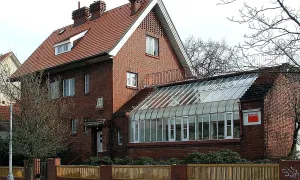
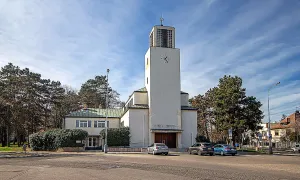
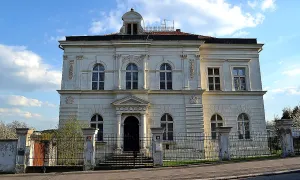
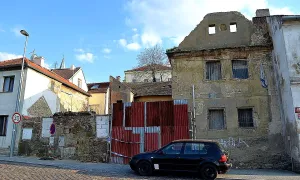
Real photos taken near the monument


Zdroj a licence jsou uvedeny u každého snímku.
Tips from visitors
No tips yet. Be the first!
Log in and add your tip.
Sources and literature
Photos: VitVit / CC BY-SA 4.0 — Wikimedia Commons. The author and licence also appear when you hover over the image.
Faktickým podkladem tohoto textu byl článek na Wikipedii, jehož autory jsou přispěvatelé Wikipedie. Článek je dostupný pod licencí CC BY-SA 4.0.
Location on the map
Příběhy a pověsti
Legendy, pověsti a příběhy spjaté s touto památkou
Fotografie návštěvníků
Zatím žádné fotografie. Buďte první, kdo přidá fotografii z návštěvy!
Log in a přidejte svou fotografii nebo hodnoťte.
Za ověřenou návštěvu v aplikaci získáte víc bodů — poznáme podle GPS, že jste na místě.
Reviews and comments