






Nad hradním vodojemem 17 Homestead
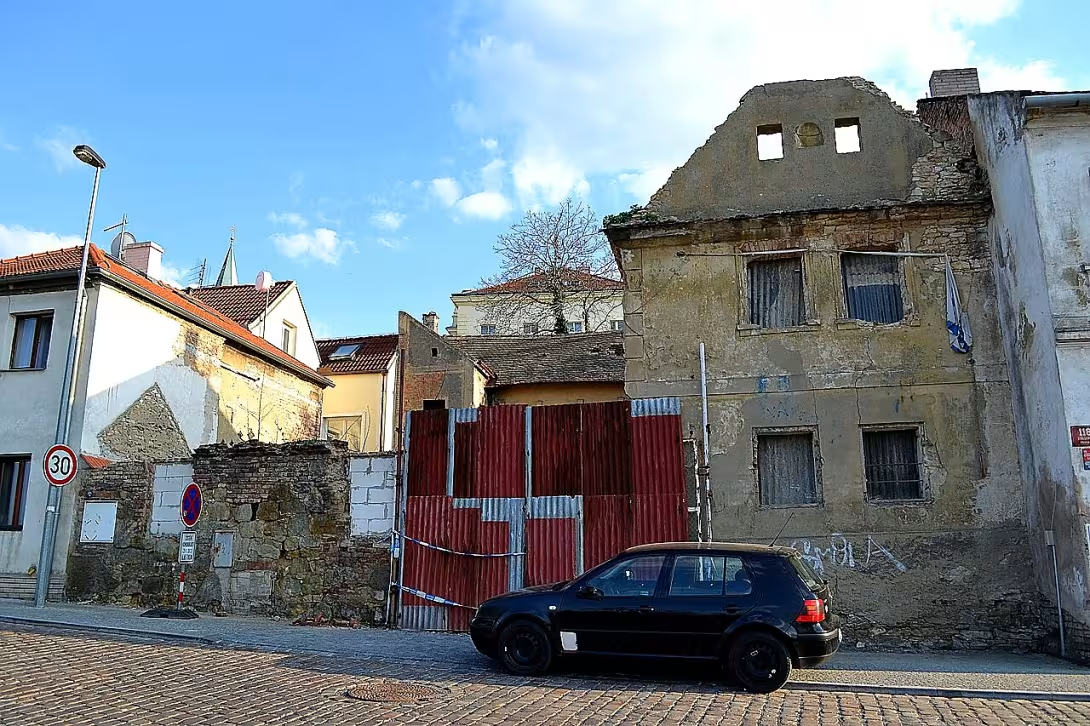
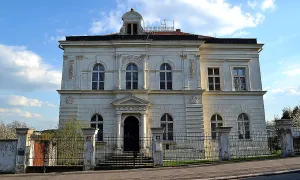
Residence No. 71 in Prague Rostovice in street There is a ruin of a classicist stone house above the castle waterjem with a gate and a courtyard. It was created in 1824-1825. The building was originally used as a housing for craftsmen and workers. It represents the remnant of the historical development of the area of the Great Střešovice.
Street It was stopped above the castle waterjet in the 1930s. This part of the village, called the Great Střešovice, was different from the Little Roošovice and Vøíchovky, now known as the Nuts. The estate is connected with the development of the southern part of the village in the vicinity of the extinct medieval backyard of the Angel, in whose place today stands the building of the falcon house. According to the roof matrices, there were mainly masons and workers from the sandpit, bricks or opal quarry. They worked for Prague in the service of the Strahov monastery.
Ruina is removed from the aural wall with accessories from the bricks. The main building was storey, two-axis street facade and a saddle roof. Of which only remains the remains of the roof structure without covering. The eastern part is today represented only by the basic masonry and imprint of the masonry on the side facade of the neighbouring house. The court wing served originally as an agricultural background with piglets for animal husbandry. It was remodeled around 1880. Until the 1970s, there were two smokescreen kitchens of two apartment units and a classicist door with a suncut motif. In the 1980s, a new wall with a gate was built into the complex.
The exact time of origin was confirmed by a dendrochronological analysis of the beam from the roof. He proved that the used tree was thrown down in 1823. In 1958, the construction was declared a cultural monument. In the 1980s, the estate was threatened by an unrealized project to build a new diplomatic district, leading to the first demolition in the area. In the 1990's, there was a squatter movement, the Medadas, who created a newer local name Old Střešovice.
In 2019, the building was excluded from the monument catalogue as being in state 5 and was abandoned from its protection. Currently, legal protection applies only to the land on which the ruins stand. The building remains a testament to the craftsmanship history of the Prague Střešovice.
Visit this place and get an idea of the original form of the building of the Great Rošovice. Even as a ruin, the estate reminds of the connection of the local craft with the history of Strahov monastery.
Historical milestones
- 1824
- Start of the estate construction
- 1880
- Court wing reconstruction
- 1958
- Announcement of a cultural monument
- 2019
- Abandoning the protection of the monument due to the demise of the building
Architectural development
The building was built from an opal wall with bricks, the main house was storey with a saddle roof. The court wing with pigsty was rebuilt around 1880. In the 1980s, a new wall with a gate was built.
Historical events
In 1958, the building was declared a cultural monument and in 2019 it was excluded from the monument catalogue as extinct.
Points of interest
- The estate was established in 1824-1825 and served as a residence for craftsmen and workers. - There were mainly masons and workers from the sandpit, brick or leech quarry who worked for the Strahov monastery. - Until the 1970s, there were two smokescreen kitchens and a door with a suncut motif. - The analysis of the beam from the roof showed that the used tree was dropped in 1823. - In the 1990s, there was a Medadas movement that illegally inhabited the building.
Guide
Show guide text
This text was created by artificial intelligence and has not been editorially reviewed. It may contain inaccuracies.
Welcome to the quiet streets of Prague Rošovice. You stand before what used to be a full estate, but today only her stone heart remains, the ruin of a townhouse with a gate and a court. Look around you and get carried away by the atmosphere of the place where time seems to be stopped. In front of you are the remains of walls that tell the story of patience, work and the lives of people who once lived here. Although it may seem that this building has long since been forgotten, its stone structure still holds firmly in the ground and reminds us of the important role it played in the history of this neighborhood. Now that your headphones are on, you can afford to be completely focused on what you see and feel. This ruin is not just a pile of bricks and stone, but a living witness to the history that took place right here in the heart of Rosovice.
Let's go back more than two centuries to 1824 to 1825 when this estate was built. At that time, the city was going through major changes and development, with the need for housing for an increasing number of craftsmen and workers. This building was not intended for nobles or rich townspeople, but for those who worked hard and helped to build Prague with their efforts. It was a functional building designed to provide shelter and comfort to those who worked for Prague or the famous Strahov monastery. Imagine how the masons, sandstone workers, brick houses, and leavings walked through here. To them, it was not just a place where they slept, but a home where friends were born and stories were shared from the workplace. This estate, which carried a descriptive number of seventy-one, was part of a network of residential buildings that ensured that craftsmen had a place to rest after a difficult day.
Now pay attention to the material from which the construction is built. The main building element is opka, typical Prague stone, which gives its characteristic texture and colour from the wonder. Note how the opal masonry is supplemented with bricks, which creates an interesting contrast between smooth or rough surface treatment of the stone and regular brick pattern. This combination of materials is not random; reflects the available construction technologies and local resources of that time. Opuka was very valuable in Prague for its strength and aesthetic value, and its use here shows that even residential houses for workers were built with some care and care for quality. Look at the remains of the walls and try to imagine what they looked like when they were new and whole. Today we see only fragments, but these fragments allow us to understand how the building was designed.
One of the most interesting elements you can see is the gate and the yard. The court was the heart of the estate, a place where everyday activity took place. This is where the laundry was dried, where the neighbors' conversations were held and where the children played. The gate that led to this court was an important architectural element that separated private space from public street space. Even though the construction is now in an advanced state of decay, it is still possible to imagine how this gate worked and how it affected the flow of life inside the yard. In 1880, the yard wing was rebuilt, suggesting that the building was being developed and adapted to the changing needs of its inhabitants. This reconstruction could include changes in the available rooms or facade appearance to make the building even more functional and comfortable.
The history of this estate is not without fluctuations. In 1958 it was declared a cultural monument, which was a recognition of its historical and architectural value. The protection of the monument was intended to save the building from further decay and to ensure its preservation for future generations. However, as it turns out, the protection of the monument is not always a guarantee of its survival. The state of the building gradually deteriorated and in 2019 it was decided to abandon the protection of the monument due to the demise of the building. This decision was difficult, but necessary, because the building was in such a bad state that maintaining it would be economically and technically impossible. This development reminds us of how fragile historical monuments can be and how important their regular maintenance and care are.
The interesting thing to think about is that until the 1970s, there were two smoke kitchens. Smoking trees were traditional Prague cuisine, which were known for its atmosphere and quality of food. Their presence in this estate suggests that there were not only residents, but also visitors who came for good cuisine and hospitality. That adds another layer to the story of this place. In addition, there was a door with a cut motif, which was another architectural detail that gave the building character and individuality. These details, although perhaps invisible or destroyed today, were part of the overall impression that the building produced.
Think about the people who lived here. We don't know their names or their specific stories, but we can imagine their lives. They were people who worked hard and often in difficult conditions. Their home was their refuge, a place where they could regenerate and draw power for the next day. This estate was more than a building object for them; It was their identity and their home. Even though we only see the ruin today, we can imagine what the steps here were, how the children laughed and how the stories were shared at the fire. This imagination helps us connect with the past and appreciate the value of this place.
In conclusion, I'd like to invite you to look at this place from different angles. Try to stand up so you can see the gate, and imagine people coming through here. Look at the walls and try to imagine what they looked like when they were new. Get carried away by the atmosphere and think about the people who lived and worked here. This ruin is a reminder of how important history is and how important it is to protect and respect it. Even if the building itself dies, its story remains and can inspire us to be more interested in the history around us.
Thank you for your attention and I wish you a pleasant exploration of Rošovice. Remember, every memory, even the ruin, has a story worth knowing. Let this story inspire you and leave you with respect for the past. Parting with this monument is not the end, but the beginning of another discovery. Continue your journey and discover other beauty and stories that Prague offers. I hope this audio guide brought you something new and interesting. When you have time, come back here and look
Tips for visitors
The best time to visit the ruins above the castle waterjet is autumn or spring, when vegetation is less dense and ensures a better view of the structure. Sunny days are ideal for understanding architectural details.
Parking is nearby, but due to limited capacity it is preferable to use public transport. Local buses and trams can be a convenient way of being admitted to Rostošovice.
When visiting, bring shoes suitable for walking on uneven terrain, sunglasses and protective tie. In addition, it is useful to carry a map or GPS device for orientation in the surroundings.
For shooting the ruins we recommend adoption in the morning or in the evening when light is mild and shady. The north side of the building offers the best views, where some of the masonry has been preserved.
In the surrounding area you can visit the falconies on the site of the former backyard of the Angel and explore the border of Břevnov. These places offer another historical context and a beautiful view of the surrounding gardens.
Businesses nearby
Do you run a restaurant, accommodation, shop, museum, rental, wellness or other visitor service near this monument? Show yourself directly to the people heading to it — this is how they will see you in the app and on the web:
Events nearby

Zdroj akcí: otevřená data měst a obcí ČR (Národní katalog otevřených dat) a kalendář akcí Národního památkového ústavu.
Nearby
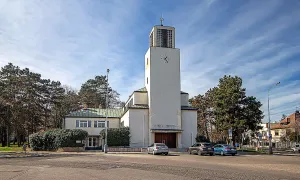
V blízkosti se nachází budova sokolovny na místě zaniklého středověkého dvorce Andělka a hranice Břevnova.
Accommodation nearby
Trips and activities nearby
Guided tours, tickets and activities nearby from GetYourGuide
Affiliate link: if you buy from the partner, we may receive a commission. The price for you does not change.
Search tours and activities →Themed route
1. The Sokol House in the place of the extinct medieval backyard of the Angel Type: Historical building Here you can discover traces of an ancient medieval courtyard.
2. Břevnova border Type: Historical area This item represents an interesting place on the interface of old territories.
3. Nad hradním vodojemem 17 (ruin) Type: Ruins The main destination of the trip, which offers a view of the historical ruins.
Seasonal recommendations
In the spring the ruin comes alive thanks to fresh green and blooming flowers that cover old walls. The atmosphere is full of hope and the light is soft. We recommend you take a lighter jacket because of the variable weather and visit the place in the morning when the air is the cleanest.
In the summer months, the dense leaves of the surrounding trees provide a pleasant shade, while the sun sharply highlights the texture of the stone. It's the perfect time for a short walk on a hot day. You better come early in the morning to avoid the greatest heat and potential groups of visitors, and don't forget the drinking water.
Autumn brings golden leaves and morning fog to Rostovice, which gives the ruins a mysterious and melancholy touch. The lighting is warm and rich in this period. The practical shoe is moisture-resistant and warm sweater, with the best time to observe the surroundings is late afternoon.
In winter, the monument works in a harsh and quiet way, especially if the wall is covered by a layer of snow. The contrast of grey stone and white landscape creates a minimalist atmosphere. Because of the cold, choose layered warm clothes and plan to visit in the morning because the days are short and the darkness comes very quickly.
Visualizations and artistic views

The visualisations are generated by artificial intelligence and serve as inspiration.
Photos from the area
Real photos taken near the monument


Zdroj a licence jsou uvedeny u každého snímku.
Tips from visitors
No tips yet. Be the first!
Log in and add your tip.
Sources and literature
Photos: Sefjo / CC BY-SA 3.0 — Wikimedia Commons. The author and licence also appear when you hover over the image.
Faktickým podkladem tohoto textu byl článek na Wikipedii, jehož autory jsou přispěvatelé Wikipedie. Článek je dostupný pod licencí CC BY-SA 4.0.
Location on the map
Příběhy a pověsti
Legendy, pověsti a příběhy spjaté s touto památkou
Fotografie návštěvníků
Zatím žádné fotografie. Buďte první, kdo přidá fotografii z návštěvy!
Log in a přidejte svou fotografii nebo hodnoťte.
Za ověřenou návštěvu v aplikaci získáte víc bodů — poznáme podle GPS, že jste na místě.
Reviews and comments