



Panenská Homestead
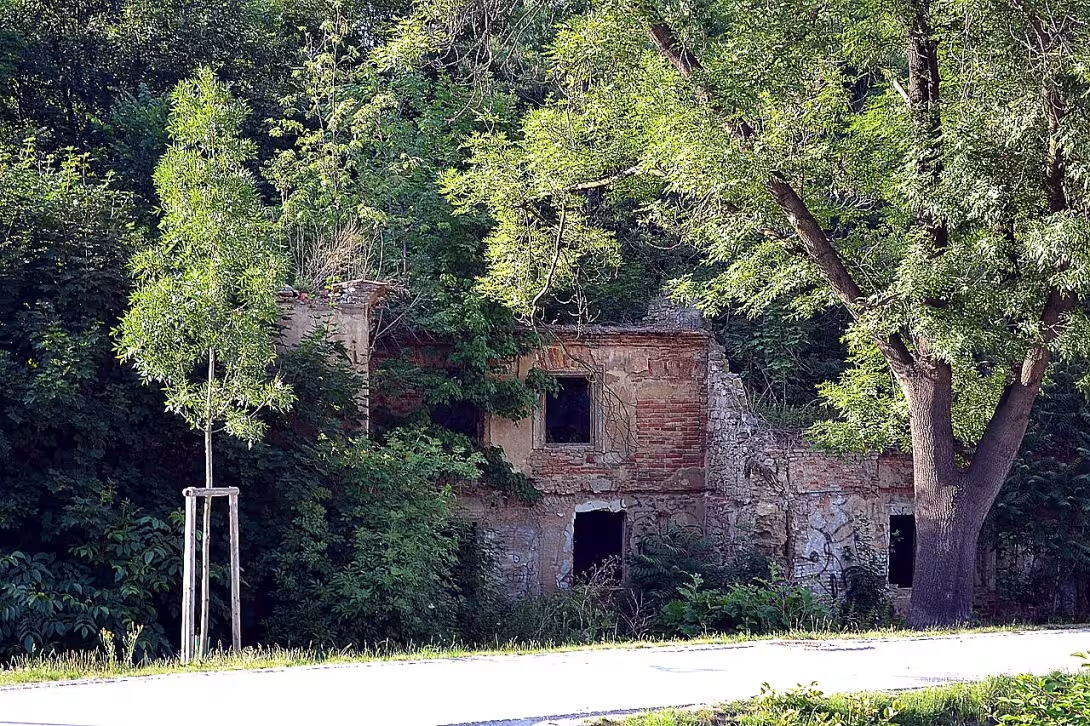
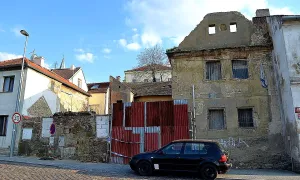
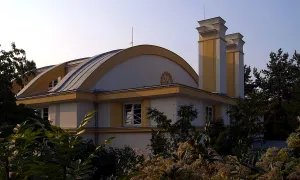
Panenská, also known as Na Virgin, is a historical ruin in the village Střešovice, which belongs to Prague 6. This monument has roots dating back to the 17th century when the original Virgin vineyard was built. Today there is only one building with the number 123, sometimes referred to as Malovanka, although the correct name is Panenská. This ruin represents an interesting part of the history of Prague 6, revealing the transformation of the area from the vineyard to industrial and residential territory.
Originally Panenská vineyard was the property of the benedictions from the monastery of St. George in Prague Castle, which has been documented since 967. This relationship lasted until 20 March 1782, when the vineyards left the beet trees. At the time of their operation there was a wine press and a house of a gardener, typical elements for such areas. After the separation from the village of Břevské, the estate joined the Střešovice, starting a new chapter in its history.
In the 19th century there were significant changes in the Virgin Islands. In 1829 Abundius Bachofen from Echt purchased the estate, which created a brick and later became a place for the starch syrup factory founded in 1840 by his nephew Clemens Bachofen von Echt. This industrial activity has contributed to the development of the area and to the change of its character.
The Panenská estate has repeatedly been auctioned off, reflecting its strategic location and potential. In 1874 there were offered cheap summer apartments for visitors, showing the popularity of the place as a recreation center at that time.
It is also interesting to connect the estate with personalities from Czech culture. The poet František Ladislav Čelakovský asked Bohuslav Raj here to marry him, which was recorded in her diary. This moment highlights the cultural and personal heritage of the site.
With time, new buildings appeared on the Virgin, such as a stud house, barracks and tavern, which were later demolished. In 1953, a demolition of the buildings of the estate started, which led to only one building with the number 123 remaining today from the entire complex.
Today's state of the Virgin as a ruin reflects changes in the area of Střešovice from the vineyard to the industrial and residential function to the present state. This monument is worth visiting not only for its historical significance, but also as a testament to the transformation of the urban environment and the life of its inhabitants. To visit the Virgin means to travel through time and discover a unique piece of the history of Prague 6, which reminds of the rich heritage and changes of this area.
Then and now
Drag the slider to compare how the landmark may have looked when it was built with the view today.
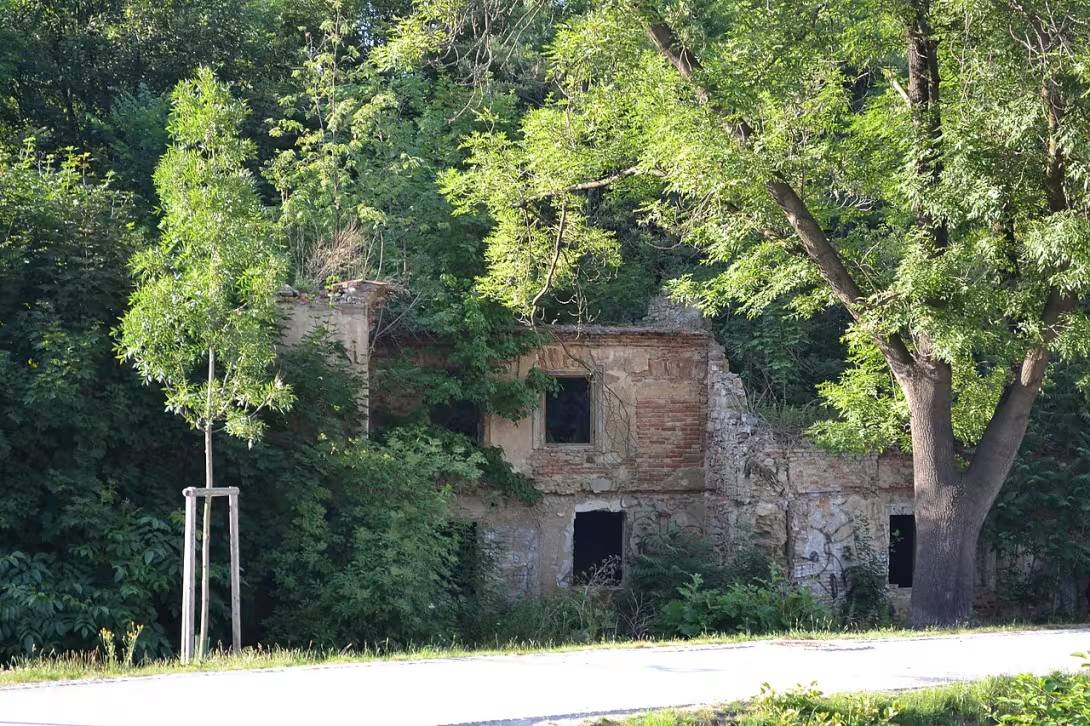
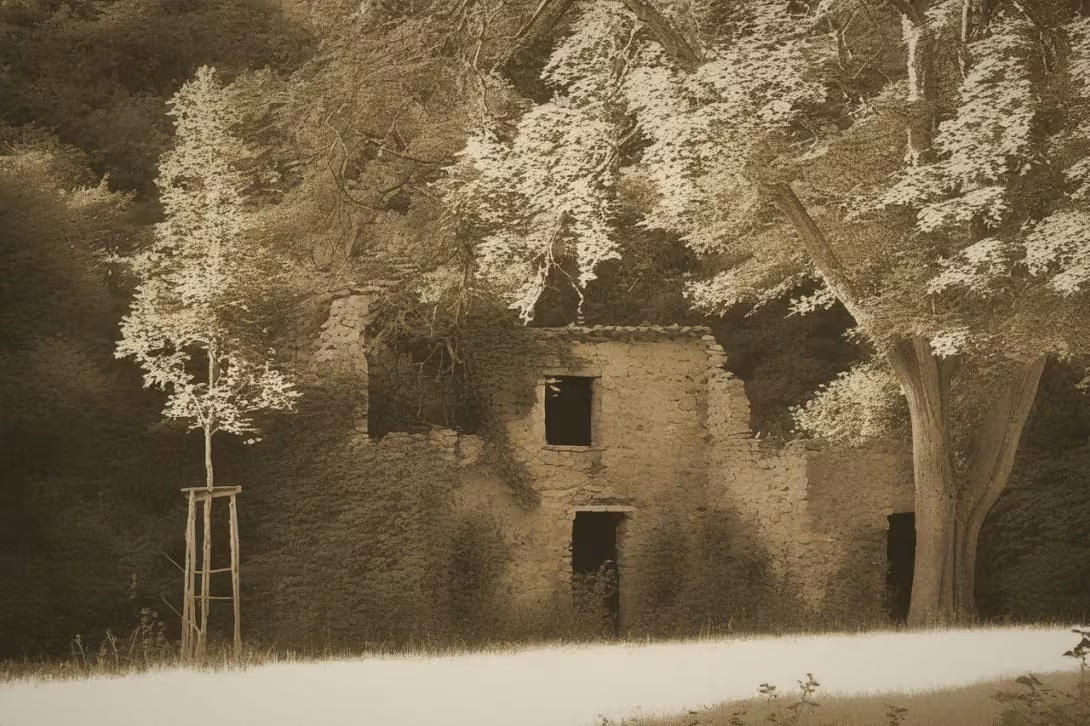
The historical appearance on the left is an AI-generated visualisation and serves as inspiration only.
Historical milestones
- 967
- First mention of the Virgin vineyard as the property of the benedicts.
- 1782
- The end of ownership of the vineyard with benedictines.
- 1829
- Abundius Bachofen bought the estate and set up a brick.
- 1850
- Abundia Bachofen's death in the manor.
Architectural development
In the 17th century the estate was established with a wine press and a house of a gardener. Later, industrial objects such as brick and syrup factory were set up in the premises. In the 19th century, the buildings of stallions, barracks and pubs were added, but they were later demolished.
Historical events
1829: The purchase of the estate by Abundie Bachofen and the foundation of the brick. 1840: Establishment of a starch syrup factory with Clemens Bachofen. 1850: The death of Abundia Bachofen in the estate.
Owners
Benedict from the monastery of St. George (until 20 March 1782), Abundius Bachofen (from 1829), Josef Brož (evidenced by 1876, 1879, 1885)
Points of interest
- Panenská has roots dating back to the 17th century when the original vineyard was built. - Originally it was the property of the benedictions of St. George's monastery in Prague Castle, which has been documented since 967. - There were significant changes in the 19th century when the estate was converted into a brick and later into a starch syrup factory. - The estate has repeatedly been auctioned off, reflecting its strategic location and potential. - Poet František Ladislav Čelakovský proposed to Bohuslav Raj here.
Guide
Show guide text
This text was created by artificial intelligence and has not been editorially reviewed. It may contain inaccuracies.
Welcome to one of the quiet and mysterious corners of Prague six, part Střešovice. Stop for a moment, take a breath and look ahead. You're standing in front of a place that looks like a silent testimony from a long time ago. What you see before you are the ruins of the Virgin. At first glance, you may only be interested in the silence and remnants of walls that slowly give up time, but in these stones, a story is encoded for over a thousand years. Feel the atmosphere of this place, where the peace of Rošovice today meets the echoes of ancient work, prayers and human destinies.
Let's go back in time together so that these ruins begin to tell us their story. Imagine we're going back to nine hundred and sixty-seven. It's the early Middle Ages when this landscape was completely different. It is this year that the first mention of the Virgin vineyard appears in the records. This land was not the property of a rich nobleman at the time, but belonged to the benedictines of St. George's monastery in Prague Castle. Introduce yourself in the role of one of these nurses, as you walk among the rows of wines, as you take care of the grapes, and as you perceive the smell of the earth in the morning dew. For over 800 years, this vineyard has been closely linked to spiritual life and monastery discipline. It was a place of peace, work and devotion, where wine was grown for the needs of the monastery and for the glory of God.
This situation lasted until a thousand seven hundred and eighty-two, when the ownership of the benedicts finally ended. With the end of the monastery era, the face of this place began to change. In the seventeenth century, before the end of the ownership of the sisters, there began to be a settlement that supplemented the vineyard. Panenská was thus transformed from purely agricultural space to a residential place where the life of the economy mixed with the rhythm of nature.
Now pay attention to what you see right in front of you. Take a look at the rest of the building that carries the number one hundred and twenty-three. This building is today the only tangible remnant of the entire original complex. In some records and in folk language, this ruin is referred to as Malovanka. Look at her masonry, see the texture of the old walls, and think about how many layers of history hide within themselves. Do not look here today for any windows or roofs, rather observe empty spaces and how nature broke into the architecture. It is in this raw ruin that you feel the truth about the permeability of all human beings. This building was once the centre of economic activity, a place where work was planned in fields and buildings, and today it is a silent monument that makes us think.
But when we move to the nineteenth century, we find that silence has disappeared here for a long time. Panenská has become a place of intensive work and industrial expansion. In the year one thousand eight hundred twenty-nine a man named Abundius Bachofen came into play. He was an ambitious man who in Virgin saw tremendous potential thanks to the strategic position in Prague six. He bought the estate and decided to turn it into something much bigger than just a place to grow wine. He set up a brick here. Imagine the noise, the dust, and the heat of the ovens that made building materials for a growing city day and night. Bricks from the Virgin probably helped build houses that you may see around Rostovice.
But Abundius Bachofen didn't stop at the bricks. Panenská became a place of experimentation and entrepreneurship, because there was also a factory for the production of starch syrup. The place where the Benedict sisters had once quietly harvested grapes became a noisy industrial area. It was a period of great change when the agricultural tradition gave way to modern business. It was here that two worlds met: the old world of monastery peace and the new world of capitalism and production. Abundius Bachofen spent a significant part of his life here, and in the year a thousand and eight hundred and fifty in this estate he also died. His name remained in the history of this place as a symbol of the change of Virgin into industrial coal.
However, this site attracted not only entrepreneurs but also personalities from other areas. In connection with the Virgin Islands, names are emerging that we know from our books and history. There was Clemens Bachofen von Echt, for example, which followed the family tradition. But it is also fascinating to connect with poet František Ladislav Čelakovský or Bohuslav Rajská. Imagine these people going through the same paths you're going through. Maybe they were here looking for inspiration, maybe just peace in the vicinity of the city, or spending time in the presence of their friends. It's fascinating to think that one and the same building could also be home to a hard brick man and a refuge for a sensitive poet.
And now I'm going to lead you to one interesting thing that makes Virgin a real historical puzzle. Think about what an incredible cycle this is. It started in nine hundred and sixty-seven with prayer and wine bush. Then came the era of the estate, followed by the era of fire and clay in the brick and finally sweet, sticky syrup from the factory. Each of these layers completely erased the previous one, and yet they all kept one thing: the strategic value of this land. Panenská was not just a building, it was a chessboard on which different generations played their game of prosperity and survival. Today, only a ruin with the number 120 is standing as the last witness to this constant transformation. It's a place where time has stopped and where we can reconstruct images from different millennia in silence today.
Now, when you look around you, think of Virgin not as a pile of old stones, but as an open book. Every crack in the wall could be a trace of Bachofen's brick, every piece of grass could grow in a place where a thousand years ago the wine castle of the benedicts stood. This place teaches us that nothing is eternal, but that the tracks we leave behind can survive for a thousand years if someone is willing to look for them and listen to them.
Now I'm leaving you to explore this place at your own pace. Take a walk around the remains of the building Malovanka, feel the silence of Rošovice and try to imagine the contrast between the monastery room and the industrial noise. Let the secret of the Virgin capture you and its ability to survive in oblivion. Thank you for your journey through time and I wish you a pleasant continuation in discovering the beauty and secrets of our city. Goodbye.
Tips for visitors
The best time to visit the Virgin ruins is in the spring or autumn season when vegetation is best visible and light is not too strong. This time of year offers ideal conditions for understanding the historical context and viewing the ruins without discomfort at extreme temperatures.
It is advisable to use public transport or a passenger car to reach Virgin. Local connections can be checked in the current route search engine.
When visiting, take a quality camera or mobile phone with you for shooting. Also remember the protective sunglasses, shoes suitable for walking on uneven terrain and water, especially if you are planning a long walk.
Photography of the ruins offers the best possibilities from the southwest side, where the light is sunny and naturally illuminates architectural elements. The morning clock is ideal for soft light, which highlights the texture of masonry.
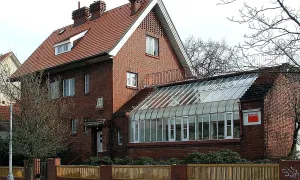
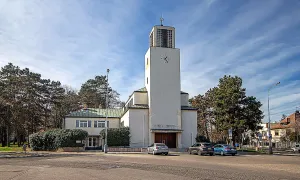
There is a church of St. Norbert in Střešovice, which is a significant church building with a rich history. In addition, you can explore the surrounding building of Prague 6 and look into the life of former homesteads Hubálka and Kashník, which add another layer of historical context.
Frequently asked questions
Can the monument be visited?
This is a residential or farm building, not a museum with opening hours. Please view it from public space and respect the owners' privacy. We have no information about access to the interior.
Where is the monument?
Location: Střešovice. The map on this page shows the exact spot.
Why is the monument protected?
It is listed in the Central List of Cultural Monuments of the Czech Republic as a cultural monument (register no. 1000153306).
Businesses nearby
Do you run a restaurant, accommodation, shop, museum, rental, wellness or other visitor service near this monument? Show yourself directly to the people heading to it — this is how they will see you in the app and on the web:
Events nearby

Zdroj akcí: otevřená data měst a obcí ČR (Národní katalog otevřených dat) a kalendář akcí Národního památkového ústavu.
Nearby
Kostel sv. Norberta ve Střešovicích, okolní zástavba Prahy 6, v blízkosti se nacházely bývalé usedlosti Hubálka a Kašnička.
Accommodation nearby
Trips and activities nearby
Guided tours, tickets and activities nearby from GetYourGuide
Affiliate link: if you buy from the partner, we may receive a commission. The price for you does not change.
Search tours and activities →Themed route
Thematic cruise route around the ruins Panenská
1. Ruins Panenská - Type: Historical monument, ruins of the castle. - Why it is worth a visit: An interesting view of history and nature. This ruin is a witness of past times and offers beautiful views of the surrounding area.
2. Church of St. Norbert in Rostovice - Type: Religious place, church. - Why is it worth a visit: The church is an architectural pearl with rich history and beautiful interior. It offers a quiet space for relaxation and reflection after exploring the ruins.
3. Former estate Hubálka - Type: Historical building, former estate. - Why it is worth a visit: This estate is an important part of local history and shows the lifestyle of past residents. It's interesting to explore its architectural elements and imagine how it was once used.
4. Former homestead Chestnut - Type: Historical building, former estate. - Why it is worth visiting: Like Hubálka estate, it offers a view of the history and architecture of the area. It is the next step into the past that complements the overall understanding of the region.
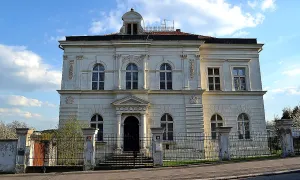
5. The surrounding building of Prague 6 - Type: Urban development. - Why is it worth a visit: Exploring local buildings allows you to understand the current life and development of the area. Modern architectural elements are also interesting, which intersect with historical structures.
This route offers a combination of history and the present, allowing visitors to explore the rich past and today's life area around the ruins of Panenská.
Seasonal recommendations
In spring the ruin comes alive thanks to the first green and flowering bushes in the surrounding area. The morning dew and fine light create a fresh atmosphere of a new beginning. I recommend waterproof shoes, as the surrounding path may be wet after thawing. An ideal visit in the morning.
In the hot months, dense green partly masks stone walls and provides shelter from the sun. The atmosphere is full of the sounds of summer insects and sharp lights that highlight the texture of stone. Light, breathable clothing and head protection are suitable. The best time is a late afternoon when temperatures are dropping.
The autumn of the colourful leaves of trees complements the nostalgic mood of abandoned buildings. Fogs that often float by the ground give a mysterious touch to the place. It is advisable to wear a warm jacket and solid shoes on a slippery surface of wet leaves. I recommend arriving at noon for the best visibility.
In a freezing period, the ruins work rigorously, while white snow contrasts sharply with a dark stone. The absence of leaves allows you to see the entire structure from outside much better than in other times. Hot layers of clothing, gloves and hats are essential. I recommend short walks before dark, because the days are very short.
Visualizations and artistic views


The visualisations are generated by artificial intelligence and serve as inspiration.
Photos from the area
Real photos taken near the monument

Zdroj a licence jsou uvedeny u každého snímku.
Tips from visitors
No tips yet. Be the first!
Log in and add your tip.
Sources and literature
Photos: Sefjo / CC BY-SA 3.0 — Wikimedia Commons. The author and licence also appear when you hover over the image.
Faktickým podkladem tohoto textu byl článek na Wikipedii, jehož autory jsou přispěvatelé Wikipedie. Článek je dostupný pod licencí CC BY-SA 4.0.
Location on the map
Příběhy a pověsti
Legendy, pověsti a příběhy spjaté s touto památkou
Fotografie návštěvníků
Zatím žádné fotografie. Buďte první, kdo přidá fotografii z návštěvy!
Log in a přidejte svou fotografii nebo hodnoťte.
Za ověřenou návštěvu v aplikaci získáte víc bodů — poznáme podle GPS, že jste na místě.
Reviews and comments