



Pomník obětem 1. světové války (Střešovice) World war i memorial
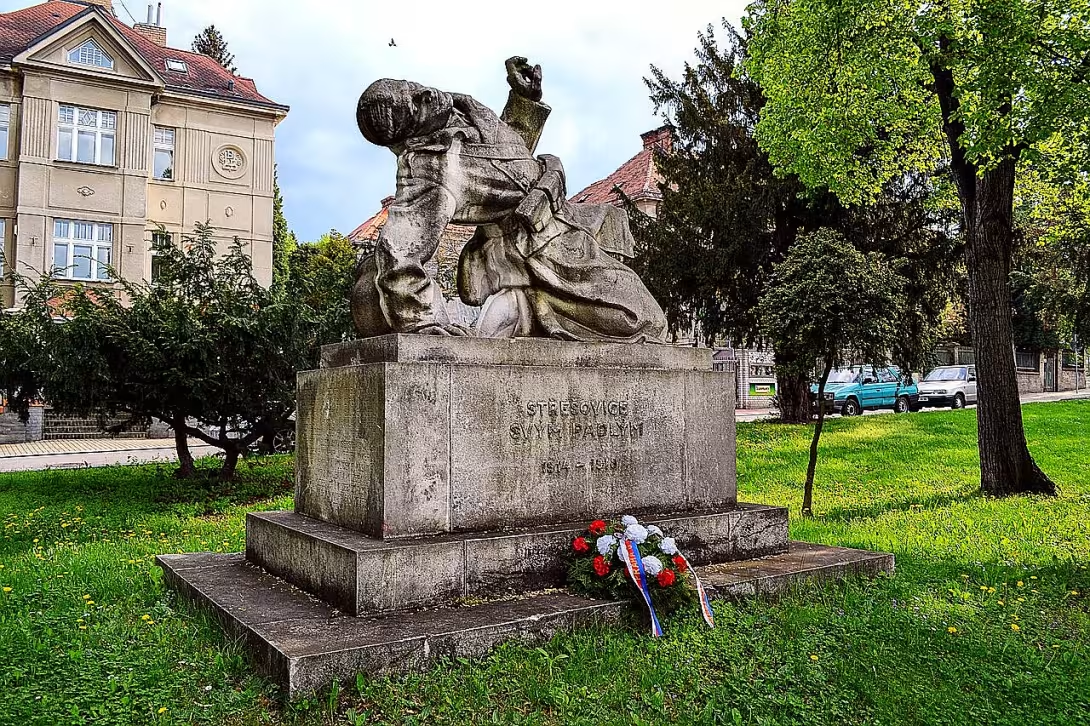
The memorial to the victims of the First World War in Rostovice is a remarkable monument that reminds the victims of the First World War. Located in Prague's residential district of Ořichovka on the central axis of the Macharov Square in its southern part, against the Central House. It is protected as a real cultural monument of the Czech Republic.
The memorial dates back to 1929. His author is sculptor Josef Franěk, pupil of Bohumil Kafka. He collaborated with architect Alois Dryák on the architectural solution. The monument is allegedly carved out of limestone from the village of Pucisca in the former Yugoslavia. On a graduated plinth lies a statue that depicts a wounded soldier. The one in the bow falls to the ground, his head tilted, his eyes closed and his mouth opened. He's wearing a pawn's uniform, he's got stacks and daggers at his waist, and he's got a wrench on his feet; next to his right arm lies the helmet.
The front wall of the pedestal says "Střešovice with its fallen 1914- 1918." Part of the inscription died (was cut). The original inscription was: "Střešovice to its fallen in the struggle for freedom 1914-1918," on the back wall: "Built by the care of the citizens of the roofing year 1929." The names of the fallen are engraved on both sides of the pedestal.
The monument is remarkable by its unique architecture and creative depictions. His author is sculptor Josef Franěk, who specialized in monumental sculpture. The monument is carved out of limestone from the village of Pucisca in the former Yugoslavia, which is an unusual material for sculpture work. On the graduated plinth lies a statue of a wounded soldier, which is depicted in dramatic caution.
The monument is also remarkable for its historical value. It is one of the few monuments that resemble the victims of the First World War in Prague. It is protected as a real cultural monument of the Czech Republic, which means it is protected as a cultural heritage of national importance.
Today, the monument is open to the public and worth visiting. It is located in a quiet residential district of Ořekovka, which is famous for its architecture and quiet atmosphere. The memorial is a remarkable monument that reminds of the victims of the First World War and is worth visiting anyone interested in history and architecture.
Then and now
Drag the slider to compare how the landmark may have looked when it was built with the view today.
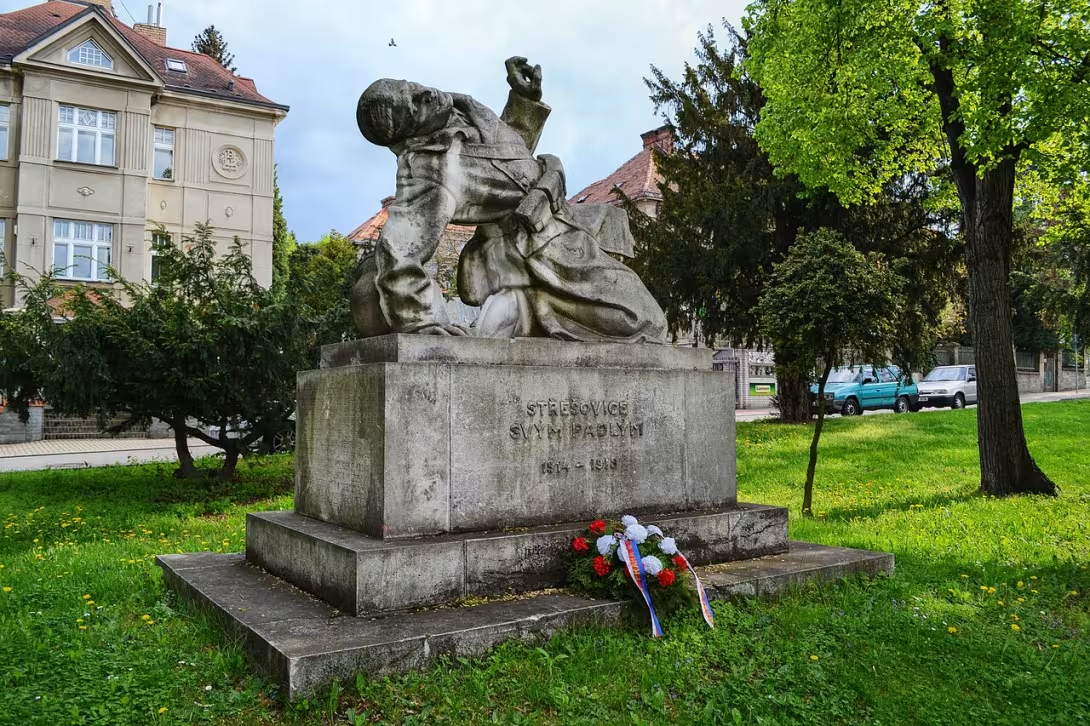
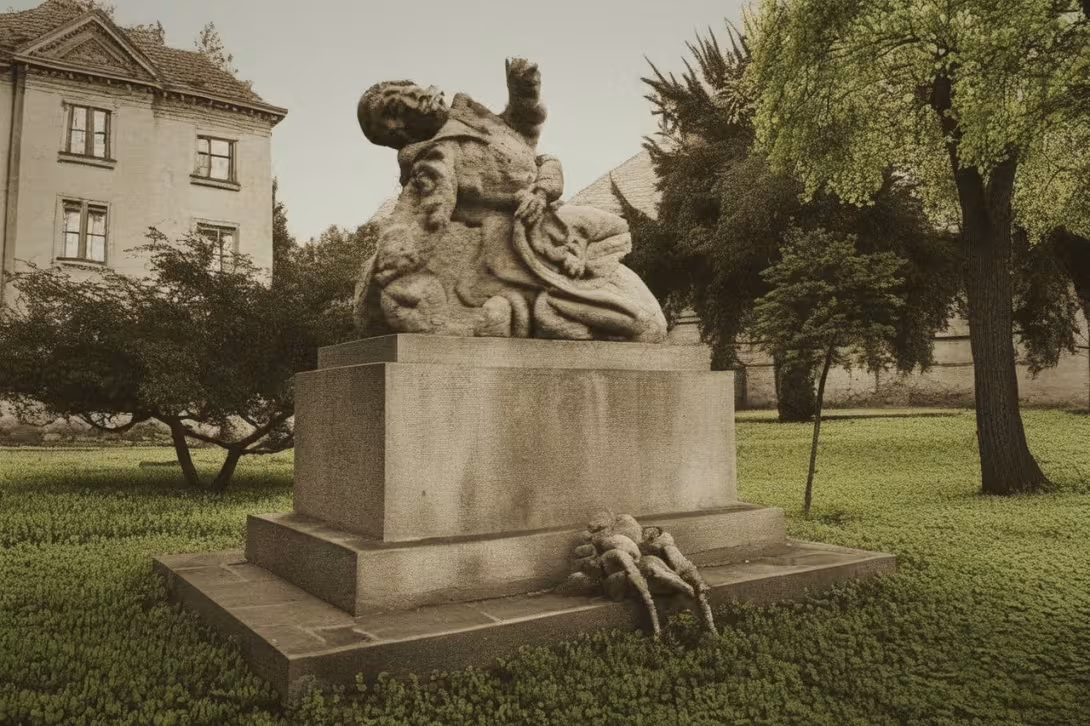
The historical appearance on the left is an AI-generated visualisation and serves as inspiration only.
Historical milestones
- 1914
- The outbreak of World War I
- 1918
- End of World War I
- 1929
- Exposure of the monument to the victims of World War I
- 1992
- The breakdown of Yugoslavia and the change in the name of the village of Pučišća
- 2000
- The monument was registered as a real cultural monument of the Czech Republic
Points of interest
- The monument is protected as a real cultural monument of the Czech Republic. The monument is remarkable by its unique architecture and creative creations. - The monument is carved out of limestone from the village of Pucisca in the former Yugoslavia. The monument is remarkable for its historical value. The memorial is open to the public.
Guide
Show guide text
This text was created by artificial intelligence and has not been editorially reviewed. It may contain inaccuracies.
Welcome to one of the most peaceful and beautiful parts of Prague, in the location Střešovice. Please stop for a moment and focus fully on what you see right in front of you. You stand before a monument that is not just an ordinary stone building, but a profound expression of pain, memory and respect. The first impression that will likely hit you is a feeling of heavy sadness and incredible humanity. In front of you, there's a figure that makes you stop your haste and think about the price humanity pays during the war. It's a representation of a man at his most fragile moment, the moment he no longer has the strength to fight.
To understand why this monument is standing here, we must go back more than a century together. In a thousand and nine hundred and fourteen, the First World War broke out, a conflict of such an enormous magnitude as the world had not yet known. It was a time of total struggle that shook the world and destroyed millions of lives. When the war finally ended in a thousand and nine hundred and eighteen, deep wounds were left in the hearts of survivors and empty seats at family tables in every village and city. Střešovice was no exception. The need to honor those who did not return from the battlefield and to keep their names in the memory of future generations led to the fact that in the year one thousand nine hundred twenty-nine this monument was officially exhibited. It was built here as a silent witness to the tragedy that affected this local community.
Now I would ask you to pay full attention to the very form of the monument and its architectural processing. Look first at the foundation on which the whole statue lies. It is a graduated plinth that slowly elevates the figure of a soldier above the ground, giving it some nobility, even though the scene itself is full of suffering. Notice the material from which the memorial is carved. It is a special limestone that comes from the village of Pucisca. At the time of the memorial, this village was located in Yugoslavia. This bright stone gives the whole piece special softness and resistance that allowed him to survive decades in Prague.
Now please look directly at the statue. What you see here is not a victory celebration or a heroic portrait of a general. It's a depiction of a wounded soldier falling down in a deep tilt. Feel his position. His head is tilted, his eyes are tightly closed, and his mouth is only slightly open, as if they had just escaped the last sigh or silent groin of suffering. It's a moment of utter helplessness and surrender to fate.
When you approach, start to notice the tiny details that the makers of the stone in the carvedeli with incredible care. The soldier is wearing a foot uniform that looks very authentic. At the waist, you'll see the stockpiles that the soldiers carried ammunition into and the dagger strapped in. Take a look at his legs, where the ovines are shown, i.e. the typical fabric bandages around the calves, which at that time replaced or supplemented the shoes. And right next to his right arm, on the ground, lies the helmet. This detail is crucial because it reveals that a soldier is no longer in battle, that his protection has fallen and he himself is now completely vulnerable.
On the front wall of the pedestal you can read the inscription that begins with the words Střešovice with its pad. This text is a direct recognition of the gratitude and sadness of the locals towards their fallen sons, fathers and brothers.
This remarkable building was not created by accident. The creative works of the architects Josef Fáňek and Alois Dryák are behind it. These two men were able to combine the architectural stability of the volcano with the emotional intensity of the statue. Their goal was not only to build a memorial, but to create space for reflection and sadness. The place is also associated with Bohumil Kafka whose name is recorded in connection with this monument. Together with the architects, they have helped to create a work that is unique to its creative energy and ability to generate strong emotions for anyone who stands before it.
Besides the artistic design itself, there is an interesting historical dimension connected with the material. As I mentioned, the stone comes from the village of Pucisca. It is fascinating to think of the way this limestone must have traveled from the Adriatic coast to Prague Rostojovice. The history of this stone follows us through later history. In the year one thousand and nine hundred and ninety-two, Yugoslavia fell apart, bringing changes to the names and administration of the places where the stone came from, including the village of Pucisca. Thus, the monument bears not only the memory of the First World War, but also a silent record of the geopolitical changes of the twentieth century.
Thanks to its unique architecture, historical value and deep emotional charge, the memorial was registered as a real cultural monument of the Czech Republic in the year two thousand. This means that the state has recognised its irreplaceable importance for our national and local history. It is a place that is fully open to the public so that everyone, no matter where they come from, can feel the weight of history and the importance of peace.
Now that you're standing in front of this wounded soldier, try to forget the noise of the city around you for a moment. Feel the silence this monument radiates. It's a silence that speaks for thousands of people who never came home. This statue teaches us that war has no winners, but only victims. It is a memento that encourages us to respect human life and to guard the peace that we now feel in these streets of Rostojovice.
Now that you've looked at all the details, from the limestone to the uniform to the expression in the face of the soldier, I suggest you stay with the monument for a while and let your thoughts float freely. Then you can slowly continue to explore the beauty of this neighborhood, which hides many other stories and hidden corners.
Thank you for taking a walk in this touching place. I hope you are interested in this short trip to history and that you are leaving with a feeling of deeper understanding for the fate of the people who lived in the great war. I wish you a pleasant continuation in your discovery of Prague and Střešovice. Goodbye.
Tips for visitors
What to take with you
When visiting the monument, it is advisable to take the camera with you to take quality photographs of the statue and surrounding environment.
Photography
The best places for photography are from outside, where you can get quality images of the statue and surrounding environment. The best light is morning or evening when the sun is not too high.
What to visit in the area
In the vicinity of the monument there are several other historical monuments such as the Střešovice castle, which is about 10 minutes' walk from the monument.
Frequently asked questions
Can the monument be visited?
This is a structure in a public space that can usually be seen from outside free of charge. We have not verified that this particular one is freely accessible.
Where is the monument?
Location: Střešovice. The map on this page shows the exact spot.
Why is the monument protected?
It is listed in the Central List of Cultural Monuments of the Czech Republic as a cultural monument (register no. 1865132235).
Businesses nearby
Do you run a restaurant, accommodation, shop, museum, rental, wellness or other visitor service near this monument? Show yourself directly to the people heading to it — this is how they will see you in the app and on the web:
Events nearby

Zdroj akcí: otevřená data měst a obcí ČR (Národní katalog otevřených dat) a kalendář akcí Národního památkového ústavu.
Nearby
🏰 Historic sites (1692)
- Střešovice svým padlým 1914-1918 0.0 km
- Ing. Antonín Lederer 0.1 km
- Emil Pollert 0.2 km
- Müllerova vila 0.2 km Nad hradním vodojemem 642/14 +420 224 312 012 web
- Judr. Josef Kocman 0.3 km
- Muzeum městské hromadné dopravy v Praze 0.6 km Patočkova +420 296 128 900 web
- Max van der Stoel 0.7 km
- Malovanka 0.7 km
- Francisk Skaryna 0.7 km
- sv. František z Assisi 0.7 km
- vlk z Gubbia 0.7 km
- Alois Kříž; Jaroslav Mračno 0.8 km
- Johannes Kepler a Tycho Brahe 0.8 km
- sovětský vojín; neznámý vojín; Jan Krasanovský; František Šaparatka; Josef Lesák 0.8 km
- František Běhounek 0.8 km
- Rabíndranáth Thákur 0.9 km
- Kučerův palác 0.9 km
- Jan Žižka 0.9 km
- Arnošt Jolesch 0.9 km
- Karolína Joleschová 0.9 km
🍽️ Restaurants and dining (5411)
- Beseda Ořechovka 0.1 km Na Ořechovce web
- Bistro Ořechovka 0.1 km +420 778 067 778 web
- Stará Ořechovka 0.1 km +420 734 736 175 web
- Na Ořechovce 0.1 km
- Hudera a syn 0.4 km Nad hradním vodojemem 17/25 +420 224 312 046 web
- Salaš U Staré cesty 0.4 km Nad hradním vodojemem 11/29 +420 602 250 044 web
- Na Andělce 0.5 km Sibeliova 368/51 +420 608 959 876 web
- Burger Pub Na Hubálce 0.5 km Za Hládkovem 975/2 +420 604 562 941
- SOREHA ROUT 0.6 km Evropská 33a
- Wanhao - Asijská Restaurace 0.6 km Hládkov 703/6 +420 776 853 860
- Hadovka 0.6 km Evropská 33a
- La Stanzetta Cafe 0.7 km Hládkov 686/3 +420 222 264 838
- Klubovna 0.7 km +420 739 834 056 web
- Sprint 0.7 km +420 734542475
- Nový svět 0.8 km Nový Svět 87/2 +420 24 24 30 700 web
- Jídlovice Telehouse 0.8 km Generála Píky 430/26 +420 723 612 814 web
- Oáza 0.8 km Mydlářka 2
- Scolarest 0.8 km +420 220 511 622
- Bellčafe 0.8 km Radimova 2522/4 +420704444177 web
- Hradčany 0.8 km Keplerova 6
🏨 Accommodation (806)
- U Staré cesty 0.4 km Nad hradním vodojemem 11/29 +420 602 250 044 web
- Fairy-Tale Prague From Lev i Sova 0.5 km web
- Residence Jana 0.5 km
- Dejvice Apartments 0.6 km Glinkova 14
- Vila Edita 0.6 km Glinkova 6
- Discounts Prague Hotel 0.8 km Cukrovarnická 64 +420 212 241 943 web
- Penzion Chaloupka 0.8 km Nad hradním vodojemem 794/83 +420 220 511 761 web
- Jelení dvůr 0.8 km Jelení 197/7 +420 233 028 333 web
- Hotel Savoy 0.8 km Keplerova 6
- Silenzio 0.9 km
- Masarykova kolej 0.9 km Thákurova 1 web
- Vienna House Diplomat Prague 0.9 km Evropská 15 +420 296 559 111 web
- Pyramida 0.9 km Bělohorská 24 +420 233 102 111 web
- Hotel Monastery 1.0 km Strahovské nádvoří 13
- Hotel Questenberk 1.0 km Úvoz 15
- Hotel Hormeda 1.0 km +420220513604 web
- Lindner Hotel Prague Castle 1.0 km Strahovská 128 +420 222 539 539 web
- DownTown Suites 1.1 km Bělohorská 1390/50 web
- Vila Kozlovka 1.1 km
- Hotel DAP 1.2 km Vítězné náměstí 4 +420 973 211 444 web
🚲 Rentals and sport (526)
- Koupaliště Petynka 0.4 km
- TJ Tatran Střešovice 0.5 km +420 603 448 250 web
- Atombike 0.7 km Evropská 34
- Sportovní klub Střešovice 1911 0.8 km web
- Blitz Flitz 0.9 km
- Sportovní klub Hradčany 1.0 km Diskařská 294/1
- Bikestar 1.0 km web
- T.J. Sokol Břevnov-Hradčany 1.1 km
- Cordeus 1.1 km Na Dlouhém lánu 11
- Bike Gallery 1.2 km Kladenská 19
- Beach Praha Arena 1.2 km Chodecká 1230 +420 233 109 306 web
- Bike tunel 1.2 km Bělohorská 261/37 +420 233 354 555 web
- JB Sport 1.2 km Na Rozdílu 1 +420 739 095 312 web
- Sportovní areál Hanspaulka 1.3 km +420 724 069 956 web
- Sportopia 1.3 km
- HUDYsport 1.3 km Dejvická 665/48 +420 233 341 249 web
- Víceúčelové sportoviště Kotlářka 1.3 km web
- Husky 1.4 km Dejvická 664/46 +420 220 513 301 web
- Moira 1.4 km Dejvická 524/17 +420 773 786 698 web
- Fitness Kuláťák 1.4 km Národní obrany 35
🥾 Hiking and nature (471)
- Strouhalák 0.4 km
- Horní Lumbeho zahrada 0.8 km
- Loretánská zvonohra 0.9 km
- jídelní tramvaj T3 1.0 km
- Park Jaroslava Meda 1.0 km
- Masarykova vyhlídka 1.1 km
- Medvědárium 1.1 km
- Morávkův park 1.1 km
- Velká strahovská zahrada 1.2 km
- Nicholase Wintona 1.2 km
- Vítězné náměstí (čtvrtý kvadrant) 1.2 km
- Plečnikova Pyramida 1.3 km
- Park Bachmačské náměstí 1.4 km
- Býčí schodiště 1.5 km
- Malý belvedér 1.5 km
- Petřínská rozhledna 1.6 km web
- Dolní Jelení příkop 1.6 km
- Zemní pyramidy 1.6 km
- Park Lotyšská 1.6 km
- Černá hora 1.6 km
Accommodation nearby
Trips and activities nearby
Guided tours, tickets and activities nearby from GetYourGuide
Affiliate link: if you buy from the partner, we may receive a commission. The price for you does not change.
Search tours and activities →Themed route
Thematic cruise route: Memorial to the victims of World War I and the surroundings
1.Pomník obětem 1. světové války (Střešovice)
Type: Historical monument
Why is it worth a visit: This monument is an important monument that worships the victims of the First World War. It is located in one of the most beautiful places in Prague and offers views of the history and natural beauty of the surrounding area.
2. Church of Saint Anne (Střešovice)
Type: Religious object
Why is worth a visit: The church is one of the oldest sacral buildings in Prague and represents Baroque architecture. Its history dates back to the 17th century, making it interesting for visitors interested in history and architecture.
3. Roof sets
Type: Park
Why is it worth a visit: This park offers a quiet space for relaxation and a beautiful opportunity to explore the natural environment near the centre of Prague. It is an ideal place for a picnic or just for a moment rest on your back.
4. Rostovik Square
Type: Square
Why is worth a visit: The square is the heart of the village Střešovice and offers a view of modern architecture and historical buildings. It's where local people and visitors meet, which creates a lively atmosphere.
5. Rostovic pond
Type: Pond
Why is it worth a visit: This small pond is a beautiful place to relax and observe nature. It offers quiet corners that are ideal for relaxing after exploring historical monuments.
This route allows you to explore not only the main monument but also other attractions of the village Střešovice.
Seasonal recommendations
Spring: In the spring the surroundings of the monument awaken and the colors become more vivid thanks to new leaves and blooming vegetation. The light is delicate and pleasant in this period, which helps in the peaceful perception of the place. I recommend a visit early in the morning when the air is still fresh and the surrounding area is quieter. Wear layered clothes because the morning cold can still smell.
Summer: During the summer months there is a strong sun and the surrounding green is in full bloom, creating a rich background. The atmosphere is hot, and the sunlight hits the rock very intensely. The best time for a tour is early morning or late evening to avoid the greatest heat. Don't forget the headgear and suitable summer clothes.
Autumn: Autumn brings golden shades and falling leaves to the quarter, which gives the place a quiet and nostalgic mood. The light is low and creates long shadows, which is ideal for observing the details of the monument. Prepare a waterproof jacket and warmer clothing because fog or more frequent precipitation may occur.
Winter: In winter, the monument is in a raw environment between naked branches of trees. If snow falls, the whole place is very quiet and dignified. Because the days are short and the lights are low, visit the place around noon when the most light is. The necessity is to wear a very warm jacket and tight shoes in case the path is slippery.
Visualizations and artistic views


The visualisations are generated by artificial intelligence and serve as inspiration.
Photos from the area
Real photos taken near the monument


Zdroj a licence jsou uvedeny u každého snímku.
Tips from visitors
No tips yet. Be the first!
Log in and add your tip.
Sources and literature
Photos: Sefjo / CC BY-SA 3.0 — Wikimedia Commons. The author and licence also appear when you hover over the image.
Faktickým podkladem tohoto textu byl článek na Wikipedii, jehož autory jsou přispěvatelé Wikipedie. Článek je dostupný pod licencí CC BY-SA 4.0.
Location on the map
Příběhy a pověsti
Legendy, pověsti a příběhy spjaté s touto památkou
Fotografie návštěvníků
Zatím žádné fotografie. Buďte první, kdo přidá fotografii z návštěvy!
Log in a přidejte svou fotografii nebo hodnoťte.
Za ověřenou návštěvu v aplikaci získáte víc bodů — poznáme podle GPS, že jste na místě.
Reviews and comments