






Najštejn Castle
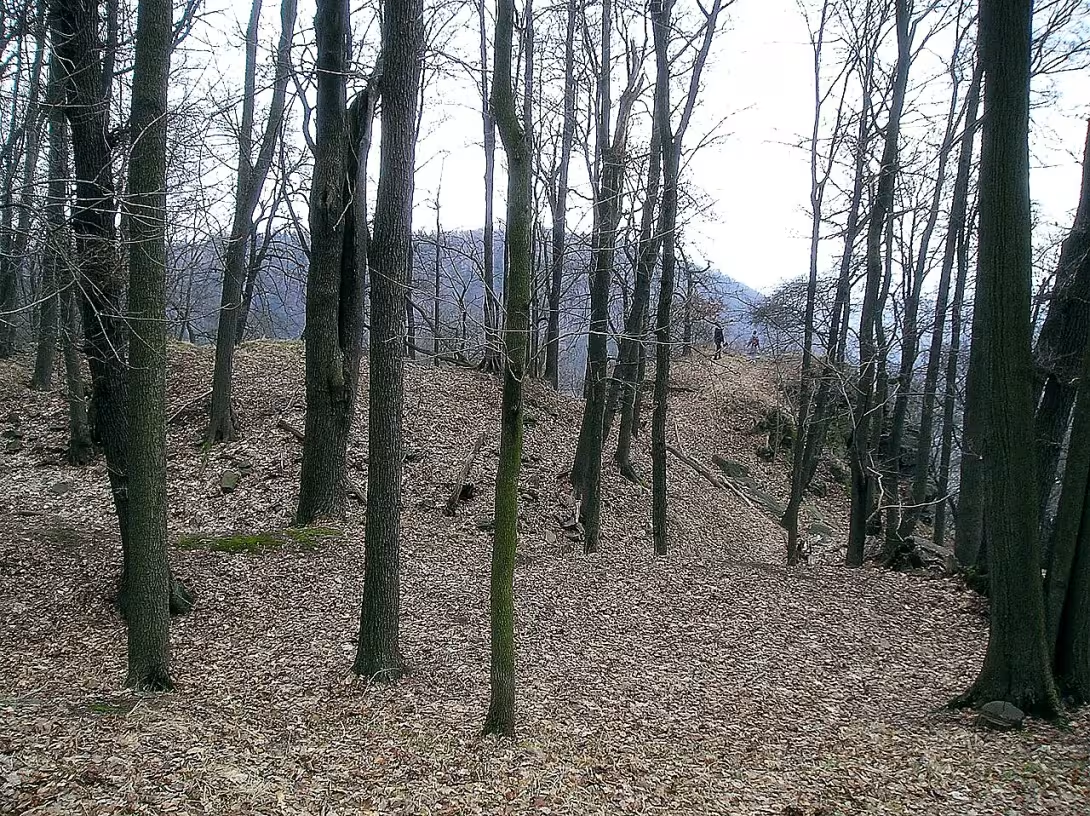
Objekt se nedochoval — na místě dnes nestojí. Následující text popisuje jeho historii, ne současnou návštěvu.
The Najštejn is located at an altitude of approximately 560 metres above the Jirkovsky play, between the villages Březenec and Květnov, less than 6 kilometres north of Chomutova. The castle is protected as a cultural monument of the Czech Republic. The local tradition also knows it under the names Neustein, Lapis Novus, Najnštejn or Nanštejn.
The castle was probably built in the first half of the fourteenth century by Jetrich of Alamsdorf, a nobleman remembered since 1323. The oldest written mention dates back to 1363, when Jetřich's descendants Jan a Hugo z Alamsdorfu had a new altar built in St. Linhart's Church in March. The fate of the castle was broken in 1381, when Fricolt z Alamsdorfu sold the village Břenec order of German knights in Chomutov. This move has allegedly solved the long-term hostility between the two parties. Soon after, the castle itself fell into order. It seems that already in the 14th century it was abandoned and over time it fell into oblivion. The interesting thing is that the House of Alamsdorfski was a possible founder of the nearby castle Hausberk.
Najštejn was one of the castles in which the palace formed the main defensive and residential building. The base of the castle was separated from the rest of the island by a boulder and moat; at best conservation sites reaches a depth of five to seven metres. There was a two-dimensional rectangular palace in front, 16 long and 10 metres wide, from which only the insignificant foundations of the perimeter walls were preserved. The archeoclave findings corps contained fragments of ceramic tiles decorated with the relief of the coronation of the Virgin Mary. The back part of the island is formed by a rock excavation with a natural crack, which is closed by a wall with a shooting of unclear age. The front was protected by a massive moat up to 20 metres wide, broken directly into the rock. Both sides of the ditch are accompanied by piles of broken stone - a material prepared as a building stone for the planned expansion of the castle, but it never occurred after taking over the premises. Not far from the castle, about a hundred metres from the bank of the dam, the remains of the Telšský mill are spread in the valley of Bílina with the drive carved directly in the rock.
The visitor goes to the castle from the village Květnov along a narrow road towards Orazín. After less than 200 metres, a smaller asphalt road leading east to the Telsška grove house is separated. From there, the forest path continues along approximately one kilometre straight to the remaining castle torso. There are deep trenches and ramparts, through which time and nature gradually reworked the medieval structure, and a attentive pilgrim will discover even the modest remains of the palace - a silent testimony of the time that once inhabited him.
Then and now
Drag the slider to compare how the landmark may have looked when it was built with the view today.
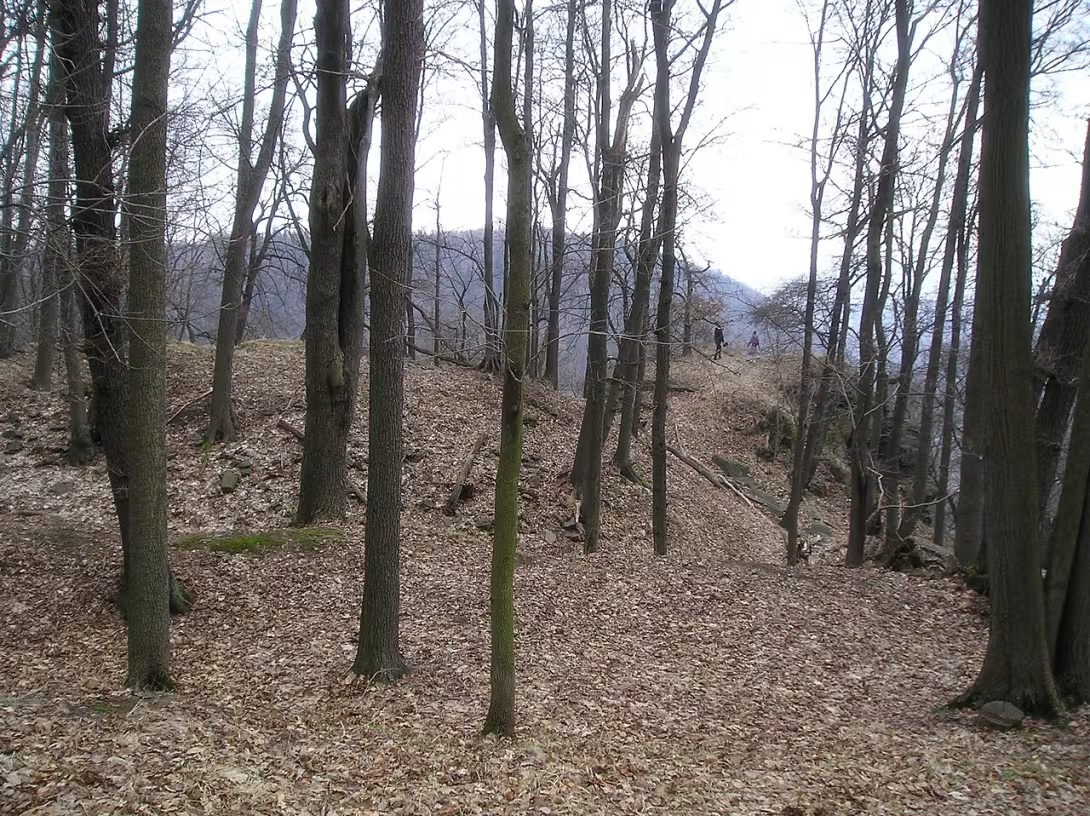

The historical appearance on the left is an AI-generated visualisation and serves as inspiration only.
Historical milestones
- 1323
- Jetřich z Alamsdorfu mentioned.
- 1363
- Castle first mentioned.
- 1381
- Ves Březenec and castle sold by order of German knights.
Architectural development
The castle had a palace as the main building, separated from the island by a boulder and moat. The moat was moved to a wide plateau on the northeast side. The palace was preserved in the remains of walls and ceramic tiles with relief decoration.
Historical events
- 1363
- Castle first mentioned.
- 1381
- Ves Březenec and castle sold by order of German knights.
Owners
Probably built by Jetrich of Alamsdorf in the first half of the 14th century; sold by order of German knights in Chomutov after 1381.
Points of interest
- The Najštejn is located at an altitude of approximately 560 metres above the Jirkovsky play.
- The castle was probably built in the first half of the fourteenth century by Jetrich of Alamsdorf, a nobleman remembered since 1323.
- The oldest written mention of the castle dates back to 1363, when the new altar of Jetřich was built in St. Linhart's church in Březenec by Jan and Hugo from Alamsdorf.
- In 1381 he sold Fricolt z Alamsdorfu village Březenec order of German knights in Chomutov, which led to the castle falling to order.
- Archaeological findings contained fragments of ceramic tiles decorated with the relief of the coronation of the Virgin Mary.
Guide
This guide is narrated by a synthetic voice generated by artificial intelligence.
Show guide text
This text was created by artificial intelligence and has not been editorially reviewed. It may contain inaccuracies.
Welcome to Najštejna, the extinct medieval castle that rises above the Jirkovsky play. You're standing in front of a beautiful monument that hides rich history and fascinating stories. Look up and see how the castle rises to a height of approximately 560 meters.
Let's move on to the past and find out who the original owner of this castle was. The 14th century, when Jetřich z Alamsdorfu appeared here, a nobleman remembered since 1323. It is believed that he created castle Najštejn. The oldest written mention of the castle dates back to 1363, when it was referred to as the residence of the Alamsdorf family.
Now pay attention to the architecture of this castle. Note that this is a extinct castle that was probably built in the first half of the 14th century. The deep moat and remains of the palace are proof that the castle served as a fortress to protect its inhabitants from the enemy. Take a look at the facade and see the atmosphere that is spreading around.
Castle Najštejn is connected to several historical personalities. Jetřich z Alamsdorfu, Jan a Hugo z Alamsdorfu, Fricolt z Alamsdorfu - names that appear in historical records that are important to us. The interesting thing is that the castle was sold to the order of German knights in 1381. What was the reason? That's a question we may never have an answer to.
The Najštejn is located on an edge where it is located at an altitude of approximately 560 meters above the Jirkovsky play. This is a truly unique place that offers a view of the surrounding landscape. See if you can find any more interesting details.
When you continue to explore Najštejn, remember to note other details that hide secrets and stories from the past. Najštejn is really an extraordinary monument that will interest you and bring you into the world of medieval history. Let yourself see Najštejn more thoroughly and discover the secrets it hides.
For kids
Imagine going back to the past, when the Most High Castle was strong and powerful. He even had his own name - sternberg. There were people who lived here for a living in agriculture and trade.
The castle stood in the middle of the woods and rivers as if it were hidden from danger. And really, the castle was protected from attack by enemy armies. He had strong walls and deep trenches.
Businesses nearby
Do you run a restaurant, accommodation, shop, museum, rental, wellness or other visitor service near this monument? Show yourself directly to the people heading to it — this is how they will see you in the app and on the web:
Nearby
The castle is located between March and Květnov, near the Jirkov dam. In the valley of Bílina, there is a ruin of the Telš Mill.
Visualizations and artistic views


The visualisations are generated by artificial intelligence and serve as inspiration.
Photos from the area
Real photos taken near the monument


Zdroj a licence jsou uvedeny u každého snímku.
Tips from visitors
No tips yet. Be the first!
Log in and add your tip.
Sources and literature
Photos: Pohlud / CC BY-SA 3.0 — Wikimedia Commons. The author and licence also appear when you hover over the image.
Faktickým podkladem tohoto textu byl článek na Wikipedii, jehož autory jsou přispěvatelé Wikipedie. Článek je dostupný pod licencí CC BY-SA 4.0.
Location on the map

Příběhy a pověsti
Legendy, pověsti a příběhy spjaté s touto památkou
Fotografie návštěvníků
Zatím žádné fotografie. Buďte první, kdo přidá fotografii z návštěvy!
Log in a přidejte svou fotografii nebo hodnoťte.
Za ověřenou návštěvu v aplikaci získáte víc bodů — poznáme podle GPS, že jste na místě.
Reviews and comments