






Náměstí Jana Pavla II. 6 a 7 House
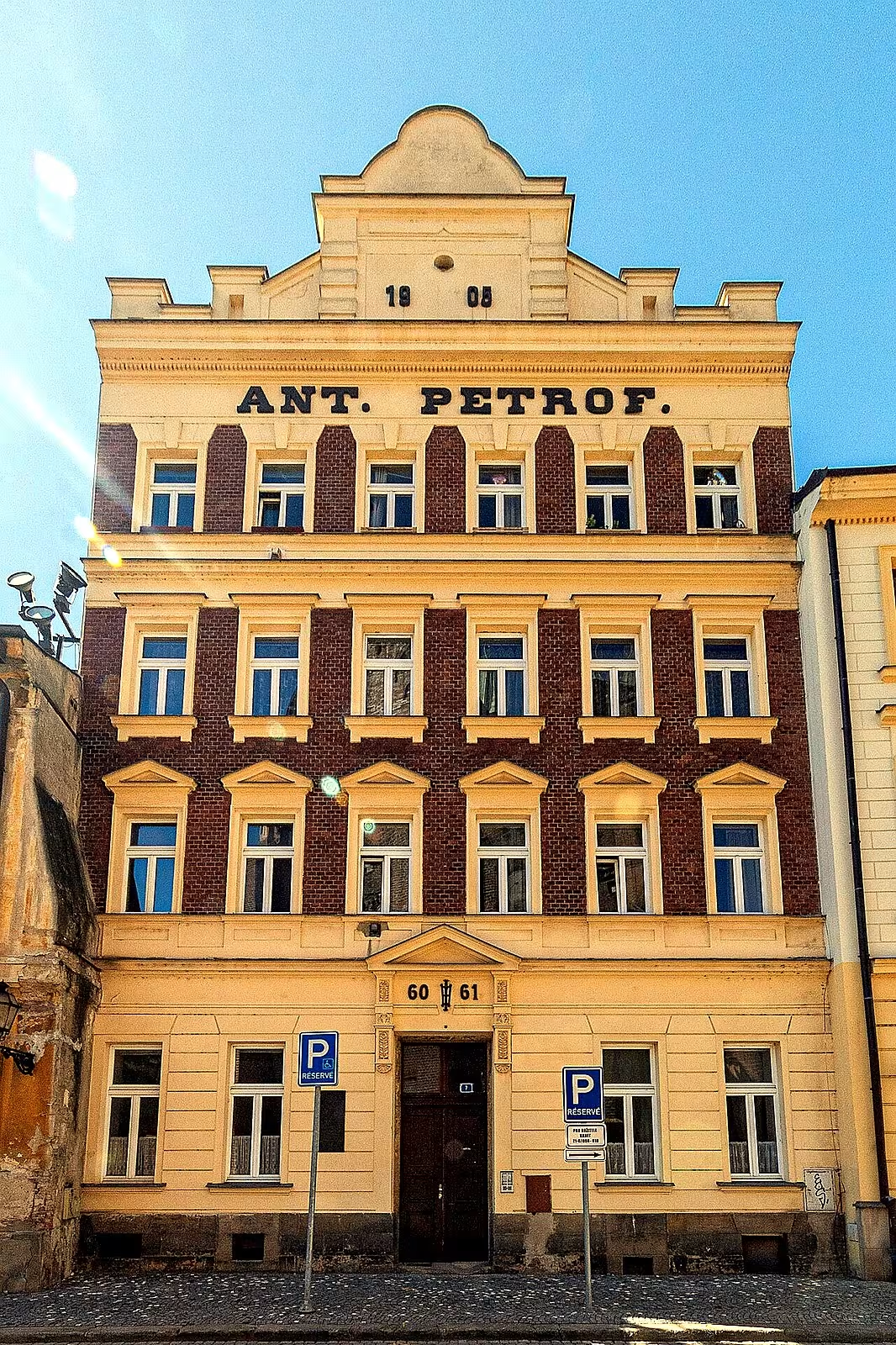
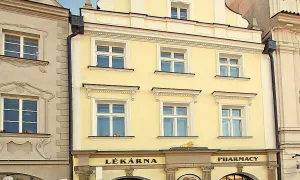
The house of Antonín Petrof at the Square of John Paul II in Hradec Králové is a historical monument which represents a fascinating example of architectural changes caused by industrialization at the turn of the 19th and 20th centuries. This three-storey object features a non-orenessant style, resulting from extensive reconstruction carried out by Antonín Petrof, a manufacturer from Hradec Králové. It is located in a key location of the city and its history is closely linked to the development of the commercial and industrial environment of that time.
The history of the house dates back to the Middle Ages when it was originally one of the city houses. In 1905 Antonín Petrof opted for a significant reconstruction of the building, which connected two neighboring houses to one three-story building with a conspicuous shield. This transformation not only changed the physical appearance of the house, but also reflected the dynamics and prosperity of the industrialization period in Central Europe. In 1958, the house was declared a cultural monument, confirming its historical and architectural importance.
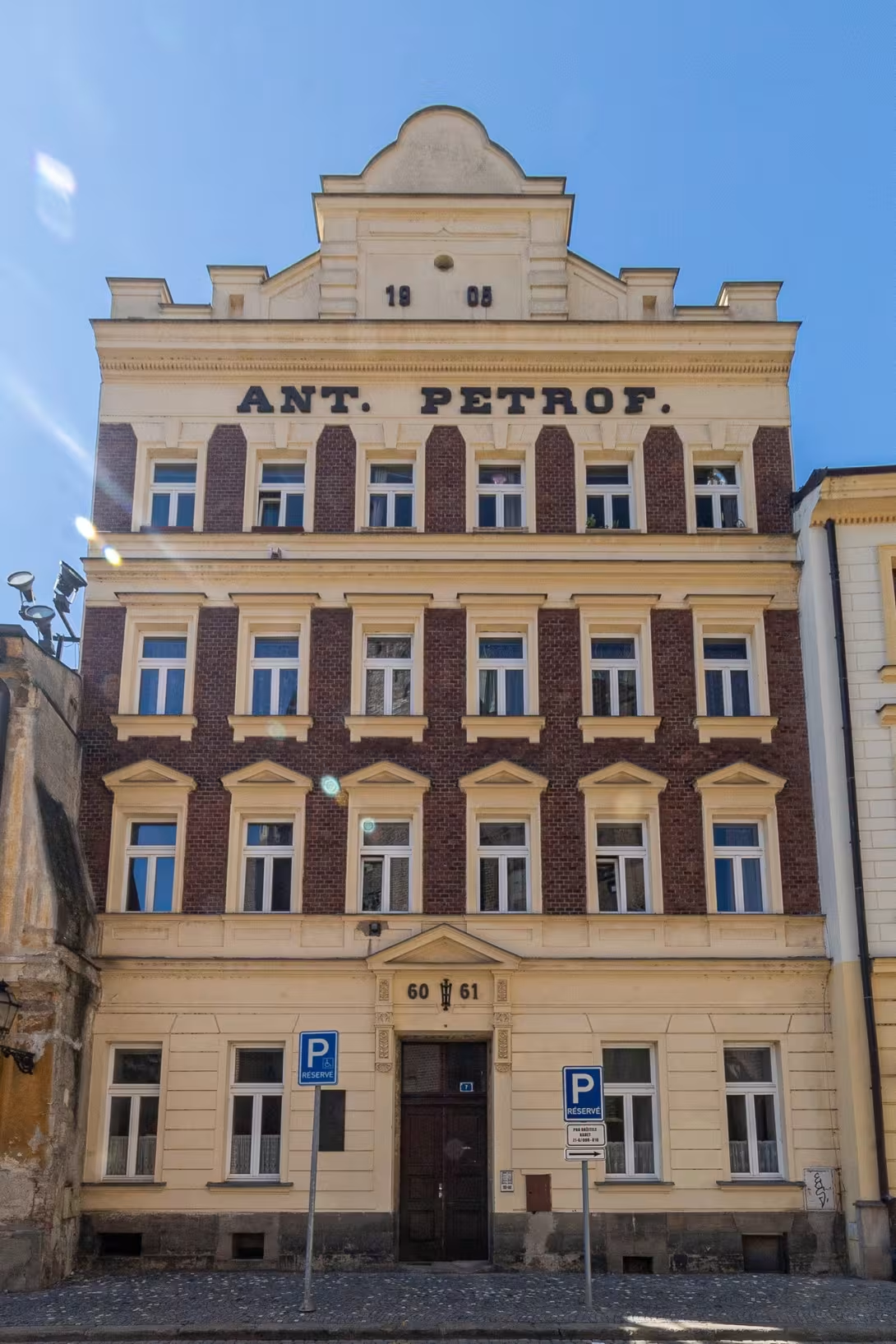
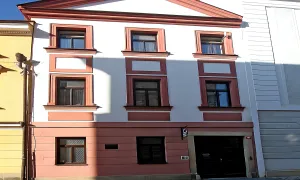
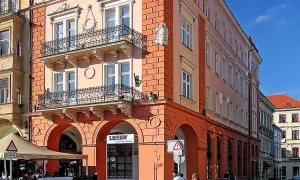
The architecture of the house is characteristic of the neoRenaissance style. The facade is headed for the square of John Paul II, where three storey buildings with crown ledge and shield attract attention. The ground floor is five-axis, in the center there is a main entrance with a triangular front, while the other floors are six-axis. The windows of the first floor have triangular frontons, the second floor of the window of the mantelpiece and on the third floor the windows are slightly reduced with a jeweler in the upper. Under the crown ledge is placed stucco inscription "ANT. PETROF," while the shield is divided by pilars and in the middle bears the inscription 1905.
The house of Antonín Petrof was already owned by the father of Antonín Petrof, suggesting a long family tradition associated with this property. The reconstruction carried out by Antonín Petrof was not only an architectural enterprise, but also symbolized the transition from traditional urban life to modern industrial age. In 1995, the buildings were demolished in the doors of both former urban houses, which opened up the space for further modification and maintenance of the monument.
The house was repaired between 2011- 2012, which included reconstruction of cable lines and replacement of power boxes. These modifications were necessary to keep the construction in good condition and adapt it to modern requirements.
Today, Antonín Petrof's house is not only a cultural monument, but also a witness to the rich history of Hradec Kralove. Its architecture and historical importance make it an interesting destination for tourists and locals. By examining this object, it is possible to better understand how the city evolved and what changes industrialization brought in at the end of the 19th century.
The house of Antonín Petrof is therefore not only an architectural monument but also a living testament to the history of Hradec Králové and its development during the period of industrialization. By exploring this object we can not only enjoy beautiful architecture, but also better understand the historical context in which this house was created and developed. The house is therefore undoubtedly worth visiting for every interested person in history and architecture.
Then and now
Drag the slider to compare how the landmark may have looked when it was built with the view today.
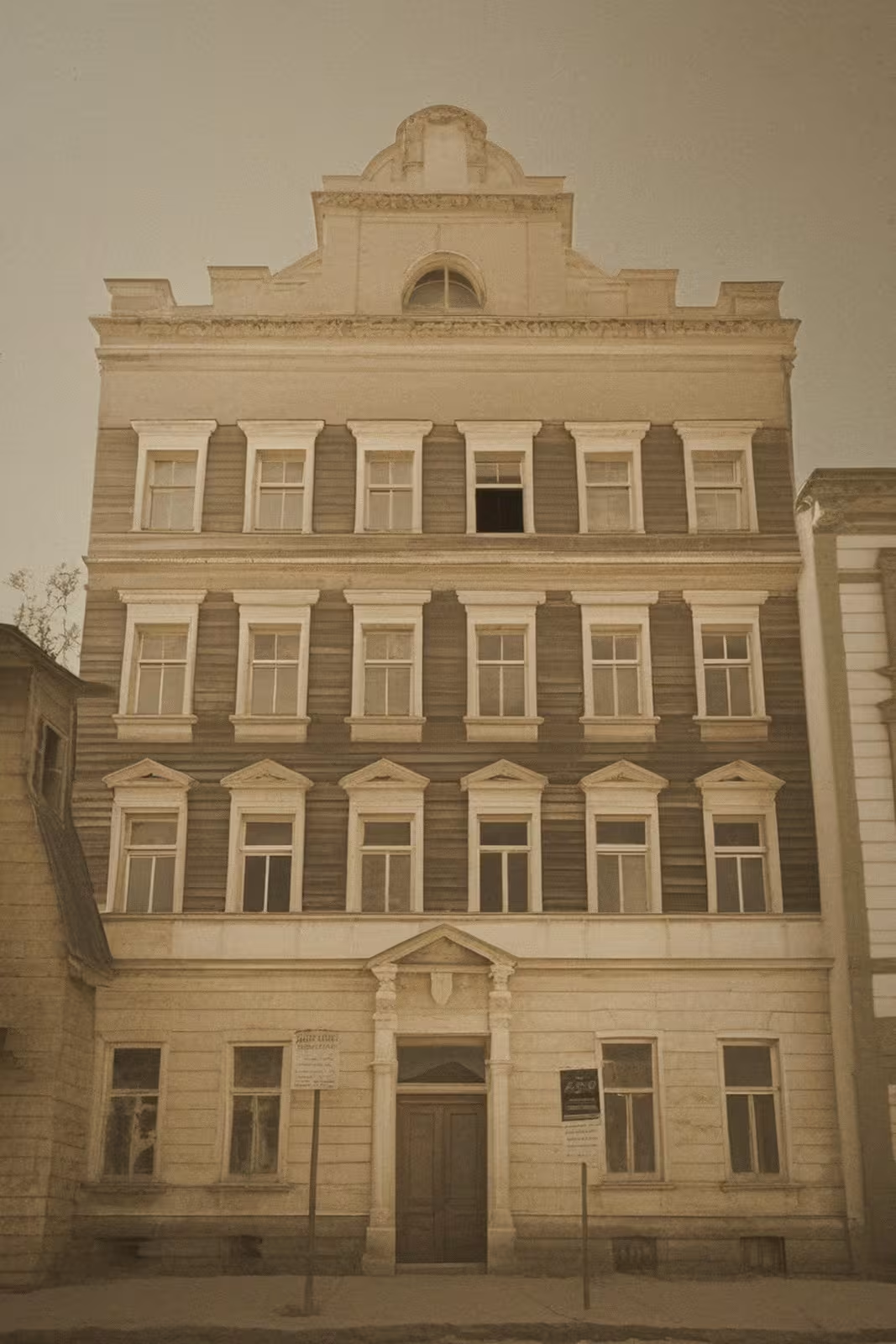
The historical appearance on the left is an AI-generated visualisation and serves as inspiration only.
Historical milestones
- around 1350
- Original building as one of the city houses.
- 1905
- Marked reconstruction by Antonín Petrof, connecting two neighboring houses to one three-storey building with neoRenaissance style.
- 1958
- The house was declared a cultural monument.
- 1995
- Burning the building in the doors of both former city houses for modification and maintenance of the monument.
- 2011- 2012
- Repair of the house including reconstruction of cable lines and replacement of power boxes.
Architectural development
The originally medieval city house underwent a distinctive neoRenaissance reconstruction of Antonín Petrof at the turn of the 19th and 20th centuries, which connected two neighboring houses to a three-storey building with a conspicuous shield.
Historical events
- 1905
- Antonín Petrof entered the object for reconstruction.
- 1958
- The building was declared a cultural monument.
Owners
The house was already owned by Father Antonín Petrof. In 1905 Antonín Petrof commissioned a reconstruction of the building in the form of a combination of two neighboring houses into one three-storey building.
Points of interest
- The house of Antonín Petrof is a historical monument representing architectural changes caused by industrialization at the turn of the 19th and 20th centuries.
- This three-storey object features a non-orenessant style, a consequence of the extensive reconstruction carried out by Antonín Petrof, a manufacturer from Hradec Kralove.
- In 1958 the house was declared a cultural monument, confirming its historical and architectural significance.
- Antonín Petrof's house was already owned by Antonín Petrof's father, suggesting a long family tradition associated with this property.
- In the years 2011- 2012 the house was repaired, which included reconstruction of cable lines and replacement of power boxes.
Guide
Show guide text
This text was created by artificial intelligence and has not been editorially reviewed. It may contain inaccuracies.
Welcome to the beautiful city of Hradec Králové. Right now you're standing in a place where rich medieval history meets energy of modern industrial age. You have a building in front of you on the square of John Paul II, which is not just an ordinary house, but a real witness to the changes that our entire society has been going through. Look at this impressive facade. The first impression of the building is a sense of stability, dignity and a certain expansion. It's a structure that, with its size and appearance, clearly stands out from the surrounding environment and immediately attracts your view. Feel the atmosphere where every brick and line seems to tell the story of the ambitions of the people who lived here.
But to really understand what you're seeing right now, we need to go back deep into the past with you. Imagine a year around 1350. That was the time when our city was warm in the beat of medieval life. At that time, there was not this magnificent three-story building that you are now observing. Instead, there were smaller, probably much more modest urban houses, which were typical of the then dense and narrow urban buildings. These original buildings were part of the organic growth of the city, which gradually became an important centre. But after centuries, the world around you has changed. It was a time of great industrial change, a time when cities stopped changing slowly and naturally, but began to undergo rapid and radical reconstructions.
Now pay attention to what happened at the turn of the nineteenth and twentieth centuries. This is precisely the crucial moment that donors of today's appearance of this monument. Something crucial happened in 1905. Two neighboring city houses, which have stood here for centuries, have been connected to one large, united whole. This transformation wasn't just an ordinary repair, it was a complete transformation. The aim was to create a modern, representative object that would match the new, richer and more industrialized world. And it was thanks to this reconstruction that the house acquired its present form of a three-story building with a distinctive front.
If you look at the details of architecture now, notice the style that dominates the whole look. It's a neoRenaissance style. This direction was greatly admired at that time because it returned to the ideals of the Renaissance, to beauty, order and harmony, but it did so with new energy and technological possibilities of the time. Even if we don't discuss every detail, you can see how this style manifests itself in the overall structure of the facade. It's a style designed to create a sense of grandeur and endurance. This architecture was a clear sign that the city was no longer just a medieval fortress, but a prosperous centre of trade and production.
And who was behind this magnificent vision and realization? A man named Antonín Petrof was behind this reconstruction. He was not just an ordinary owner of the house, he was an important man then Hradec Králové - a successful manufacturer. His character is vital to this house. Petrof was a representative of a new class of people who, thanks to industry, gained not only wealth but also the power to influence the appearance of their city. When he invested in this reconstruction, he did not only want to create practical housing or space for business, he wanted to create a monument to his success and also a symbol of the modern city. It was thanks to his decision and his money that two old houses merged into a monumental building that you admire today.
This house is a truly fascinating example of how industrialization has changed the face of European cities. It wasn't just small houses with narrow streets anymore, but large, representative objects that reflected the power of a new age. And that importance was later recognised by official channels. In 1958, this house was declared a cultural monument. This means that its historical value has been recognised as an inviolable part of our common heritage. Even in later years, for example in 1995, the building was taken care of to preserve its beauty and integrity. Even in the last decade, namely 2011 and 2012, there have been important repairs to ensure that the house remains in good technical condition and can serve other generations.
You might find one interesting thing that links the past to the present. When you look at this house, you don't just see stone matter, but you see the result of a huge technological leap. Imagine the contrast between the medieval craft of 1350 and the industrial precision of 1905. This house is like a bridge between these two worlds. It is proof that although technology is changing, although production methods are changing, the human desire for beauty and for building something lasting remains the same.
Now that you've swallowed the story of this house, I suggest you continue your walk around the square. Focus on other buildings in the area and try to find similar traces of changes that have passed through the city. Every corner of this square has its own story, waiting to be revealed. Thank you for spending this moment with us and paying attention to this important monument. We wish you a beautiful and inspiring visit to our city.
Tips for visitors
Best time to visit The square of John Paul II is usually in the spring or autumn season when the weather is pleasant and less humane compared to sunny summer days. This time of year also offers the most beautiful lighting conditions for photography when light is mild and warm.
Parking in Hradec Kralove can be found in several places around the city. For a comfortable journey we recommend the use of public transport, which is well connected to the city centre. Current information about routes and connections can be found in the online search engine or on local transport company websites.
When visiting Antonín Petrof's house, you will bring a suitable suit because the floors can be cold. It is also good to bring a camera or mobile phone to capture beautiful architecture and details of the building. Also remember the sunglasses if you plan to take pictures outside.
Photography is particularly attractive from the northeast side of the building, where you can enjoy beautiful pictures with excellent light. The best time for photography is morning or evening when light is mild and shadow effects are more pronounced.
In the vicinity of Antonín Petrof house you can visit the National Museum Hradec Králové or explore the city centre, which is full of historical buildings and beautiful streets. For families with children it is advisable to visit the zoo in Hradec Králové, where children can enjoy interactive spaces and meet different animal species.
Businesses nearby
Do you run a restaurant, accommodation, shop, museum, rental, wellness or other visitor service near this monument? Show yourself directly to the people heading to it — this is how they will see you in the app and on the web:
Nearby
🏰 Historic sites (335)
- Bílá Věž 0.0 km +420734711142 web
- Karel Rokitanský 0.1 km
- P. Stanislav Vydra (Cordatus Bohemius) 0.1 km
- Dům "U Špuláků" 0.2 km
- Josef Liboslav Ziegler 0.2 km
- Mariánský sloup 0.2 km web
- Bývalý Jesuitský Seminář 0.2 km
- Judr. Josef Tausik 0.2 km
- Klára Tausiková 0.2 km
- Střílnová kasemata 0.2 km web
- Jesuitská kolej 0.2 km
- Kostel Nanebevzetí P. Marie 0.3 km
- Petrof muzeum 0.3 km
- Ofelie 0.3 km Klicperova
- Muzeum české lékárny 0.3 km Velké náměstí 29/39
- Galerie moderního umění 0.3 km
- Mistru Jiráskovi 1851 - 1930 0.3 km
- Muzeum východních Čech 0.3 km
- Muzeum východních Čech v Hradci Králové 0.3 km
- Památník padlým legionářům 4. střeleckého pluku Prokopa Velikého. Jan Gayer (1885 - 1918) 0.3 km web
🍽️ Restaurants and dining (398)
- Pho 99 0.1 km
- Bistro u dvou přátel 0.1 km
- Alen Bakery 0.1 km Velké náměstí 165/2
- X-treme 0.1 km
- Sachi 0.1 km
- Grill Bench 0.1 km
- Batalion U Draků 0.1 km V Kopečku 163 +420 775 944 026 web
- Fika. 0.1 km
- Hac Asia Sushi 0.1 km
- Chroast 0.1 km
- Restaurace U Lva 0.2 km +420 725 741 167 web
- Pizza Luigi 0.2 km web
- U stolu 0.2 km
- Mantichora 0.2 km
- Restaurace Mustang U Děravýho Kotle 0.2 km
- Kebab and Burgers 0.2 km
- Hendrix Café 0.2 km Velké náměstí 153/9 +420 491 611 402 web
- Murloc Lounge 0.2 km
- Pivovarská brána 0.2 km V Kopečku 5 +420 602 500 848
- Cup Bab Korean Bistro 0.2 km Velké náměstí 153/9 +420 608 812 259 web
🏨 Accommodation (52)
- Hotel Pod Věží 0.1 km
- Hotel Grand 0.2 km +420 491 514 999 web
- Hotel Stadion 0.2 km web
- Nové Adalbertinum 0.2 km Velké náměstí 32/40
- Hotel Okresní dům 0.2 km Palackého 6 +420 495 054 300 web
- U České koruny 0.3 km
- Hnízdo snů 0.3 km +420608024616 web
- Hotel U Královny Elišky 0.5 km Malé náměstí 117/10 +420 495 518 052 web
- Tereziánský dvůr 0.5 km +420495505111 web
- Penzion Amátka 0.5 km Malé náměstí 120/13 +420 606 776 795 web
- Hotelový dům Academic 0.8 km +420 495 511 175 web
- Penzion Pupendo 1.2 km
- Penzion MAR 1.3 km
- Černigov 1.4 km
- Koloťuk 1.5 km +420 774 716 339 web
- Penzion - Ubytovna U Mlejna 1.8 km Zámostí 261/19
- Alessandria 1.8 km
- Sasanka 1.9 km web
- Hertz 1.9 km Kydlinovská 335/46a
- Stulík 2.0 km web
🚲 Rentals and sport (167)
- Nextbike 0.2 km web
- Nextbike 0.2 km web
- Zimní Stadion 0.2 km
- Nextbike 0.2 km web
- Nextbike 0.2 km web
- Nextbike 0.3 km web
- Nextbike 0.3 km web
- Kostka 0.4 km
- MOJEKOLO 0.4 km
- Nextbike 0.4 km web
- Cyklospeciality 0.4 km
- Nextbike 0.4 km web
- Nextbike 0.5 km web
- Hudy Sport 0.5 km
- Nextbike 0.5 km web
- Sokol 0.5 km
- Hřiště u nemocnice 0.6 km
- Nextbike 0.6 km web
- Nextbike 0.6 km web
- Jezdecké potřeby 0.6 km
🥾 Hiking and nature (199)
- Radnice 0.1 km
- Vrcholek batarda 0.4 km web
- Pevnostní koridor 0.4 km web
- Žižkovy sady 0.4 km
- Jiráskovy sady 0.4 km
- pozůstatky pontonové lávky 0.4 km web
- Vrcholek batarda 0.5 km web
- Poterna 0.6 km web
- Kavčí plácek 0.6 km
- náměstí Václava Havla 0.6 km
- pevnostní patníky 0.6 km web
- Sady architekta Lisky 0.6 km
- Sady architekta Lisky 0.7 km
- Vonešovy sady 0.8 km
- Šimkovy Sady 0.9 km
- Kubištovy sady 0.9 km
- Hraniční patníky pevnosti 0.9 km web
- Vila Václava a Luisy Tesařových 0.9 km web
- Park Skleněnka 1.0 km
- Bidlův park 1.1 km
Accommodation nearby
Themed route
Thematic cruise route from Náměstí Jana Pavla II. 6 a 7
1.Náměstí Jana Pavla II. 6 a 7 (house)
Type: Historical residential houses
Why is it worth a visit: These two historic houses in the Square of John Paul II are an important part of the architectural heritage of Hradec Kralove. Their elegant Baroque and Renaissance elements attract historians and tourists who are interested in local culture and history.
2. Church of the Holy Spirit
Type: Church
Why is it worth visiting: This church is one of the oldest sacral buildings in Hradec Kralove. Its gothic architectural style and history, which dates back to the 13th century, offer a view of the spiritual life of the city for centuries.
3. Church of St. Wenceslas
Type: Church
Why is it worth a visit: Located near Jan Pavel II Square, this church is famous for its Baroque architecture and rich history. It is a place where you can appreciate artistic elements and spiritual atmosphere that characterizes many Czech churches.
4. Jan Nepomuk Square
Type: Square
Why is it worth a visit: This historic square is the center of the city and offers a beautiful view of the ancient architecture. It is an ideal place for relaxation where you can enjoy a quiet moment in the atmosphere of rich history.
This track allows you to know the main cultural and historical points of Hradec Králové. Each of the visited places offers a unique perspective on the heritage of this beautiful Czech city.
Seasonal recommendations
Spring: In the spring period, Jan Paul II Square in Hradec Králové will turn into a shining room where flowering trees and shrubs revive space with their colorful flowers. Sunny days and mild temperatures create a pleasant atmosphere for visiting, when it is particularly impressive to observe morning twinkles or evening lighting. For those who want to enjoy spring days in the monument, we recommend clothes suitable for mild temperatures and a trip in the morning or late afternoon time to avoid overheating. Although not yet the main visiting season, it may be good to check the opening times of the sights.
Summer: In summer, Jan Paul II Square becomes a centre of attention thanks to long sunny days and warm evenings, which are ideal for walking or relaxing on outdoor platforms. In the main summer season, more people can gather here, creating a lively atmosphere. We recommend visiting the memory early in the morning or later in the evening to save yourself from heat and crowd. Don't forget the protective sun clothes, hat and plenty of drinking water.
Autumn: In autumn, John Paul II Square offers views full of colour when trees colour their leaves in yellow, orange and red shades. The sunny atmosphere today is sometimes accompanied by cool winds or the first drops of rain, which adds romantic and peaceful charm to the place. Clothes suitable for colder temperatures and rain protection are recommended for visiting. The best time is the middle day or noon, when the light is still sufficient for inspection.
Winter: The Winter Square of Jan Pavel II in Hradec Králové offers a calm and quiet atmosphere with the possibility to enjoy the color lighting that highlights the architectural elements of the monument. Cold temperatures and shorter days require a careful selection of clothes - remember warm shirts, blankets and moisture protection. If you visit a memorial during the day, it may be useful to check the opening times, as these months may differ from the summer schedule. The evening tour is often interesting thanks to the illuminated environment and cold air, which contributes to the feeling of peace.
Visualizations and artistic views


The visualisations are generated by artificial intelligence and serve as inspiration.
Photos from the area
Real photos taken near the monument


Zdroj a licence jsou uvedeny u každého snímku.
Tips from visitors
No tips yet. Be the first!
Log in and add your tip.
Sources and literature
Photos: VitVit / CC BY-SA 4.0 — Wikimedia Commons. The author and licence also appear when you hover over the image.
Faktickým podkladem tohoto textu byl článek na Wikipedii, jehož autory jsou přispěvatelé Wikipedie. Článek je dostupný pod licencí CC BY-SA 4.0.
Location on the map
More monuments – Hradec Králové
Show all in the municipality
Příběhy a pověsti
Legendy, pověsti a příběhy spjaté s touto památkou
Fotografie návštěvníků
Zatím žádné fotografie. Buďte první, kdo přidá fotografii z návštěvy!
Log in a přidejte svou fotografii nebo hodnoťte.
Za ověřenou návštěvu v aplikaci získáte víc bodů — poznáme podle GPS, že jste na místě.
Reviews and comments