



Netunice Fortress
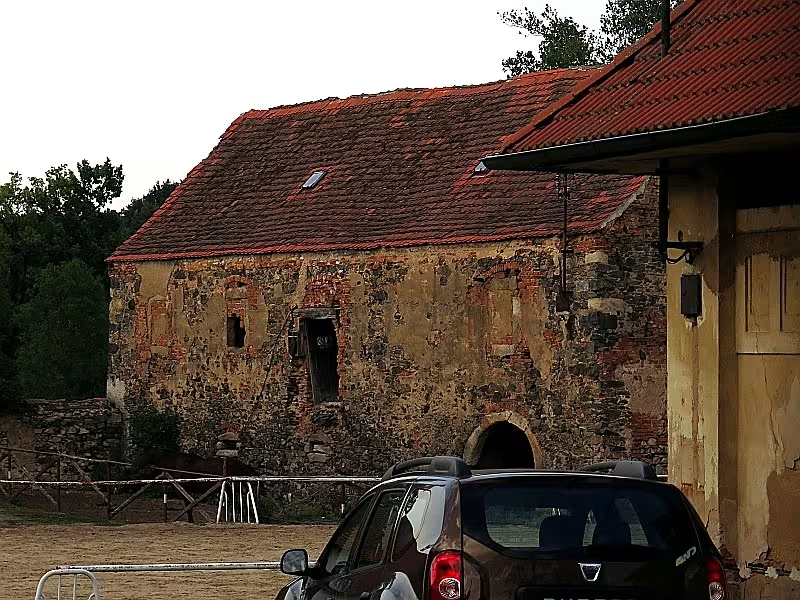
Netunice is a Renaissance fortress in the Pilsen-South district, which was converted into a Baroque granary in the 18th century. This building is an important cultural monument of the Czech Republic, bearing traces of the original nobility and later agricultural functions.
The oldest history of the mansion has been left little. In the years 1192-1193 there is already mention of John from Nezecice in the sources. The preserved Renaissance fortress was probably built by an unknown builder after 1500, and the first written mention of it dates back to 1548. In this year, the brothers Jan and Hynek Nebikov of Nebilov had the fort and the whole village written into the boards of the earth together with the sailing court after their father Jaroslav Nebikov of Nebilov.
According to the historical catalogue, the Gothic core of the building could already exist in 1427. The original fortress was three-winged, but after the demolishing of the southern wing at the beginning of the 19th century, the ground plan has the shape of the letter L. A small fragment of sgraffiti letters was preserved on the west side. On the ground floor, three rooms are preserved with vaulted vaults with sections. When the granary was rebuilt, the stone-lined windows were reduced or walled and the original entrance in the south wing was replaced by a new one in the west wall.
After the death of John Nezecki, Hynek Nezecko became the sole owner, who bequeathed the estate to the wife of Margaret of Doup. The estate was subsequently inherited by his sister Dorota of Nebilov, who died in 1575. At the end of the 16th century, the estate belonged to Josef Úlický of Plešnice and his sons, and Apolon Ladislav Úlický of Plešnice was based here in 1615. In 1630, the widow Anna Apolona sold the estate to Peter of Hartenberk. His son John of Hartenberk sold the fort in 1643 to Nicholas Mirabelle of Treuhof. After several changes to owners, including Jan Jindřich Šeflinger of Röhrsdorf, Jan Bedřich Vinkler of Heimfeld and Arnold Alois Engel of Engelfluss, Netunice became part of the Nelenovský estate under the leadership of Count Jan Jindřich of Kokořov after 1685.
The key moment for today's appearance of the building was the reconstruction from the fading fortress to the Baroque granary in 1780. This change significantly affected the architecture of the building, especially by the form of windows and placing of entrances.
Currently, the building is protected as a cultural monument of the Czech Republic, but it is in very poor condition. Since 1948, it has been used by a single agricultural cooperative that has not kept it. Even after taking over the original owners' offspring after 1989, there was insufficient maintenance, which led to damage to plaster, ceilings and circumferential masonry due to leaking water.
Netunice represents an authentic trail of former noble settlements and their subsequent use. It is advisable to look at this object to preserve the memory of its complex history.
Historical milestones
- 1192
- A mention of John from Neunice.
- 1548
- First written mention of the fort.
- 1780
- Rebuilding the fort into a baroque granary.
Architectural development
Originally a three-wing structure from which the L-shaped ground plan remained after the demolishing of the southern wing. On the ground floor are preserved three rooms with vaulted vaults and fragments of sgraffiti letters. The stone-lined windows were reduced or walled up when the granary was converted.
Historical events
1548: First written mention of the fort in the earth's plates. 1780: Rebuilding a fading fortress into a baroque granary. 1948: Taking over the building by a single agricultural cooperative.
Owners
Jan z Netunic (end of 12. st.), Jan and Hynek Nekunický z Nebílov (1548), Josef Úlický z Plešnic (end of 16. st.), Apolon Ladislav Úlický z Plešnic (1615), Petr z Hartenberka (1630), Jan z Hartenberka, Mikuláš Mirabella z Treuhofu (1643), Jan Jindřich Šeflinger z Röhrsdorf (1666), Jan Bedřich Vinkler z Heimfeld (1672), Arnold Alois Engel z Engelflussu, Jan Jindřich z Kokořova (after 1685).
Points of interest
The Renaissance fort was converted into a baroque granary in the 18th century. - According to the historical catalogue, the Gothic core of the building could have existed in 1427. - A small fragment of sgraffiti letters was preserved on the west side. - On the ground floor, three rooms are preserved with vaulted vaults with sections. - The building is in very bad shape right now.
Guide
Show guide text
This text was created by artificial intelligence and has not been editorially reviewed. It may contain inaccuracies.
Welcome to the Netunice monument. You are standing in front of a building that is a fascinating, albeit slightly sad example of how the fate of human structures changes over the centuries. Now, if you look around you, you'll probably see a state that suggests that time knows no mercy and that every building has its own, relentless life cycle. The walls are dilapidated, the structure of the building is fragile, but it is in this fragility and in this gradual decay lies its incredible strength and authenticity. This building is not just a pile of stone and mortar; He is the living chronicler of this region, who has been here for almost a thousand years. Feel the atmosphere - the silence around you is intersected by the echo of the ancient events that took place here, and every crack in the plaster is like a wrinkle on an old man's face that tells the story of survival.
Let's go deeper into the past together to understand what you really see before you. In order to fully understand the importance of this place, we need to go back much further than it might seem. Although the current form of the building tells us of much younger times, the roots of this place go back to the deep Middle Ages. The first clue that leads us to the fact that this place was important dates back to 1192. The name of John of Nezecice appears in the records at the time. Imagine that time - the world of knights, constant change and deep faith, when every solid structure was a symbol of power and security. Netunice has been here since the beginning, as a base for the genus that defined this place. Later, in 1548, in written testimonies, the term "fortress" appears for the first time. This clearly tells us that the site had already performed its usual function at the time - it was a fortified residence which was not only intended to serve as a home, but also as a protection for its inhabitants and owners in unstable times. The main part of the construction that you see today was probably built in the sixteenth century, when the fortress became a full Renaissance mansion of nobles, representative and proud.
Now pay attention to the architecture itself and how it reflects the world's changes. Although the building shows signs of neglect, its structure still tells the story of a constant change in functions. Notice how different styles are mixed in her walls and how one era is poured into another. In the eighteenth century there was a fundamental and decisive turnaround for the building. In 1780, this Renaissance fortress was converted into a baroque granary. This was the moment when military and representative character became purely practical, economic use. The building has ceased to be the home of the noble estate and has become a storage space for the harvest, which was crucial to life at that time. Now, if you look at the west side of the building, try to see the details that survived the time. You may be able to catch tiny fragments of sgraffiti letters in the cracks and in the peeling parts of the surface. These fine decorative elements are the remnant of the ancient Renaissance beauty that tried to decorate the building and elevate its status. And if you had the opportunity to enter the ground floor areas, you would encounter something very interesting. In these rooms, three rooms are preserved, which are encapsulated by vaulted vaults. These arches are a silent proof of the quality of the construction at the time and give the interior a sense of stability and monumentality, which persisted even after the building lost its original nobility and became part of the agricultural operation.
To better imagine this place, we must remember the people who once lived here and decided the fate of the neighborhood. Netunice wasn't just buildings, they were homes of powerful families that affected the whole country. Jan z Netunic, which we know about from the end of the twelfth century, was one of those who defined this place in its earliest stages. Later there were other important people like Mikuláš Mirabella z Treuhofu or Jan Jindřich z Kokořova. Imagine their lives in these areas - their legal disputes, celebrations, political interests, and daily duties. Each of these names is printed in the history of this place and gives it a human dimension that you will not find in the stones without them. Each of these lords left his mark in these walls, whether through his decision or through the very existence of this mansion.
Now I want to invite you to think of one fascinating and mysterious question. What is really underneath what you see? Under the current Renaissance and Baroque layers, an even older secret can be hidden waiting for its unveiling. According to the historical catalogue there was probably a Gothic core of the building already in 1427. It means that even though you seem to see a building from the 16th or eighteenth century, beneath your feet and at the depth of its walls, a foundation that comes from the age of Hussite wars or even before. It's a fascinating idea - you're standing over layers of history that pose as chapters in a book where every new chapter is built on the previous, often invisible and forgotten.
Please do not tremble before the monument is in a difficult state. It's the imperfection, the patina of time, and the traces of decay that make the Neunice so authentic and powerful an experience. Take a look at the building from different angles, perceive its shadows and the light that hits its decrepit but still proud walls. Every detail, every crack, and every fragment of sgraffite is an invitation for further discovery and a deeper understanding of our own history. Thank you for spending this moment with the history of the Neunice. I wish you a pleasant and inspiring further journey in the footsteps of the past.
Tips for visitors
The best time to visit is spring and autumn months, when surrounding nature complements the atmosphere of historical ruins. We recommend avoiding very rainy days so that visitors avoid mud around the building.
Due to the emergency condition of the fort, it is necessary to wear a tight sole and suitable clothing that may be dusted. We recommend you take enough drinking water with you.
For the best photos we recommend to use late afternoon light to highlight the texture of the old masonry from the sixteenth century. The most interesting images are generated by capturing the details of the decaying architecture.
It is an adventurous destination for families with children, but it is necessary to be more careful about the technical condition of the construction.
Frequently asked questions
Can the monument be visited?
Some buildings of this kind are open for guided tours, others serve another purpose or are privately owned. We have not verified whether and when this monument is open – please ask the operator. According to the heritage register the structure is in poor condition – do not enter it and take care nearby.
What are the opening hours and admission?
We have not verified the opening hours or admission. Current information is published by the operator.
Where is the monument?
Location: Plzeňský kraj. The map on this page shows the exact spot.
Why is the monument protected?
It is listed in the Central List of Cultural Monuments of the Czech Republic as a cultural monument (register no. 1000143460).
Businesses nearby
Do you run a restaurant, accommodation, shop, museum, rental, wellness or other visitor service near this monument? Show yourself directly to the people heading to it — this is how they will see you in the app and on the web:
Events nearby


Zdroj akcí: otevřená data měst a obcí ČR (Národní katalog otevřených dat) a kalendář akcí Národního památkového ústavu.
Nearby
🏰 Historic sites (247)
- Nebil Chateau 1.2 km + 420 377 917 090 web
- Monument Antonín Svehly 4.4 km
- Memorial to the fallen in World War I 4.6 km
- Memorial of the fallen in the world war 5.0 km
- Wolf 5.1 km
- Saint Jan Nepomucký 5.7 km
- Monument 5.9 km
- Lower Lukavi 6.2 km
- Freedom Memorial 6.6 km
- sv. Petr 6.8 km
- Myslivec Museum Špejchar 6.9 km + 420 723789531 web
- Rady 7.4 km
- Statue of St. Wenceslas 7.4 km
- Memorial to the victims of World War I and World War II 7.5 km
- Petr Bočan 7.9 km
- Jaroslav Štěpáková 8.0 km
- Chateau 8.4 km Naves of the Republic of 1
- Monument of Raushar Sado 8.5 km
- Hradiště Jindrn 8.6 km
- Moto Chlumčany Museum 8.6 km + 420603871716 web
🍽️ Restaurants and dining (464)
- Cafe Tuwora 1.2 km + 420 377 917 090
- Brewery Bizon 3.9 km Chižice 76 + 420 607 970 506 web
- Na Joy - D & C Patisserie 4.5 km
- Restaurant Atevi 4.5 km + 420733525610
- Wolf Bastion 4.7 km + 420602180990 web
- Guesthouse U Karlose 5.3 km + 420603810718
- Tahoda Under Lesem 5.6 km
- Patronka - Restaurant "U Vitrak" 5.9 km + 420 705 717 646 web
- Restaurant People's House Puppies 6.2 km Connector 194 + 420 722 421 750 web
- Guesthouse 6.5 km
- Pashek 6.8 km
- Green Dog 7.0 km
- Restaurant under Radyni 7.3 km Standard 538 + 420 777 102 921 web
- Restaurant Under Rady 7.3 km + 420 777 102 921
- U Tity 7.3 km
- Pub u Špejcharu 7.5 km + 420733796180
- Na Polance 8.1 km
- Sklipk u Matese 8.2 km
- Preštice barn - music color 8.3 km + 420 777 574 476
- Mini brewery Radouš 8.3 km Naves of the Republic + 420 776 570 736; + 420 608 247 964 web
🏨 Accommodation (41)
- Guesthouse U Jezu 8.6 km + 420 603 252 249
- Hotel Volf 8.8 km
- U Franty 8.8 km Poděbradova 393 web
- Hotel Purkmistr Beer & Spa Resort 8.9 km Selské nav 21 / 2 + 420377994311 web
- Hotel Purkmistr Beer & Spa Resort 8.9 km Selské nav 21 / 2 + 420377994311 web
- Hotel Purkmistr Beer & Spa Resort 8.9 km Selské nav 21 / 2 + 420377994311 web
- Václav King - ARVEX 9.0 km + 420 602 421 866
- Pod 9.1 km
- Pan House 9.2 km + 420371594796 web
- Primavera 10.2 km
- Blue stars 10.6 km
- Centre Letiny 10.9 km + 420 775 552 922 web
- Seník 11.2 km
- U Gigantu 11.8 km Chivokov 71 + 420 606 652 427
- Parkhotel 12.0 km
- Parkhotel 12.0 km
- Lions 12.6 km ZBorovská 85 / 18 + 420377420010
- Guesthouse Bory 12.8 km web
- Joachim Lewardt 12.9 km
- Hotel Brdy 12.9 km Chateau 141 + 420601200226 web
🚲 Rentals and sport (78)
- Body unity 7.0 km + 420731185637 web
- Cycloservice and auto parts Malík 8.4 km Naves of the Republic of 71 + 420 377 969 586
- Intersport 8.9 km
- CYKLO SPORT CAPAT 8.9 km American 46 + 420728356003 web
- Biotop Blovice 9.2 km
- TJ Sokol Blovice 9.2 km
- ♪ 9.3 km Masaryk Square 37 web
- Multi-purpose water tank 9.4 km
- Tennis Hall Dobřany 10.1 km
- Biotop Kotynka 10.3 km
- Black Feather Airsoft 10.4 km web
- Table tennis 10.5 km
- Football Park Plzeň 10.9 km
- SK Smíchov Plzeň 11.6 km
- Skoda Sport Park 11.9 km
- Body unity Slavia 12.0 km
- Damand 12.0 km
- Skaut Bullet Plzeň 12.0 km
- TJ Slavia VŠ 12.3 km
- Sokol Plzeň - Doudvesky 12.3 km
🥾 Hiking and nature (162)
- Hájsko 2.1 km
- Pod Sad corner 3.4 km
- Fat mountain 3.5 km
- Na Homolce 3.7 km
- Kozí kámen 4.0 km
- Komár prospect 4.3 km
- Jelení vr 4.5 km
- Zlin 4.6 km
- Vysoka 4.8 km
- Wolf 5.1 km
- Puppies top 5.3 km
- Ružich 5.5 km
- Kožich 5.5 km
- Sížov 6.3 km
- Kluk 6.5 km
- sv Barbora 6.6 km
- Kluk 6.6 km
- Hájez 7.1 km
- Valík 7.3 km
- Húrka 7.3 km
Accommodation nearby
Trips and activities nearby
Guided tours, tickets and activities nearby from GetYourGuide
Affiliate link: if you buy from the partner, we may receive a commission. The price for you does not change.
Search tours and activities →Themed route
Thematic cruise route Netunice
1.Netunice (fortress) * Type: * Historical fortress It is worth a visit because it offers a view of the 14th century architecture and is part of the history of the region. The fortress boasts a beautiful park and views of the surrounding countryside.
2. Park near Nezecice * Type: * Park It is an ideal place to relax and walk the long corridors of the old fortress. The park offers beautiful green and quiet places to relax, which is a great way to enjoy the natural beauty of the surroundings.
3. St. John Nepomuk's Chapel * Type: * Chapel This chapel is a small architectural pearl near the fortress, which offers a peaceful space for meditation and reflection. It's a place of historical significance and beautiful architecture.
4. Garden near the Neunice * Type: * Garden It offers a view of various types of flowers and trees, which is ideal for lovers of botany or a simple walk. It's a place full of peace and beauty of nature.
5. Tanks Fortress Netunice * Type: * Historical courtyard Visiting splendor is a great way to learn more about the history and architecture of the fortress. It is a place full of atmosphere of past times and offers views of other structures of the fortress.
This route allows you to explore Netunice and its surroundings, from the historical fortress to the quiet park to the small architectural pearls.
Seasonal recommendations
Spring: A spring visit offers a unique feeling of revival, where nature is awakened from winter sleep around the fortress. Green meadows and flowering bushes form a living background for historical construction, which shows the history of this area. Since the fort is in a state of emergency, it is recommended to visit it at the beginning of spring before the crowds are added tourists and interested in nature. At this time it is advisable to carry a warm coat for a colder morning and afternoon sun day when temperatures start to increase gradually.
Summer: During the summer period, Nezunice is most visited because of the ideal weather and opportunity to explore nature in the surroundings. Sunshine days mean that a fortress can become a place of life with tourists who enjoy the beauty of rural surroundings and historical monuments. It is advisable to visit it in the early afternoon to avoid the greatest increase in the crowd, and to wear a protective sun helmet that protects against intense sun. Also remember to bring water for drinking, especially if you plan to spend more time walking around the surrounding countryside.
Autumn: Autumn offers Neponika a melancholy and colorful view when leaves of falling trees color the landscape in a variety of eye shades. The atmosphere is calmer than during the summer and nature offers a beautiful background for photos. When visiting this season, it is advisable to wear warm clothes because the temperatures are gradually decreasing and the morning and evening can be cold. In addition, it is recommended to visit the fort in periods without forecast rain weather in order to fully enjoy the beauty of the autumn landscape.
Winter: Winter visit It offers a unique view of the snow-covered fortress, which creates a romantic and quiet environment. Although the monument is in a state of emergency, the winter visit can be a quiet experience without large crowds of tourists. We recommend visiting the fort with warm clothes, including fur and glass glasses for protection against freezing air, and with concern for dissection, because winter climate can be challenging.
Visualizations and artistic views


The visualisations are generated by artificial intelligence and serve as inspiration.
Tips from visitors
No tips yet. Be the first!
Log in and add your tip.
Sources and literature
Photos: Sovicka169 / CC BY-SA 4.0 — Wikimedia Commons. The author and licence also appear when you hover over the image.
Faktickým podkladem tohoto textu byl článek na Wikipedii, jehož autory jsou přispěvatelé Wikipedie. Článek je dostupný pod licencí CC BY-SA 4.0.
Location on the map
More monuments – Plzeňský kraj
Show all in the region



Příběhy a pověsti
Legendy, pověsti a příběhy spjaté s touto památkou
Fotografie návštěvníků
Zatím žádné fotografie. Buďte první, kdo přidá fotografii z návštěvy!
Log in a přidejte svou fotografii nebo hodnoťte.
Za ověřenou návštěvu v aplikaci získáte víc bodů — poznáme podle GPS, že jste na místě.
Reviews and comments