



Nezvěstice Fortress
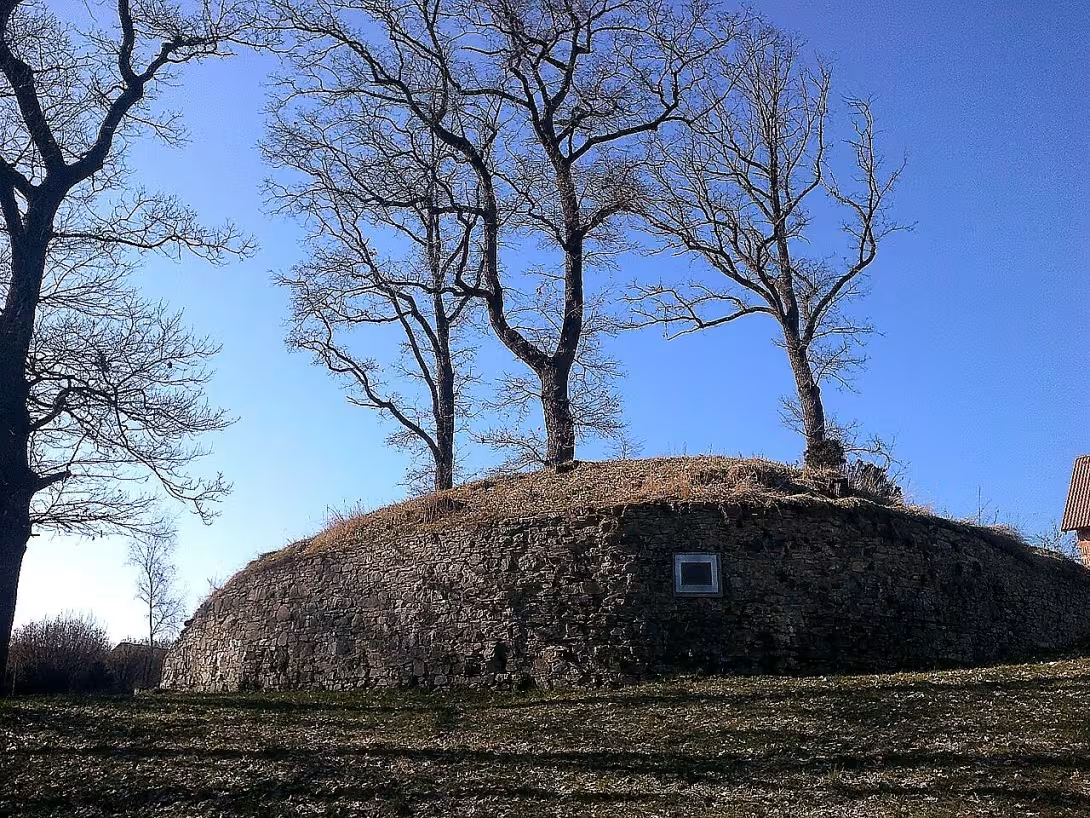
Nezvěstice is a extinct medieval fortress in the village Nezvěstice in the district of Pilsen-town. It was located above the left bank of the river Sáslava in a place called Pod Zámeček and is today protected as a cultural monument of the Czech Republic.
Little is known about the village's oldest history; the first written mention of Nezonestice dates back to 1379. According to historian Augustus Sedláček, however, a part of the village belonged already in 1350 to the masters of Litice. In the 14th century, the village was divided into several owners. They belonged to the manor of the chateaux of Litice and Lopata, Rožmberk, and the two estates of Blahuta and Zdenek. One of these properties included a fort.
From the original architecture, only a fortress 20 to 30 metres in diameter has been preserved. On the south side of the building there is a wall with a height of 1.5 to 2 meters. On the east side there are visible remnants of the moat and the wall, while the northern part of the moat was taken in time.
Although the first written mention of the fortress itself dates back to the sixteenth century, historical sources suggest that it was already owned by Oldřich z Řisutě in 1402- 1424. Later, in 1483-1495, the farm belonged to Jan from Javor. In 1526-1527 he was owner of Jan Žichovec z Duban, who replaced the fort with the Lochovice estate. It is in this contract that the first documented mention of construction appears. After this period Nezvěstice owned Jan z Roupova, which subsequently left them to his wife Margaret from Klinštějn.
In 1549 Nezvěstice were outsourced and connected to the Vlčtín estate. During this period, the fortress ceased to serve as a mansion and was abandoned as a waste. In 1587, when Nezvěstice was bought by Karel Kokořovec from Kokořov, it is no longer mentioned in the contract.
Today this place is protected as a cultural monument representing the remains of a former mansion. It's an interesting clue in the landscape that allows you to see the structure of medieval governance in the region. Visiting this place is suitable for people interested in the history of local buildings.
Historical milestones
- 1379
- First written mention of the Nescists.
- 1526
- The first mention of the fort in the contract of Jan Žichovce from Duban.
- 1549
- Nezvěstice has been attached to the Vltín Manor.
Architectural development
Today, a fortress of 20 to 30 metres in diameter has been preserved from the fort. On the south side there is a wall up to two metres high and on the east side remains of a ditch and a wall.
Historical events
The first written mention of the village in 1379. The first mention of the fortress itself in the contract of Jan Žichovce of Duban in 1526. Connection to the Vltín estate in 1549.
Owners
Lords of Litic (about 1350), Oldřich z Řisutě (1402- 1424), Jan z Javora (1483- 1495), Jan Žichovec z Duban (1526- 1527), Jan z Roupova (after 1527).
Points of interest
- The fortress is located above the left bank of the river Slava in a place called Pod Chateau. - From the original architecture, only a fortress 20 to 30 meters in diameter has been preserved today. - On the south side of the building there is a wall 1.5 to 2 meters high. - The first documented mention of construction appears in the contract from 1526-1527. - In 1549, the fort ceased to serve as a mansion and was abandoned in vain.
Guide
Show guide text
This text was created by artificial intelligence and has not been editorially reviewed. It may contain inaccuracies.
Welcome. Stop for a moment, take a breath and feel the surrounding silence, which only interrupts the noise of the nearby river of the Reunion. Right now, you're standing in a place that once formed the center of one of the local power centers. You are in a place called Under the Chateau, where the landscape is spread out in front of you, which keeps the secrets of the extinct fortress Nezvěstice. Perhaps at first glance you might wonder where the monument is. Look around you. What you see today as a slightly decayed terrain and greenery over the left bank of the river is basically an open history book, even though its pages are now covered with a layer of grass and time. You're standing on a so-called stronghold, which means that even though the walls no longer reach the sky, the floor plan itself and the trace of earlier construction in the country remain.
Let's go back in time together so that this space starts to make sense to us. In order to understand why the fort was built here, we must move to the 14th century. At that time, this area was divided between several different owners, creating an interesting mosaic of ownership and influence. The first written mention of Nezonestic dates back to 1379. So imagine that, even at a time when there were very different chivalry and political conditions in Europe, there was a seat here that served as a government home. The fortress was not only a defensive object, but above all a symbol of the status and power of a local nobleman. It was a basic unit of landscape management, a place from which the surrounding fields, forests and, of course, the strategically important river Sáslav, which in ancient times was a key artery for transport and trade.
Now pay attention to what you can perceive with your senses right now. Even if you do not see the noble palaces here today, the Nezevestic architecture is still present in the form of landscaping. If you look at the space around you, notice that the entire area of the fort is approximately 20 to 30 meters in diameter. It's a relatively compact space, which is typical of the smaller aristocratic strongholds of the time. They were designed to be easily sustainable and safe at the same time. Now, please move slowly to the south side of the object. This is where you can see the most significant remains that have survived for centuries. Note the rest of the wall that stands out from the field to a height of one and a half to two meters. This wall is today the only tangible witness of the time when the nobles ruled here. Touch in the spirit of the stones and try to imagine what this wall once looked like when it was part of a solid perimeter fortification that separated the security of the court from the wilderness and the unknown outside world.
Who actually lived here and who made the decisions in these walls? The history of Nezestic is linked to the names of men who built their power on land ownership and strategic contracts. The personalities we associate with this place include Oldřich z Řisutě or Jan z Roupova. A very important figure was Jan Žichovec z Duban. One of the most important written tracks is connected to it. In 1526, the fort appears in the contract which Jan Žichovec z Duban concluded. These documents are an invaluable resource for us today, because they tell us that the fort at that time still worked and was a recognised property. Imagine these men going through here, planning their economy and discussing the politics of the time. It was places where everyday life was blended with strict rules of the social order.
Here we come to the part that may be the most mysterious. Why are we only seeing the ruins and remains of the wall today? Nezvěstice served as a mansion until the mid-sixteenth century. In 1549 there was a fundamental change when Nezvěstice was connected to the estate of Vltín. With this change of ownership and administrative shift, the era of decline has also begun. The fort was gradually abandoned. It is no secret that, with the advancing time and the change in architecture, small chateaux have become inefficient. The nobility sought greater comfort, more modern buildings and safer centres of power. Nezvěstice so slowly disappeared, their stones may have been used in construction in the surrounding area and nature gradually returned the site. It is fascinating to think that the construction, which was still mentioned in official contracts in 1526, has become just a memory over a few decades.
Today this place is protected as a cultural monument of the Czech Republic. Although you will not find any large halls or high towers, it is in this modesty that the power of Nezestic lies. It's a place that teaches us humility before time. If you look at the south wall and then the stream of the river Slava, you realize that while human structures are gone, the landscape remains. A 30-metre-diameter fortress is now a silent monument that encourages us to think about how our history has changed and how powerful settlements have become silent hills in the landscape.
Now imagine the last painting. It's half the sixteenth century, the sun sets over the Realm, and the last owners are leaving their fort. They lock doors that no one else opens, and they go towards the Wolf. All that remains is the silence and the wall that you see before you.
Now I encourage you to take a walk around the fort for a while. Try to admire the entire space, perceive its dimensions and think about what could have happened in each of these meters of soil. Go through the edge of the fort and let your imagination finish what time has erased. Let yourself be filled with the atmosphere of this forgotten corner of history.
Thank you for accompanying me on this short journey in time to the extinct fortress Nezvěstice. I hope you found some peace and inspiration in this quiet place. I wish you a pleasant continuation in discovering the beauty of our landscape and its hidden heritage. Goodbye.
Tips for visitors
The best time to visit Nezvěstice is in the spring or autumn season when vegetation is less dense and light pleasant. This time of year also offers lighter weather for long walks around ruins.
Transport by public transport is also available, but specific connections and times can be verified using an online search engine.
When visiting take with you suitable shoes for a long walk, protective sunglasses, and sprinkler or water. Also remember to protect from insects, especially in warmer months.
The best place for photography is above the ruins of the fortress, where an open view of the river Sáslav and surrounding landscape is offered as an ideal background. The best light for photos is in the early morning or evening when the sun is not directly above your head.
In the surrounding area you can visit the river Sáslav, which offers beautiful sounds and quiet space for relaxation. For families with children, it is a good opportunity to explore the surrounding forests and to try out some toys or playing activities that are independent of places.
Frequently asked questions
Can the monument be visited?
This is a ruin. Such sites are often freely accessible, but some can only be visited with a guide or are closed for safety reasons. We have not verified the current situation – take care and respect any restrictions.
Where is the monument?
Location: Plzeňský kraj. The map on this page shows the exact spot.
Why is the monument protected?
It is listed in the Central List of Cultural Monuments of the Czech Republic as a cultural monument (register no. 1000148463).
Businesses nearby
Do you run a restaurant, accommodation, shop, museum, rental, wellness or other visitor service near this monument? Show yourself directly to the people heading to it — this is how they will see you in the app and on the web:
Events nearby


Zdroj akcí: otevřená data měst a obcí ČR (Národní katalog otevřených dat) a kalendář akcí Národního památkového ústavu.
Nearby
The river Záslav and locality Pod Zámeček.
Accommodation nearby
Trips and activities nearby
Guided tours, tickets and activities nearby from GetYourGuide
Affiliate link: if you buy from the partner, we may receive a commission. The price for you does not change.
Search tours and activities →Themed route
1. The river Sladlav, natural water flow. The road along the shore offers a quiet atmosphere and beautiful views. 2. Under Chateau, locality. This area is an ideal place to relax before the final goal. 3. Nezvěstice (fortress), historical monument. The main destination of the trip, which will lead you to explore the history and architecture of this object.
Seasonal recommendations
In spring, the surroundings of the fortress are revived by lush greenery and flowering flowers that gently cover stone walls. The atmosphere is full of hope and the light is fine, making the monument a pleasant place to walk. We recommend moisture-resistant shoes because the road to the ruins can be muddy after rain. It is ideal to visit in the afternoon when it is already warmer.
The summer season brings August heat and thick shade under the surrounding trees, which contrasts with dazzling white ruins. There are more visitors in the main season, which is why it is best to arrive early in the morning to enjoy peace. Do not forget light clothes, a cap and plenty of fluids for refreshment.
The space around Nezvěstice is coloured in golden and brown tones, which underlines the melancholy nature of the ruin. Morning fog gives the place mystery and drama. Due to the changing weather, reach for layered clothes and waterproof jackets. The best time for photography is a late afternoon in the low sun.
In winter, the fortress is rigorously and stroboid, especially if the stones are covered with a layer of snow or frost. There is a deep silence and the landscape is successful. It is necessary to have warm thermo-linens, gloves and fixed footwear with anti-slip soles. Count on shorter opening times and we recommend a visit on clear days.
Visualizations and artistic views


The visualisations are generated by artificial intelligence and serve as inspiration.
Photos from the area
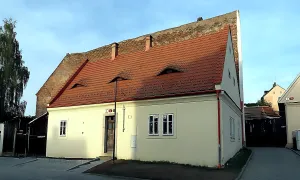
Real photos taken near the monument


Zdroj a licence jsou uvedeny u každého snímku.
Tips from visitors
No tips yet. Be the first!
Log in and add your tip.
Sources and literature
Photos: Tr.ma / CC BY-SA 3.0 — Wikimedia Commons. The author and licence also appear when you hover over the image.
Faktickým podkladem tohoto textu byl článek na Wikipedii, jehož autory jsou přispěvatelé Wikipedie. Článek je dostupný pod licencí CC BY-SA 4.0.
Location on the map
More monuments – Plzeňský kraj
Show all in the region


Příběhy a pověsti
Legendy, pověsti a příběhy spjaté s touto památkou
Fotografie návštěvníků
Zatím žádné fotografie. Buďte první, kdo přidá fotografii z návštěvy!
Log in a přidejte svou fotografii nebo hodnoťte.
Za ověřenou návštěvu v aplikaci získáte víc bodů — poznáme podle GPS, že jste na místě.
Reviews and comments