






Nová synagoga Site of events
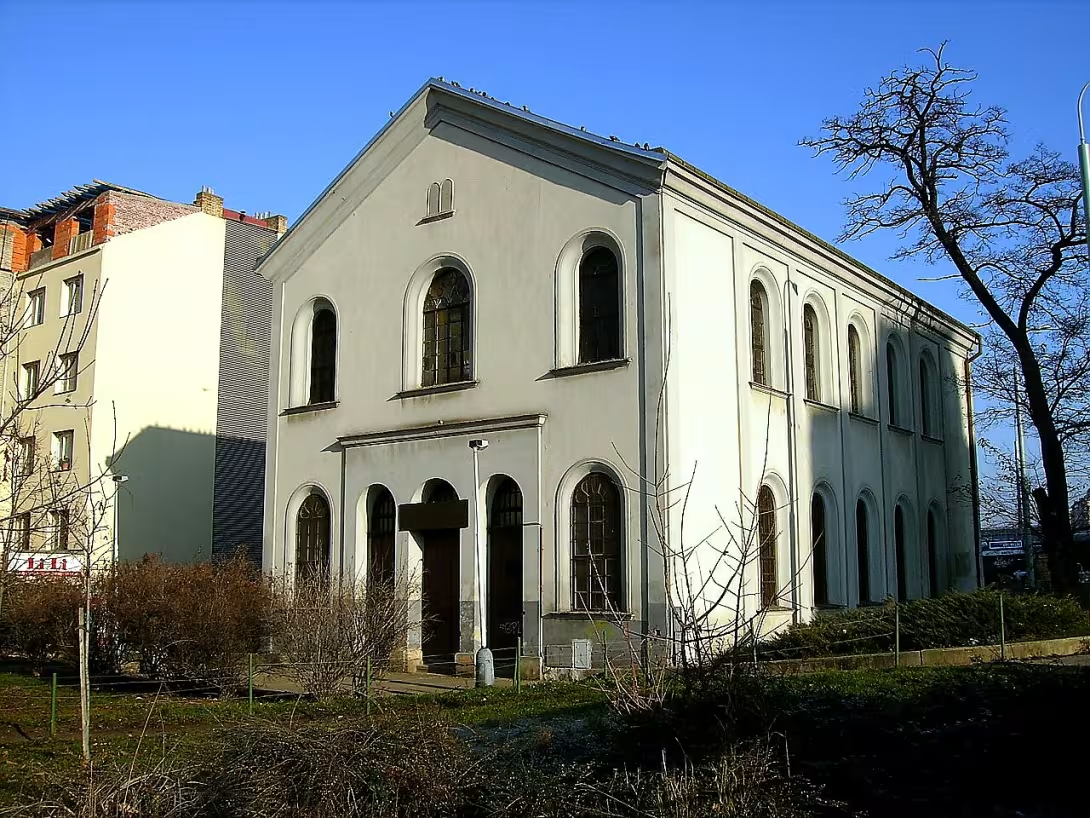
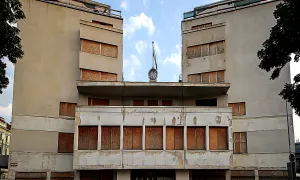
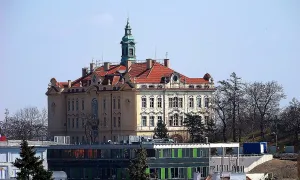
The new liberal synagogue in Prague 8 at the Palmovka junction is a historical monument with a rich past and cultural significance. It was built in 1846 and ceremonially consecrated in 1858. Its architecture reflects Roman ancient style with elements of the New Romanesque style, which was typical of romantic historism at the time. The building is outside the borders of the original liberal ghetto due to the risk of floods from the Vltava.
The creation of a liberal Jewish village is closely linked to the events of the 18th century. After the lost war with Prussians, Marie Theresa published an edition of the expulsion of Jews from Prague and Bohemia, which led to the expulsion of over 10,000 inhabitants of the city. Although the Jews could eventually return, several dozen families had already settled in Libni, creating a ghetto. This village became the second most important Jewish centre in the territory of today's Prague.
The architectural style of the building is characterized by a combination of Roman ancient style and new Romanesque elements. The whole building lasted twelve years (1846-1858) and was implemented outside the original ghetto due to the risk of floods from Vltava. The facade originally had a richer stucco decor, but it was not preserved. The interior is divided as a three-boat basilica with empores over side ships and is oriented towards Jerusalem.
The synagogue served the liberal, Karlinian and high-ranking Jews. The important rabbis included Dr. Izák Kämpf, for example. Religious services were held here continuously until World War II, when the building was closed and converted into a warehouse of confiscated Jewish property. After the war, the services were not restored and the object remained used as a warehouse.
In the 1950s, Bohumil Hrabal lived here as a stagehand. In the 1960s, the synagogue was revived by literary and philosophical debates as well as workshops of well-known personalities such as Krabal, Egon Bondy and Vladimir Boudík. After the 1989 revolution, the synagogue was cleared out, partially repaired and began to serve cultural purposes.
Today, the New Libernese Synagogue is being used sporadically for cultural events, while several times a year the Jewish community is doing religious services here. The plans for its future multifunctional use include both a cultural programme and more frequent religious ceremonies.
The new liberal synagogue is not only an architectural and historical monument but also a witness of important events and personalities of Czech history. Her visit offers a unique opportunity to explore the rich past of the liberal Jewish community and appreciate its cultural heritage.
Then and now
Drag the slider to compare how the landmark may have looked when it was built with the view today.
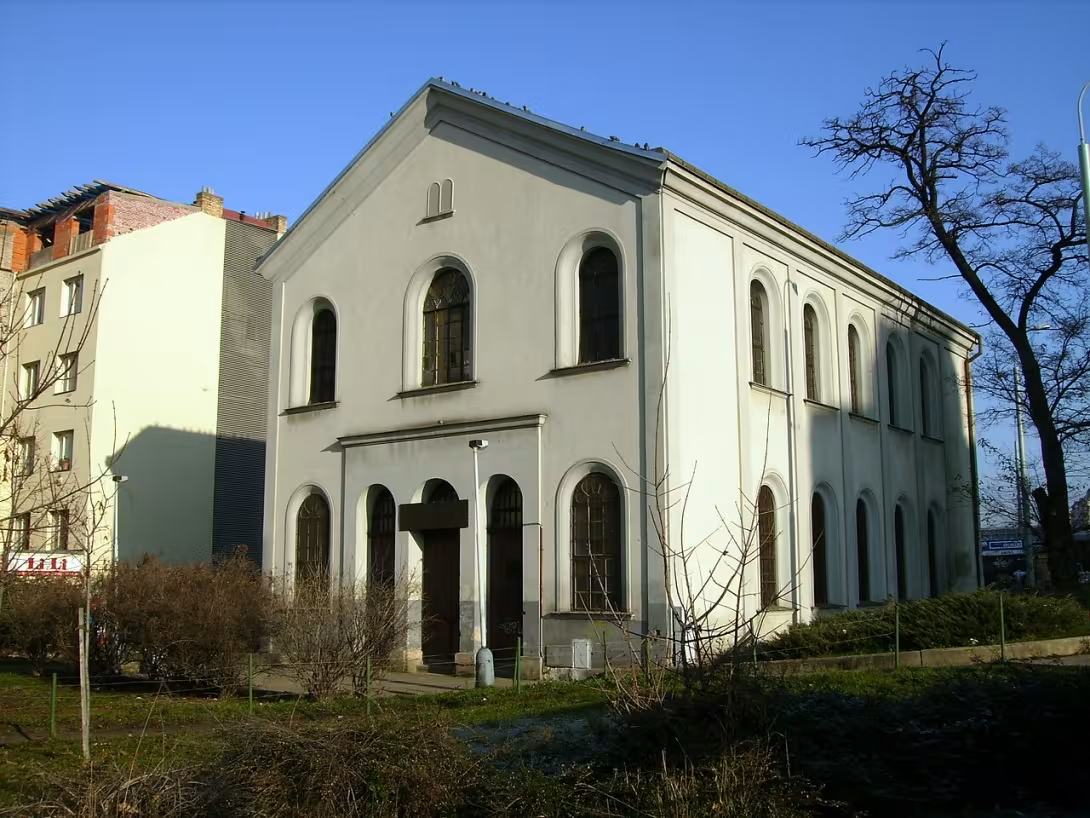
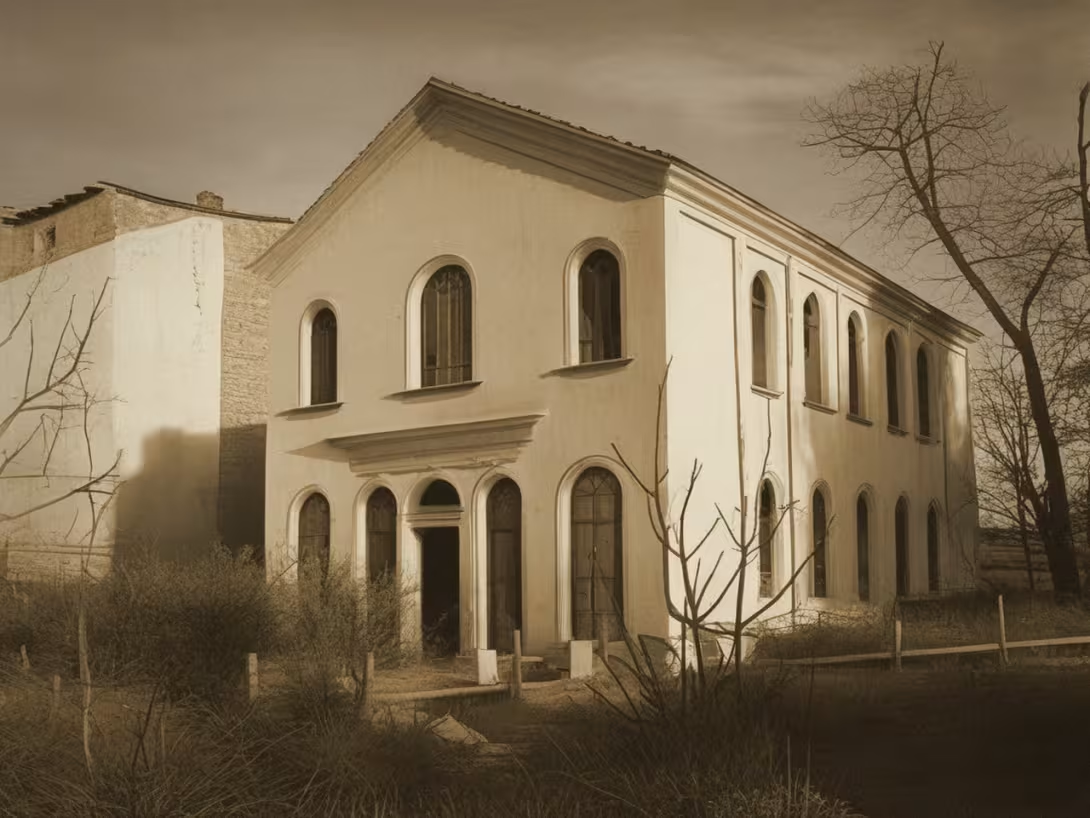
The historical appearance on the left is an AI-generated visualisation and serves as inspiration only.
Historical milestones
- 18th Century
- The creation of the liberal Jewish ghetto
- 1846
- Start construction of the new liberal synagogue
- 1858
- The ceremonial consecration of the synagogue
- 1939-1945
- Closure of the building and conversion into a confiscated property warehouse
- 1960-1969
- Literary and philosophical debates in the synagogue
- 1989
- Cleaning, repair and start of cultural use
Architectural development
The construction lasted twelve years, from 1846 to 1858. The original facade had a richer stucco decor, which was not preserved. The interior is divided as a three-boat basilica with empores over side ships.
Historical events
- 1744
- The expulsion of the Jews by Marie Terezia.
- 1858
- The ceremonial consecration of the synagogue.
- 1941
- The synagogue was closed and converted into a warehouse of confiscated Jewish property.
Points of interest
- The construction lasted twelve years and its architecture combines Roman ancient style with elements of the New Romanesque style. - The building was located outside the border of the original liberal ghetto due to the risk of flooding from the Vltava. - The interior consists of a three-boat basilica with empores, which is oriented towards Jerusalem. - During World War II, the synagogue was closed and served as a warehouse for confiscated Jewish property. - In the 1950s, Bohumil Hrabal stayed here as a stagehand.
Guide
Show guide text
This text was created by artificial intelligence and has not been editorially reviewed. It may contain inaccuracies.
Welcome to Prague, part Libeň. Right now, you're facing one of the very important and fascinating structures in this area. In front of you is the new liberal synagogue. Stop for a moment, take a breath, and just feel the presence of her in the middle of today's traffic at Palmovka. It is a place where the everyday rush of a modern city is met with a silent testimony of history that goes deep into the past. Look at the building ahead. Feel its shapes and the overall atmosphere it radiates. It's a building that carries traces of generations, hopes and tragedies.
To understand why this synagogue is standing right here, we have to go back much longer than one century. In the eighteenth century, a Jewish ghetto was established in Libni, a closed neighborhood where the Jewish community lived. However, when it came time to build a new, representative temple, it was decided not to be placed inside the original ghetto. It may interest you, but the reason was not politics or lack of space, but nature. The Vltava, which runs a short distance from here, was unpredictable at the time, and the risk of devastating floods was too high. That's why the synagogue was placed outside the ghetto border, in a safer place where the water didn't endanger it.
The construction itself was a long and patient process. They started it in 1846, but the ceremonial consecration of the building took place in 1858. Imagine this building was built for 12 years. At the time, it was not only a matter of finance, but also precision and search for the right expression. Although the names of architects have remained forgotten in time and are now unknown, their work is ahead of us.
Now please pay attention to the architecture itself. Look at the facade and see the building line. What you see is a typical example of romantic historism, which was very popular in the middle of the nineteenth century. At that time, architects returned to the magnificent styles of the past to express dignity and perseverance. This synagogue combines Roman ancient style with elements of New Romanesque style. Notice the robust shapes and harmony that radiates from the building. It's a combination of ancient elegance and medieval power.
If you could look inside now, you would see a space that is designed with a deep spiritual sense. The interior consists of three-boat basilica with empores, which are such elevated galleries. The entire space is oriented towards Jerusalem, which is the basic building principle for synagogues, which connects the local community with the spiritual center of their faith.
But this building is not just about stones and style. It's primarily the place of human stories. In her walls, the people who shaped their times left their mark. These included, for example, Dr. Isaac Kämpf, Vojtěch Rakous or František R. Kraus. Names that may not be known to everyone today, but which were crucial to the liberal Jewish community.
But the history of this synagogue is also very painful. When 1939 came and World War II started, the building was violently closed. She stopped being the place of prayer and became a stock of confiscated property. Imagine the contrast. The place that was meant to serve spiritual upbringing turned into a place where the things of the people whose property and their lives were stolen were stored. It's a silent but frozen testimony of the cruelty of that time.
But history doesn't end in tragedy. After the war and in the decades to come, the synagogue began to live again, albeit in a different way. In the 1960s, between 1960 and 1969, she became the unexpected center of intellectual life. There were literary and philosophical debates in her premises. It was a meeting place for thinkers to find answers to the questions of existence and meaning. It is this period and this location that are associated with names such as Arnošt Lustig, who witnessed the Holocaust and a major writer, or Helga Hošková-Weissová. Even Bohumil Hrabal, one of our greatest writers, had a relationship with this place and its surroundings. The synagogue has thus become a bridge between religious tradition and modern intellectual search.
The late '80s brought another break. In 1989, the building was cleaned out, repaired and its new cultural use started, which still lasts until today. It's a fascinating journey from a religious temple to a magnifying glass warehouse to a space for culture and thought.
You might think of one interesting thing that stands out from the whole story. Think about the 12-year construction period. In 1846, when the first shovel dropped, the world was completely different. When the synagogue was consecrated in 1858, the company was already in a different movement. This construction thus carries the dynamics of a whole period. And remember her location again. You are standing here in Palmovka, in the heart of modern transport, but this building is here precisely because Vltava was once perceived as a threat. It's a reminder of how much one must respect the forces of nature.
Now that you know the story of the new liberal synagogue, I suggest you observe it quietly again. Look at her facade, perceive her stability, and think of all the people who went through them. From the believers in the nineteenth century, to the suffering in the times of war, to the debating philosophers in the 1960s. This building is like an open book that tells about survival, memory and the ability to start over.
I wish you to take a sense of respect for the history and inspiration of the courage of the people who worked here. Now invited to further explore the surroundings of Libna, where there are many other hidden corners and stories waiting for you. Thank you for your attention and I wish you a pleasant continued journey.
Tips for visitors
The best time to visit is in the morning or late afternoon, when natural light best highlights the details of the facade and architectural elements.
The monument is available by car and public transport; The current connection and parking possibilities in the vicinity of the Palmovka junction we recommend to check in maps or search engines.
Complete your visit with a camera and comfortable shoes. For the best images, focus on elements of Roman ancient style and new Romanesque details that are characteristic of this building.
We recommend families with children to focus on the observation of architectural differences compared to modern buildings in the surroundings and prepare a short interpretation of the history of the construction from the middle of the nineteenth century for children.
Businesses nearby
Events nearby

Zdroj akcí: otevřená data měst a obcí ČR (Národní katalog otevřených dat) a kalendář akcí Národního památkového ústavu.
Nearby
XXXHistorical monuments (1662)
- 100 km tram track on flat panel 0.2 km
- Emil Lustig 0.2 km
- Otakar Löw 0.2 km
- Klara LöwovaxZ4ZX 0.2 km
- Antonín Löw 0.2 km
- František Löw 0.2 km
- Student Gallery World 1 0.2 km World 523 / 1 web
- Primator Jan Podlipný 0.4 km
- Jindřiška Nováková 0.4 km
- Frantisek Thomayer 0.6 km
- _ 0.7 km
- Memory plate for married men 0.7 km web
- Oskar Straka 0.7 km
- Zdenka Strakova 0.7 km
- Marta Straková 0.7 km
- Film Legends Museum Prague 0.8 km Sokolovská 1207 / 226
- Beseder Gallery 0.9 km Distiller 12 web
- Magnus art gallery 1.0 km
- Memorial of drowned soldiers 1.2 km
- Petrus Strozi 1.3 km
Restaurant and catering (5446)
- Fresh grilled chicken 0.0 km
- Confectioner Liber delicacies 0.1 km
- Palmovka kebab 0.1 km
- VIETNAM Fast Food 0.1 km Zenklu 13
- elpíčko 0.1 km + 420 799 553 013 web
- Bar Napalm 0.1 km + 420605283520 web
- Metro 0.1 km
- Casino Palmovka 0.1 km
- Viet Food Anbi 0.1 km Zenklu 186 / 15 + 420 774 439 300 web
- Jihlavanka Caffé 0.1 km
- Pizza ScuolaxZ7ZX 0.1 km Heydukova 896 / 11 + 420 734 211 555 web
- Curry House 0.1 km Novak 893 / 7 + 420284684417 web
- Veronax5ZX 0.1 km Novak 7
- Café Milano 0.1 km
- People's Dining 0.1 km Zenklu 464 / 19 web
- VerandA 0.1 km
- Wine plant U HrabalaxZ4ZX 0.1 km
- GovindaxZ7ZX 0.1 km Na Dam 216 / 5 + 420 777 438 339 web
- kopi 0.2 km Zenklu 2530 / 23 web
- Alf & Bet 0.2 km World 454 / 2 + 420 739 765 399 web
Accommodation (815)
- A1 Hotel 0.4 km
- Guesthouse Andre 0.5 km
- Olympik Tristar 0.6 km U Sun 71 / 14
- Olympik Artemis 0.7 km U Sun 14 + 420 266 184 891 web
- Stop Meteor 0.7 km web
- Olympyk 0.7 km Sokolovská 615 / 138 + 420 266 184 820 web
- Hotel Jerabek 0.8 km Primary 4 + 420283841919 web
- Step 0.8 km
- Hotel Bohemia Praha 0.9 km web
- Hotel Harfa 1.0 km Drahobezlov 1058 / 17 + 420774373119 web
- Arlington 1.0 km
- Botel MarinaxZ7ZX 1.0 km U Libeň Bridge 1 web
- Jasmin 1.0 km Slopped 515 + 420 271 090 832 web
- Carol 1.0 km
- Hostel U Libertariv 1.1 km
- Pension Coráb 1.2 km + 420 778 775 525 web
- ArenaxZ5ZX 1.2 km web
- Camp Zizkov 1.3 km
- Prague Central Camp 1.3 km
- My Hotel Apollo Prague 1.4 km Hartigova 1086 / 158 + 420 222 592 414 web
▶ Rental and Sport (534)
- DOCK 0.4 km
- Fitness 0.4 km
- Sokolovna Praha Libeň 0.5 km + 420 284 825 135 web
- Slackshop. cz 0.5 km web
- Boatpark 0.6 km Sokolovská 146 + 420 284 826 787; + 420 604 728 042 web
- Sportcentrum Step 0.7 km
- Ski & Bike 0.9 km
- Cinkili 0.9 km
- Lane Center DDM Praha 1.0 km web
- Vltava 1.0 km
- ProCycle 1.0 km web
- Norwegian fashion 1.0 km
- Floral. Com 1.1 km
- Arena Sparta 1.1 km web
- Endorphin Republic 1.1 km Sokolovská 663 / 136C + 420 774 889 994 web
- COLOFIX 1.1 km Kovanecký 2405 / 27 800 01 01 01 web
- VM-SPORT 1.1 km + 420 284 813 050 web
- Prague 1.2 km
- Sports Center Coráb 1.2 km Krejčí 2261 / 2a web
- GYMPRA - Gymnastics Academy Prague z.s. 1.2 km Františka Kadlece 2441 + 420 720 308 060 web
© Tourism and Nature (451)
- Park Jan Podlipný 0.5 km
- Sudk Sets 1.2 km
- Black Rock 1.3 km
- Data Center Vápenka 1.4 km web
- Kaizle sets 1.4 km
- In interblock 1.4 km
- Exposition of Emma Destiny 1.6 km
- White Rock 1.7 km
- Vítkov 1.7 km
- Proseckprobabilities 1.8 km
- Park U Priest meadow 1.8 km
- Park Red Rock 1.8 km
- Lesopark White Rock 1.9 km
- U Vody 2.0 km
- Okrocarbon 2.1 km
- Okrocarbon 2.1 km
- United Nations Square 2.2 km
- Exilvorstand der deutschen Sozialdemocratie 1933 bis 1938 2.2 km
- Park King Alexandra 2.2 km
- Park _ 2.2 km
Accommodation nearby
Trips and activities nearby
Guided tours, tickets and activities nearby from GetYourGuide
Affiliate link: if you buy from the partner, we may receive a commission. The price for you does not change.
Search tours and activities →Themed route
Thematic cruise route: Nová synagoga and around Libneje
1.Nová synagoga (synagogue) - Type: Historical monument, cultural center - Why is it worth a visit: Visit this important historical and architectural work that has been restored as a cultural centre. The synagogue is not only a monument to the Jewish community, but also a place for different cultures and events.
2. Square Libeň - Type: City square - Why is worth a visit: This central town square in Libni is an ideal place for relaxation and sightseeing. After visiting the synagogue you can relax here or walk past historical buildings.
3. School in Greece - Type: Historical object - Why is it worth visiting: This school is one of the few surviving wooden buildings in Prague. Its history and architecture offer an interesting view of the past, making it an ideal addition to visiting the synagogue.
4. Prague basin - Type: Natural area - Why is it worth a visit: Although it is a more outdoor tour, the Prague basin offers beautiful views and opportunities for sports. Shortly from Libney you can find places suitable for picnic or circular walk.
5. Club in Libni - Type: Cultural and social space - Why is it worth a visit: This space serves as a community centre where various events, performances and meetings are held. It's a great way to deepen the understanding of local culture and social activities.
This route offers a combination of historical objects, cultural spaces and natural beauties, allowing you to explore Libeň and its surroundings deeply.
Seasonal recommendations
Spring in Libni brings awakening greenery, which contrasts beautifully with dark wood and stone facade of New Synagogue. Sunlight begins to arrive at a higher angle, revealing subtle details of Gothic and Renaissance architecture, which are often in the shade in colder months. The atmosphere is calm, because tourists are only just returning to the city, and the surrounding area is spotted with fresh air. It is ideal to choose a late morning when temperatures rise, but the main summer season has not yet occurred. Clothes should be layered because spring weather is variable and it can be cold in the morning. Avoid weekends in May, when many cultural events are held in Prague, which can cause traffic jams and a larger gathering of people in the centre, which can also be reflected in Libna.
Summer is the time of the highest attendance for the New Synagogue, especially thanks to long days and warm weather, which attracts walks along the waterfront. Specific here is a bright, sharp light that highlights the rich ornaments of the interior if the monument is open to the public, or the exterior structure of the building. The atmosphere is lively and full of energy, but also more noisy because of summer traffic. The practical advice is to come as soon as possible in the morning, ideally before nine o'clock, to avoid the biggest crowds and take a picture of the memory without useless people in the background. Clothes should be light and breathable, with plenty of drinking water, because in summer temperatures can rise significantly. The lunch clock is the least suitable for outdoor tours because the sun shines directly in the eyes and threatens to overheat.
Autumn offers a unique atmosphere thanks to the changing leaves of trees around it, creating a warm, golden palette of colors contrasting with the dark tones of the historic building. The light is softer and shorter, which gives the memory a mysterious and noble character. Nature around Libna is full of autumn colours, making the walk to the synagogue even more pleasant. It's a time when crowds start to follow, but it's not so cold for tourists to get in. I recommend visiting a memory in the afternoon when the sun shines at a low angle and creates dramatic shadows on the facade. Clothes should be warmer, with a waterproof layer, because autumn rains are frequent and unpredictable. Avoid Fridays and Saturdays when various cultural events take place in Prague, which can increase the number of visitors.
Winter is a time of quiet and contemplation for the New Synagogue, when the city is quiet and the monument acts as a fortified castle in the middle of a grey winter landscape picture. Short days and low sun create dramatic lighting that highlights vertical lines of Gothic architecture. The atmosphere is cold but intimate, and if there is a snow blanket outside, the monument is even more impressive. The practical advice is to plan a visit in the afternoon when the temperature is highest and the light still allows you to see the details. The clothes must be very warm, with gloves and a hat, because the outside can be very cold and windy. In winter the opening times of the monuments are often shortened, so it is important to check the current operating rules in advance. Avoid evening hours when it's dark and cold outside and focus on a short but intense tour so you don't have to stay out for long.
Visualizations and artistic views


The visualisations are generated by artificial intelligence and serve as inspiration.
Photos from the area
Real photos taken near the monument


Zdroj a licence jsou uvedeny u každého snímku.
Tips from visitors
No tips yet. Be the first!
Log in and add your tip.
Sources and literature
Fotografie: No machine-readable author provided. Slimejs assumed (based on copyright claims). / CC BY 2.5 — Wikimedia Commons. The author and licence also appear when you hover over the image.
Faktickým podkladem tohoto textu byl článek na Wikipedii, jehož autory jsou přispěvatelé Wikipedie. Článek je dostupný pod licencí CC BY-SA 4.0.
Location on the map
More monuments – Libeň
Show all in the municipality
Příběhy a pověsti
Legendy, pověsti a příběhy spjaté s touto památkou
Fotografie návštěvníků
Zatím žádné fotografie. Buďte první, kdo přidá fotografii z návštěvy!
Přihlaste se a přidejte svou fotografii nebo hodnoťte.
Za ověřenou návštěvu v aplikaci získáte víc bodů — poznáme podle GPS, že jste na místě.
Reviews and comments