



Obřany (hrad, okres Kroměříž) Castle ruin
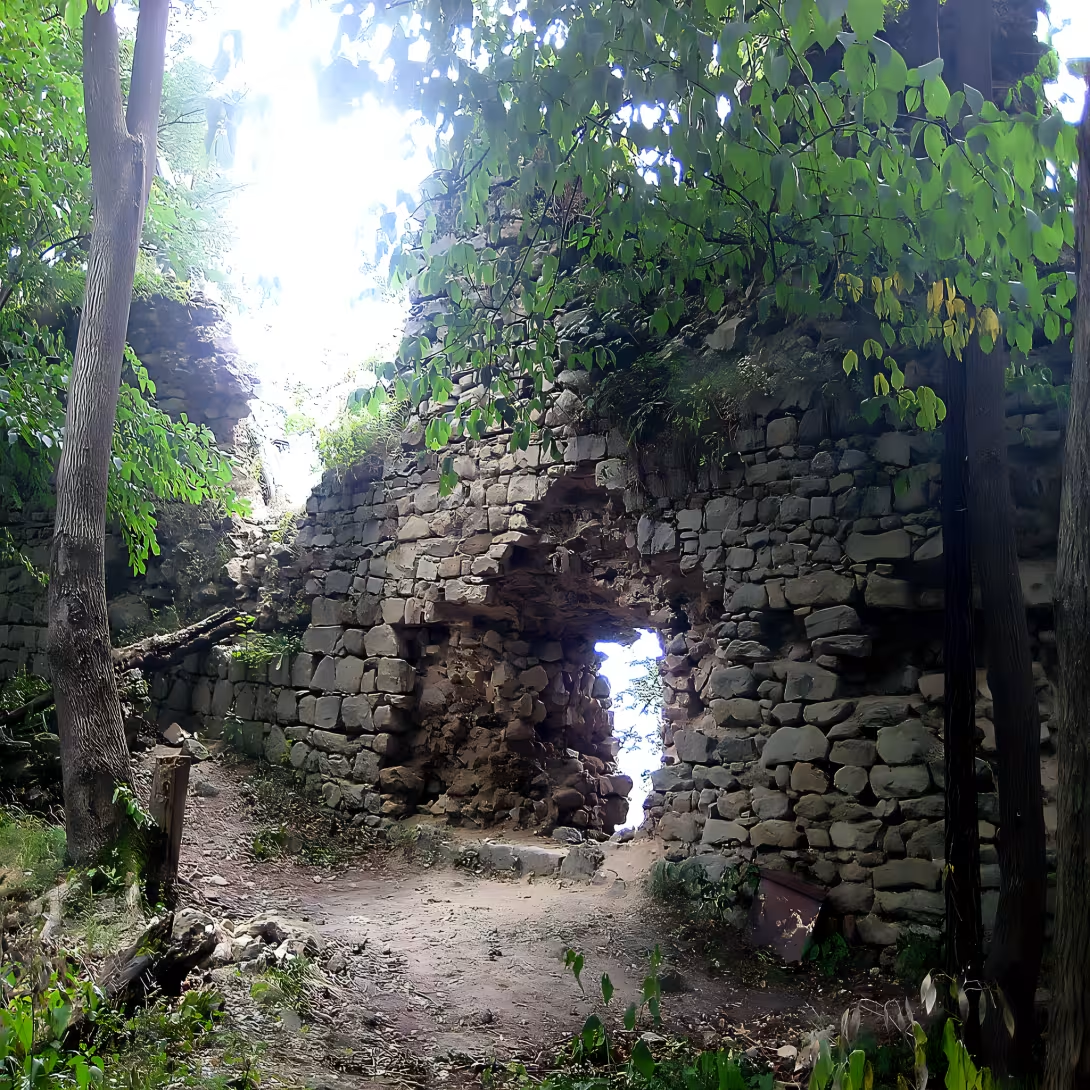
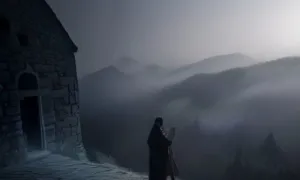
Obřana Castle is a Gothic ruin in the Hostín hills near Bystřice pod Hostín in the Kroměříž district. This monument dates back to the middle of the 14th century. It is remarkable by its location in the nature reserve of the Giant Mountains as well as by considerable altitude.
The castle was founded before 1365 Boček z Kunštátu a Poděbrad. He named it according to his defunct home of the Giant family at Brno. However, the construction took place without the consent of Moravian Margrave Jan Henry and Czech King Charles IV. Because of this unauthorized move, the monarch ordered the construction demolition in 1366. In fact, however, this probably only led to the cessation of further construction.
The architecture of the castle was significantly influenced by the terrain, namely a narrow and elongated ridge of approximately 120 × 20 metres. In the western part of the complex there are remains of a round guard tower, while in the eastern part you can see signs of a large palace. In the most protected area with wide view is the cylindrical tower. The south side of the castle shows the remains of an unfinished ditch and wall where the entrance gate was located.
After the initial legal problems with construction, the castle was probably used only temporarily in the first half of the 15th century. The object was definitely destroyed during the Hussite Wars. Subsequently the castle was no longer used and its function was taken over by the newly built fortress in Bystřice pod Hostín.
Thanks to the altitude of 704 meters, the Giant Mountains are considered to be the second most situated castle in Moravia. However, the historian Václav Štěpán disputes this claim and mentions the aforementioned castles of Rabštejn at Rýmar or Silesian Koberštejn at Jeseník. The sources of Táborský and Ondrúšek, originally called the Hunger well, rise beneath the ruin. They received their names in honor of the ethnographer and writer František Táborský and painter František Ondrúšek, who often came here.
Since 1973, the castle has been protected as a cultural monument. Torzo masonry is, however, greatly defeated. Ventilation, tree falls and vandal interventions damage the castle all the time. The red tourist sign from Bystřice under the Hostín leads to the memory in the direction of Hostín and then to Rožnovačka.
The ruin of the Giant Castle represents a valuable testimony of medieval architecture adapted to demanding terrain. The visit to this place offers a combination of the history and nature of the Hostín hills.
Then and now
Drag the slider to compare how the landmark may have looked when it was built with the view today.
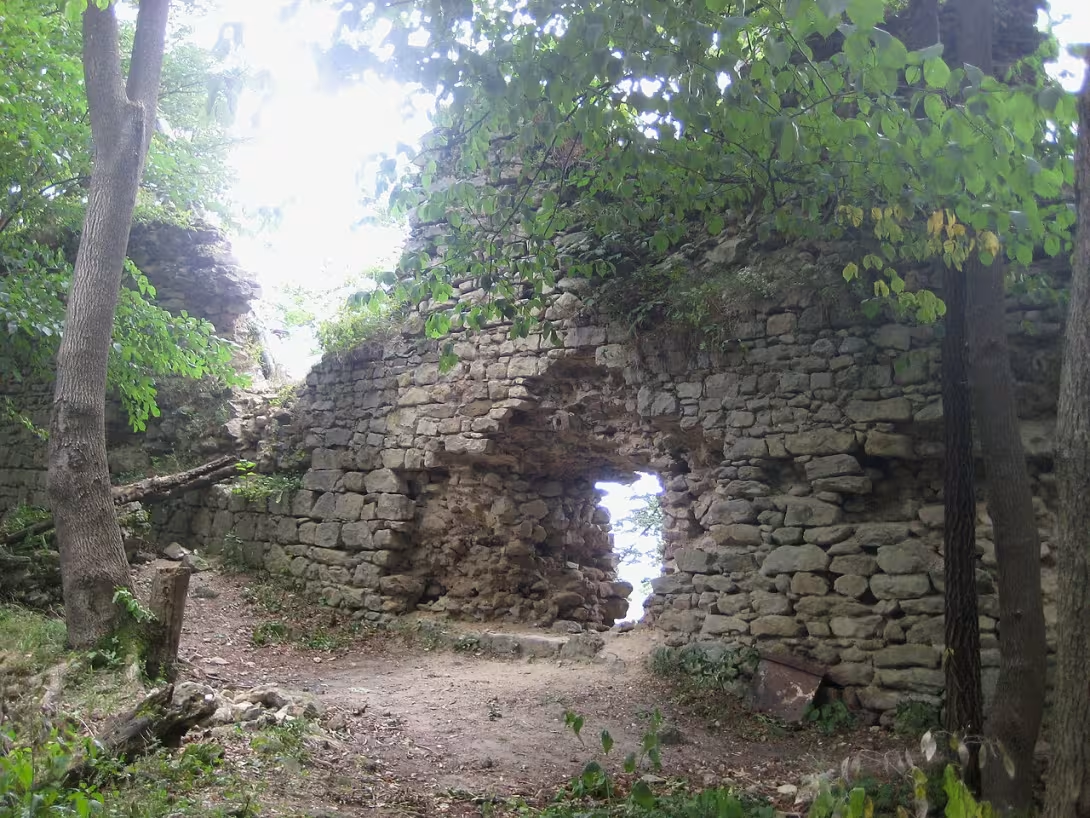

The historical appearance on the left is an AI-generated visualisation and serves as inspiration only.
Historical milestones
- 1365
- The castle was founded by Bochek of Kunštát and Podebrad.
- 1366
- King Karel IV. ordered the demolition of the castle.
- 1973
- The castle was declared a cultural monument.
Architectural development
The castle was adapted to a narrow ridge and included round tower, palace and cylindrical tower. On the south side there were unfinished remains of a ditch and a wall. The whole building was probably Gothic at the time of existence.
Historical events
In 1366 King Karel IV. ordered demolition of the castle. In the first half of the 15th century the castle was probably provisionally used. During the Hussite wars, it was finally destroyed.
Owners
Boček z Kunštátu a Poděbrad (before 1365)
Points of interest
- The castle was founded before the year 1365 by Boček of Kunštát and Poděbrad, who named it after his extinct home address near Brno. - The construction was carried out without the consent of the Moravian Margrave and the Czech King, which led to a demolition order in 1366, but probably only to stop further construction. - Thanks to the altitude of 704 metres, the Giant Mountains are considered the second highest castle in Moravia, although the historian Václav Stepan disputes this claim. - The sources of Táborský and Ondrúškov, which bear the names of the ethnographer František Táborský and the painter František Ondrúšek, emerge under the ruin. - The architecture of the castle was significantly influenced by a narrow and elongated ridge of approximately 120 × 20 metres.
Guide
Show guide text
This text was created by artificial intelligence and has not been editorially reviewed. It may contain inaccuracies.
Welcome to the heart of the Highlands. Right now you're standing in a place where history is bound to the wild beauty of nature and where the air seems to be filled with stories that took place centuries ago. Look around you. You see the endless green wave of the Giant Nature Reserve that surrounds you? And right in the middle of this calm, deep green lace, it's the shadows of the past. In front of you are the ruins of the Giant Castle. Even though you see mostly stone remains and fragments of buildings today, try to close your eyes for a moment and imagine how this place once seemed to be a resilient fortress that dominated the whole area. Feel this atmosphere - the silence that exists here is not empty, it is a silence full of echoes of ancient events.
Let's move forward in time together and figure out how this place came to be. To understand the nature of this place, we must return to the time before 1365. At the time, it was not only a nature reserve, but a place of great ambition. The castle was founded here by the nobleman Boček z Kunštátu a Poděbrad. Why did he choose this steep and challenging stretch of land? Perhaps he was attracted to the strategic advantage offered by this high point. A very interesting detail is the name of this place itself. Boček named the castle Giant according to his old, long-lost family estate, which was located near Brno. By doing so he tried to transfer a piece of his heritage and his identity to these new, wild mountain peaks. It was the act of a man who wanted to leave a mark in history.
Now pay attention to what you see right in front of you and under your feet. The architecture of this castle is fascinating by its unusual location. Look at the terrain itself. The castle was not built on a wide beach, but on a very narrow and long ridge. If you would like to imagine the dimensions of this place, imagine a strip of land of approximately a hundred and twenty metres long, which is only twenty metres wide. This extreme anxiety of the ridge must have posed a huge challenge for the then builders and future defensemen. Even in today's state of ruin, even though there are no more buildings, you can recognize in stone structures the shapes that once formed the heart of the castle. Notice the remnants of the round guard tower that used to watch over the surrounding area and provide a view of all the incoming ones. Take a look at the remains of the palace, where the life of the then nobles took place, and search for shadows of the cylindrical tower, which was probably one of the key points of the entire complex. Every stone you see here has been carved and placed knowing that it must face the difficult conditions of this narrow ridge.
But the history of this place is not just a story about stones and building. It is, above all, a story of power, conflict and decisions that can destroy even the greatest ambitions. Imagine the tension that ruled in 1366. The side of Kunštát acted on his own. The construction of this castle took place without the permission of the Moravian Margrave and without the permission of the Czech king himself. At that time, it was not just an administrative deficiency, but a serious act of disobedience to the highest power. King Karel IV., one of the most important rulers of the time, did not respond to this act by silence. He issued an order to demolish the castle. That was the moment that the fate of the Defense decided.
But here we come to one of the most interesting questions that leads us to the secrets of this place. To this day, historians still ask: was the demolition order really the final judgment, which was to wipe the castle completely off the face of the earth, or was it something else? It is very likely that the King was not about total destruction, but only about stopping further construction and thus suppressing the rise of Boček from Kunštát. Just because we see these remains today, we can ask ourselves how deep the real destruction was. This uncertainty gives the ruins a strange, melancholy spell. Who else walked in these areas? Names such as Jan Jindřich, František Táborský or František Ondrúšek are linked to the history of this region and this place, and even though they are unknown, their presence in history makes us think about people who once lived here, fought and made decisions.
Even after centuries that have passed since the castle was declared a cultural monument in 1973, this place has retained its unwieldy power. The wraps aren't just a pile of stone in the woods. They are witnessing human efforts for power, for building something lasting and for the relentless laws of the then politics.
Now we leave you with your thoughts and the atmosphere of this place. Let yourself be carried away by the silence of the nature reserve and feel the beauty of the Hostinian hills. Continue to walk on this narrow ridge, explore the remaining stone shapes and look at the world from the height from where the guards once looked at their towers. Thank you for sharing this story with us. We wish you a beautiful and peaceful journey along the paths of history and nature.
Tips for visitors
The best time to visit is the spring and autumn months, when the Hostín hills offer the most beautiful colours and temperate temperatures, which greatly enhances field walks.
Since it is a ruin situated in nature, solid footwear is necessary for the field, enough drinking water and repellent. For the best photos we recommend using the morning or late afternoon light, which best excels on the narrow ridge on which the castle stands.
As part of a short trip in the surrounding area we recommend visiting Bystřice pod Hostín, Castle Skalný or explore the Highlands.
Frequently asked questions
Can the monument be visited?
This is a ruin. Such sites are often freely accessible, but some can only be visited with a guide or are closed for safety reasons. We have not verified the current situation – take care and respect any restrictions.
Where is the monument?
Location: Chvalčov, Zlínský kraj. The map on this page shows the exact spot.
Why is the monument protected?
It is listed in the Central List of Cultural Monuments of the Czech Republic as a cultural monument (register no. 1000146339).
Businesses nearby
Do you run a restaurant, accommodation, shop, museum, rental, wellness or other visitor service near this monument? Show yourself directly to the people heading to it — this is how they will see you in the app and on the web:
Nearby
Natural reservation Giant Mountains, Hostín hills, Bystřice pod Hostín, Castle Skalný.
Accommodation nearby
Trips and activities nearby
Guided tours, tickets and activities nearby from GetYourGuide
Affiliate link: if you buy from the partner, we may receive a commission. The price for you does not change.
Search tours and activities →Themed route
1. hrad Skalný, Castle: This historical monument offers a view of ancient architecture. 2. Obřany, ruin: The main destination of the trip where you can explore the remains of medieval fortification. 3. Natural reservation Obřany, natural area: Ideal place for a quiet walk in authentic vegetation. 4. Host Vrchy, mountains: They offer beautiful views and the possibility of hiking in hilly landscape. 5. Bystřice pod Hostým, city: A suitable place to end the journey.
Seasonal recommendations
Spring: In the spring season, the giants offer a unique experience where the newly growing shrubs and flowering grass revive the soil around the ruins. Sun rays illuminate the castle walls in fine colours, adding a romantic and quiet touch to the atmosphere. At this time it is advisable to visit the memory early in the morning or evening to avoid the warm sun of the middle day. Gifts are usually minimal, so you can enjoy a quiet walk. It is recommended to wear comfortable clothes and shoes with good soles, which allow you to safely explore the terrain.
Summer: For years, the Giant is a popular destination for visitors looking for an escape from urban activity. The sunny days and warm evenings bring a lively atmosphere where the shade beneath the old trees enjoys peace. In the main summer season, however, it is advisable to visit the memory early in the morning or late in the afternoon to avoid the biggest crowds. When planning a visit, remind yourself of clothes suitable for warm weather and undeniable escorts are water and sun protection, which ensures comfort during walks.
Autumn: In autumn, the Giant Mountains offer visitors a beautiful experience of trees that are slender in living colors. The sunny days and cold evenings add a melancholy touch to the atmosphere, which is ideal for romantic walks or inspiring poetry. When visiting this time, remember the appropriate clothes against cold and possible rain, because autumn can suddenly be variable weather. You would visit the Giants best in the backbone days when the crowd's minimal and peaceful experience is assured.
Winter: Winter visit to the Giant offers a completely different feeling than in other times. The freezing morning brings a calm and quiet atmosphere where the ruin seems to be controlled only by snow and cold. Hot clothing, including hat and gloves, is essential for comfort during the visit. In addition, remember to protect against frost, which ensures safety while walking on snow terrain.
Visualizations and artistic views


The visualisations are generated by artificial intelligence and serve as inspiration.
Photos from the area
Real photos taken near the monument


Zdroj a licence jsou uvedeny u každého snímku.
Tips from visitors
No tips yet. Be the first!
Log in and add your tip.
Sources and literature
Photos: Miloš Dvořák, KIC Rosice / CC BY-SA 3.0, rozlišení zvýšeno umělou inteligencí — Wikimedia Commons. The author and licence also appear when you hover over the image.
Faktickým podkladem tohoto textu byl článek na Wikipedii, jehož autory jsou přispěvatelé Wikipedie. Článek je dostupný pod licencí CC BY-SA 4.0.
Location on the map
Příběhy a pověsti
Legendy, pověsti a příběhy spjaté s touto památkou
Fotografie návštěvníků
Zatím žádné fotografie. Buďte první, kdo přidá fotografii z návštěvy!
Log in a přidejte svou fotografii nebo hodnoťte.
Za ověřenou návštěvu v aplikaci získáte víc bodů — poznáme podle GPS, že jste na místě.
Reviews and comments