



Okrouhlík Housing estate
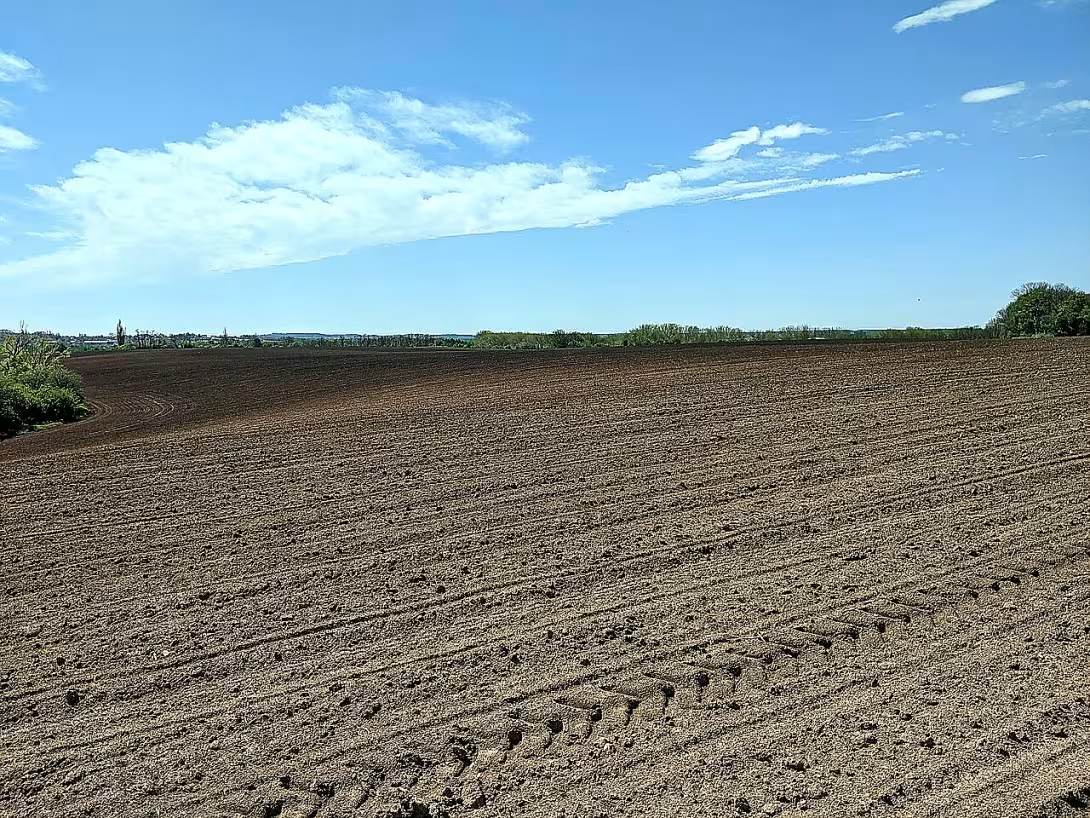
Okrouhlík is an archaeological site located southwest of the village Bylany near Český Brod in Kolín district. This locality represents a non-olithic settlement on a low surface above the right bank of the river Bylanka and is protected as a cultural monument. Its importance is to provide valuable information on the living conditions of people in eneolite, a period characterised by agricultural innovation and the development of ceramics.
The historical context of Okrouhlík is closely linked to the diversity of ceramic cultures. During the eneolite, the settlement was inhabited by people belonging to cultural groups such as culture with poplar cups, culture with canned ceramics and especially rodent culture. The smaller presence of shards of spherical amphor and Vučedolan culture suggests interactions between different groups. The last phase of the settlement was the settlement of older Ukrainian culture in the Bronze Age, which shows a long history of the population and its adaptation to local conditions.
The estate wasn't fortified. It was located on an agricultural-used top with an altitude of 254 metres, which runs from the terrace platform and has steep slopes to the valley of the creek. This geographical location could be key to ensuring both safety and access to water resources, which was necessary for the living conditions of the population. Archaeological research on the site revealed ceramics of various cultures, which provides important information about the technologies and artistic expression of the then inhabitants.
František Dvořák, a native of nearby Red Peak, is a major figure associated with the research of Okrouhlík. His work on the site took place in the first half of the twentieth century and brought important knowledge of the eneolithic settlement, although the documentation of his research subsequently disappeared. Dvořák was later executed by Nazis, adding a tragic layer to the history of this archaeological site.
The interest of Okrouhlík is not only its long-term settlement by various cultures, but also topics related to his research and tragedy by František Dvořák. Despite the loss of documentation, much knowledge of the non-olithic living conditions has been preserved thanks to the ceramics found, which allows to reconstruct the history of the site.
Today Okrouhlík is protected as a cultural monument and represents a valuable resource for understanding life in the eneolite. Its current state allows visitors to discover the historical roots of the area that has witnessed many cultural changes. Visiting Okrouhlík is not only a way to the past, but also a reminder of humanity's resilience and adaptation to the face of time changes.
Okrouhlík reminds us of the value of preserving historical monuments for understanding our roots. It is a place that is worth visiting not only because of its importance to archaeology, but also as a reminder of historical events and personalities whose work has helped to uncover the secrets of the past.
Historical milestones
- around 4500- 2500 bc.
- The settlement of places by people from non-olithic cultures, including culture with funnel cups
- about 2300-800 bc.
- The period of the presence of an older tubetic culture in the Bronze Age
- first half of the twentieth century
- Archaeological research on the site by František Dvořák
Architectural development
The estate was not fortified and was located on the agricultural area used by the top. Archaeological research revealed the ceramics of various cultures, suggesting a long history of settlement.
Historical events
- Residential research was conducted by František Dvořák.
- The settlement was inhabited by people of culture with poplar cups, cultures with canned ceramics and rodent culture.
- The last phase of the settlement was the settlement of an older Ukrainian culture in the Bronze Age.
Points of interest
- Okrouhlík is an archaeological site located southwest of the village Bylany near Český Brod. - The locality is a non-olithic settlement on the hill above the river Bylanka and is protected as a cultural monument. - The settlement was inhabited by people from various ceramic cultures, including the Romanesque culture and older Ukrainian culture in the Bronze Age. - František Dvořák, native of the Red Peak, was an important figure associated with Okrouhlík research and was later executed by the Nazis. - Despite the loss of documentation, a lot of knowledge about the non-olithic living conditions has been preserved thanks to the ceramics found.
Guide
Show guide text
This text was created by artificial intelligence and has not been editorially reviewed. It may contain inaccuracies.
Welcome, distinguished visitors. Now you're standing in a place called Okrouhlík. It is a place with a very deep history, located southwest of the village Bylany, near Český Brod. Now, if you look around slowly, you'll notice you're on a low surface. It was this slight terrain lift thousands of years ago that was crucial to the people who lived here. Look down where the river of the Bylanka flows. It was this right bank of the creek that offered ideal conditions for life, safety and livelihood. What you see today as a peaceful landscape was once home to generations of people who built their settlements here and created their culture.
Let us now move together far further back in time before our modern cities and villages began to emerge. Okrouhlík is not an ordinary piece of earth, it is an archaeological site that brings us back to a time called the Neolithic. It's a fascinating time we call copper age. Imagine that mankind had just discovered the first metals, but it still maintained many of the customs of the Stone Age. The settlement of this place began around the year four thousand five hundred BC and continued until two thousand five centuries AD. At that time there were people who chose this very design over Bylanka because it gave them a strategic advantage. They were close to the water that fed them, but they were high enough not to be threatened by any flooding and to have a better view of the environment.
When you look around you now, you may not see any tall walls or stone columns, but feel the atmosphere of this place. The architecture of the then settlements was not made of stone, but of wood, clay and reeds. Notice the shape of this top. It was here, in this country, that there were simple houses in which everyday life took place. People have been cooking, sleeping, making tools and keeping animals. Even though these buildings are not visible on the surface today, their footprints remained in the country, which experts were able to dig up and study. It's an invisible architecture that we need to see through the eyes of imagination. Imagine standing in the middle of a village where smoke rises from the chimneys, and there are voices of people talking in languages around you that no one knows anymore.
This site is very valuable because it shows us how the way of life changed over the centuries. Okrouhlík was not inhabited by just one group of people. After the eneolite, after the copper age, life didn't end here. Around the year two thousand and three hundred BC, people from the Bronze Age appeared here, specifically from a culture we now call the older ethnic culture. This means that this particular place over the Bylanka stream has been attractive to people for thousands of years. Every new wave of inhabitants has brought new knowledge, new techniques of metal processing and other customs. It's fascinating to think that on the same part of the country where you're standing right now, the whole era of human development was changing.
Speaking of how we learned about this place, we have to mention one important person. In the first half of the twentieth century, a man named František Dvořák got here. He was the one who carried out a thorough archaeological research on the Okrouhlík site. Imagine him, with patience and precision, exploring layers of soil, searching for shrapnel of ceramics and remains of ancient instruments. Thanks to his work and scientific approach, we now know that there was a settlement of various ceramic cultures. František Dvořák basically breathed new life into this place and helped us understand what life in our region looked like thousands of years ago. Without his efforts, Okrouhlík would remain a common hill in the landscape, but today he is protected as a cultural monument.
Now I want to interest you in one interesting thing about the objects that have been found here. Archaeologists have come across traces of different cultures, including the so-called culture with pointy cups. Imagine ceramic containers that have a throat resembling a funnel. These vessels were not just ordinary food dishes, but they carried the symbolism and aesthetics of the time. Also, there were traces of native culture. These names sound complicated, but they actually tell us that people in Bylany were part of a wider network of contacts. They weren't isolated, but they were exchanging goods, ideas and maybe even partners with people from other areas.
The mystery remains many details. Why did people finally move out of this place? What exactly led to the estate gradually becoming extinct and retreating to nature? Maybe a change in the stream's trough, maybe the depletion of the soil, or perhaps the arrival of other tribes. These questions remain open, and that is the magic of archeology. Every rock and shard is a piece of puzzle we try to fold to understand the truth about our ancestors.
Now, when you look around, think of this space as an open book. Okrouhlík reminds us that history is not just in textbooks or museums, but is right below our feet. It's a reminder of the continuity of human being. People who lived here 5,000 years ago had needs similar to those of us today. They were looking for safety, shadow, water and community. And it was this low-rise over Bylanka that gave them all that.
Now I encourage you to take a slow walk around. Try to stop, close your eyes and listen to the noise of the river Bylanka. Imagine hearing the sounds of an ancient estate, the beating of dirt, the calling of animals and the whispers of people who once lived here. Feel the calm of this landscape, which so perfectly protects the secrets of the past. Okrouhlík is a silent witness to time and you have become part of its present today.
Thank you for accompanying me on this short journey to the depths of time. I hope you are interested in this place and that you are leaving with a sense of respect for the people who laid the foundations of life here thousands of years ago. I wish you a pleasant further walk and many new discoveries around Bylan and Český Brod. Goodbye.
Frequently asked questions
Can the monument be visited?
This is a structure in a public space that can usually be seen from outside free of charge. We have not verified that this particular one is freely accessible.
Where is the monument?
Location: Bylany. The map on this page shows the exact spot.
Why is the monument protected?
It is listed in the Central List of Cultural Monuments of the Czech Republic as a cultural monument (register no. 1000138528).
Businesses nearby
Do you run a restaurant, accommodation, shop, museum, rental, wellness or other visitor service near this monument? Show yourself directly to the people heading to it — this is how they will see you in the app and on the web:
Nearby
🏰 Historic sites (131)
- památník padlých 1945 1.5 km
- hradiště Svatováclavské Šance 2.1 km
- vysílač Liblice A 2.7 km
- Lipanská mohyla 3.7 km
- Mohyla sv. Prokopa 3.8 km
- JIŘÍ STRÁNSKÝ 4.0 km
- FRANTIŠEK STRÁNSKÝ 4.0 km
- KARLA STRÁNSKÁ 4.0 km
- HELENA STRÁNSKÁ 4.0 km
- MARIE FISCHELOVÁ 4.1 km
- VALERIE FISCHELOVÁ 4.1 km
- ARNOŠTKA JELÍNKOVÁ 4.1 km
- BERTA NOVÁKOVÁ 4.1 km
- Sousoší Svaté Rodiny 4.1 km
- Jan Hus 4.1 km
- KAREL ORLÍK 4.2 km
- OTAKAR ORLÍK 4.2 km
- VILÉM ORLÍK 4.2 km
- EVA ORLÍKOVÁ 4.2 km
- ŽOFIE ORLÍKOVÁ 4.2 km
🍽️ Restaurants and dining (122)
- Pizzeria Malechov 3.7 km
- U Černého koně 3.9 km
- Kebab, pizza 4.0 km Krále Jiřího 97 web
- KUP 4.0 km nám. Arnošta z Pardubic 44 +420321622451 web
- Na Vyhlídce 4.1 km 604 306151 web
- MaKa Coffee espresso bar 4.1 km nám. Arnošta z Pardubic 50
- Herna 4.1 km
- Modrá Hvězda 4.2 km
- U Madony 4.2 km Suvorovova 58
- Na Kutilce 4.2 km
- U Hrabětů 4.2 km
- Šenk 4.4 km
- U Nováků 4.4 km
- Šemberská hospůdka 4.4 km
- U Bedrníčků 4.4 km
- U Bruthansů 5.8 km +420 321 792 768
- Kounická hospůdka 7.0 km
- Zájezdní hostinec 7.3 km web
- Restaurace Na Střelnici 7.4 km Pražská 303 728 205 51 web
- Setkávačka 7.6 km
🏨 Accommodation (18)
- Apeyron 4.3 km
- Podviňák 4.5 km
- Romantic baroque nest 4.6 km web
- Ubytování v pivováru 7.3 km web
- Penzion u lva 7.5 km
- Hotel Ostrov Garni 10.2 km web
- Bungalovy Kersko 12.0 km
- Penzion Lony 12.1 km +420607137207 web
- Hotel Bouček 12.7 km
- Residence Da Antonio 12.8 km +420 603 176 176 web
- Hotel Holiday 12.8 km
- Polabí 13.0 km web
- Mlýn Pataki 13.0 km Doubecká 32 +420323660029 web
- Hotel Sokol 13.1 km
- Autokemp Ostrá 13.3 km
- Hotel u sv. Huberta 13.6 km +420 731 920 731 web
- Ubytování Lysá nad Labem 14.1 km U Staré školy 98 +420 604 278 423 web
- Penzion Variant 14.6 km web
🚲 Rentals and sport (23)
- AutoMotoVelo 4.2 km Suvorovova 136 +420776574594 web
- Kolo pro radost 4.2 km Kollárova 972 +420603843048 web
- Sokolovna 4.3 km
- Sportovní hala 4.3 km
- Sokol Poříčany 5.6 km
- Sokolovna 6.8 km
- Koupaliště Radim 7.0 km
- Policejní střelecký klub Union Praha 7.2 km
- TJ Sokol Kounice 7.4 km
- Sokolák 7.5 km
- SSK Kostelec nad Černými lesy 8.9 km
- CYKLOSERVIS JEVANY 11.8 km Sportovní 359 732365079 web
- Cykloservis Vyžlovka - Josef Dřízhal 11.8 km Skalská 275 +420 728 508 057 web
- Sokolovna 12.8 km web
- Sportovní hala 13.1 km
- Býv. rekreační středisko sovětské armády 13.3 km
- Veslařský klub 13.7 km
- Koupaliště Úvaly 13.9 km
- Sokolovna 14.0 km
- SK Úvaly 14.3 km +420 603 735 853 web
🥾 Hiking and nature (72)
- Svatého Prokopa 3.4 km
- Městské hradby 3.9 km
- Kouřimská brána 3.9 km
- Lipská hora 4.0 km
- Varhánky 4.0 km
- Krupá 4.4 km
- Hlaváčova Lhota 4.5 km
- Triglyf 4.6 km
- Dům mafiána Františka Mrázka 4.8 km Františka Macháčka 1364
- Okopy odpalovacích jam 5.1 km
- Okopy odpalovacích jam 5.2 km
- Zálužník 5.6 km
- Pramen Járy Cimrmana 6.0 km web
- Holý 6.1 km
- Lom u Radimi 6.7 km
- Mírové náměstí 7.6 km
- Rozhledna 7.8 km
- park Na Hradbách 7.8 km
- Výhled od Lechova kamene na město Kouřim 8.1 km
- zábavné zastavení 8.1 km
Accommodation nearby
Trips and activities nearby
Guided tours, tickets and activities nearby from GetYourGuide
Affiliate link: if you buy from the partner, we may receive a commission. The price for you does not change.
Search tours and activities →Themed route
Thematic cruise route: Okrouhlík and surroundings
1. Okrouhlík (archaeological site) Type: Archaeological site Why is it worth a visit: This place is one of the oldest famous settlements in the Czech Republic, dating back to the period before the keltization. Visit and explore ancient finds that reveal the lives of the first settlers of our territory.
2. St. John Nepomuk's Chapel Type: Religious monument Why is worth a visit: This picturesque chapel is located near Okrouhlík and offers a quiet atmosphere for reflection. It is a place where you can enjoy the beauty of the rural environment and remember the history of the region.
3. Memorial Forest Type: Historical forest Why is it worth a visit: The forest around Okrouhlík is full of old oak trees that witness many generations and historical events. It is an ideal place for a short walk when visiting an archaeological site.
4. Village Garden Type: Green space Why is worth a visit: This garden is a beautiful natural haven where you can enjoy the peace and sight of the vast field. It is also a place for relaxation after a visit to Okrouhlík.
5. Natural park around Type: Natural space Why is worth a visit: The park offers an opportunity to explore the natural beauty of the area, with a diverse flora and fauna. It is an ideal place for nature lovers and travelers looking for a quiet rest.
This route allows you not only to discover the historical roots of the village Bylany, but also to enjoy the beauty of its surroundings.
Seasonal recommendations
Spring: In the spring period Okrouhlík in Bylany is strangely attractive to its living nature, when fields and forests are openly spread out in their most beautiful form. Sun rays penetrate deep into the ground, creating ideal conditions for photography and cognitive walks. Visitors can expect mild crowd returns, so it is advisable to come early in the morning or late in the afternoon to avoid larger groups of tourists. It is recommended to wear light clothes with the possibility to add a layer to cooler weather.
Summer: Summer brings long days and warm sunlight that illuminate archaeological sites in the best light. Nature is at the top of its beauty with flowering lawns and green trees, creating an ideal environment for relaxing outdoors. In the main summer season Okrouhlík can become very visited, so it is advisable to arrive early or late in the afternoon to avoid peak time. Warm clothes and sun protection (hat, protective cream) are key for a comfortable day of visit.
Autumn: Autumn brings Okrouhlík in Bylany a unique atmosphere with a colourful shade of leaves and lighter sunlight. This time of year is ideal for quiet walks, when fewer people visit the memory. Days are short, so it is recommended to arrive early in the morning or at a time when the sun still illuminates the plot. Wet and cold weather requires wearing layered clothes with warm raincoats.
Winter: Winter visit Okrouhlík offers a quiet atmosphere, where nature is resting and the monument is surrounded by snow. The sun rays illuminate the ground in a mild light, which can be ideal for a photograph on a quiet pavement. Hot clothing with protective elements against cold (micrometal, warm shoes) is essential for a comfortable visit in winter months.
Visualizations and artistic views

The visualisations are generated by artificial intelligence and serve as inspiration.
Photos from the area
Real photos taken near the monument


Zdroj a licence jsou uvedeny u každého snímku.
Tips from visitors
No tips yet. Be the first!
Log in and add your tip.
Sources and literature
Photos: MartinVeselka / CC BY-SA 4.0 — Wikimedia Commons. The author and licence also appear when you hover over the image.
Faktickým podkladem tohoto textu byl článek na Wikipedii, jehož autory jsou přispěvatelé Wikipedie. Článek je dostupný pod licencí CC BY-SA 4.0.
Location on the map





Příběhy a pověsti
Legendy, pověsti a příběhy spjaté s touto památkou
Fotografie návštěvníků
Zatím žádné fotografie. Buďte první, kdo přidá fotografii z návštěvy!
Log in a přidejte svou fotografii nebo hodnoťte.
Za ověřenou návštěvu v aplikaci získáte víc bodů — poznáme podle GPS, že jste na místě.
Reviews and comments