






Ořechov (zámek) Chateau
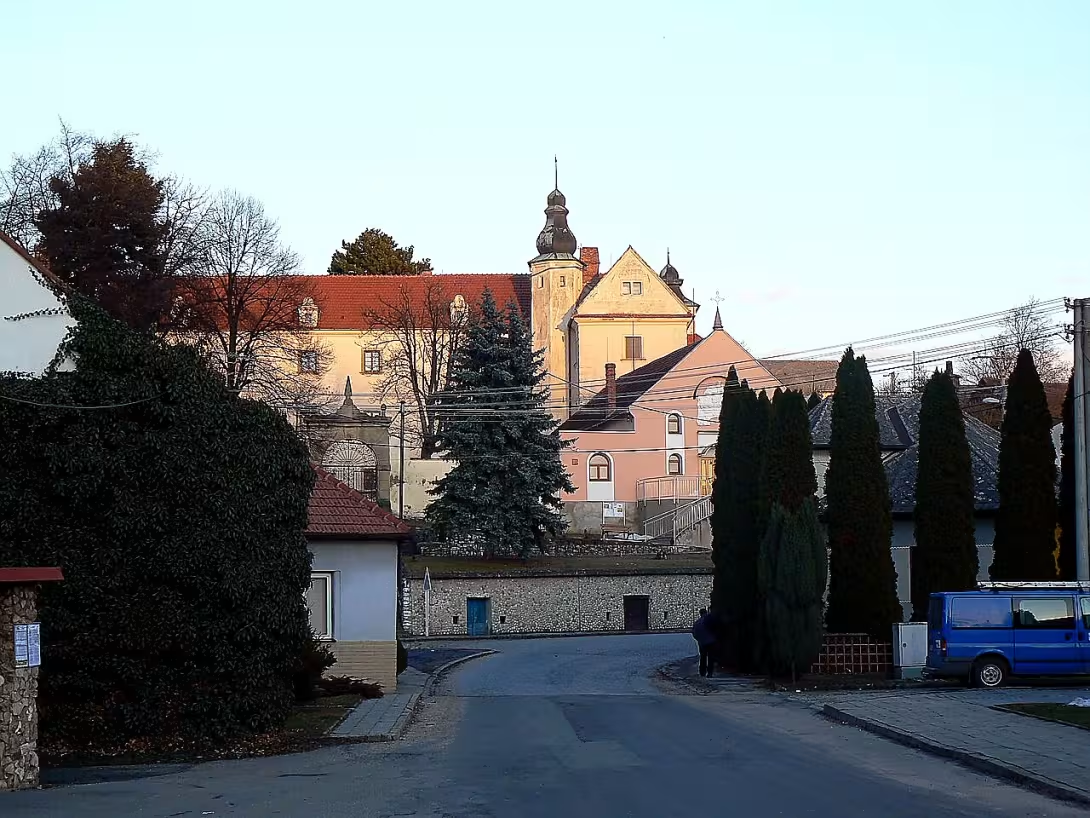
Ořechov Chateau is a historically significant Renaissance chateau located in the village of Ořechov within Uherské Hradiště District, Zlínský kraj. Originally built as a fortress in the 14th century, it has undergone several architectural transformations and is now recognized as a cultural monument of the Czech Republic. The site's rich history and architectural evolution make it an intriguing destination for visitors interested in exploring Bohemian heritage.
The origins of Ořechov Chateau trace back to the 14th century when it was constructed as a fortress by the zemanský rod z Ořechova. Over time, this structure evolved into a Renaissance chateau under the ownership of the Onšíkové z Bílkovic family in 1571. This transformation marked an important period in its history, reflecting broader cultural and architectural trends across Europe during the Renaissance.
Architecturally, Ořechov Chateau began as a fortress but was later converted into a Renaissance structure by the Onšíkové z Bílkovic family. Subsequent Baroque renovations were carried out under the Magnisové family at the end of the 17th century, which included significant modifications to its façade and interiors. A chapel added in 1710 further enhanced the chateau's architectural complexity. The structure is characterized by a two-story building with three wings, corner towers featuring spiral staircases, and an enclosed courtyard bordered by a stone wall with an entrance gate.
Ownership of Ořechov Chateau has changed hands multiple times throughout its history. After the Onšíkové z Bílkovic family's Renaissance transformation in 1571, it was acquired by Jan Arnošt Platejs z Plattenštejna during the Thirty Years' War and briefly held by Veleslavín Monastery. In 1683, the Magnisové family undertook Baroque renovations before selling it to Veleslavín Monastery in 1718. Following the dissolution of the monastery in 1784, the chateau became part of Náboženský fond and later passed into the hands of a Catholic support association linked to the Olomouc archdiocese on Velehrad. In the 1930s, it was acquired by the Salesian order, who established an educational institution there. The state took over in 1950, using it for various purposes until Italian entrepreneur Alessandro Alagia purchased it in 2007 and initiated a comprehensive reconstruction.
Key events at Ořechov Chateau include its conversion into a Renaissance chateau in 1571 by the Onšíkové z Bílkovic family and the Baroque renovations undertaken by the Magnisové family in 1683. These transformations reflect significant periods of architectural and cultural change, contributing to the site's historical importance.
Today, Ořechov Chateau stands as a testament to its varied past, having been restored under Alessandro Alagia's ownership. While it has served various functions over the centuries, from educational institutions to storage facilities, it now offers public events and activities, inviting visitors to explore its storied halls. The chateau's rich history and architectural beauty make it a worthwhile destination for those interested in Czech cultural heritage.
Ořechov Chateau is more than just an architectural marvel; it is a living chronicle of the region's historical transformations. Its journey through different eras and ownerships reflects broader socio-political changes, making it a fascinating site to visit. Whether you are drawn by its Renaissance origins or intrigued by its Baroque embellishments, Ořechov Chateau offers a unique glimpse into the past, inviting visitors to step back in time and experience its enduring legacy.
Then and now
Drag the slider to compare how the landmark may have looked when it was built with the view today.
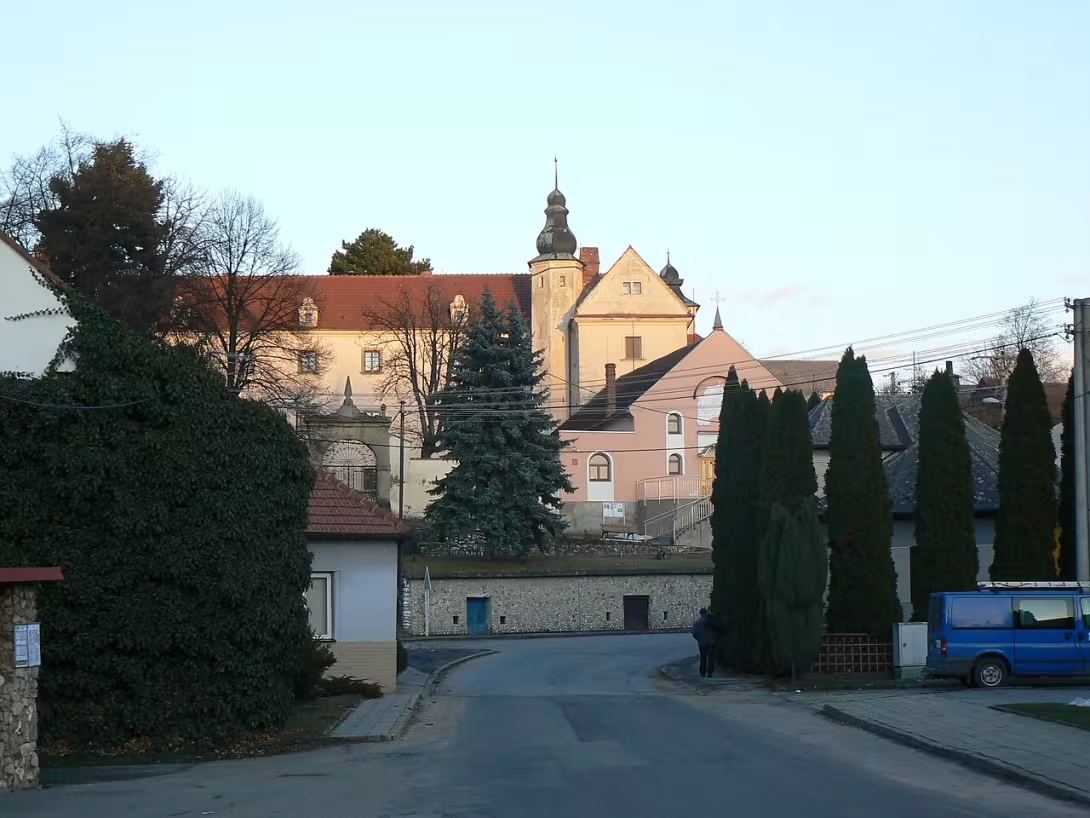
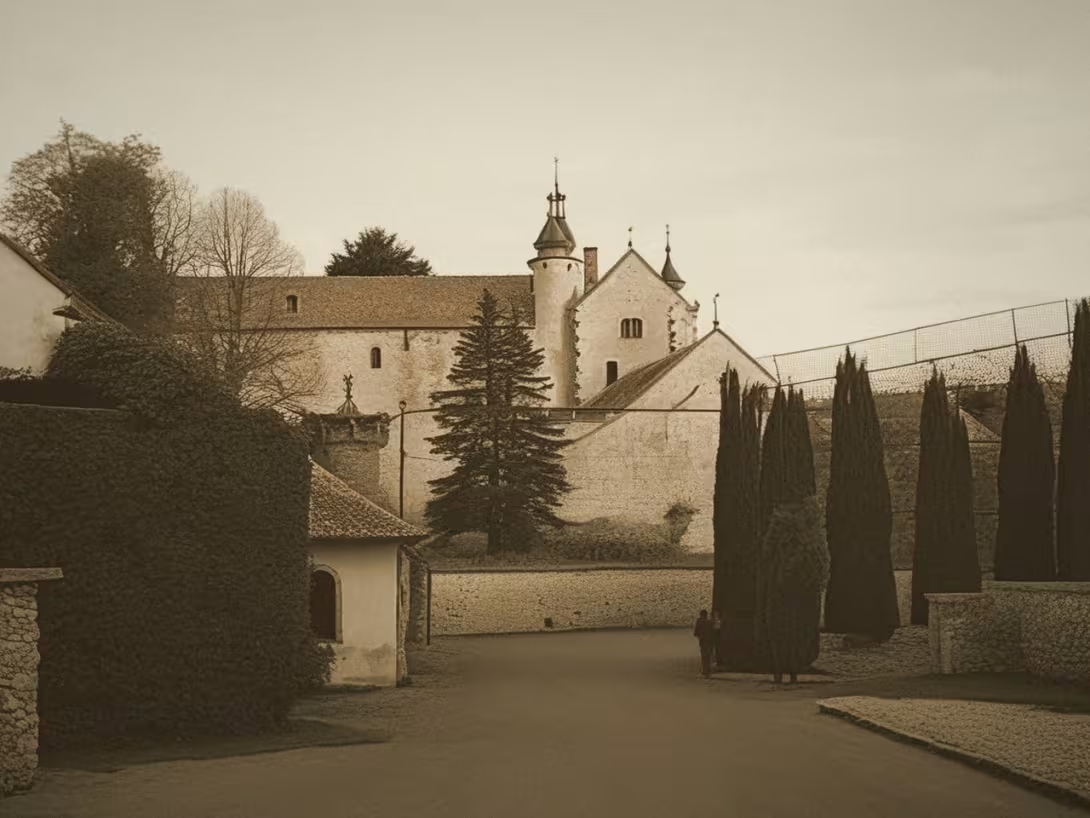
The historical appearance on the left is an AI-generated visualisation and serves as inspiration only.
Historical milestones
- 14th century
- Original construction as fortifications.
- 1571
- Transformation into a Renaissance chateau by the Onšíkový family of Bílkovice.
- 1683
- Baroque renovation by the Magnis family.
- 1710
- Addition of a chapel to enhance architectural complexity.
- 1784
- Dissolution of the Veleslavín monastery and transition into the Religious Fund.
- 2007
- Purchase by Alessandro Alagia and beginning of reconstruction.
Architectural development
Ořechov Chateau began as a fortress in the 14th century and was transformed into a Renaissance chateau by the Onšíkové z Bílkovic family in 1571. The structure underwent significant Baroque renovations under the Magnisové family at the end of the 17th century, which included modifications to its façade and interiors. A chapel was added in 1710, enhancing the chateau's architectural complexity.
Historical events
1571: Conversion to a Renaissance chateau by Onšíkové z Bílkovic.
1683: Baroque reconstruction under the Magnisové family.
1784: Transition to Náboženský fond after the dissolution of Veleslavín Monastery.
Owners
14th century: Zemanský rod z Ořechova
1571: Onšíkové z Bílkovic
Thirty Years' War period: Jan Arnošt Platejs z Plattenštejna, Veleslavín Monastery
1683: Hrabata Magnisové
1718: Veleslavín Monastery
1784: Náboženský fond
1883-1927: Katolický podpůrný spolek arcidiecéze olomoucké na Velehradě
1930s onwards: Řád salesiánů
1950: Krajský výbor SNB
2007-2022: Alessandro Alagia
Points of interest
- Despite its transformation into a Renaissance chateau, Ořechov Chateau's origins as a 14th-century fortress are marked by the zemanský rod z Ořechova, whose legacy is less documented compared to later owners like the Onšíkové z Bílkovic family.
- During the Thirty Years' War, Jan Arnošt Platejs z Plattenštejna briefly held ownership of the chateau, a period that reflects the broader tumultuous history of Central Europe during this era, yet specific events at Ořechov Chateau during his tenure remain largely unrecorded.
- The Magnisové family's Baroque renovations in 1683 included significant architectural changes such as altering the façade and interiors; however, many details about their design choices and inspirations are not extensively documented, leaving some aspects of this transformation shrouded in mystery.
- After its time with Veleslavín Monastery, Ořechov Chateau became part of Náboženský fond following the dissolution of monasteries in 1784. This transition reflects a broader trend across Europe where many religious properties were secularized, yet specific activities and uses at Ořechov during this period are not well-documented.
- The chateau's acquisition by Italian entrepreneur Alessandro Alagia in 2007 led to its comprehensive reconstruction; however, the extent of historical accuracy versus modern adaptation in these renovations is a topic that invites curiosity but lacks detailed public documentation.
Guide
This guide is narrated by a synthetic voice generated by artificial intelligence.
Show guide text
This text was created by artificial intelligence and has not been editorially reviewed. It may contain inaccuracies.
Welcome to Ořechov Chateau, one of the most interesting historical landmarks in the area. You stand before a majestic complex towering over the village of Ořechov. Look up and notice its unique architecture that combines elements from different eras.
Let's delve into history and discover how Ořechov evolved from its original form as a fortress in the 14th century. At that time, it was home to the Ořechov family, who left fewer traces of their presence. Later, in 1571, the chateau was rebuilt into a Renaissance manor by the Onšíkovýs of Bílkovice. Their presence here left a deep impression and their name became an inseparable part of Ořechov's history.
Now focus on the architecture. Take a look at the façade and notice how individual elements complement each other. Here you can see how the Baroque style, which emerged in the 17th century, intertwines with Renaissance elements from the 16th century. The chapel added in 1710 is another interesting part of the complex. Its architecture has become an integral part of the chateau's overall appearance.
Let's pause to consider some key figures who have left their mark on Ořechov's history. The Onšíkovýs of Bílkovice were among the most significant owners of this manor. Their presence here was linked with many events and changes that unfolded over the centuries. Jan Arnošt Platejs z Plattenštejna, who resided here in the 17th century, was another notable figure who made his mark on Ořechov's history.
An interesting fact you might find intriguing is that Ořechov Chateau was once associated with the Veleslavín monastery, which was dissolved in 1784. This fact is evidence of the complex's significant role in history not only as a residence but also as a cultural and religious center.
Whether you are visiting Ořechov Chateau for the first time or have been here before, there are plenty of things to see and explore. Thank you for your attention, and I hope you enjoy discovering the secrets of this complex as you move through it.
Frequently asked questions
Can the monument be visited?
Some buildings of this kind are open for guided tours, others serve another purpose or are privately owned. We have not verified whether and when this monument is open – please ask the operator.
What are the opening hours and admission?
We have not verified the opening hours or admission. Current information is published by the operator. Official website: http://www.zamekorechov.cz/
Where is the monument?
Location: č.p. 91, Ořechov, Zlínský kraj. The map on this page shows the exact spot.
Why is the monument protected?
It is listed in the Central List of Cultural Monuments of the Czech Republic as a cultural monument (register no. 21799/7-3383).
Businesses nearby
Do you run a restaurant, accommodation, shop, museum, rental, wellness or other visitor service near this monument? Show yourself directly to the people heading to it — this is how they will see you in the app and on the web:
Events nearby


Zdroj akcí: otevřená data měst a obcí ČR (Národní katalog otevřených dat) a kalendář akcí Národního památkového ústavu.
Nearby
Ořechov Chateau is situated in a rural landscape within the Zlínský kraj region. The surrounding area includes natural features typical of southern Moravia, with no other major monuments listed within a 5 km radius.
Accommodation nearby
Themed route
Ořechov Chateau (zámek) - This 16th-century Renaissance chateau is a must-visit for its well-preserved architecture and beautiful gardens.
Ořechov Village (obec) - Get a glimpse into traditional rural life in southern Moravia by exploring the charming village of Ořechov.
Ořechov Church (kostel) - Admire the simple yet charming architecture of this local church, a great spot to take in the peaceful atmosphere of the surrounding countryside.
Seasonal recommendations
Jaro:
In the spring season, Ořechov Chateau is surrounded by nature awakening from its winter slumber. The specific atmosphere of peace and tranquility as nature emerges from winter is noteworthy. We recommend visiting the chateau in the spring when it's open to avoid the large crowds of tourists that come later in the season. The best time to visit the chateau is in the first half of April, when it's still relatively quiet, allowing you to enjoy the beautiful spring flowers and greenery in the park.
Léto:
In summer, Ořechov Chateau is full of life and energy. The specific lighting creates a pleasant evening atmosphere. We recommend visiting the chateau early in the morning or later in the evening when there are fewer people, allowing you to enjoy the courtyard and park in peace. The best time to visit the chateau is in June and July, when the weather is sunny and warm.
Podzim:
In autumn, Ořechov Chateau is surrounded by beautiful leaf colors and blooming autumn flowers. The specific lighting creates a romantic atmosphere. We recommend visiting the chateau in autumn when it's open to avoid the large crowds of tourists that come later in the season. The best time to visit the chateau is in October, when it's still relatively quiet, allowing you to enjoy the beautiful autumn colors.
Zima:
In winter, Ořechov Chateau is closed and tranquil. The specific lighting creates a pleasant atmosphere. We recommend visiting the chateau in winter early in the morning or later in the evening when there are fewer people, allowing you to enjoy the courtyard and park in peace. The best time to visit the chateau is in December and January, when it's open for limited hours, allowing you to see the chateau in tranquility. Don't forget to wear warm clothing, as it's cold in winter.
Visualizations and artistic views


The visualisations are generated by artificial intelligence and serve as inspiration.
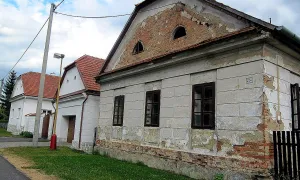
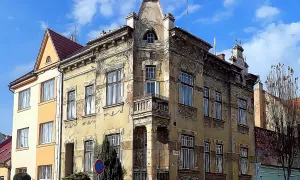
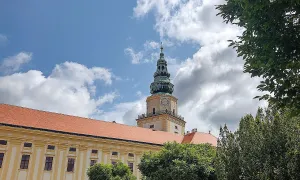
Photos from the area
Real photos taken near the monument


Zdroj a licence jsou uvedeny u každého snímku.
Tips from visitors
No tips yet. Be the first!
Log in and add your tip.
Sources and literature
Photos: P.matel / CC BY-SA 3.0 — Wikimedia Commons. The author and licence also appear when you hover over the image.
Faktickým podkladem tohoto textu byl článek na Wikipedii, jehož autory jsou přispěvatelé Wikipedie. Článek je dostupný pod licencí CC BY-SA 4.0.
Location on the map


Příběhy a pověsti
Legendy, pověsti a příběhy spjaté s touto památkou
Fotografie návštěvníků
Zatím žádné fotografie. Buďte první, kdo přidá fotografii z návštěvy!
Log in a přidejte svou fotografii nebo hodnoťte.
Za ověřenou návštěvu v aplikaci získáte víc bodů — poznáme podle GPS, že jste na místě.
Reviews and comments