



Ostrý (Františkov nad Ploučnicí) Ruin
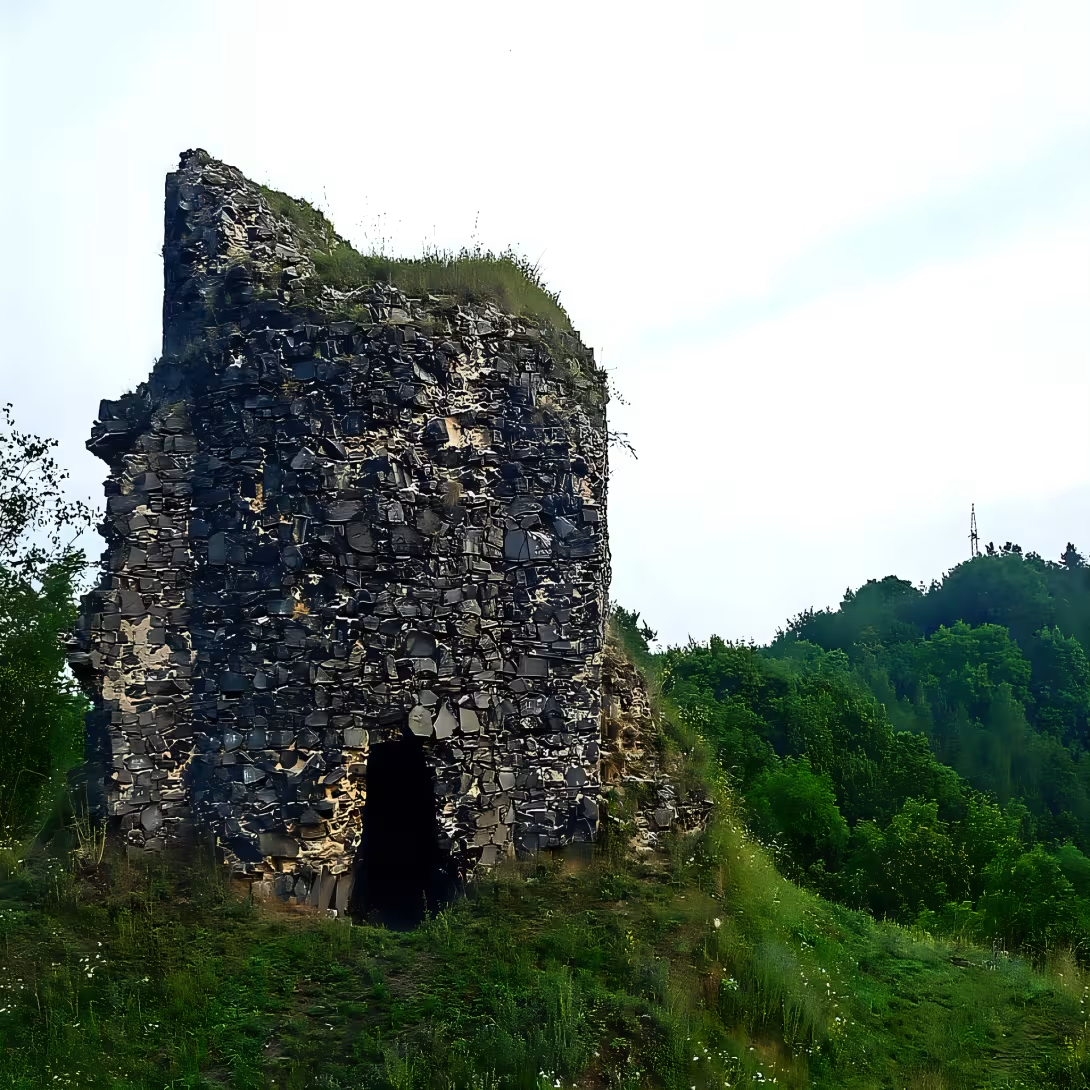
Ostrý, originally known as Šarfenštejn or Scharfenstein in German, is a medieval castle ruin near Františkov nad Ploučnicí in the Czech Republic. Located on a narrow basalt ridge surrounded by the Ploučnice River, it was constructed around the mid-13th century. The site holds historical significance due to its strategic location and involvement in regional conflicts during the Middle Ages. Notable for its architectural features, Ostrý played an important role in Bohemian history.
The origins of Ostrý trace back to the 13th century when it was built on royal estates by the Markvartici family. At that time, Bohemia was part of the Holy Roman Empire under King Wenceslaus I, experiencing territorial consolidation and cultural growth. The first documented mention of Ostrý dates to 1268, appearing on a seal, indicating its early importance. In 1283, King Wenceslaus II granted the castle to Jan z Michalovic, marking its association with notable historical figures.
Architecturally, Ostrý's design is influenced by its basalt ridge location. The castle features a pentagonal core with a bergfrit, an additional tower providing defensive strength and strategic advantage. Access to the central area was controlled by robust fortifications, including a strong gatehouse later reinforced with an opěrák (a type of buttress). Although the main palace opposite the tower did not survive, these elements highlight its medieval military architecture.
Throughout history, Ostrý experienced several changes in ownership and fortune. After Jan z Michalovic, it was held by his descendants until 1406 when Hynek Berka z Dubé acquired it. The Vartenberks later became owners, but their conflicts with the Six Towns League led to a significant event in 1445: the castle was captured and burned by Lusatian forces. This marked its decline, as Ostrý was abandoned and fell into ruin after being burned.
Today, the ruins of Ostrý are accessible via marked hiking trails from nearby towns such as Benešov nad Ploučnicí and Františkov nad Ploučnicí. It is a worthwhile destination for visitors interested in history and architecture. The site offers scenic views of surrounding natural basalt formations and the Ploučnice River, providing a picturesque backdrop to explore its historical remnants.
Ostrý stands as a testament to medieval architectural ingenuity and the turbulent history of regional conflicts. Its preservation as a cultural monument since 1966 underscores its significance in Czech heritage. Visitors are invited to experience this remarkable site, where history is etched into every stone, offering insights into a bygone era that shaped the region.
Then and now
Drag the slider to compare how the landmark may have looked when it was built with the view today.
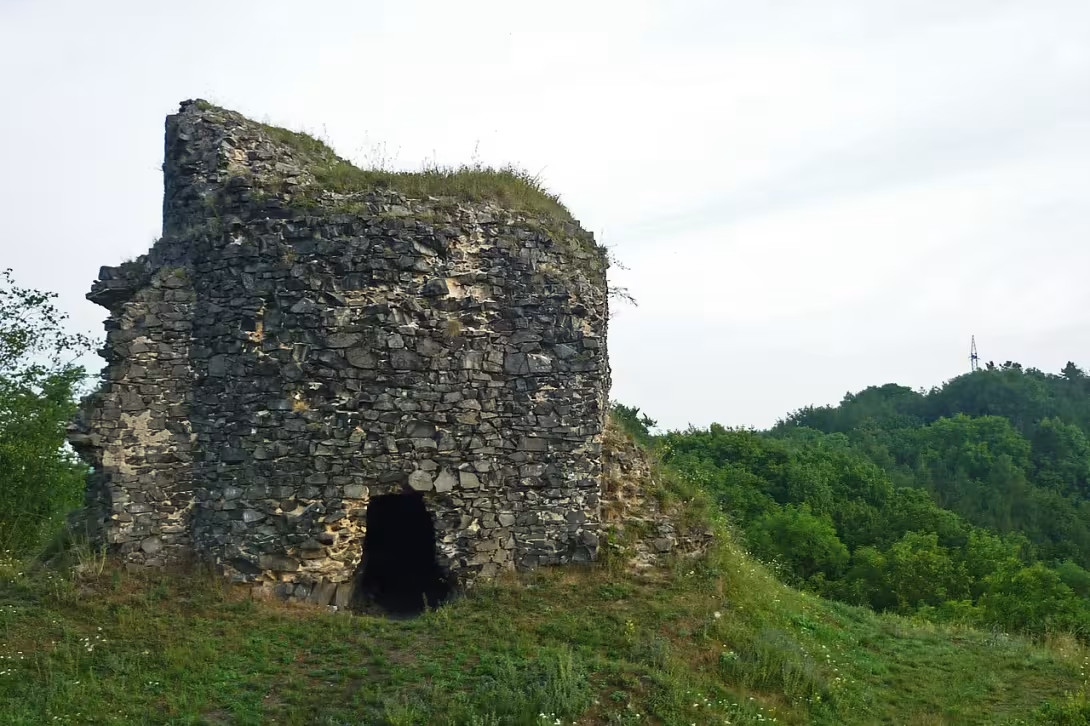
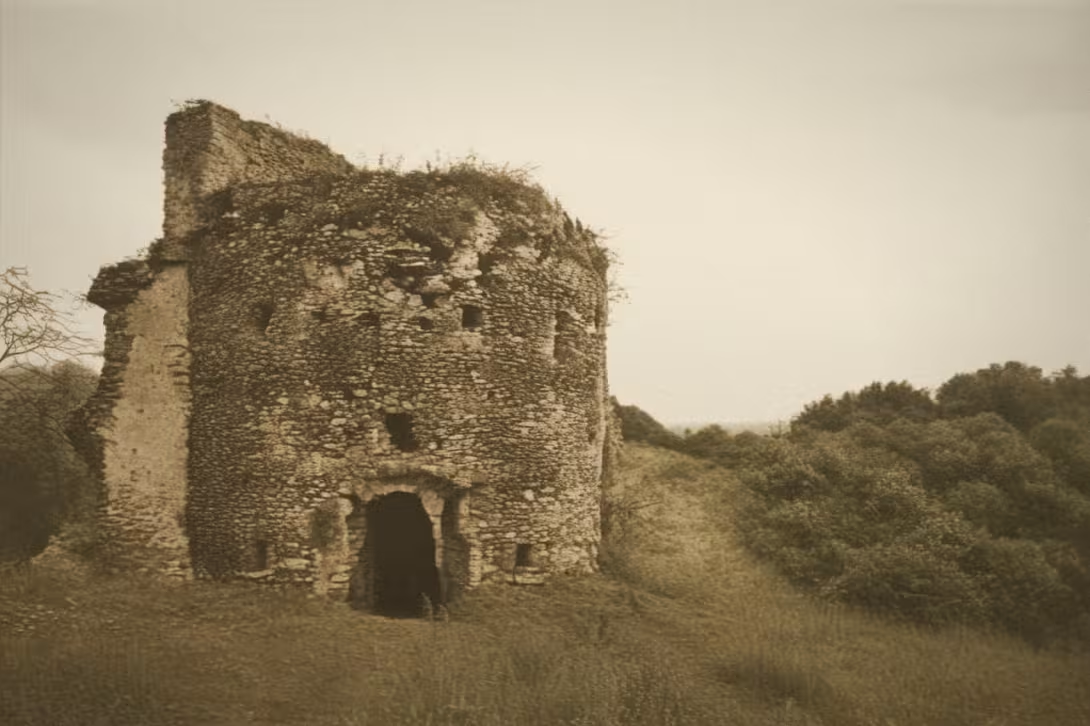
The historical appearance on the left is an AI-generated visualisation and serves as inspiration only.
Historical milestones
- 1268
- First known mention of the castle on a seal.
- 1283
- King Wenceslaus II granted Ostrý to Jan z Michalovic.
Architectural development
The castle's design is heavily influenced by its basalt ridge location, featuring a pentagonal core with a bergfrit. Access to the central area was controlled by strong fortifications and an additional tower. The main palace opposite the tower did not survive.
Historical events
- 1268
- First known mention of the castle on a seal.
- 1283
- King Wenceslaus II granted Ostrý to Jan z Michalovic.
- 1445
- The castle was captured and burned by Lusatian forces during conflicts with the Six Towns League.
Owners
Markvartici (circa 13th century)
Jan z Michalovic (1283)
Hynek Berka z Dubé (1406)
Vartenberks
Points of interest
– Despite its name "Ostrý," which means "sharp" or "pointed" in Czech, the castle's primary defensive feature is a bergfrit, an additional tower that provided strategic advantage rather than sharpness.
– The castle was once part of a royal estate under King Wenceslaus I and later granted to Jan z Michalovic by his son, King Wenceslaus II. This connection illustrates its importance in the political landscape of medieval Bohemia within the Holy Roman Empire.
– In 1445, Ostrý's decline began when it was captured and burned by Lusatian forces during conflicts with the Vartenberks and the Six Towns League, a pivotal event that led to its abandonment and ruin.
– The castle’s architecture includes a pentagonal core and robust fortifications such as an opěrák (buttress), which were designed for defense but also reflect the medieval military architectural style influenced by its basalt ridge location.
– Ostrý is not only a historical site but also a scenic destination, with hiking trails offering picturesque views of natural basalt formations and the Ploučnice River, making it an attractive spot for both history enthusiasts and nature lovers.
Guide
This guide is narrated by a synthetic voice generated by artificial intelligence.
Show guide text
This text was created by artificial intelligence and has not been editorially reviewed. It may contain inaccuracies.
The ruins of Ostrý castle are located in the Děčín district, about two kilometers southeast of Benešov nad Ploučnicí and half a kilometer west of Františkov nad Ploučnicí. It stands on the summit of a narrow basalt ridge at an elevation of two hundred and fifty meters. The river Ploučnice winds around it on three sides. Originally the castle was called Šarfenštejn, after the German Scharfenstein. Since nineteen sixty-six it has been protected as a cultural monument.
The castle was built by the Markvartici around the middle of the thirteenth century on royal estates. The region was inhabited at that time by the original Serbian population, which was supplemented by colonists from Saxony. The first known mention of the castle comes from a seal dating from twelve sixty-eight.
In twelve eighty-three, the young king Václav the Second granted Ostrý to Jan z Michalovic. Around twelve ninety-five he distinguished himself at tournaments on his way to Paris. His descendants held the castle until fourteen hundred and six, when it was acquired by Hynek Berka z Dubé. Later it belonged to the Wartenberks. They got into disputes with the Six Towns and in fourteen forty-five the castle was captured and burned by the Lusatian army. After fifteen fifteen the castle was abandoned and fell into ruin.
The appearance of the castle was significantly determined by the basalt ridge. The access road to the castle core led along its western side. A strong rampart blocked the entrance, which was later reinforced with a buttress. Another strong rampart protected the path from the west. The core itself had a pentagonal ground plan. At its front stands the main tower, called a bergfrit, which was built in later. A palace stood opposite the tower, but it has not survived.
Tips for visitors
The best time to visit Ostrý is during late spring or early autumn, when the weather is mild and pleasant for hiking. These seasons offer clear skies and comfortable temperatures, making it ideal for exploring the scenic trails around the castle ruins. Additionally, visiting outside of peak summer months helps avoid crowds, providing a more serene experience amidst nature.
Public transportation options are available; you can take buses from nearby towns such as Františkov nad Ploučnicí and follow the marked hiking trails leading to the site. Always check current public transport schedules online for the most accurate information.
When visiting Ostrý, it's recommended to bring comfortable walking shoes, a hat, sunscreen, and plenty of water, especially during warmer months. A packed lunch or snacks can be useful since there are no facilities on-site. For those interested in photography, consider bringing a camera with a zoom lens to capture the expansive views from the basalt formations.
For photography enthusiasts, the best spots at Ostrý include the vantage points along the hiking trails that offer panoramic views of the Ploučnice River and surrounding natural landscapes. Early morning or late afternoon light provides the most dramatic lighting conditions for capturing the castle ruins against a beautiful backdrop. Families with children will find the area enjoyable due to its natural beauty, but it's important to ensure young ones are comfortable with hiking.
Nearby attractions within 30 minutes include the charming town of Františkov nad Ploučnicí, known for its picturesque setting and local history. The natural surroundings also offer opportunities for leisurely walks along the river or exploring other nearby basalt formations. These make excellent additions to a day trip itinerary.
Frequently asked questions
Can the monument be visited?
This is a ruin. Such sites are often freely accessible, but some can only be visited with a guide or are closed for safety reasons. We have not verified the current situation – take care and respect any restrictions.
Where is the monument?
Location: Františkov nad Ploučnicí, Ústecký kraj. The map on this page shows the exact spot.
Why is the monument protected?
It is listed in the Central List of Cultural Monuments of the Czech Republic as a cultural monument (register no. 36821/5-3666).
Businesses nearby
Do you run a restaurant, accommodation, shop, museum, rental, wellness or other visitor service near this monument? Show yourself directly to the people heading to it — this is how they will see you in the app and on the web:
Events nearby



Zdroj akcí: otevřená data měst a obcí ČR (Národní katalog otevřených dat) a kalendář akcí Národního památkového ústavu.
Nearby
Ostrý is located near the Ploučnice River, with natural basalt formations surrounding it. The area offers scenic views and is accessible via marked hiking trails from nearby towns.
Accommodation nearby
Trips and activities nearby
Guided tours, tickets and activities nearby from GetYourGuide
Affiliate link: if you buy from the partner, we may receive a commission. The price for you does not change.
Search tours and activities →Themed route
Thematic Walking Tour: The Ruins of Ostrý and Surroundings
1. Ostrý (Františkov nad Ploučnicí) - Historical Ruin
Begin your journey at the fascinating site of Ostrý, a historical ruin located near Františkov nad Ploučnicí. This 13th-century castle offers visitors a glimpse into medieval architecture and history, with its impressive basalt rock formations providing a dramatic backdrop. The ruins are easily accessible via marked trails from nearby towns, making it an ideal starting point for exploring the area's rich heritage.
2. Ploučnice River Trail
From Ostrý, follow the scenic trail along the Ploučnice River. This natural pathway offers stunning views of the river and its surrounding landscapes. The trail is perfect for a leisurely walk or hike, allowing you to immerse yourself in the tranquility of nature while enjoying the picturesque scenery. The proximity to basalt formations adds an element of geological interest to your exploration.
3. Basalt Formations
As you continue along the river trail, take time to explore the unique basalt rock formations that characterize this region. These natural wonders are a testament to the area's volcanic past and provide excellent opportunities for photography and outdoor activities. The formations create an enchanting environment, with their rugged shapes and textures inviting closer inspection.
4. Scenic Overlook
Conclude your tour at one of the scenic overlooks along the Ploučnice River trail. These vantage points offer panoramic views of the river valley and the surrounding natural beauty. It's a perfect spot to reflect on the day's journey, capturing memories of the historical ruins, the serene river path, and the captivating basalt formations that make this area so special.
This thematic walking tour offers a blend of history, nature, and scenic beauty, providing an enriching experience for visitors to Františkov nad Ploučnicí.
Seasonal recommendations
Spring: The ruins of Ostrý, nestled in Františkov nad Ploučnicí, come alive with the vibrant hues and fragrances of spring. As nature reawakens, wildflowers blanket the surrounding landscape, offering a picturesque backdrop to the historical site. This season is characterized by mild temperatures and longer daylight hours, making it an ideal time for exploration. Visitors should dress in layers as mornings can be cool while afternoons warm up. While the crowds are generally manageable, arriving early ensures a quieter experience amidst the burgeoning flora.
Summer: Summer at Ostrý offers long days filled with sunlight that accentuates the ancient stones of the ruins. The lush greenery and blooming plants create an enchanting atmosphere perfect for leisurely walks or picnics in the surrounding meadows. This is the peak tourist season, so expect larger crowds, especially on weekends and holidays. To avoid congestion, plan your visit early in the morning or later in the afternoon. Comfortable walking shoes and light clothing are recommended to navigate the site comfortably during warmer months.
Autumn: Autumn transforms Ostrý into a tapestry of reds, oranges, and yellows as deciduous trees shed their leaves. The cooler temperatures make for pleasant strolls through the ruins, with fewer tourists than in summer providing a more serene experience. This season is ideal for photography enthusiasts seeking to capture the dramatic interplay between the historical architecture and the vibrant foliage. Layered clothing is advisable due to fluctuating temperatures throughout the day, and carrying a light jacket can be beneficial as evenings tend to cool down.
Winter: Winter cloaks Ostrý in a serene blanket of snow, offering a mystical atmosphere that contrasts sharply with its summer vibrancy. The ruins stand stark against the white landscape, providing a unique perspective on this historical site. Shorter days mean earlier closures and fewer visitors, allowing for a more intimate experience. However, winter weather can be unpredictable, so dressing warmly in layers is essential. Visitors should check opening times as they may vary due to weather conditions, and be prepared for potentially icy paths around the ruins.
Visualizations and artistic views


The visualisations are generated by artificial intelligence and serve as inspiration.
Photos from the area
Real photos taken near the monument


Zdroj a licence jsou uvedeny u každého snímku.
Tips from visitors
No tips yet. Be the first!
Log in and add your tip.
Sources and literature
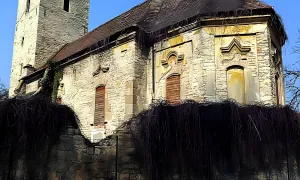
Photos: SchiDD / CC BY-SA 4.0, rozlišení zvýšeno umělou inteligencí — Wikimedia Commons. The author and licence also appear when you hover over the image.
Faktickým podkladem tohoto textu byl článek na Wikipedii, jehož autory jsou přispěvatelé Wikipedie. Článek je dostupný pod licencí CC BY-SA 4.0.
Location on the map
More monuments – Františkov nad Ploučnicí
Show all in the municipality



Příběhy a pověsti
Legendy, pověsti a příběhy spjaté s touto památkou
Fotografie návštěvníků
Zatím žádné fotografie. Buďte první, kdo přidá fotografii z návštěvy!
Log in a přidejte svou fotografii nebo hodnoťte.
Za ověřenou návštěvu v aplikaci získáte víc bodů — poznáme podle GPS, že jste na místě.
Reviews and comments