



Otmíče Hillfort
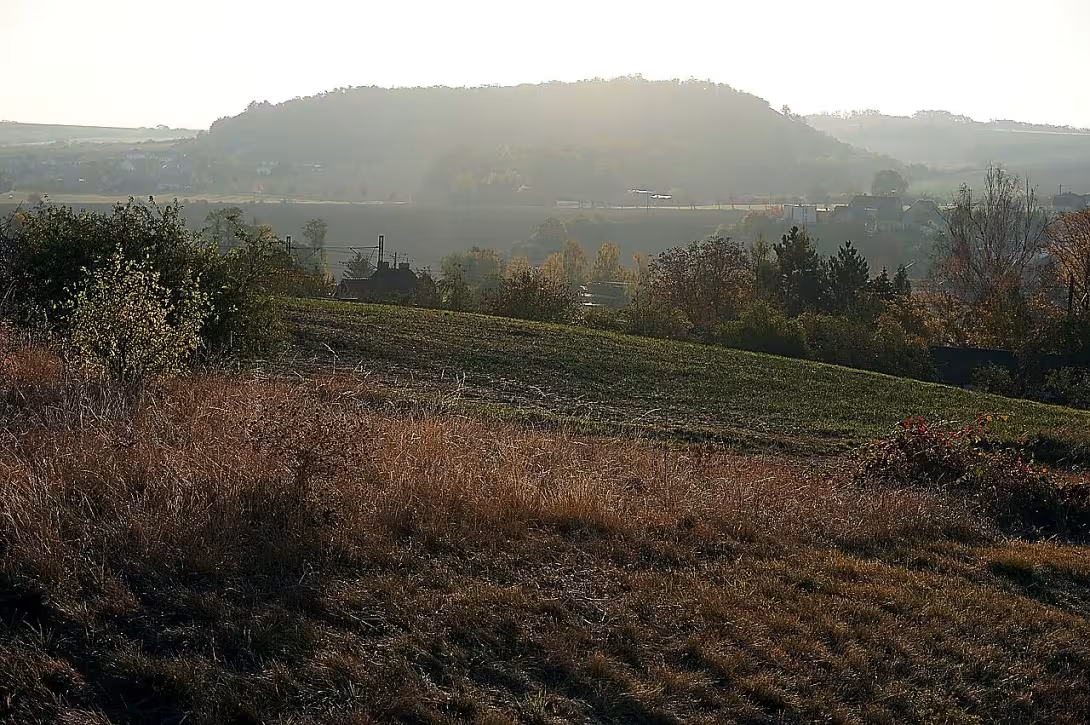
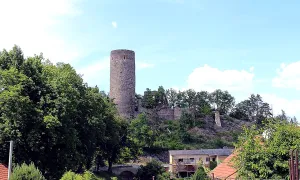
Otmíče are an important primordial and probably early medieval castle situated on top of the Plateau of the Ottomball Mountains in Beroun district in Central Bohemia. The area of 2,2 hectares shall be divided into acropolis and a prefix. The fortification consists of a combination of stone walls, ditches and natural rock formations. Archaeological findings show a settlement already in the eneolithic era, the period of the Hallatians and then in the early Middle Ages. The monument is an important proof of the development of fortified settlements in the area of Horovická horkatina and is freely accessible to the public.
The fort was first described and drawn by archaeologist Břetislav Jelínek. Other surface collections were carried out by Jan Axamit and in the years 1952- 1953 he carried out a smaller research of Josef Maličký. During these works, findings were obtained from the eneolite, the period of the Halštat and the middle to younger forage times. Given the complexity of the site, it is not clear exactly when the castle was created. The oldest fence could have been built in the eneolithic. At the time of the Halštátský on the site there was a mansion (called Herrensitz) or a castle. In the early Middle Ages, the older mansion could be repopulated or modified. However, this phase is less likely, as there was a nearby castle in Lochovice at the same time.
The area of 2,2 hectares is situated on the top platform of the Omnibus Mountains at an altitude of 360- 401 metres. The area extends from the platform towards the northeast. Fortification of the division of the premises on the front (1,4 hectares) and acropolis (0,8 hectares). The acropolis shall take the form of an artificially aligned platform of 58 × 72 metres. The layer of the saturated material on the east side was supported by a wall, leading to up to 0,8 metres deep moat. The stone wall turns aroundingly towards the north, where it follows the slope of the hill. The entrance to the fort was probably at the south end of the ditch. The outer fortification consists of a natural rocky spine, to which the body of the wall was sprinkled. Whether the lower plateau at the northwest foot of the hill belonged to the site, it is not possible to decide without further research.
The fort is freely accessible, although no marked tourist route leads to it. The location is part of the Ottoman Mountain, the western part of which is declared a natural monument. The village Otmíče and the castle in Lochovice are located nearby. The site provides valuable evidence of the development of fortified settlements in Horovic hill town and offers visitors the opportunity to learn about the history of the region.
Then and now
Drag the slider to compare how the landmark may have looked when it was built with the view today.
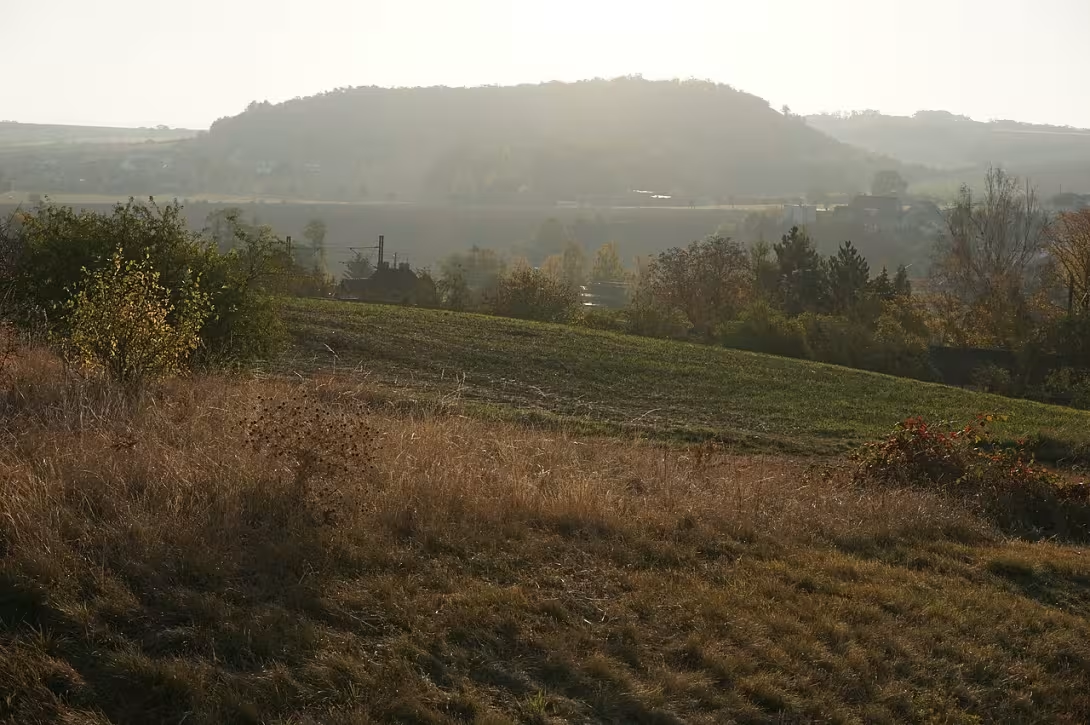
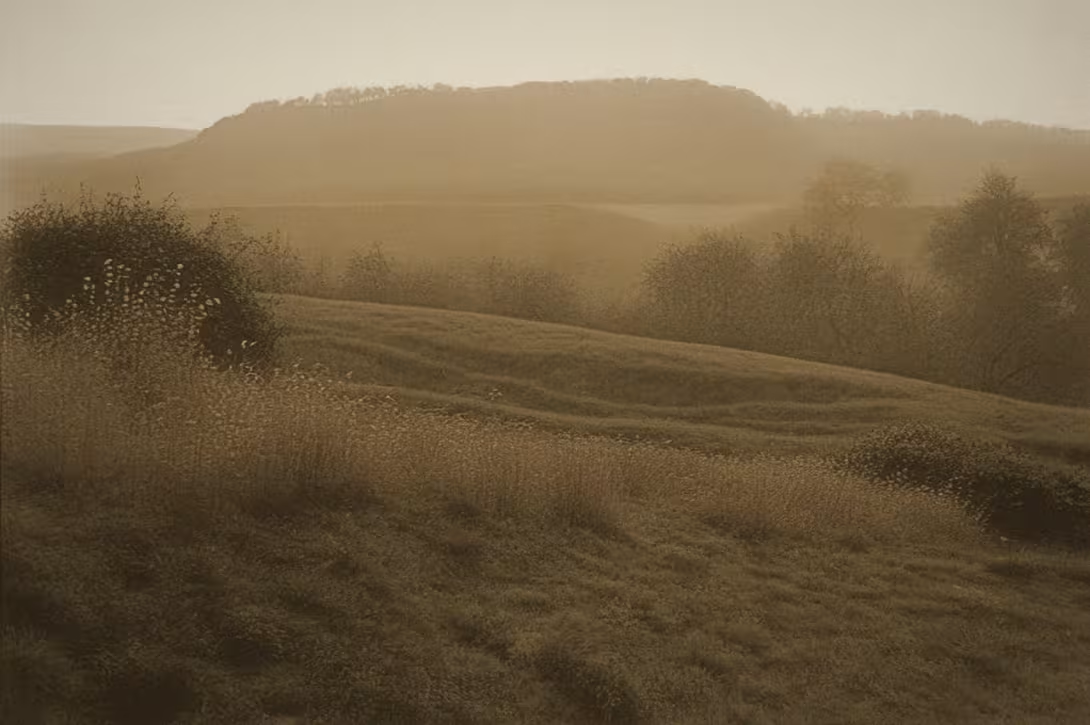
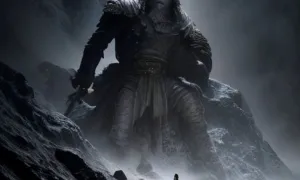
The historical appearance on the left is an AI-generated visualisation and serves as inspiration only.
Historical milestones
- around 3000 BC l.
- The first documented settlement of the site during the period of eneolite.
- around 700 B.C.
- The use of the site as a mansion or a castle in the time of the Halštats.
- around 800 n.l.
- Likely settlement or modification of the fort in the early Middle Ages.
- 1952
- Opening of archaeological research under the direction of Josef Malický.
- 1953
- Termination of archaeological research of the site.
Architectural development
The oldest fortifications were probably already established in the eneolithic area, and at the time of the Halštat, the mansion could have been built. The acropolis was artificially aligned and protected by a stone wall with a moat of up to 0.8 metres deep. In the early Middle Ages, the older fort was probably restored and adapted for its needs.
Historical events
In 1952- 1953, archaeological research led by Josef Malický took place on the site, which confirmed settlement from various prehistoric periods.
Points of interest
- The fort is situated on the top platform of the Omnibus Mountains at an altitude of 360 to 401 metres. - The area with a total area of 2,2 hectares is divided into an acropolis of 0,8 hectares and a prepaid area of 1,4 hectares. - Fortification of the site consists of a combination of stone walls, ditches and natural rock formations. - Archaeological findings show a settlement in eneolithic times and the early Middle Ages. The entrance to the castle was probably at the south end of the ditch.
Guide
Show guide text
This text was created by artificial intelligence and has not been editorially reviewed. It may contain inaccuracies.
Welcome to the Oblins, a unique archaeological site full of secrets and history. You are standing on the top of the Plateau of Oblich Mountain, where this important castle is spread out with an amazing panoramic view. There's natural beauty and the air of ancient times around you. The fort is spread over an area of 2,2 hectares, divided into acropolis with a size of 0,8 hectares and a prepayment of 1,4 hectares.
Let's dive into its creation. Otmíče was already inhabited during the period of eneolite around 3000 B.C., as evidenced by archaeological findings of this era. Subsequently, the site became a manor or castle in the period of Halštat around 700 B.C., indicating its strategic and social importance. In the early Middle Ages, around 800 AD, the fort may have been repopulated or modified.
Now pay attention to architecture Otmíček. Notice the combination of stone walls, ditches and natural rock formations that formed the defensive structure of this place. These elements create a unique picture of ancient life and defense. The castle boasts its position at an altitude of between 360 and 401 metres, which gave it not only a strategic advantage but also a wonderful view.
Key personalities associated with the Bumples include archaeologists Josef Malický and Břítislav Jelínek, who played an important role in the discovery and study of this place. In 1952 Josef Maličký began pioneering archaeological research Otmíček which was completed in the following year. Their work has helped uncover the rich history of this place.
Among the attractions of Otmíček is the fact that it is one of the few sites that show the continuity of the settlement and construction from the eneolite to the Hallatin period to the early Middle Ages. This long-term history makes Otmíče a fascinating place to explore.
Let's move on and look at the other details you notice while you're walking. Note the way the natural formations worked in favor of the castle's defensive structures. The atmosphere of this place can draw you into the past and inspire you to think about the lives of those who once lived here.
Let me thank you for your visit to Otmíček. I hope you've had fun and gained new knowledge of this fascinating location. If you have the opportunity, visit other archaeological sites in our region and discover more secrets of the past. When I see you!
Tips for visitors
The best time to visit is spring or autumn, when vegetation is thinner on Oblich Mountain, which allows better terrain transparency and easier orientation in the remains of the castle. In the summer months the site may be overgrown, making it difficult to observe archaeological elements.
The location is freely accessible in nature. We recommend that you arrive by car in the village Otmíče and then continue on foot on the tourist marked paths leading to the top of the mountain. Public transport can be used in the village, check the connection in the current connection search engine.
For the climb to the top, take fixed shoes suitable for the field, plenty of fluids and snacks, because there are no services or stands at the castle itself. Do not forget the charged phone with map materials to help you identify the individual parts of the acropolis and the front cover.
The golden hour at sunrise or sunset is ideal for photography, when oblique light highlights off-road inequalities and remains of fortifications. The best shots are taken from elevated places in the acropolis, where an interesting view of the integrity of the entire area opens up.
For families with children the trip is suitable as a combination of light tourism and history. In the surrounding area you can visit the natural monument of Otmíčská hora, which offers interesting nature, or go to the castle in Lochovice, which allows children to better understand how ancient mansions in the landscape were located.
Frequently asked questions
Can the monument be visited?
This is an archaeological site. Often there is little to see on the ground and the land may be private. We have not verified access.
Where is the monument?
Location: Středočeský kraj. The map on this page shows the exact spot.
Why is the monument protected?
It is listed in the Central List of Cultural Monuments of the Czech Republic as a cultural monument (register no. 1000132162).
Businesses nearby
Do you run a restaurant, accommodation, shop, museum, rental, wellness or other visitor service near this monument? Show yourself directly to the people heading to it — this is how they will see you in the app and on the web:
Events nearby
Zdroj akcí: otevřená data měst a obcí ČR (Národní katalog otevřených dat) a kalendář akcí Národního památkového ústavu.
Nearby
Oblich mountain, natural monument Oblich mountain, village Otmíče, castle in Lochovice.
Accommodation nearby
Themed route
1. Municipality Otmíče (Municipality) - Suitable starting point for getting to know the local environment. 2. Otmíče (Archaeological site) - The main destination of the trip, which offers insight into ancient settlements. 3. Natural Monument of Oblich Mountain (Natural Monument) - A place to walk in nature with beautiful views of the surroundings. 4. Hradiště v Lochovice (Hradiště) - Final stop focused on another important archaeological object.
Seasonal recommendations
Spring: In the spring period, the archaeological site Otmíče is oddly charming due to the freshening nature that revives the surrounding landscape. Sun rays penetrate through a foggy atmosphere, creating a romantic and peaceful way of exploring historical ruins. During the spring, it is recommended to visit the memory before noon or evening to avoid warm semi-autumn days while enjoying beautiful lighting. Clothes should be consistent with sudden weather changes, so it is advisable to bring both light and slightly warmer layers. Despite the fact that there may be more visitors here in the spring than at the end of winter, the atmosphere is still calm and welcoming.
Summer: Summer on Oblich offers long sunny days and ideal conditions for exploring archaeological findings. The sun illuminates the ruins in full, allowing them to capture their beauty in the best way. In the main summer season it is recommended to visit the memory earlier in the day to avoid large crowds and surprising heat. It is advisable to bring a sun helmet and plenty of drinking water. Warm clothes are necessary, but it also depends on the possibility of a sudden rain that could change plans.
Autumn: In autumn the Otmíče offers a unique atmosphere with cool leaf colours and warm sunlight. This time of year is ideal for those looking for a quieter experience without many visitors. You would visit the memory in the morning or evening light to enjoy beautiful colors and a quiet environment. Clothes should be warmer because winter comes faster than expected, and it is advisable to bring a hat or a hat to protect against cold winds. Despite the fact that autumn may be a period of smaller visitors, care should be taken for possible rainy days.
Winter: The winter season brings a calm and slightly romantic atmosphere with cool colors and often a snow blanket that increases its mystical character. You would visit a memorial in the morning or in the evening when the temperature is lighter and the lighting is quiet. It is important to bring warm clothes, a protective helmet against cold winds and perhaps even a pair of shoes for light snow conditions. Despite the fact that there are similarly fewer people than in other seasons, care must be taken for safety on a cool surface.
Visualizations and artistic views


The visualisations are generated by artificial intelligence and serve as inspiration.
Photos from the area
Real photos taken near the monument

Zdroj a licence jsou uvedeny u každého snímku.
Tips from visitors
No tips yet. Be the first!
Log in and add your tip.
Sources and literature
Photos: MartinVeselka / CC BY-SA 4.0 — Wikimedia Commons. The author and licence also appear when you hover over the image.
Faktickým podkladem tohoto textu byl článek na Wikipedii, jehož autory jsou přispěvatelé Wikipedie. Článek je dostupný pod licencí CC BY-SA 4.0.
Location on the map
More monuments – Středočeský kraj
Show all in the region




Příběhy a pověsti
Legendy, pověsti a příběhy spjaté s touto památkou
Fotografie návštěvníků
Zatím žádné fotografie. Buďte první, kdo přidá fotografii z návštěvy!
Log in a přidejte svou fotografii nebo hodnoťte.
Za ověřenou návštěvu v aplikaci získáte víc bodů — poznáme podle GPS, že jste na místě.
Reviews and comments