






Palác Pachtů z Rájova (Celetná 31) Palace
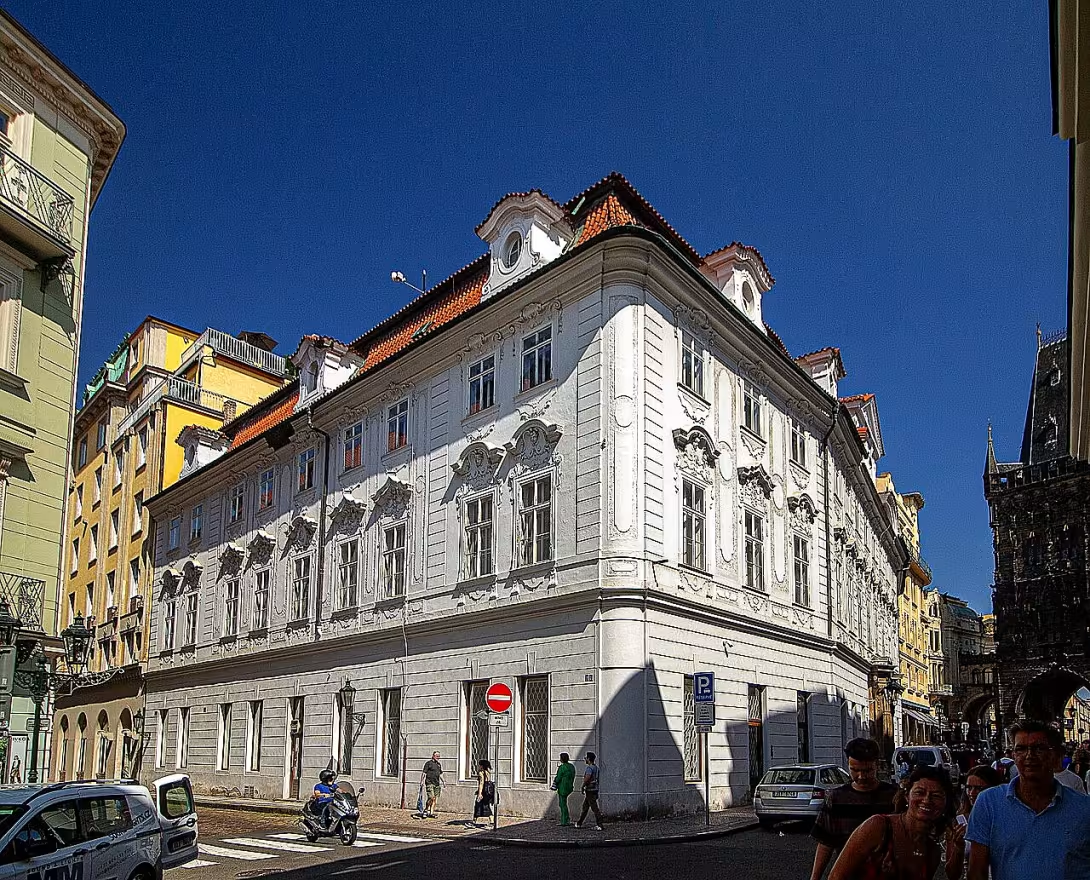
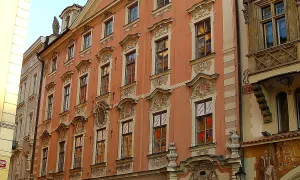
The Palace of Pachts of Paradise, also known as the Seebergov Palace or the Langer House, is a top baroque and partially classicically modified building on Celetná Street in Prague. This historical complex was built in 1740 according to the design by Kilian Ignác Dientzenhofer for Josef Ignác von Langer and is protected as a cultural monument since 1964. Today it serves as an administrative building for the Ministry of the Interior.
The history of the palace dates back to the Middle Ages, when there were four houses at the site of today's building. They were united in the 15th century and remodeled renaissance. In 1666 the palace burned down during the so-called French fire, which led to the original buildings being connected to one house. In 1737 Josef Ignác von Langer purchased the palace and ordered its reconstruction in the style of the top Baroque, which was completed by Kilián Ignác Dientzenhofer in 1740. In 1801-1822 he was the property of the Pachts of Rájov, who after 1840 carried out classical modifications under the leadership of the construction company Jan Ripota.
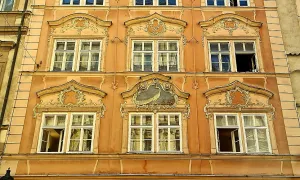
The architecture of the palace is characterized by a four-wing object of almost square ground plan around the newly shot yard. The main facade to Celetná Street has 14 window axes, the middle eight highlights risalites. In the centre of this facade is a portal decorated with stucco medals Marie Teresa and František Štěpán Lorraine, above which is a shield skylight with voluously curved wings. The side facade on Kralodvor Street is easier and has 9 axes. Baroque vaults and staircases with classical railing are preserved on the ground floor, while in the middle of the main facade the ceiling was preserved with decoration from the time of Dientzenhofer's reconstruction.
The palace has undergone some dramatic changes in ownership and modifications. After the fire in 1666, the original buildings were connected to one house which Josef Ignác von Langer rebuilt in the style of the highest Baroque. The classic modifications were made by Jan Ripota after 1840. In the 1930s, the palace was the seat of the bank, which required significant adjustments including the roofing of the yard. Other interior modifications occurred in the 1980s.
Today, the Pachta Palace of Paradise is an administrative building for the Ministry of Interior, but its historical significance and architectural features make it an interesting place to visit. Its rich history and artistic value attract not only experts but tourists from all over the world.
The Palace of Pachts of Paradise is more than an architectural treasure; it is part of the lively history of Prague and the Czech Republic. His presence on Celetná Street testifies to the rich cultural heritage of the city that deserves to be discovered and appreciated. For those who want to understand the deeper layers of Czech history and architecture, a visit to this palace is necessary.
Then and now
Drag the slider to compare how the landmark may have looked when it was built with the view today.
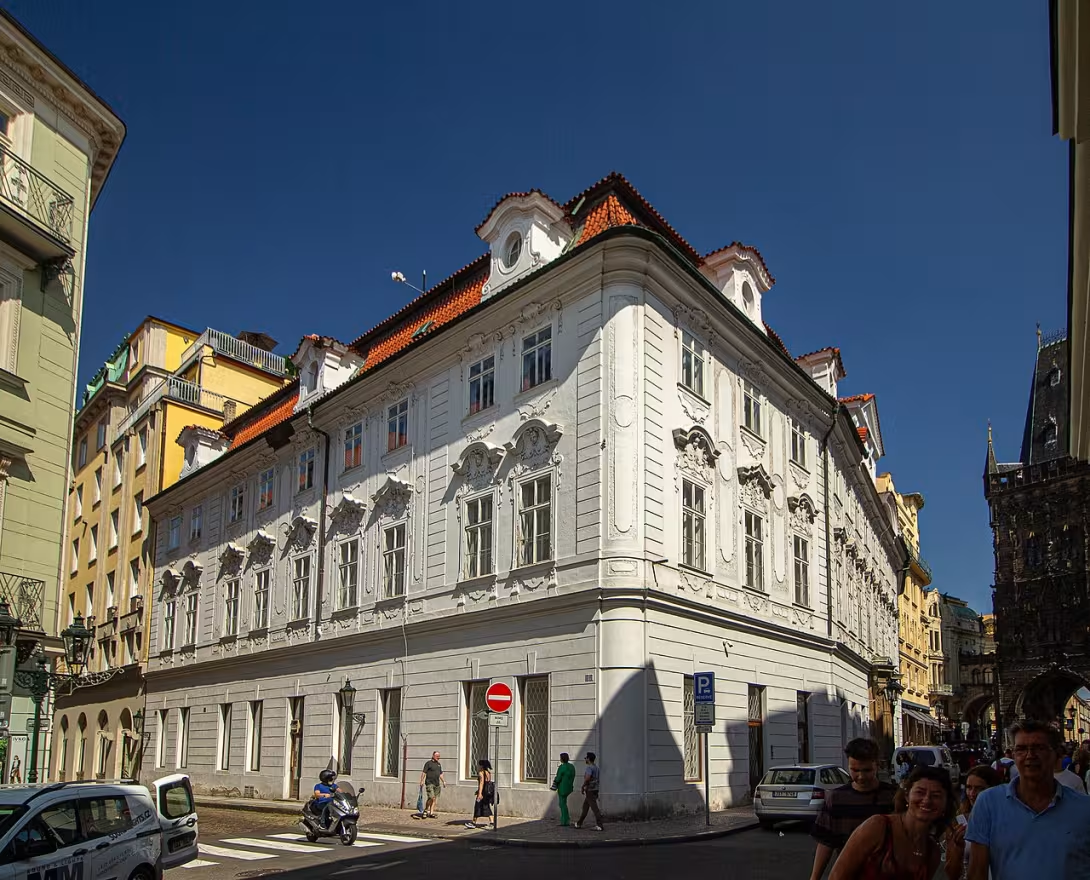

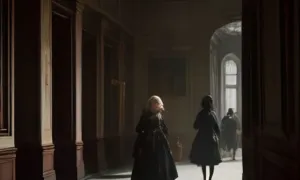
The historical appearance on the left is an AI-generated visualisation and serves as inspiration only.
Historical milestones
- 1964
- Protected as a cultural monument
Architectural development
In the place of today's palace, there were originally four medieval houses, which were united and remodeled in the 15th century. After the fire in 1666 they were connected to one house. In 1737 Josef Ignác von Langer ordered a Baroque reconstruction completed by Kilián Ignác Dientzenhofer. The classic modifications were made by Jan Ripota after 1840.
Historical events
- 1666
- The French fire that burned down the original buildings.
- 1737
- Transfer of ownership to Josef Ignác von Langer and subsequent reconstruction in the style of the top Baroque.
Owners
- 1689
- 1737
- 1801-1822
Points of interest
- The palace was built in 1740 according to the design by Kilian Ignác Dientzenhofer for Josef Ignác von Langer.
- The history of the palace dates back to the Middle Ages, when there were four houses on the site of today's building, which in the 15th century were united and remodeled.
- In 1666 the palace burned down during the so-called French fire, which led to the original buildings being connected to one house.
- After 1840, the Pachti of Raj made classical modifications under the direction of the construction of Jan Ripota.
- The main facade of the palace has stucco medals Marie Theresa and František Štěpán Lorraine, which decorate the portal.
Guide
This guide is narrated by a synthetic voice generated by artificial intelligence.
Show guide text
This text was created by artificial intelligence and has not been editorially reviewed. It may contain inaccuracies.
Welcome to the heart of Prague, where history and architecture form a unique symphony. You are standing in front of the Palace of Pachts of Paradise, also known as the Seeberg Palace or the Langer House, which boasts its baroque and partly classical elements. This impressive object on Celetná Street will address you with its elegance and historical background.
Let's dive into its beginnings. In 1740 the palace was built according to the project by Kilian Ignác Dientzenhofer for Josef Ignác von Langer, which is proof of the rich history and architectural art of that time. In the place where this baroque-Classicist gem is now being turned off, there were once four houses from the 15th century, which were united and reassembled. This transformation shows a long history of transformations and architectural efforts.
Look up and notice the elegant facade that reflects the skills of Kilian Ignatius Dientzenhofer. His design is known for its harmony and detail, which will welcome you from the first point of view. The internal space, even though it is now used as an administrative building for the Ministry of the Interior, retains some elements of its historical nature.
The key personalities associated with this place are of course Pachtové z Rájova and Josef Ignác von Langer. Their stories are inherent to the building heritage of this palace, which was declared a cultural monument in 1964.
Now notice the interesting mystery: in 1666, today's palace burned down during the so-called French fire, which represents one of the many historical trials this object faced. This fact adds another layer of mystery and resistance to its existence.
Get carried away by the atmosphere of this place and do not hesitate to see the surrounding street, which itself is full of historical stories. Whether you're here for a short while or a long visit, the Pacht Palace of Paradise will offer you much to explore and uncover.
Thank you for your visit to this historic place. We hope you will return with new impressions and experience. When I see you on the next landmark road!
Tips for visitors
The best time to visit the Palace of Pachts of Paradise is in the early afternoon, when fewer people and sunlight illuminate architectural details. This time also offers ideal conditions for shooting palaces from different angles, especially from Celetná Street towards the Old Town Hall.
The possibility to use public transport is most advantageous for access to the centre of Prague.
When planning a visit, remember the appropriate suit. Although the palace is cold inside, it may be warm and sunny outside, so a light coat or coat to protect against the morning clouds or evening cold would be appropriate. In addition, remember a camera or mobile phone with a good quality camera if you are interested in photography.
For families with children, the Pachts Palace of Paradise is an interesting place to explore history and architecture. In the vicinity you can visit the Old Town Hall or walk on Celetná Street, where there are many other historical buildings and shops. For children it can also be interesting to explore the surrounding Old Town Square with its small streets and marketplace.
Frequently asked questions
Can the monument be visited?
Some buildings of this kind are open for guided tours, others serve another purpose or are privately owned. We have not verified whether and when this monument is open – please ask the operator.
What are the opening hours and admission?
We have not verified the opening hours or admission. Current information is published by the operator.
Where is the monument?
Location: Praha 1, Hlavní město Praha. The map on this page shows the exact spot.
Why is the monument protected?
It is listed in the Central List of Cultural Monuments of the Czech Republic as a cultural monument (register no. 1000150668).
Businesses nearby
Do you run a restaurant, accommodation, shop, museum, rental, wellness or other visitor service near this monument? Show yourself directly to the people heading to it — this is how they will see you in the app and on the web:
Events nearby

Zdroj akcí: otevřená data měst a obcí ČR (Národní katalog otevřených dat) a kalendář akcí Národního památkového ústavu.
Accommodation nearby
Trips and activities nearby
Guided tours, tickets and activities nearby from GetYourGuide
Affiliate link: if you buy from the partner, we may receive a commission. The price for you does not change.
Search tours and activities →Themed route
Thematic tour "History and architecture of Prague 1"
1.Palác Pachtů z Rájova (Celetná 31) * Type: * Historical Palace * Why is it worth a visit: * This Baroque Palace is one of the most famous and best preserved examples of Prague Baroque. Built for a rich family of Pachts from Rajov, he served as their residence and now hosts a number of cultural events and exhibitions.
2. Church of St. Nicholas * Type: * Historical church * Why is it worth a visit: * Located on Celetná Street, right opposite the Pachta Palace of Paradise. St. Nicholas Church is famous for its architecture and historical ties to Prague 1. Its unique interior and wooden statues are real pearls for lovers of history.
3. Church of St. Gilji * Type: * Historical church * Why is it worth visiting: * This Gothic church is one of the oldest in Prague and is located on the corner of Celetná Street. Its history dates back to the 14th century, making it fascinating for those who want to discover the ancient architecture of the city.
4. Church of St. Peter and Paul * Type: * Historical church * Why is it worth a visit: * Located on the corner of Celetná Street, where two of Prague's most historic churches meet. Its Baroque interior and significant works of art are a real reward for visitors who are interested in history and art.
5. Church of St. Henry * Type: * Historical church * Why is it worth a visit: * This Baroque church is part of the monastery of Augustinian and is located near the Palace of Pachts of Paradise. Its rich historical background and architectural details make it interesting for those who want to understand the Baroque period in Prague.
This route offers visitors a view of the rich history and architecture of the Prague 1 centre, each of which has its unique stories and beauty.
Seasonal recommendations
Spring: In the spring season, the Palace of Pachts of Paradise is transformed into a flowering refuge, where new leaves and flowers give life to historical walls. The sunny days offer ideal conditions for walking around Prague, which is also time to use it to visit the palace with its architectural pearls. Due to the openness of gardens and parks, the atmosphere can be calmer than in the main summer season, allowing for a more relaxed immersion in history. It is recommended to come early in the morning to be able to discover the palace without excessive crowds and in warm clothes that will protect against cold spring winds.
Summer: In summer, the Palace of Pachts from Raj offers visitors not only historical valuables but also swimming in the sun glare of Prague. Celebrations and tourist currents are at their maximum, which adds to the atmosphere life, but also increases the number of visitors. The best time to visit is in the morning or later in the evening, when the crowd decreases and the temperature becomes more pleasant. It is important to choose suitable clothes - light and light, which will protect against sunlight, and must not miss quality sunflowers.
Autumn: In the autumn months the Palace of Pachts from Raj's melancholic beauty takes place when the leaves are colored and falling. The atmosphere is calmer compared to the summer period, which allows you to explore the historic palace more easily. Sunshine days are ideal for visiting, while rain and clouds can deliver a scene of romantic tone. It is recommended to come in warm clothes with a blanket or a hat on your head in order to enjoy the changed colors and cooler air without discomfort.
Winter: A winter visit to the Palace of Pachts from Paradise offers a unique atmosphere where historic walls are projected into darkness and the city is dazzled by the light of public lighting. It is recommended to visit on the day when the sun is at its highest, to enjoy maximum lighting, and to come in warm clothes with protective cold blankets. This season offers a quieter attendance, which allows you to explore the architectural pearls of the palace in more detail.
Visualizations and artistic views


The visualisations are generated by artificial intelligence and serve as inspiration.
Photos from the area
Real photos taken near the monument

Zdroj a licence jsou uvedeny u každého snímku.
Tips from visitors
No tips yet. Be the first!
Log in and add your tip.
Sources and literature
Photos: VitVit / CC BY-SA 4.0 — Wikimedia Commons. The author and licence also appear when you hover over the image.
Faktickým podkladem tohoto textu byl článek na Wikipedii, jehož autory jsou přispěvatelé Wikipedie. Článek je dostupný pod licencí CC BY-SA 4.0.
Location on the map
Příběhy a pověsti
Legendy, pověsti a příběhy spjaté s touto památkou
Fotografie návštěvníků
Zatím žádné fotografie. Buďte první, kdo přidá fotografii z návštěvy!
Log in a přidejte svou fotografii nebo hodnoťte.
Za ověřenou návštěvu v aplikaci získáte víc bodů — poznáme podle GPS, že jste na místě.
Reviews and comments