



Palác Riesů ze Stallburgu Palace
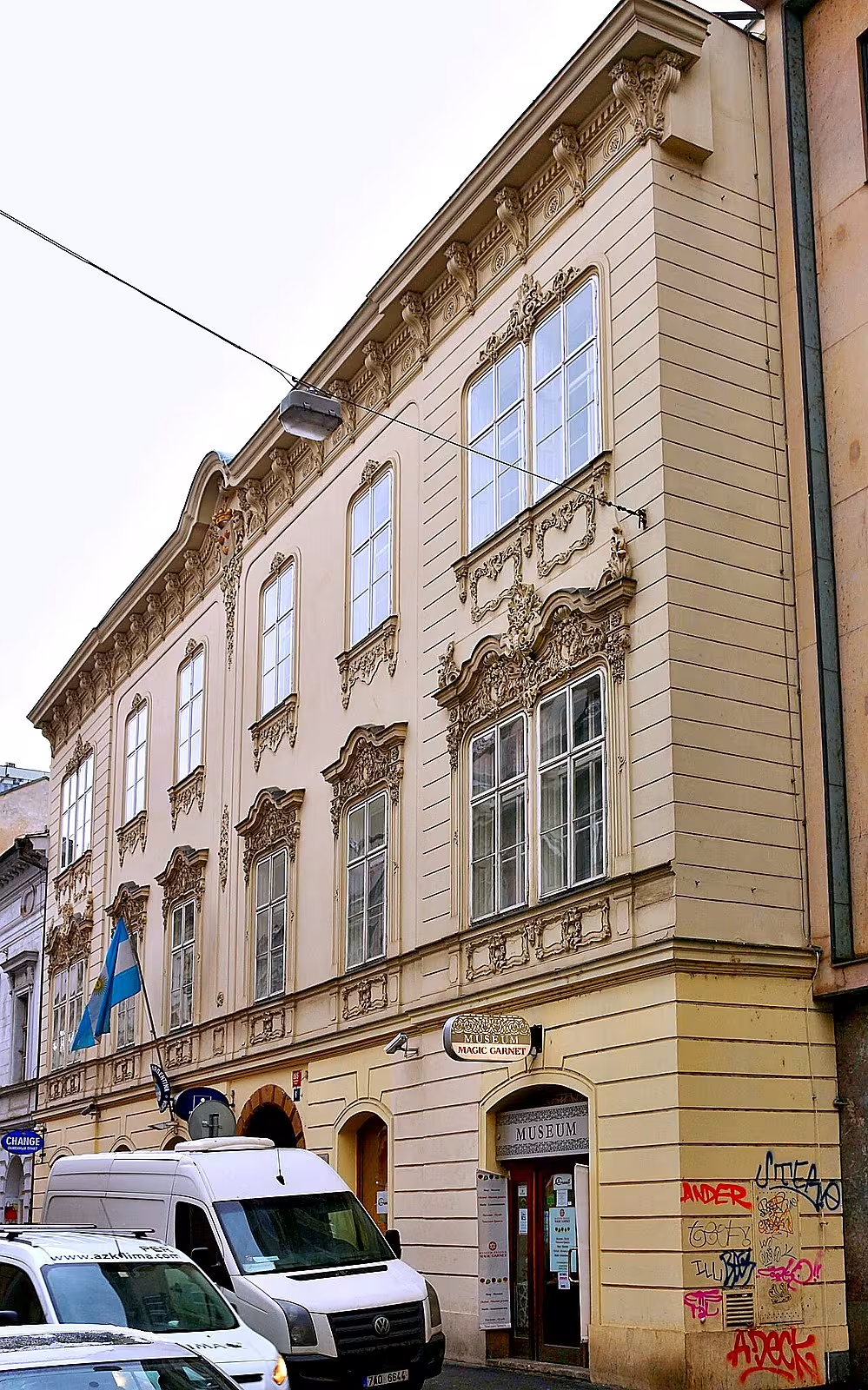
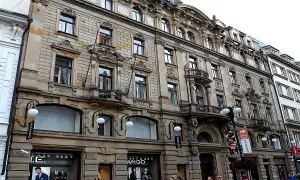
Palác Riesů ze Stallburgu stands as a testament to Prague's rich architectural heritage, located in the heart of the city's New Town at Panská 895/6. This Neorococo palace is significant for its historical and cultural value and serves as the residence of the Argentine embassy today. Its evolution from a medieval structure to a Baroque palace, and finally into its current form, reflects Prague's dynamic architectural history.
The origins of Palác Riesů ze Stallburgu trace back to a medieval building that transformed in the late 17th century into a Baroque palace. Initially owned by the Golz family and later by the Kounic family, the palace underwent a significant change between 1861 and 1862. During this period, Baron Matyáš Bedřich Riese ze Stallburgu commissioned architect Josef Maličký to redesign it in the Neorococo style, marking a pivotal moment in its history. This transformation reflected broader cultural shifts across Europe during the mid-19th century, including nationalism and industrialization.
Architecturally, Palác Riesů ze Stallburgu is distinguished by elaborate stucco decoration and asymmetrical design elements, particularly evident at its main entrance. The palace comprises two wings: a front wing facing Panská Street and a rear wing set within the garden, showcasing the Neorococo style's characteristic elegance and detail. Over time, additions such as an office building and mezzanine constructed in 1928 expanded its utility and architectural complexity.
Ownership transitioned through notable families before Baron Matyáš Bedřich Riese ze Stallburgu reshaped it into a cultural monument. The Golz and Kounic families were early proprietors whose legacies are intertwined with the building's history, culminating in its redesign by Josef Maličký for Riese. This transformation was crucial not only for the palace but also as a reflection of broader architectural trends within the Austro-Hungarian Empire.
Throughout its existence, Palác Riesů ze Stallburgu has been the site of significant events and renovations that have contributed to its preservation and modernization. In 2002, it underwent extensive reconstruction under architect Oleg Haman, which included interior updates and restoration of artistic elements such as stucco work and parquet flooring. These efforts ensured the palace's continued relevance and functionality in contemporary times.
Today, Palác Riesů ze Stallburgu stands as a cultural monument, housing representative offices while also serving commercial purposes with spaces like law firms and real estate agencies located within its premises. Its historical significance, combined with modern adaptations, makes it an intriguing site for visitors interested in Prague's architectural evolution and diplomatic history.
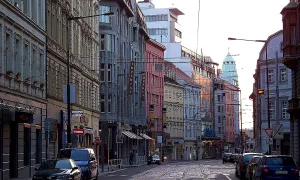
The palace is surrounded by other notable buildings such as Kounický Palace, Neubergovský Palace, and Millesimovský Palace, enriching the cultural tapestry of its neighborhood. This proximity to other historical sites enhances its appeal as a destination for those exploring Prague's rich heritage.
In conclusion, Palác Riesů ze Stallburgu is not only an architectural marvel but also a living piece of history that continues to serve contemporary purposes while preserving its past. Its journey from a medieval building to a Neorococo palace encapsulates the dynamic cultural and political shifts of Europe over centuries. Visitors are invited to explore this remarkable site, where history and modernity coexist harmoniously, offering insights into Prague's architectural legacy and diplomatic significance.
Then and now
Drag the slider to compare how the landmark may have looked when it was built with the view today.
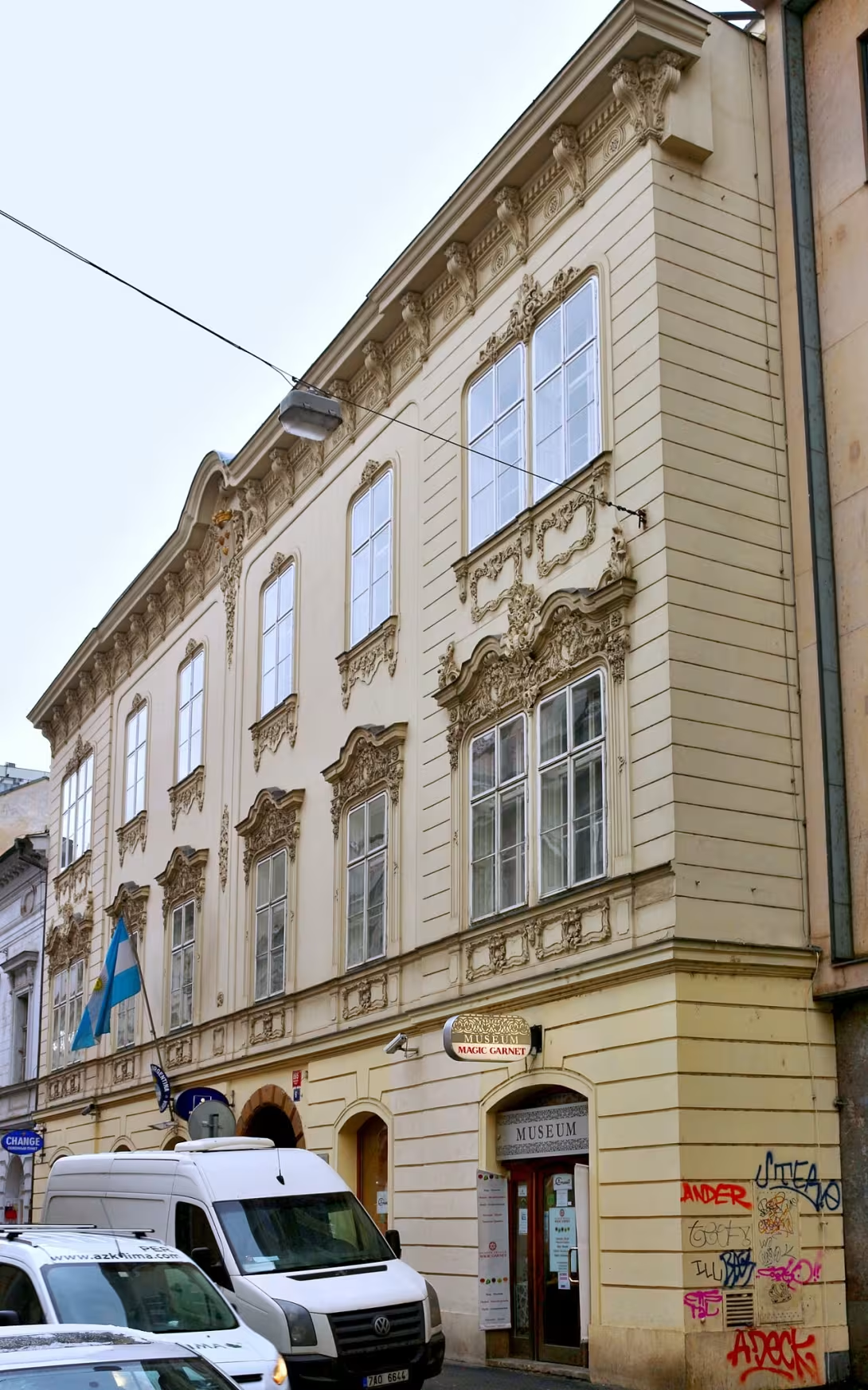
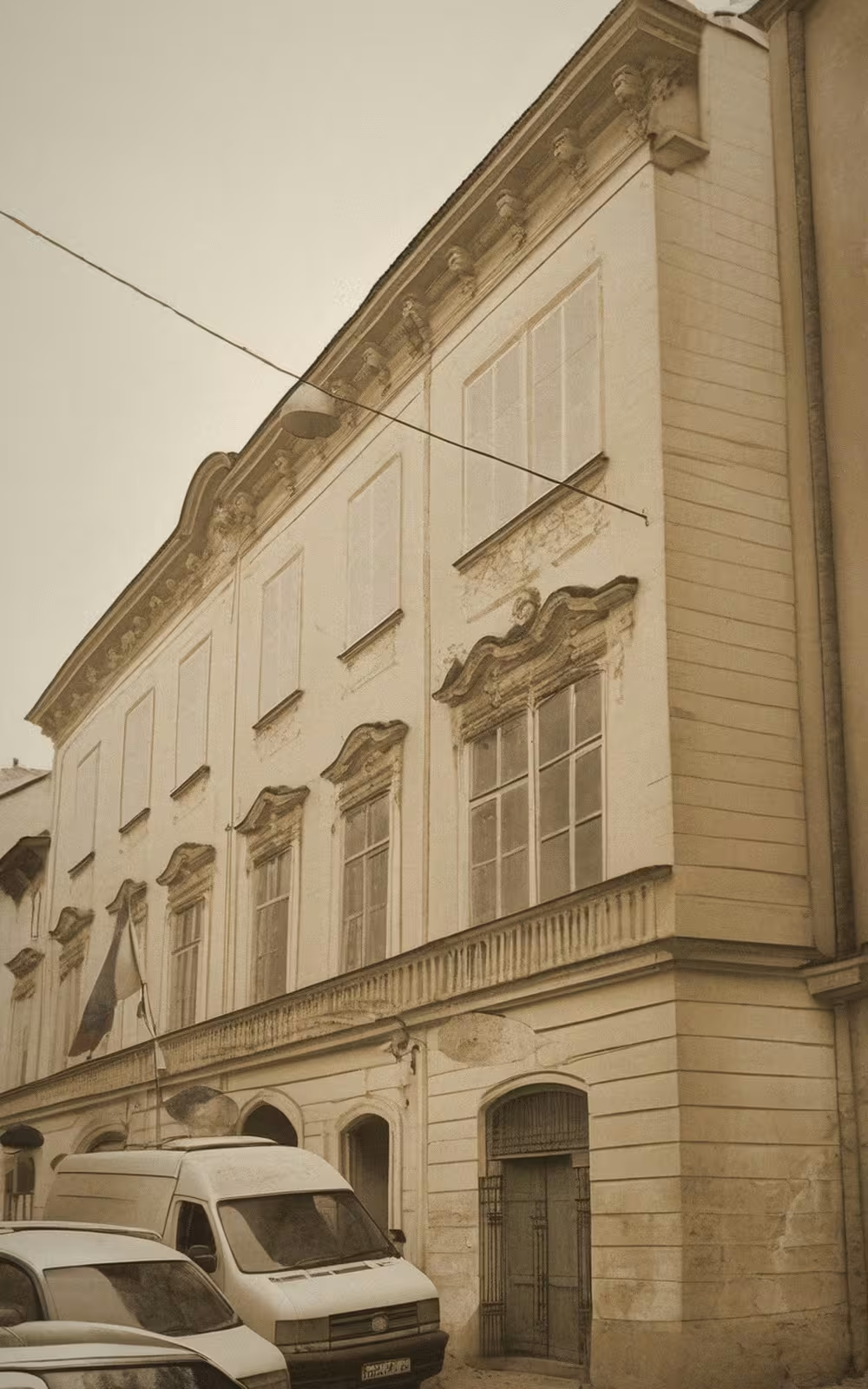
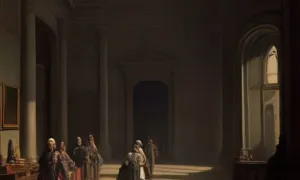
The historical appearance on the left is an AI-generated visualisation and serves as inspiration only.
Historical milestones
- 1861-1862
- Redesign of the palace in Neorococo style by Josef Maličký.
- 1928
- Construction of an office building and mezzanine addition within the courtyard.
- 2002
- Modernization and reconstruction, including interior updates and restoration of artistic elements.
Architectural development
Palác Riesů ze Stallburgu began as a medieval structure before being transformed into a Baroque palace in the late 17th century. In the mid-19th century, it was redesigned in the Neorococo style by Josef Maličký for Baron Matyáš Bedřich Riese ze Stallburgu. The palace features elaborate stucco decoration and asymmetrical design elements. A significant modernization occurred in 2002, which included interior updates and restoration of artistic elements.
Historical events
- 1861-1862
- The palace was redesigned in the Neorococo style by architect Josef Maličký for Baron Matyáš Bedřich Riese ze Stallburgu.
- 1928
- An office building and a mezzanine addition were constructed within the courtyard of the palace.
- 2002
- The palace underwent modernization and reconstruction, including interior updates and restoration of artistic elements.
Owners
Golzů
Kouniců
Matyáš Bedřich Riese ze Stallburgu (1861–1862)
Points of interest
- The transformation of Palác Riesů ze Stallburgu into a Neorococo palace in the mid-19th century was influenced by broader European cultural shifts, including nationalism and industrialization, reflecting how architectural styles can mirror societal changes.
- Architect Josef Maličký's redesign of the palace for Baron Matyáš Bedřich Riese ze Stallburgu is an example of how individual patrons have historically played a crucial role in shaping architectural heritage by commissioning works that reflect contemporary tastes and trends.
- The extensive 2002 reconstruction led by architect Oleg Haman not only modernized Palác Riesů ze Stallburgu but also preserved its artistic elements like stucco work and parquet flooring, showcasing the balance between maintaining historical integrity and adapting to contemporary needs.
- Originally a medieval structure that evolved into a Baroque palace before becoming Neorococo, Palác Riesů ze Stallburgu's architectural journey highlights Prague's dynamic history of stylistic transformations influenced by different eras and owners.
- Surrounded by other notable buildings such as Kounický Palace, Neubergovský Palace, and Millesimovský Palace, the area around Palác Riesů ze Stallburgu forms a rich cultural tapestry that exemplifies the historical architectural density of Prague's New Town.
Guide
This guide is narrated by a synthetic voice generated by artificial intelligence.
Show guide text
This text was created by artificial intelligence and has not been editorially reviewed. It may contain inaccuracies.
The Palazzo of the Riese family of Stallburg, also called At the Disbachs or At the Buckets, stands on Panská Street in the New Town of Prague. It is a Rococo-remodeled building, protected as a cultural monument. Today it houses the Argentine embassy. Right next to it is the Millesimovský Palace and the Baroque Neubergovský Palace, the seat of the Brazilian embassy.
Originally, a medieval building stood on the site of the palazzo. At the end of the seventeenth century it was converted into a Baroque palazzo, which belonged to the Golz family and later to the Kaunitz family. It acquired its present appearance between 1861 and 1862. At that time, architect Josef Maličký remodeled it in the Neo-Rococo style for Baron Matthias Frederick Riese of Stallburg. The six-axis façade is decorated with rich stucco ornaments and features an asymmetrically placed entrance to the courtyard.
The palazzo consists of two wings. The front wing faces Panská Street, while the rear wing stands in the garden. They are connected by two lateral wings, left and right. In 1928, an office building was added in the courtyard and the palazzo was given an additional story. On the three above-ground floors there are rooms with rich stucco decoration and ornamental parquets, which today serve as representative offices. The ground floor is used for commercial purposes, for example housing a law office and a real estate agency. In the right courtyard wing there is an entrance hall with two main staircases. Within the complex is a grass garden with original trees.
The most recent major renovation took place in 2002 according to a design by architect Oleg Haman. The interiors were modernized and some extensions were added to the palazzo. Artistic craft elements, such as doors with frames, fittings, or wall coverings, were expertly restored or replaced with replicas. Restorers also repaired the plasterwork and paintings. On the second floor of the palazzo, replicas of inlaid and Viennese parquets were laid. The offices have new floors of oak boards and the staircase is covered with new sandstone tiles.
Other remarkable buildings stand in the vicinity of the palazzo. On Panská Street is the Kaunitz Palace with the Alfons Mucha Museum, on Příkopě the Sylva-Taroucca Palace, the New Kolowrat Palace, and the Myslbek Palace. Nearby is also the former Piarist college and gymnasium at the Church of the Holy Cross.
Frequently asked questions
Can the monument be visited?
Some buildings of this kind are open for guided tours, others serve another purpose or are privately owned. We have not verified whether and when this monument is open – please ask the operator.
What are the opening hours and admission?
We have not verified the opening hours or admission. Current information is published by the operator.
Where is the monument?
Location: Panská 895/6, Nové Město, Praha, Hlavní město Praha. The map on this page shows the exact spot.
Why is the monument protected?
It is listed in the Central List of Cultural Monuments of the Czech Republic as a cultural monument (register no. 39998/1-1156).
Businesses nearby
Do you run a restaurant, accommodation, shop, museum, rental, wellness or other visitor service near this monument? Show yourself directly to the people heading to it — this is how they will see you in the app and on the web:
Events nearby

Zdroj akcí: otevřená data měst a obcí ČR (Národní katalog otevřených dat) a kalendář akcí Národního památkového ústavu.
Nearby
Nearby, notable buildings include Kounický Palace, Neubergovský Palace, Millesimovský Palace, Palác Sylva-Taroucca, Nový Kolowratský Palace, the former Piarist College and Gymnasium near St. Cross Church, and Palác Myslbek.
Accommodation nearby
Trips and activities nearby
Guided tours, tickets and activities nearby from GetYourGuide
Affiliate link: if you buy from the partner, we may receive a commission. The price for you does not change.
Search tours and activities →Themed route
Thematic Walking Tour: Baroque Architecture and Historical Splendor of Prague's Lesser-Known Palaces
1. Palác Riesů ze Stallburgu (Stallburg Palace) - Type: Baroque Palace - Why Visit: Begin your journey at the majestic Palác Riesů ze Stallburgu, a prime example of late Baroque architecture in Prague. This palace, once home to the influential Ries family, offers visitors stunning facades and an insight into 18th-century aristocratic life. Its historical significance is enhanced by its connection to notable figures like Count Franz Anton von Sporck.
2. Kounický Palace - Type: Baroque Residential Building - Why Visit: A short walk from the Stallburg Palace, the Kounický Palace stands as a testament to Prague's rich architectural heritage. Known for its elegant Baroque design and intricate stucco work, this palace offers a glimpse into the opulent lifestyles of Bohemian nobility. Its proximity to other historical sites makes it an ideal stop on your tour.
3. Neubergovský Palace - Type: Baroque Mansion - Why Visit: Continuing along the same street, you'll find the Neubergovský Palace, another exquisite example of Baroque architecture. This mansion is renowned for its beautifully preserved interiors and historical significance as a residence of prominent families in Prague's history. Its charm lies in both its architectural beauty and storied past.
4. Millesimovský Palace - Type: Historic Mansion - Why Visit: Just a short distance from Neubergovský, the Millesimovský Palace offers a unique historical narrative tied to Prague's wine trade history. This mansion is notable for its architectural elegance and connection to the city’s viticultural heritage, making it an intriguing stop for those interested in both architecture and local history.
5. Palác Sylva-Taroucca - Type: Baroque Palace - Why Visit: Conclude your tour at the grand Palác Sylva-Taroucca, a masterpiece of late Baroque design located near the iconic Charles Bridge. This palace is celebrated for its stunning architecture and historical significance, having served as an important cultural and political center in Prague. Its proximity to other notable sites makes it a fitting end to your exploration of the area's architectural treasures.
This tour offers a deep dive into the lesser-known yet historically rich palaces surrounding Palác Riesů ze Stallburgu, providing insight into Prague’s Baroque heritage and aristocratic history.
Seasonal recommendations
Spring: Visiting the Ries Palace from Stallburg during springtime offers a unique experience as nature begins to awaken around Prague's historic center. The soft, diffused light of early spring casts gentle shadows across the palace's intricate architecture, enhancing its beauty. Gardens surrounding the palace start blooming, adding vibrant colors and fresh scents to your visit. Spring is generally less crowded than summer, making it an ideal time for a leisurely exploration. However, be prepared for unpredictable weather; carrying a light jacket or umbrella can ensure comfort as temperatures fluctuate.
Summer: Summer at Ries Palace from Stallburg is characterized by long daylight hours and warm weather, creating a lively atmosphere perfect for exploring Prague's rich history. The palace grounds are lush and green, offering picturesque settings for photographs. During this peak tourist season, it's advisable to arrive early in the morning or later in the afternoon to avoid large crowds and enjoy a more tranquil experience. Dress comfortably in light clothing and wear sunscreen to protect against the sun while exploring.
Autumn: Autumn brings a magical transformation to Ries Palace from Stallburg, with vibrant foliage painting the surroundings in warm hues of red, orange, and yellow. The soft autumn light adds an enchanting quality to the palace's architecture, making it a perfect time for photography enthusiasts. While the weather can be unpredictable, often shifting between sunny days and cooler temperatures, dressing in layers will keep you comfortable. This season is less crowded than summer, offering a more relaxed visit.
Winter: Winter at Ries Palace from Stallburg offers a serene and picturesque experience as snow blankets Prague's historic landscape. The palace takes on an ethereal beauty under the soft glow of streetlights reflecting off the snow-covered ground. While the open hours may be shorter during this season, visiting in the early morning can provide a peaceful atmosphere before larger crowds arrive. Dress warmly with layers, including a coat and hat, to enjoy the winter wonderland comfortably as you explore the palace's historic charm.
Visualizations and artistic views


The visualisations are generated by artificial intelligence and serve as inspiration.
Photos from the area
Real photos taken near the monument


Zdroj a licence jsou uvedeny u každého snímku.
Tips from visitors
No tips yet. Be the first!
Log in and add your tip.
Sources and literature
Photos: VitVit / CC BY-SA 4.0 — Wikimedia Commons. The author and licence also appear when you hover over the image.
Faktickým podkladem tohoto textu byl článek na Wikipedii, jehož autory jsou přispěvatelé Wikipedie. Článek je dostupný pod licencí CC BY-SA 4.0.
Location on the map
More monuments – Nové Město
Show all in the municipality


Příběhy a pověsti
Legendy, pověsti a příběhy spjaté s touto památkou
Fotografie návštěvníků
Zatím žádné fotografie. Buďte první, kdo přidá fotografii z návštěvy!
Log in a přidejte svou fotografii nebo hodnoťte.
Za ověřenou návštěvu v aplikaci získáte víc bodů — poznáme podle GPS, že jste na místě.
Reviews and comments