






Památník generála Gablenze Memorial
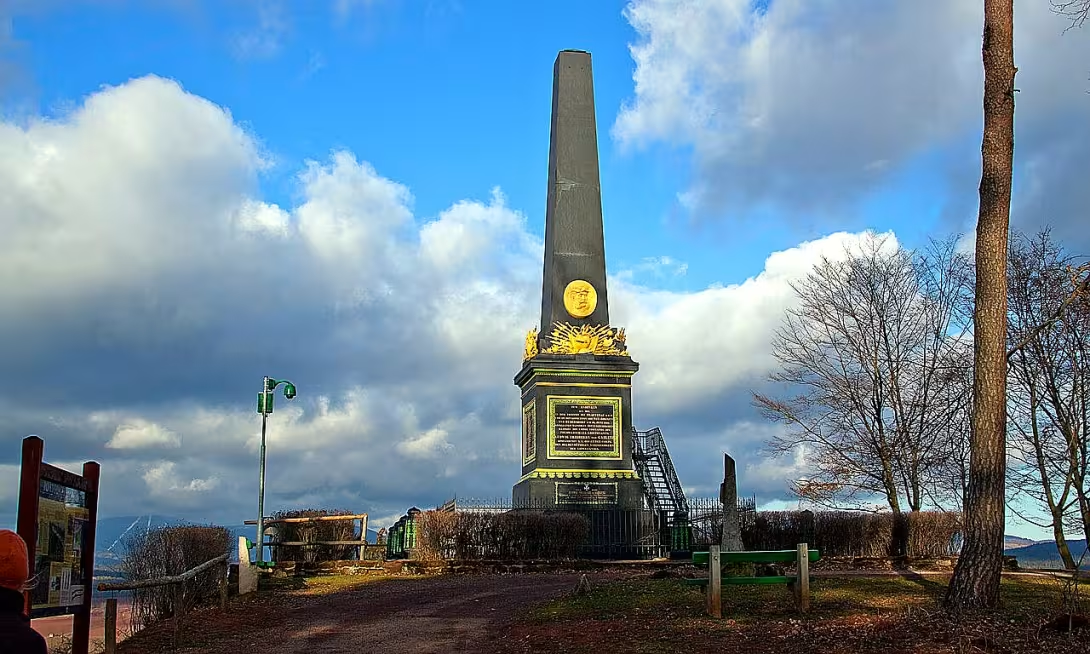
Památník generála Gablenze is an obelisk-shaped cast iron view tower that stands on the top of Šibeník nad Trutnov. This cultural monument of the Czech Republic was created in 1868 as a piety place. Reminds of the victory of the X. Austrian Army Corps in the Battle of Trutnov, which took place on 27 June 1866.
The creation of the building is closely linked to the Prussian-Austrian war, which has fundamentally affected the political order of Central Europe. In the Czech countries, a culture of reminiscent military conflicts began to be more intensively formed through monuments. The main impulse for building the building was the battle of Trutnov in 1866. The memorial was revealed two years later.
Architecturally, the work belongs to historical monuments. The 20-metre obelisk is made of cast iron and combines two functions: piety space and a view tower. The inside of the structure leads stairs that allow visitors to climb to the top.
A significant part of the building is the crypt with the remains of General Ludwig von Gablenz, who was buried here in 1874. The names of the fallen officers and the number of victims from the various regiments of the Austrian army are carved on the walls, which underlines the dignified nature of the place.
Today the memorial serves as a lookout tower overlooking the entire battlefield, the town of Trutnov and its surroundings. The building is protected as a cultural monument. The people interested in history can use the educational trail in the surroundings, following the footsteps of the war 1866 - The day of the battle at Trutnova on 27 June, which follows the places associated with this military conflict.
Památník generála Gablenze presents a unique combination of technical construction and historical legacy, which allows you to see the events of the 19th century. Visiting this place offers an opportunity to become acquainted with the history of the Prussian-Austrian war in the field, where key battles took place.
Then and now
Drag the slider to compare how the landmark may have looked when it was built with the view today.
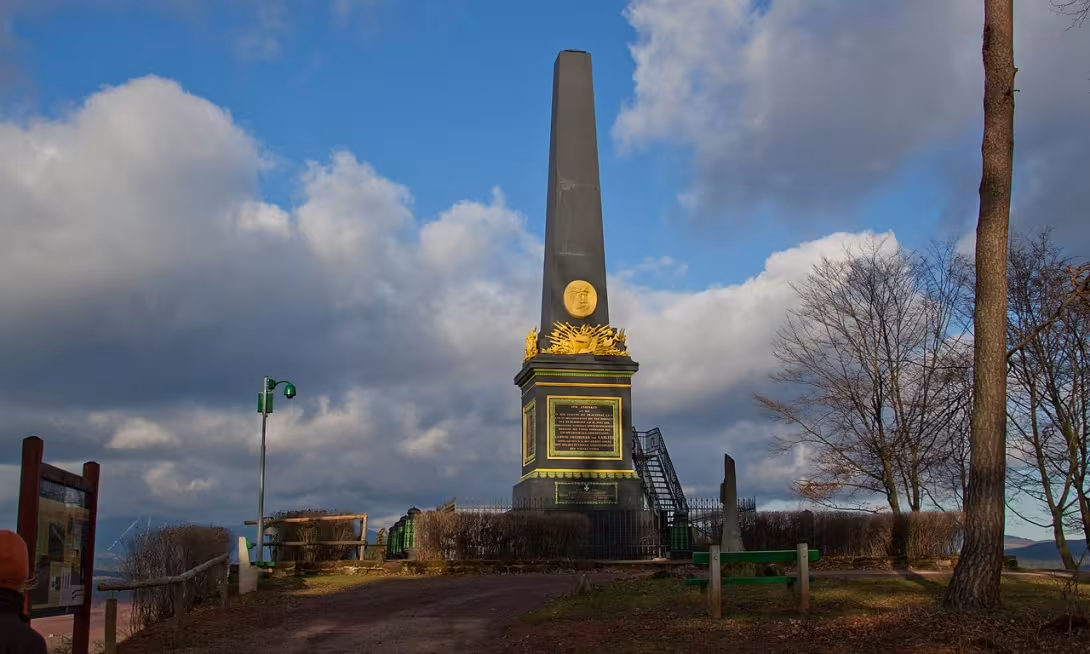
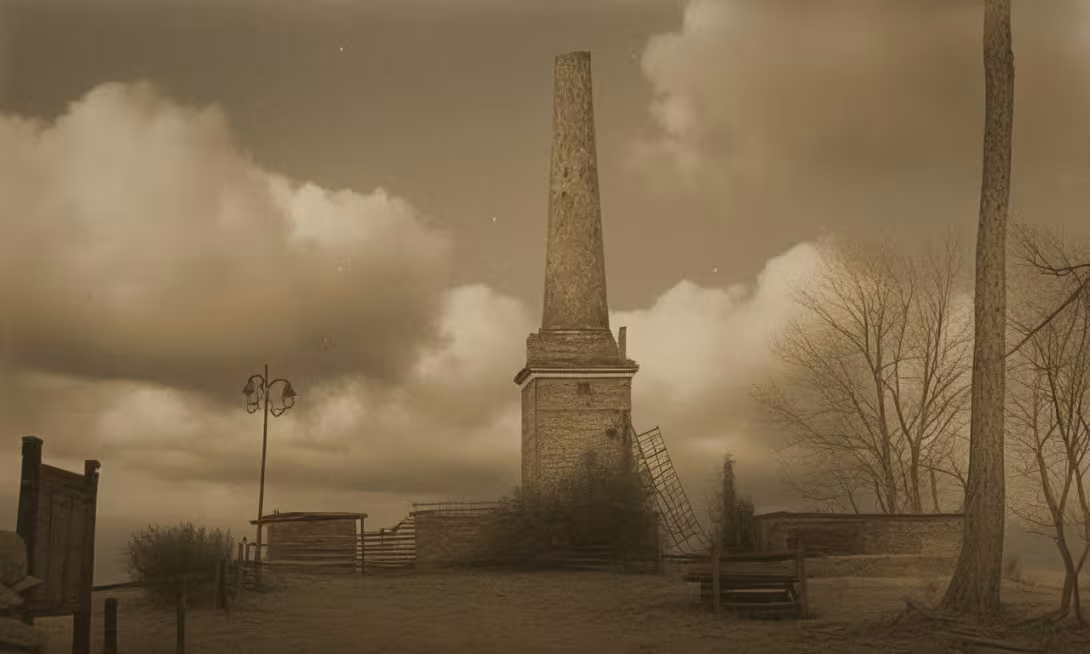
The historical appearance on the left is an AI-generated visualisation and serves as inspiration only.
Historical milestones
- 1866
- The battle of Trutnov between the Austrian and Prussian forces.
- 1868
- Finishing and erecting a cast iron monument on the Šibeník hill.
- 1874
- Putting the remains of General Ludwig Gablenz in the crypt of the memorial.
Architectural development
The monument was built out of cast iron as a 20-metre obelisk. The construction integrates the staircase leading to the viewing area and crypt for the storage of the remains. It is an architectural landmark of history.
Historical events
On June 27, 1866 there was a battle at Trutnov, 1868 the memorial was erected, 1874 General Ludwig Gablenz was buried here.
Points of interest
- The monument is a cast iron view tower in the shape of an obelisk, which combines the function of a drinking place and a view tower. - The construction was created in 1868 as a reminder of the victory of the Austrian Army Corps in the Battle of Trutnov. - Inside the building is a crypt with the remains of General Ludwig von Gablenz, who was buried here in 1874. - The names of the fallen officers and the number of victims from the various regiments of the Austrian army are carved on the walls of the memorial. - A 20-metre construction enables visitors to climb the inner stairs to the top, from where there is a view of the battlefield and the town of Trutnov.
Guide
Show guide text
This text was created by artificial intelligence and has not been editorially reviewed. It may contain inaccuracies.
Welcome to Gallows Board. You're standing in front of one of the most important symbols of this place, the General Gablenz Memorial. Imagine that right now, at this point, you're stopping in time. Before your eyes, there is a cast iron structure that resembles a majestic obelisk in its form. It's a monumental element that dominates this place and immediately attracts the attention of anyone who stops by. Feel the weight of history written in this metal. This building is not just a simple object, it is a witness to events that once fundamentally influenced the fate of entire nations. Look at her shapes, how her vertical lines get out of hand on the horizon of the surrounding landscape. It is a fascinating view of the combination of human effort, memories and technical precision of the time.
Let us now return together to the time of history and understand why this place required such a noble monument. To understand the importance of this proposal, we must return to 1866. Imagine the tension at the time, the sound of weapons and the dust from the fighting grounds that spread out in these very surroundings. There was a battle at Trutnov, a major and bloody conflict between the Austrian and Prussian forces. This place you're standing on was a direct witness to these great events. The monument you are now observing was built two years later, in 1868, to honor the victory of the tenth Austrian Army Corps over the Prussian forces. It is a celebration of the courage and strategic success that took place in these hills. This whole object was created as a constant reminder of what happened here so that future generations would know what events shaped this landscape.
Now pay attention to the structure itself and to what you see right in front of you. Notice the material from which the entire building is made. It is a cast iron, which in the middle of the nineteenth century was a top technological solution that allowed complex and durable shapes to be created. This cast iron structure in the shape of an obelisk gives the monument its specific, noble and firm appearance. Although we do not know the names of the particular architects who designed this project, their vision was incredibly thoughtful and functional. They were able to create an object that didn't only meet one role. Because it's a fascinating combination of a drinking place and a view tower. This duality is the key to understanding the monument. On the one hand it is a serious, quiet monument that serves to honor the fallen and victorious, on the other hand it is a lookout tower that allows people to enjoy the beauty of the surrounding landscape and watch the panorama of the places where history took place.
To fully understand the soul of this place, we must now focus on a character whose name is inextricably linked to this monument. He's General Ludwig von Gablenz. He wasn't just an ordinary soldier, he was a symbol of the military back then, and his name carries this monument as a token of respect. And his presence here isn't just symbolic or nameless. If you look at the very nature of this building, you'll find that there's something very personal and quiet in its interior. The crypt inside the monument contains the very remains of General Ludwig von Gablenz. His journey to this place was completed only in 1874 when his remains were stored here for eternal rest. Imagine the contrast atmosphere - while the wind is out there and people are watching the landscape, deep inside, in the silence of the crypt, resting a man whose actions defined this place.
However, there is one other thing that might interest you and which gives this place its unique character. You may be surprised by the unusual combination of functions you see here. Imagine you're standing in a bright place, which is also a tomb. It's a rare and almost mystical combination of monument and prospect. While you may later ascend to the height to watch the vast battlefield of the battle at Trutnov, which decomposes beneath your feet, you must realize that deep below you, in the silence and darkness of the crypt, the general rests. This duality between moving, looking far away and a quiet sleep in the crypt creates a unique and unspeakable atmosphere on this design. It's a place where the living, the visible, and the things that have long since left, are still present.
Now, from the invitation to further explore, we will not prevent you. Take advantage of this place, look at the panorama it offers you, and follow the line of the battlefield that spreads out in front of you. Let yourself be carried away by the history that is felt in every detail of cast iron construction and in every view of the surrounding hills. Thank you for spending this moment at General Gablenz Memorial. I wish you a pleasant rest of your journey and I hope that this view of history will remain in your memory for a long time.
Tips for visitors
To visit, choose a sunny day with good visibility, when you can best see the entire battle field of Trutnov from the gallery. The place is available by foot from the town of Trutnov or by car, and parking is possible in the nearby area under the Šibeník design; We recommend checking the exact parking possibilities in advance. With you, pack solid shoes for walking in the field and binoculars, which will help you better identify the points of the historic battlefield. We recommend to photographers morning or late afternoon hours, when soft light highlights details of cast iron construction of obelisk and surrounding landscape. For families with children, the trip is ideal as a light walk connected to history, while in the surrounding area you can visit the educational trail Following the footsteps of the war 1866 or explore the city of Trutnov itself.
Businesses nearby
Do you run a restaurant, accommodation, shop, museum, rental, wellness or other visitor service near this monument? Show yourself directly to the people heading to it — this is how they will see you in the app and on the web:
Nearby
The battlefield of the battle at Trutnov, the educational trail in the footsteps of war 1866, the city of Trutnov.
Accommodation nearby
Themed route
Památník generála Gablenze (View) Type: Main destination, lookout Why is it worth a visit: It provides a wonderful view of the surrounding countryside and recalls the key personality of the battle at Trutnov. It's the perfect place to start or end a trip with historical context.
Battle site at Trutnova Type: Historical site Why is it worth a visit: It allows you to imagine the course of the decisive conflict of 1866 happening on the spot. Visitors can adopt tactical positions of troops and atmosphere of the time.
Educational Path Following the Footsteps of War 1866 Type: Educational Path Why is it worth a visit: Systematically connects individual combat sites and provides detailed information on the course of the conflict. It's the best way to link a physical walk with a deeper understanding of history.
City Trutnov Type: City Why is worth a visit: Serves as a starting point or destination route with the possibility of refreshments and further exploring the urban environment. Allows you to add knowledge of the region after visiting monuments.
This route logically links the main monument to the surrounding battlefield and educational path, allowing a comprehensive insight into the history of the battle. The beginning of the General Gablenz Memorial offers a view and introduction to the topic, and then the transition to the battlefield and the educational trail allows detailed field and event examination. The conclusion in Trutnov provides practical facilities for visitors. The whole circuit is designed to be accessible on foot and to allow a smooth transition between individual historical points without the need to visit places outside the given framework.
Seasonal recommendations
Spring: In spring, the surroundings of the monument are covered with fresh greenery and blooming vegetation, creating a fresh and optimistic atmosphere. The lighting is soft in this period, which is ideal for observing the nature awakening to life. We recommend wearing layered clothes because the morning winds can still be cold. The best time to visit is in the morning when the crowds are still small and the air is the cleanest.
Summer: Summer months bring the longest days and intense sunlight, which offers excellent views of the surrounding area, although visibility may be slightly reduced by heat herpes. The atmosphere is alive and full of energy. Due to the increased number of visitors in the main summer season, it is advisable to come early in the morning to enjoy peace and avoid the greatest heat. Don't forget the headgear, sun protection and plenty of drinking water.
Autumn: Autumn visit offers a fascinating color spectrum thanks to the golden and red leaves that surround the view. The morning fog in the valleys gives the place a mysterious and peaceful mood. The light is low and dramatic in this period, which will be appreciated especially by lovers of photography. For comfortable movement on the humid terrain choose stronger shoes and don't forget the jacket to protect you from sudden cooling.
Winter: In winter, the panorama turns into a fragile landscape covered with snow or freeze, creating a quiet and noble atmosphere. The sun is low and the shadows are long, which gives the monument a special character. Due to shorter time of day and lower temperatures we recommend to come at around noon when the most light is. The need is very warm clothes, quality gloves and hats to make the visit pleasant even in cold days.
Visualizations and artistic views


The visualisations are generated by artificial intelligence and serve as inspiration.
Photos from the area
Real photos taken near the monument


Zdroj a licence jsou uvedeny u každého snímku.
Tips from visitors
No tips yet. Be the first!
Log in and add your tip.
Sources and literature
Photos: Oskera Miroslav / CC BY-SA 3.0 — Wikimedia Commons. The author and licence also appear when you hover over the image.
Faktickým podkladem tohoto textu byl článek na Wikipedii, jehož autory jsou přispěvatelé Wikipedie. Článek je dostupný pod licencí CC BY-SA 4.0.
Location on the map

Příběhy a pověsti
Legendy, pověsti a příběhy spjaté s touto památkou
Fotografie návštěvníků
Zatím žádné fotografie. Buďte první, kdo přidá fotografii z návštěvy!
Log in a přidejte svou fotografii nebo hodnoťte.
Za ověřenou návštěvu v aplikaci získáte víc bodů — poznáme podle GPS, že jste na místě.
Reviews and comments