



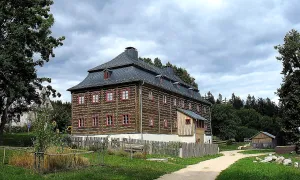
Památník Karla Hynka Máchy Museum building
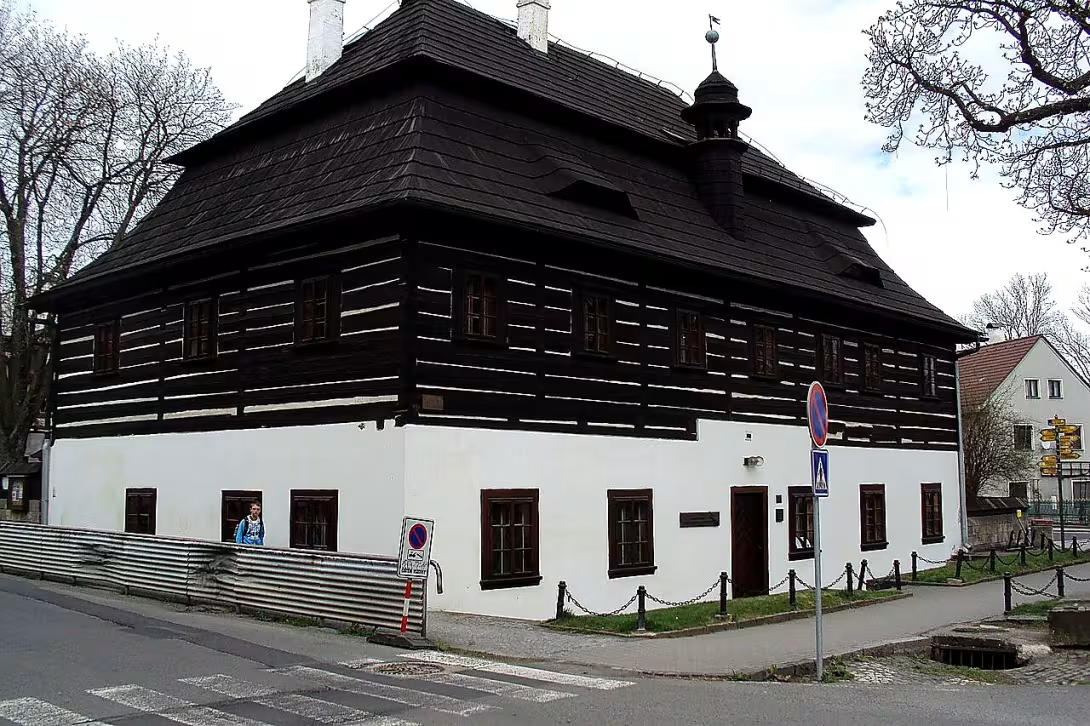
Památník Karla Hynka Máchy in the village Doksy is the oldest preserved building in the city. It serves as a Baroque museum reminiscent of the legacy of an important Czech poet and his connection to the surrounding landscape. This building, also known as Hospital, is listed in the Central List of Cultural Monuments of the Czech Republic. In addition to Mach's legacy, there is also an exhibition of fishing and pond in Czechoslovakia.
The monument building is located on the corner of Máchov and Valdštejnská street in the centre of Doks, approximately two hundred metres north of the Republic Square. The building was built in 1669, when it was built on the initiative of Countess František Heissenstejnova from Vrb or also Anna Marie from Heissenstein. The construction took place during the period when Czech countries recovered from the devastating effects of the Thirty Years' War. In the region there was intense Baroque reCatholicism and the development of the estate. The founding of hospitals and workhouses was the usual form of Christian charity and care for the subjects. That is why the house was primarily set up as a public hospital for retired men from the court, a workhouse and an orphanage. The historical context also includes the fact that there is a red international tourist route E10 called Máchov's way around the monument. Cycling routes 014 and 3045 also pass nearby.
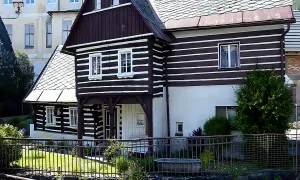
The building is a half-gagged house with a shingles tower. The architectural development of the building includes 1723. At that time, the chapel of St. John Nepomuk was established on the ground floor, equipped with benches and altar. In the meantime, there was an apartment on the floor for the hospital chaplain, which was celebrating services four times a week on the ground floor. The building also included a garden with a well and shed. Other buildings in the immediate vicinity burned down in the devastating fire of the city in 1842. But this house, as a miracle, spared and resisted the disaster.
During its existence, the object underwent many proprietary and functional changes. Originally a government hospital served after 1945 as a prayer house of the Czechoslovak Church. In 1960, the object was adapted to the museum and acquired its current name. The city library was also in operation on the ground floor until 1968, while the upstairs apartment was used by members of the Czechoslovak writers' Union. The owners and trustees include a noble family of founders, later the city of Doksy and currently the Vladivní Museum and Gallery in České Lípa, under which the monument as a branch falls. A second major reconstruction took place after 1985. The third construction adjustment started in 2025 with a two-year planned duration.
The chronology of key events includes the year 1669 when the house was built, the year 1723 with the establishment of the chapel, the year 1842 with the rescue from the great city fire and 1960 when the adaptation to the museum of Karel Hynek Mácha took place. The fact that the building is the oldest preserved building in Doksy is among the attractions. The museum is a member of the Association of Museums and galleries of the Czech Republic. In addition to permanent exhibitions, it organises various cultural events, among which there is no missing Easter fair or carving symposium.
The museum is open to the public from April to October and the basic entrance fee is 30 crowns. The main premises present the legacy of Karel Hynek Mácha, an exhibition of historical fishing and ponds installed in 1999 and also a collection of paintings from the nineteenth century. It is convenient to travel to Doks by a number of regional and long-distance bus connections or by train on track number 080 from Jedlová to Bakova nad Jizerou.
This monument represents valuable evidence of baroque construction and social care of its time while maintaining a lively memory of one of the most important Czech poets. Visiting this place in Doksy offers a unique view of the history of the region, and it is therefore worth planning your trip and the memorial to visit personally.
Then and now
Drag the slider to compare how the landmark may have looked when it was built with the view today.
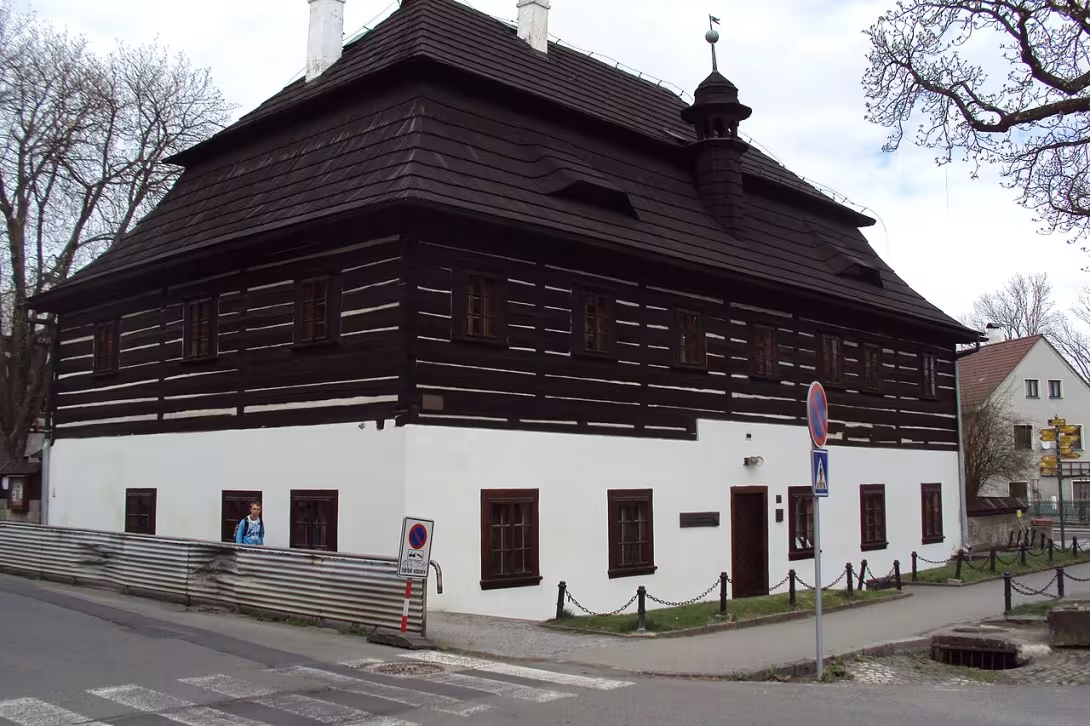

The historical appearance on the left is an AI-generated visualisation and serves as inspiration only.
Historical milestones
- 1669
- The position of a half-gagged house as a gentlemen's hospital.
- 1723
- The chapel of St. John Nepomucký was established on the ground floor.
- 1842
- The building miraculously resisted the devastating fire of the city, which engulfed the surrounding building.
- 1960
- The object was adapted to a museum dedicated to Karl Hynka Mach.
Architectural development
The building was built as a half-garted house with a shingles tower in 1669. In 1723, a chapel was set up on the ground floor and a chaplain apartment on the floor. Significant modifications and adaptations to the museum took place in 1960 and after 1985, while another major reconstruction started in 2025.
Historical events
In 1842 the house saved the devastating fire of the city Doksy, which destroyed the surrounding building. In 1723 the chapel of St. John Nepomucký was established on the ground floor. After 1945 the building became a prayer house of the Czechoslovak Church. In 1960 he was adapted to the museum.
Owners
Countess Františka Heissenštejnová z Vrba (or Anna Marie of Heissenstein), later the city of Doksy and the Vladivní museum and gallery in České Lípa.
Points of interest
- Památník Karla Hynka Máchy is the oldest preserved building in Doksy.
- The building was built in 1669 on the initiative of Countess František Heissenstejn of Vrba or Anna Marie of Heissenstein.
- Originally, she served as a master hospital for retired, workhouse and orphanage.
- In 1723 the chapel of St. John Nepomuk was established on the ground floor.
- During the great city fire in 1842, he spared the house and resisted its devastating effects.
Guide
Show guide text
This text was created by artificial intelligence and has not been editorially reviewed. It may contain inaccuracies.
Welcome to the Doksy. Right now, you are standing in front of a place that carries a profound legacy of the Czech romantic soul and is also a silent witness to the centuries of history of the entire city. Take off your everyday worries for a while and let the story begin to write many generations ago. When you look up and look ahead, you see a building that is the oldest preserved building in the Doksy. It's a half-garbled house with a distinctive shingles tower that breathes an unrepeatable atmosphere of old times upon you. Feel its unique shapes, a combination of wood and masonry, and imagine what this house has experienced while the world around it has been constantly changing.
Let us now return in time to the year sixteen hundred and sixty-nine. That's when history began to be written at this place, initiated by a noble family, namely Countess Františka Heissenštejnová z Vrba or Anna Marie of Heissenstein. This building was not built for the pleasures of the estate, but it was intended to serve a noble purpose. Originally it was created as a public hospital for retired, workhouse and orphanage. It was the arms that were supposed to protect the most vulnerable people in the society back then. A few decades later, in particular in seventeen hundred twenty-three, a chapel dedicated to Saint Jan Nepomuk was set up on the ground floor, which gave this place an even deeper spiritual dimension. The house stood, served, helped and became a solid part of the life of local people.
Now pay attention to the architecture itself and the details you have right in front of you. Look at the facade of this historic building. You see a semi-garbled structure, which is an example of old construction, and at the top of that shingles tower. When you look at these beams and walls, realize the incredible power of this place. In 1842, Doksy was hit by a devastating fire. The flames seized the surrounding building, destroyed houses and took the lives of people and their property. But this building has miraculously resisted. She stood firmly in the midst of a fiery hell, while everything was burned. We would almost be surprised at the happiness or perhaps destiny that protected this house.
Let's move on in the story, to a being whose name is connected to this landscape and this house forever. The man is Karel Hynek Mácha, our most important poet of romanticism. His creative strength and admirable sensitivity have breathed immortality into this region. Mach's region, made up of deep forests, shimmering ponds and silhouette of castle Bezděz on the horizon, inspired Mácha deeply. Although the poet walked these places long ago, his legacy lives on here. That is why in nineteen hundred and sixty decided that this memorial building would make a new sense. The object was adapted to the museum, which has the task of reminding the legacy of Karel Hynek Mácha, his work and his deep tension with this region. Today, when you're standing in front of this building, you're not just standing in front of an old hospital, but a monument to human memory and a poet genius.
It's fascinating to think about how many fates have crossed here. From the poor people, orphans, and the sick in the seventeenth century, to the believers praying in the chapel, to the people who in the nineteenth century watched with terror the flames destroying the city and hoped that at least this house would stand. And stayed. It stands here for us today so that we can see the past through it.
I invite you to stay in this place for a while, let the Doks feel the atmosphere and imagine Karel Hynek Mácha walking through the country with a pen in his hand and seeing the beauty that surrounds us afterwards. I believe your next steps around this city will be enriched by this story. Thank you for your attention, I hope you enjoyed the tour, and I wish you the beautiful rest of the day spent in Máchov County. Goodbye.
Tips for visitors
The best time to visit the monument is in the morning, when in historical areas there is a quieter atmosphere and less traffic. You can use your car and public transport to travel to Doks, and check the current connection in the respective connection search engine. Take with you comfortable shoes to walk through the city and possibly a small snack you will use during the trip. In the immediate vicinity of the monument is led the red international tourist route E10, known as Máchov's path, which directly encourages the following walks through the city centre Doksy.
Frequently asked questions
Can the monument be visited?
Some buildings of this kind are open for guided tours, others serve another purpose or are privately owned. We have not verified whether and when this monument is open – please ask the operator. According to the heritage register restoration is under way, so access may be restricted.
What are the opening hours and admission?
We have not verified the opening hours or admission. Current information is published by the operator.
Where is the monument?
Location: Doksy, Liberecký kraj. The map on this page shows the exact spot.
Why is the monument protected?
It is listed in the Central List of Cultural Monuments of the Czech Republic as a cultural monument (register no. 1000139180).
Businesses nearby
Do you run a restaurant, accommodation, shop, museum, rental, wellness or other visitor service near this monument? Show yourself directly to the people heading to it — this is how they will see you in the app and on the web:
Events nearby
Zdroj akcí: otevřená data měst a obcí ČR (Národní katalog otevřených dat) a kalendář akcí Národního památkového ústavu.
Nearby
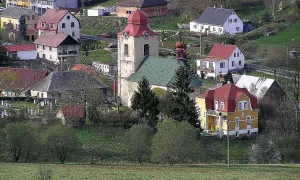
The monument is located in the center of Doksy on the corner of Máchov and Valdštejnský streets. There is a red E10 international tourist route around the building known as Máchov Road.
Accommodation nearby
Themed route
1.Památník Karla Hynka Máchy Type: Museum Why is worth a visit: The main destination of the route is located right in the heart of the village Doksy on the corner of Máchov and Valdštejnský streets. It offers interesting exhibitions related to the life and work of this famous Czech poet.
2. Mách's travel Type: Tourist route Why is it worth a visit: There is a red international tourist route E10 around the museum building, which is known just under this name. You can take her for a walk in the immediate surroundings of the Doks.
Seasonal recommendations
Spring brings awakening nature around Máchov's Jez and new hope for Památník Karla Hynka Máchy itself, which is undergoing construction renewal. The surrounding landscape smells of wet patrol and first flowers, while daylight gradually grows stronger and reveals historical facades in their raw state. Due to ongoing work within the museum, it is necessary to count on limited traffic and it is therefore worth watching the current information on the web in advance. Spring crowds are not yet as strong, so you can enjoy a walk along the water shore without rush. Wear fixed shoes in muddy terrain and windbreaker to protect you from a cool wind blowing from the water level.
The summer months attract a large number of tourists looking for refreshments to the Doks, which is reflected by the increased movement of visitors around the closed monument. The sun rays brightly illuminate scaffolding and building material, while the pine forests around them give an intense resin smell and provide a welcome shade. If you come here on the hottest days of July, plan an outdoor tour for early morning hours, when the air is still pleasantly cold and there is peace in the streets. Don't forget to wear light breathable clothes, headgear and plenty of fluids. The interior expositions remain closed due to reconstruction, but the surrounding landscape associated with the romantic poet offers sufficient incentives to reflect.
Autumn covers Doksy in melancholy mood, which exactly matches the spirit of Mach's work, and decaying leaves make the architectural details of the museum building stand out. The light is low, soft and creates long shadows, ideal for shooting construction works in a quiet autumn haze. Tourism has fallen significantly, making the whole city feel peaceful and thoughtful. For cold and dry days, choose a waterproof jacket, a warm sweater and non-slip shoes, because falling leaves on the sidewalks can slide. The best time to visit is in the afternoon, when the sun breaks through the clouds for a while and illuminates the ancient wall of the monument.
Winter brings to the region a freezing calm, a snow blanket and a period of deep calm, when the construction industry quiets and the surrounding area of Máchov's Jez turns gray under the cover of winter. Early dimming and cold grey light provide a closed monument with a mysterious atmosphere of an abandoned place. In this period, you will not encounter almost any tourists, which guarantees absolute concentration and silence when discovering exteriors. Winter clothing is absolutely essential - quality feather jacket, hat, gloves and warm snowballs are the basis for movement in frozen terrain. Due to the short days and winter regime, it is worth going out in the morning while there is at least a little daylight.
Visualizations and artistic views


The visualisations are generated by artificial intelligence and serve as inspiration.
Photos from the area
Real photos taken near the monument


Zdroj a licence jsou uvedeny u každého snímku.
Tips from visitors
No tips yet. Be the first!
Log in and add your tip.
Sources and literature
Photos: Zákupák / Public domain — Wikimedia Commons. The author and licence also appear when you hover over the image.
Faktickým podkladem tohoto textu byl článek na Wikipedii, jehož autory jsou přispěvatelé Wikipedie. Článek je dostupný pod licencí CC BY-SA 4.0.
Location on the map

Příběhy a pověsti
Legendy, pověsti a příběhy spjaté s touto památkou
Fotografie návštěvníků
Zatím žádné fotografie. Buďte první, kdo přidá fotografii z návštěvy!
Log in a přidejte svou fotografii nebo hodnoťte.
Za ověřenou návštěvu v aplikaci získáte víc bodů — poznáme podle GPS, že jste na místě.
Reviews and comments