






pamětní desky na mostu ulice U Vizerky přes Šárecký potok Memorial plaque
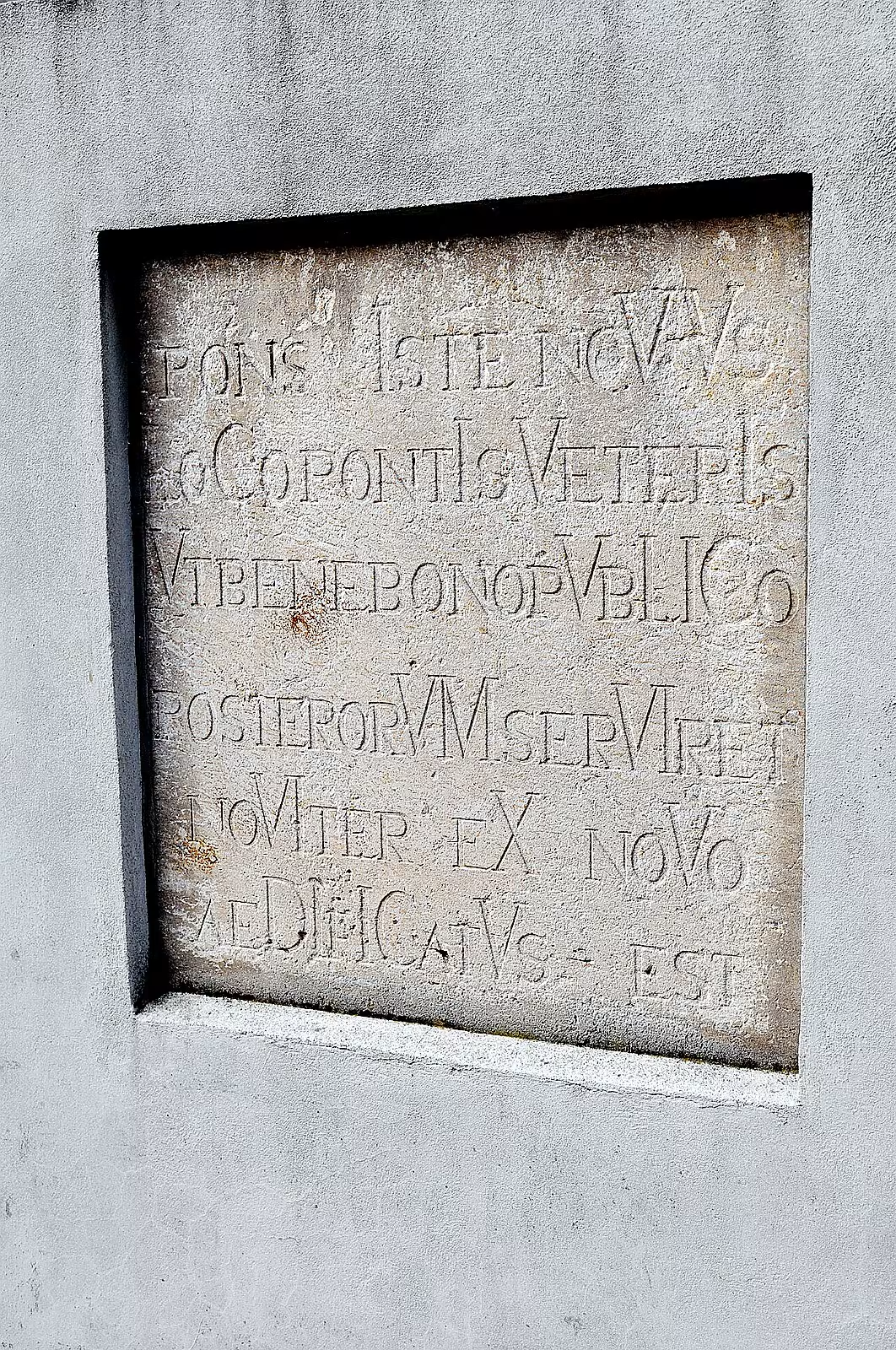
The memory boards on the bridge via the Šárecký potok in Prague Dejvice are a real cultural monument of the Czech Republic. Reminds of the technical history of the place near the castle Jenerálka. The bridge, equipped with two Latin inscriptions with chronographs, documents the construction development of a link built by premonstrates in 1831.
The history of the bridge is closely linked to the Strahov monastery. In 1831, his deputies built the original stone structure as part of the road to the castle Jenerálka. The Czech countries were then in the period of national renewal under the rule of the Austrian Empire. At that time, the Church Regulations had made significant investments in the development of infrastructure on their estates, and European architecture moved from classicism to romanticism.
It is an architectural bridge that has undergone reconstruction and modernization. The original construction was replaced by a new one, while the commemorative plates were preserved and placed in the extreme pillars of the railings. Both plates are made in a majestic font and contain Latin texts with chronograms that date the creation of the building and remind it of its purpose.
The property of the object has changed over time; it has gone from the premonstrate order to communication management. Important events in modern history include 1968, when the second plaque was added to the new construction. It complements the original 1831 sign and highlights the public benefits and care of future generations.
The first plate, located on the west side of the bridge, bears the inscription "PONTEM HVNC STRUCIT NOBIS BENEDICTI ABBATIS SIONE LIBERALISÚ BENIGNITAS." The second plate from 1968, located on the east side, states: "PONS ISTE NOVUS LOCO PONTIS VETERIS UT BENE BONO PUBLICO POSTERIORUM SERVIRET NOVITER EX NOVO AEDIFACATUS EST.".
Today, the bridge is open to the public and is close to the natural monument of the Šárecka Valley. This technical monument is an interesting proof of historical infrastructure care and thanks to preserved inscriptions it offers insight into the tradition of reminiscent of construction works. Visiting this place enables you to connect the history of the Strahov monastery with a walk in the Shareč landscape.
Then and now
Drag the slider to compare how the landmark may have looked when it was built with the view today.
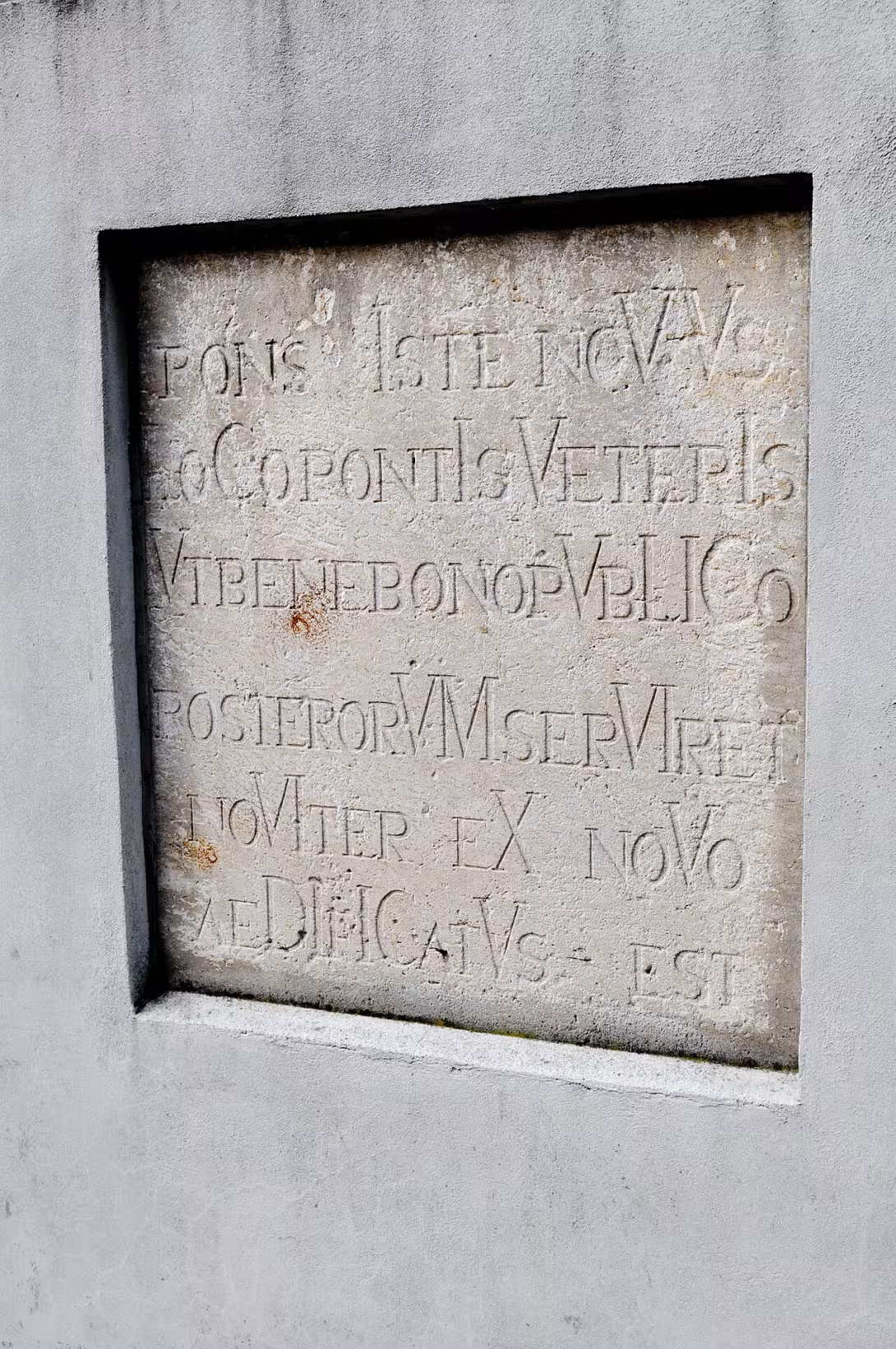
The historical appearance on the left is an AI-generated visualisation and serves as inspiration only.
Historical milestones
- 1831
- The premonstrators had the original stone bridge built to the castle of Jenerálka.
- 1968
- The new bridge construction and the second commemorative plate are completed.
Architectural development
The original stone bridge from 1831 was later rebuilt. During this modernization, the original memorial plate was transferred to a new construction and supplemented by a second plate resembling a new building.
Historical events
1831: Construction of the original stone bridge of premonstrates. 1968: Completing the second memorial board to a new bridge.
Owners
Originally premonstratní order (monastery in Strahov), later the administration of communications.
Points of interest
- Memory boards on the bridge are a real cultural monument of the Czech Republic. - The bridge was originally built by premonstrats in 1831 as part of the trip to the castle Jenerálka. - On the bridge there are two boards with Latin inscriptions and chronographs that date the creation of the building and remind it of its purpose. - The original bridge construction was replaced by a new one, with commemorative plates preserved and placed in the extreme pillars of the railings. - The second plaque was added to the new construction in 1968 and highlights the public benefits and care of future generations.
Guide
Show guide text
This text was created by artificial intelligence and has not been editorially reviewed. It may contain inaccuracies.
Welcome to Prague's Dejvice, one of the most beautiful neighborhoods of our capital. You stopped at a place that at first glance may look like an ordinary connecting element in the landscape, but in fact deep history sleeps in it. You're standing in front of a stone bridge across the Sárecký creek in the street U Vizerka. It is a place where the practical need to overcome the water flow meets the spiritual and property heritage of one of the most important monasteries in our countries. Feel the atmosphere of this place, listen to the noise of the stream beneath your feet and let yourself forget for a moment the hustle and bustle of the surrounding city. In front of you you can see a construction that has served people for almost two years and is now recognised as a real-estate cultural monument of the Czech Republic.
Let us now return together in time many years back, namely to 1831. At that time, this area was much more connected to the activities of the Strahov monastery. It is the members of the religious order of the premonstrators who worked here who decided to build this stone bridge. But it was not just for joy, but it had a clear and specific purpose. The bridge was a key part of the road that led to the castle Jenerálka. Imagine the landscape at that time, a quieter pace of life and travelers walking through to the castle, surrounded by greenery and the nature of the Sárecký creek. This bridge basically connected the spiritual centre in Strahov with its property and rest places around Jenerálka.
Now I would like to ask you to pay attention to the construction itself and its details that you can see right now. Look at the extreme pillars of the railing. It is here that two commemorative boards are placed, which are absolutely essential to this place. These plates are not only an ornament, but they serve as a historical notebook in stone. If you approach them, you'll see that they carry inscriptions in Latin. At that time, Latin was the language of educated people, priesthood and science, and its use underlines the connection of the bridge with the monastery order.
Note that these inscriptions are not common. They contain so-called time codes, which we call chronographs in professional language. It is a fascinating way of writing, when certain letters are written differently or highlighted in the text, so that when they are added up as Roman numerals, a particular year will appear. In this case, these codes tell us the date of the construction and remind us of its original purpose. It's a little puzzle from the past, carved in stone by builders so that future generations can figure out with playfulness when the bridge was actually built.
This place is closely associated with one specific personality, which at that time played a major role in the Strahov monastery. He was Abbot Benedict. It was under his leadership and through his decisions that this infrastructure was created to facilitate the journey to Jeneralka. Abbot Benedict was not only a spiritual leader, but also an administrator of extensive property, and the construction of the bridge was a manifestation of his efforts to improve accessibility and the development of the surroundings. So when you look at these stone blocks, remember that their creation was the vision of one person and the work of many unknown craftsmen whose names are not written in any chronicles, but their work still serves us all.
Now let's move forward in time. The history of this bridge is not static, but it evolved with the city. If you look at both plates carefully, you will find that they are not from one period. The first one brings us back to the beginning of 1831, but the second one shows a much more recent intervention. A new bridge construction was completed in 1968. The world has changed dramatically over the years, transport needs have grown and the original construction has not been sufficient. It was therefore necessary to modernise the bridge to withstand the burden of modern times. In order not to forget the original roots and history of the site, the second commemorative plate was also installed during this reconstruction. It's a beautiful example of how modern technology can meet with respect for tradition. The new construction carried a memory of the old one, thus maintaining continuity, which connects nineteenth century with the 20th and subsequently with our present.
You might find one interesting thing that makes this bridge more than just a trip across the creek. The whole memorial boards on the bridge are officially listed as real cultural monuments of the Czech Republic. This means that the state recognises their extraordinary value for our national history and culture. It's not just because of the material they're made of, it's because of the information they're giving us. They are silent witnesses of changes in the landscape of Dejvice and proof of the strong influence the Strahov monastery had on the development of this part of Prague.
Now try to imagine how many thousands of people have passed through here in all these years. How many monks in their robes, how many passengers heading towards the castle of Jenerálka and how many of the inhabitants of Dejvice who use this bridge every day without realizing that they are walking on a work that is almost two walls. There's something fascinating about it that a small detail like two boards in the railing can preserve the memory of generations.
Now, if you look around you again, consider this bridge a link. Not only the link between the two shores of the Sárecký creek, but the link between the past and the present. Between the spiritual world of premonstrats and today's dynamic life in Prague. These Latin inscriptions and time codes are like letters from the past addressed to you, the visitors who stopped and wanted to know more.
Thank you for accompanying me on this short trip to the history of the bridge in U Vizerka Street. I hope you find these stone details much more interesting now and that you will carry a piece of the story of Abbot Benedict and the premonstrates. Now I invite you to continue to explore the area. You can go towards the castle Jenerálka, which was the original destination of the journey, or be led through the streets of Dejvice, which hide many other secrets. I wish you a pleasant walk and many other beautiful discoveries in our city. Goodbye.
Tips for visitors
The best time to visit is in the morning or during the golden watch before sunset, when soft light beautifully depicts the structure of the stone wall bridge. The site is freely accessible, so avoid peaks if you want to relax for a tour. You can reach the bridge by foot or by bike, parking in the nearby area is limited, so we recommend you use public transport and the rest take a walk. Take your comfortable shoes to the field and a bottle of water, because there are no shops in the immediate vicinity. For photographers, the most interesting view from the river level is the historical vault of the bridge and memorial board. In the surroundings you can visit the natural monument of the Šárecká Valley, which offers beautiful trails along the Šárecký creek, or see the exterior of the castle Jenerálka. For families with children, the place is an ideal stop on a trip to nature, where children can observe water in the stream and discover history on stone plates.
Businesses nearby
Do you run a restaurant, accommodation, shop, museum, rental, wellness or other visitor service near this monument? Show yourself directly to the people heading to it — this is how they will see you in the app and on the web:
Events nearby

Zdroj akcí: otevřená data měst a obcí ČR (Národní katalog otevřených dat) a kalendář akcí Národního památkového ústavu.
Nearby
Zámek Jenerálka, přírodní památka Šárecké údolí, Šárecký potok.
Accommodation nearby
Trips and activities nearby
Guided tours, tickets and activities nearby from GetYourGuide
Affiliate link: if you buy from the partner, we may receive a commission. The price for you does not change.
Search tours and activities →Themed route
1. Janeralka Castle, historical building. You can admire the beautiful architecture and quiet environment here. 2. Natural monument of the Šárecká Valley, protected area. This route will guide you through beautiful scenery. 3. Scarlet stream, water flow. The path leads along the water that flows through this area. 4. Memory boards on the bridge of U Vizerka Street through the Sárecký stream, memorial. Here you will find the main destination of the journey and a reminder of history.
Seasonal recommendations
In spring nature awakens around the creek and fresh green gives new life to the place. The lighting is soft and pleasant during this period to observe details on the commemorative plates. The best thing is to come in the morning when the air is still fresh. Dress in layers to easily adjust to changing temperatures.
On summer days there is rich vegetation and the sound of flowing water creates a pleasant shadow. The sun shines very strongly, which is why I recommend a visit in the early morning hours to avoid the greatest heat and people. Prepare light and breathable clothes and don't forget enough fluids.
Autumn brings golden colors and fog above the surface to Dejvice, creating a melancholy atmosphere. Low sun creates interesting shadows that highlight text in monuments. It is advisable to carry a waterproof jacket and solid shoes, because wet leaves can be slippery on the sidewalk.
The winter is the surroundings quieter and bare branches of trees offer a different view of the landscape. Days are short and light is weak, so plan a visit around noon to use the greatest brightness. The need is very warm clothes, including hats and gloves, so that the cold from the water does not affect you.
Visualizations and artistic views


The visualisations are generated by artificial intelligence and serve as inspiration.
Photos from the area
Real photos taken near the monument

Zdroj a licence jsou uvedeny u každého snímku.
Tips from visitors
No tips yet. Be the first!
Log in and add your tip.
Sources and literature
Photos: Jirka Dl / CC BY-SA 3.0 — Wikimedia Commons. The author and licence also appear when you hover over the image.
Faktickým podkladem tohoto textu byl článek na Wikipedii, jehož autory jsou přispěvatelé Wikipedie. Článek je dostupný pod licencí CC BY-SA 4.0.
Location on the map


Příběhy a pověsti
Legendy, pověsti a příběhy spjaté s touto památkou
Fotografie návštěvníků
Zatím žádné fotografie. Buďte první, kdo přidá fotografii z návštěvy!
Log in a přidejte svou fotografii nebo hodnoťte.
Za ověřenou návštěvu v aplikaci získáte víc bodů — poznáme podle GPS, že jste na místě.
Reviews and comments