






pavilon A Pavilion
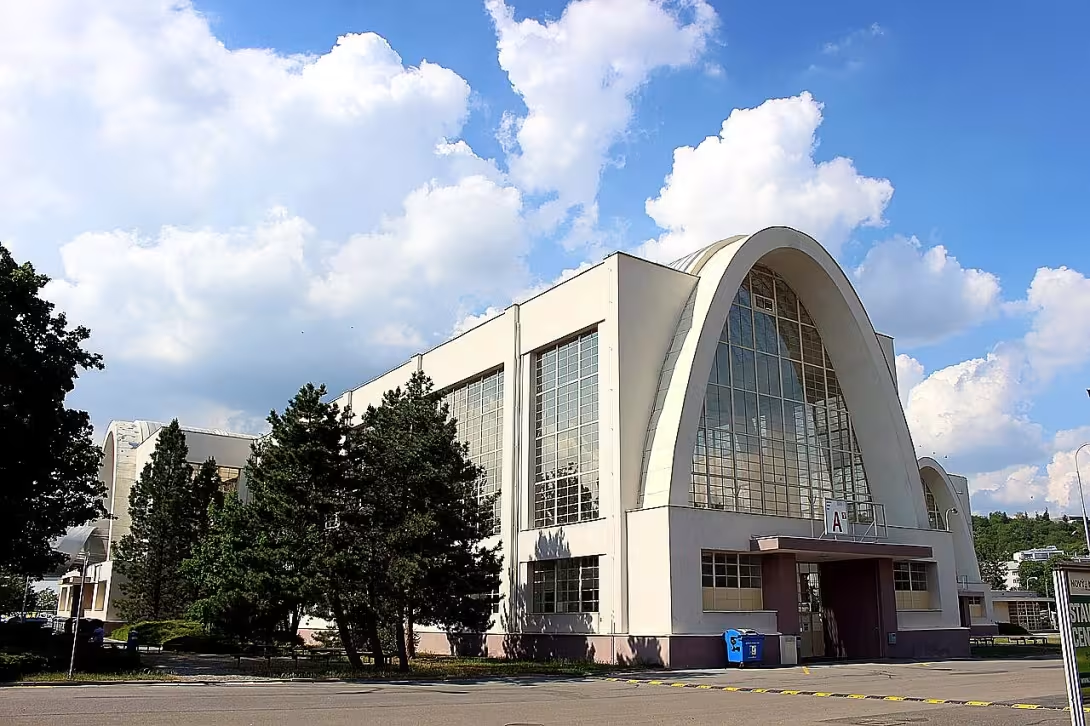
Pavilion A, also known as the Obchodně průmyslový palác, is a notable exhibition hall on Brno's exhibition grounds. Built between 1927 and 1928, it stands out for its architectural significance during Czechoslovakia's interwar period of cultural innovation. Its design features reinforced concrete with chain-link arches and glass walls, making it an integral part of the urban landscape.
The construction was completed in just 230 days, showcasing the efficiency and ambition of architects Josef Kalous and Jaroslav Valenta. The project required 50 freight trains to transport materials, highlighting its scale and logistical challenges. This rapid completion underscores its importance during a time when modernist movements like secessionism influenced European architecture.
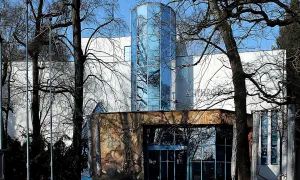
Architecturally, Pavilion A is characterized by reinforced concrete with chain-link arches and glass walls. Its central circular rotunda is flanked by two 'V'-shaped wings that guide main promenades through the exhibition grounds. In 1976, a connecting vestibule was added to link these wings, designed by Ivan Ruller, Zdeněk Müller, and Petr Uhlíře. This addition enhanced its functionality and connectivity.
Throughout its history, Pavilion A has undergone several transformations to maintain relevance and utility. During the 1980s, it was restructured to include heating installations in its exhibition halls and galleries for year-round operation. This adaptation ensured its continued use as a versatile venue for various exhibitions and events.
Today, Pavilion A remains an accessible and significant site within Brno's exhibition grounds. Its historical architecture combined with modern adaptations makes it a compelling destination for visitors interested in architectural history and contemporary cultural events. The pavilion's enduring presence highlights its importance not only as a monument of Czechoslovakia's interwar period but also as a living part of the city's ongoing cultural landscape.
Visitors can appreciate Pavilion A's unique blend of historical significance and modern functionality, making it a must-see for those exploring Brno. Its architectural beauty and rich history offer insight into the innovative spirit that characterized early 20th-century Czechoslovakia.
Then and now
Drag the slider to compare how the landmark may have looked when it was built with the view today.
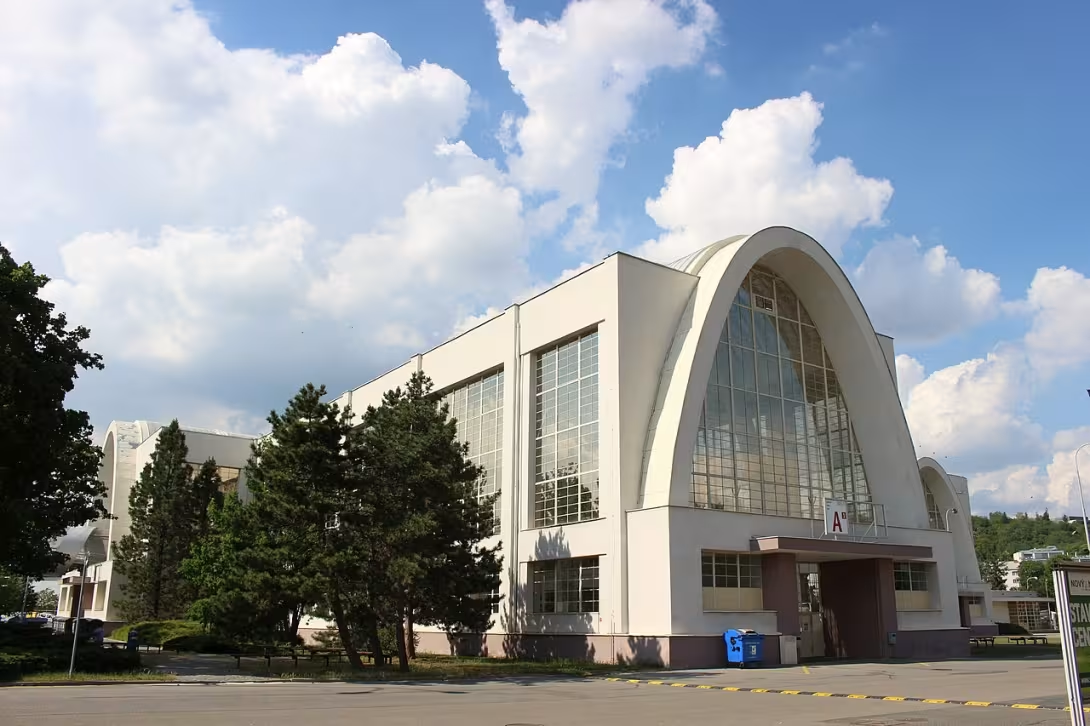
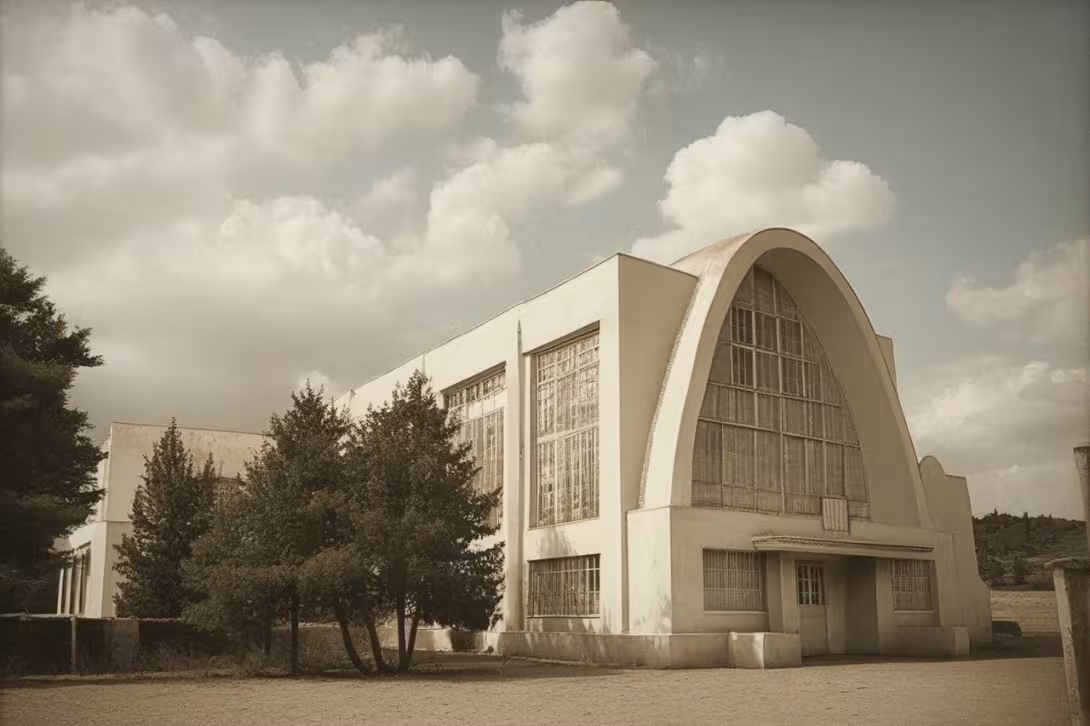
The historical appearance on the left is an AI-generated visualisation and serves as inspiration only.
Historical milestones
- 1928
- Completion of Pavilon A as part of Brno's exhibition grounds.
- 1976
- Addition of a connecting vestibule to link the pavilion's wings.
- 1980
- Reconstruction that included heating installations for year-round operation.
Architectural development
The pavilion was originally built using reinforced concrete with chain-link arches. In 1976, a vestibule was added to connect its wings. The 1980s saw further reconstruction that included the addition of heating systems in exhibition spaces and galleries.
Historical events
In 1976, a connecting vestibule was added to link both wings, designed by Ivan Ruller, Zdeněk Müller, and Petr Uhlíř.
During the 1980s, the building underwent reconstruction which included heating installations in exhibition halls and galleries, allowing for year-round operation.
Guide
This guide is narrated by a synthetic voice generated by artificial intelligence.
Show guide text
This text was created by artificial intelligence and has not been editorially reviewed. It may contain inaccuracies.
Welcome! You are standing before one of the most significant and beautiful historical landmarks on the Brno Exhibition Grounds – Pavilion A, also known as the Trade-Industrial Palace. This unique pavilion will surely captivate you with its modernist lines and architectural details.
Pavilion A was built between 1927 and 1928 as a symbol of modernist architecture in the interwar period. Its construction was part of the Brno Exhibition Grounds, which at that time were considered one of the most modern and impressive in Europe. And right here before you are some of the most interesting architectural elements.
Let's move closer and take a look at this beautiful pavilion. Notice how its circular rotunda connects with two wings shaped like the letter V. These wings lead to two main promenades that will guide you throughout the entire pavilion. Take a look at the façade, where you can see the beautiful rows of windows and doors connecting interior and exterior spaces.
Now pay attention to the architectural details. Notice how the pavilion stands out from other buildings on the exhibition grounds. Its construction using concrete and steel girders is truly unique. And observe how architects Josef Kalous and Jaroslav Valenta managed to create such beautiful and functional spaces.
Pavilion A is also full of interesting stories and personalities. Although we may not know exactly who was involved in its construction, it is certain that it was a symbol of Czech modernism and cultural renaissance. Whether you are an architecture enthusiast or simply a lover of history, Pavilion A is a place that will offer you much inspiration and interest.
And now, before you move on to another part of the exhibition grounds, learn one of the most interesting things about Pavilion A. It was designed to be a symbol of modernism and progress in the interwar period. And its architects used truly innovative techniques involving steel girders and concrete constructions.
So, before you leave, discover all the beauties of Pavilion A. It is really a unique place that will surely captivate you and leave a lasting impression. And who knows, maybe you'll like it so much that you'll want to return and explore it again.
Tips for visitors
The best time to visit Pavilon A is during the late spring or early autumn months, specifically from May to September. During this period, the weather is typically pleasant with mild temperatures, making it ideal for exploring both the pavilion and its surrounding exhibition grounds. Additionally, these months often coincide with various exhibitions and events hosted at the site, providing visitors with a richer experience.
Alternatively, public transport is accessible; you can use local buses or trams that connect to the exhibition grounds. For the most current routes and schedules, it's recommended to check a reliable transportation app or website.
When planning your visit, consider bringing comfortable walking shoes, especially if you plan to explore the entire exhibition area. A camera or smartphone is also advisable for capturing the architectural beauty of Pavilon A.
For photography enthusiasts, the best spots to capture Pavilon A are from its eastern and western facades where natural light enhances the structure's reinforced concrete design. Early morning or late afternoon is ideal for softer lighting conditions that highlight the pavilion’s unique features. Additionally, visiting during an event can offer dynamic scenes within the exhibition halls.
For families with children, Pavilon A offers a stimulating environment due to its diverse exhibitions and interactive displays. To make the visit more enjoyable, consider bringing snacks or a packed lunch as there are limited dining options nearby. The surrounding grounds also provide space for children to run around, making it an excellent spot for family outings.
Frequently asked questions
Can the monument be visited?
We have not verified whether this monument is accessible. Please ask the owner or operator, or the local municipal office.
Where is the monument?
Location: Pisárky, Jihomoravský kraj. The map on this page shows the exact spot.
Why is the monument protected?
It is listed in the Central List of Cultural Monuments of the Czech Republic as a cultural monument (register no. 1000160818_0002). It is protected as part of a larger listed ensemble.
Businesses nearby
Do you run a restaurant, accommodation, shop, museum, rental, wellness or other visitor service near this monument? Show yourself directly to the people heading to it — this is how they will see you in the app and on the web:
Events nearby


Zdroj akcí: otevřená data měst a obcí ČR (Národní katalog otevřených dat) a kalendář akcí Národního památkového ústavu.
Accommodation nearby
Trips and activities nearby
Guided tours, tickets and activities nearby from GetYourGuide
Affiliate link: if you buy from the partner, we may receive a commission. The price for you does not change.
Search tours and activities →Themed route
Route: 1. Pavilion A – Pavilion A is a unique building worth visiting as it is the first Czech functionalist structure and represents the transition from Art Nouveau to modern style. It is located in a beautiful park, which is an ideal place for rest and relaxation. 2. Pavilion A – Playground – The playground near the pavilion is a perfect spot for resting and relaxing. You can sit on a bench and watch children playing on the playground. 3. Pavilion A – Park – The park around Pavilion A is a lovely place for walking and relaxing. Here you can take a stroll and observe various types of trees and flowers. 4. Pavilion A – Swimming Pool – Near Pavilion A, there is a swimming pool where you can refresh yourself and rest from the heat.
Seasonal recommendations
Jaro
In the spring season, Pavilion A in Písek is surrounded by blooming trees and flowers, creating a pleasant atmosphere. Another specific element is the sunny weather, which allows visitors to stroll safely.
Summer
The main summer season is in the summer, when Pavilion A in Písek is full of life. A specific element here is the warmth and sunny weather, which allows visitors to stroll safely. Practical tips: Visit the pavilion early before the crowds arrive so you can see all the exhibits without unnecessary waiting.
Autumn
In autumn, Pavilion A in Písek is surrounded by beautiful colorful leaves on trees, creating a pleasant atmosphere. A specific element here is the cooler weather, so remember to bring warm clothing. Practical tips: Plan your visit for later in the morning when it's open but not yet too crowded.
Winter
In winter, Pavilion A in Písek is closed, but you can still visit the indoor spaces. A specific element here is the warm lighting that creates a pleasant atmosphere.
Visualizations and artistic views


The visualisations are generated by artificial intelligence and serve as inspiration.
Photos from the area
Real photos taken near the monument

Zdroj a licence jsou uvedeny u každého snímku.
Tips from visitors
No tips yet. Be the first!
Log in and add your tip.
Sources and literature
Photos: BíláVrána / CC BY-SA 4.0 — Wikimedia Commons. The author and licence also appear when you hover over the image.
Faktickým podkladem tohoto textu byl článek na Wikipedii, jehož autory jsou přispěvatelé Wikipedie. Článek je dostupný pod licencí CC BY-SA 4.0.
Location on the map
More monuments – Pisárky
Show all in the municipality
Příběhy a pověsti
Legendy, pověsti a příběhy spjaté s touto památkou
Fotografie návštěvníků
Zatím žádné fotografie. Buďte první, kdo přidá fotografii z návštěvy!
Log in a přidejte svou fotografii nebo hodnoťte.
Za ověřenou návštěvu v aplikaci získáte víc bodů — poznáme podle GPS, že jste na místě.
Reviews and comments