






Vila Wittal Villa
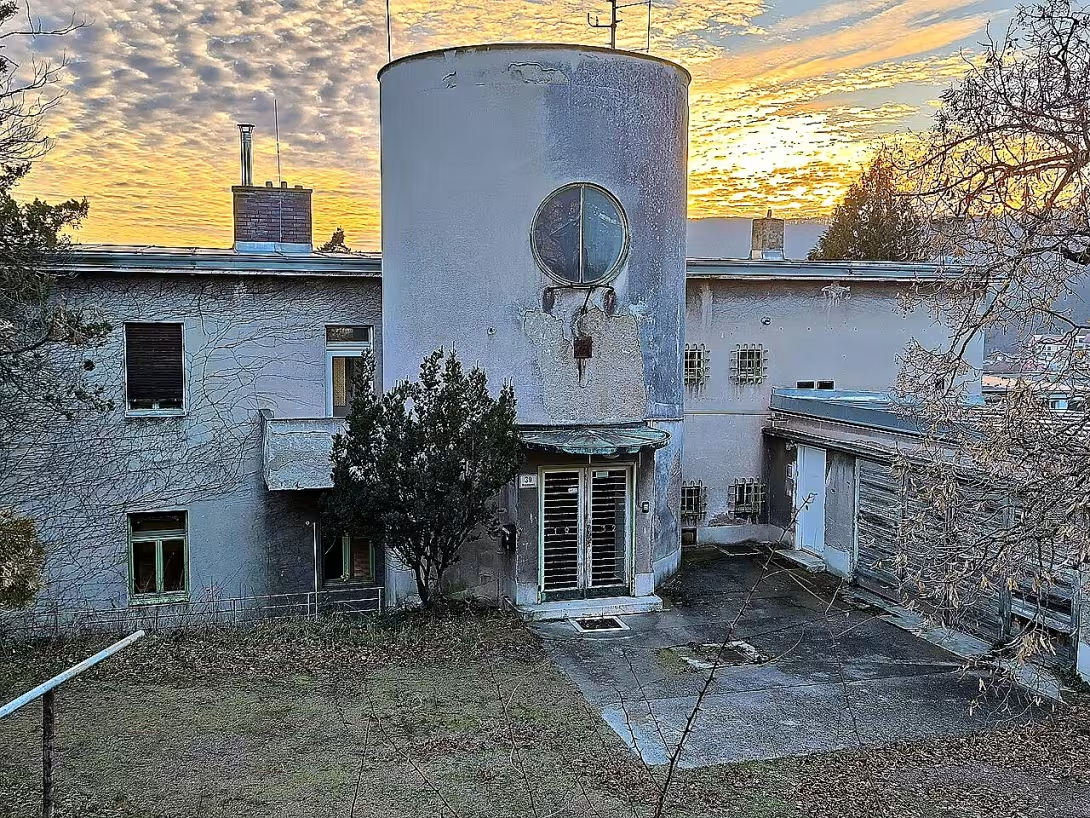
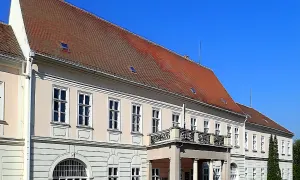
Vila Wittal in Pisárky is among the most important preserved examples of functionalist architecture in Brno with organic elements. It was built in 1932 for the Jewish business family Wittal, who lived here only shortly before the tragic fate of World War II. Today the villa is preparing for reconstruction and will serve as a centre of Jewish culture Štetl, which will become the site of the monument to the history of Brno's Jewish life.
The villa was established during the interwar Czechoslovakia, when architecture sought modern solutions associated with functionalism. The author of the project is Heinrich Blum, Czech architect of Jewish origin, who introduced elements of organic architecture into the building. The Wittal family operated a assembly company in Brno, and the villa was their home. Located on Grape Street No. 39 in Pisárky, a quarter on the west edge of the city.
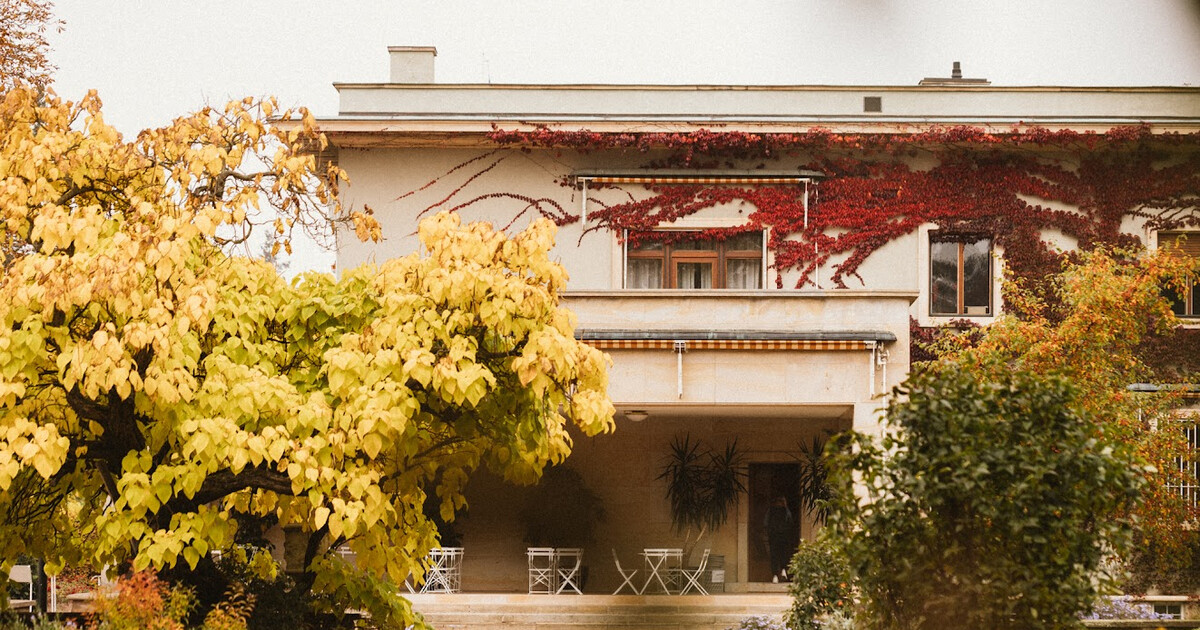
Architecturally, the villa features a simple quad core with attached accessories - oval garden terrace and rectangular risalite. In the basement there are service spaces, while the upper two floors form two separate apartments connected by a spiral staircase. The residential areas have a view of the garden, while the service areas are oriented to the street. Typical are rounded shapes such as stairs and entrance risalites, which refer to organic architecture. The inspiration of the maritime theme can be seen in the circular windows and the ship's railing. The villa was preserved in almost unchanged condition, including original tiles, window fillings and closets.
The property of the villa changed dramatically. After the German occupation in 1939, the villa was seized by the Gestapo. Johann Wittal, his wife Friederike and daughter Ida were deported to Terezin in January 1942, where they died. During the war, the villa served as the headquarters of the Brno Gestapo. After the war, it was nationalized in 1948 and transferred to the property administration. In the following decades, it served important Communist leaders such as President Klement Gottwald or Chairman of the Brno Central National Committee Vladimír Matul. Since 1985, the villa has been protected as a cultural monument.
The villa presents a rare example of preserved functionalist architecture with organic elements. The preserved interiors, including functional windows in the winter garden, are a unique example of the original design. Today the villa is waiting for reconstruction, provided by the Brno City Museum. Since 2024 it has been in his possession and is planned to be transformed into the centre of Jewish culture Štetl. This will become a place where the history of Brno's Jewish life will be stored and presented.
Vila Wittal is not only an architectural valuable, but also a historical proof of the tragic destinies of the 20th century. Visiting this place offers the opportunity to know functionalist design and the story of the family that lived here. It recalls the importance of the Jewish community in Brno and its tragic fate during World War II. For lovers of architecture and history, this monument is an unforgettable place.
Then and now
Drag the slider to compare how the landmark may have looked when it was built with the view today.
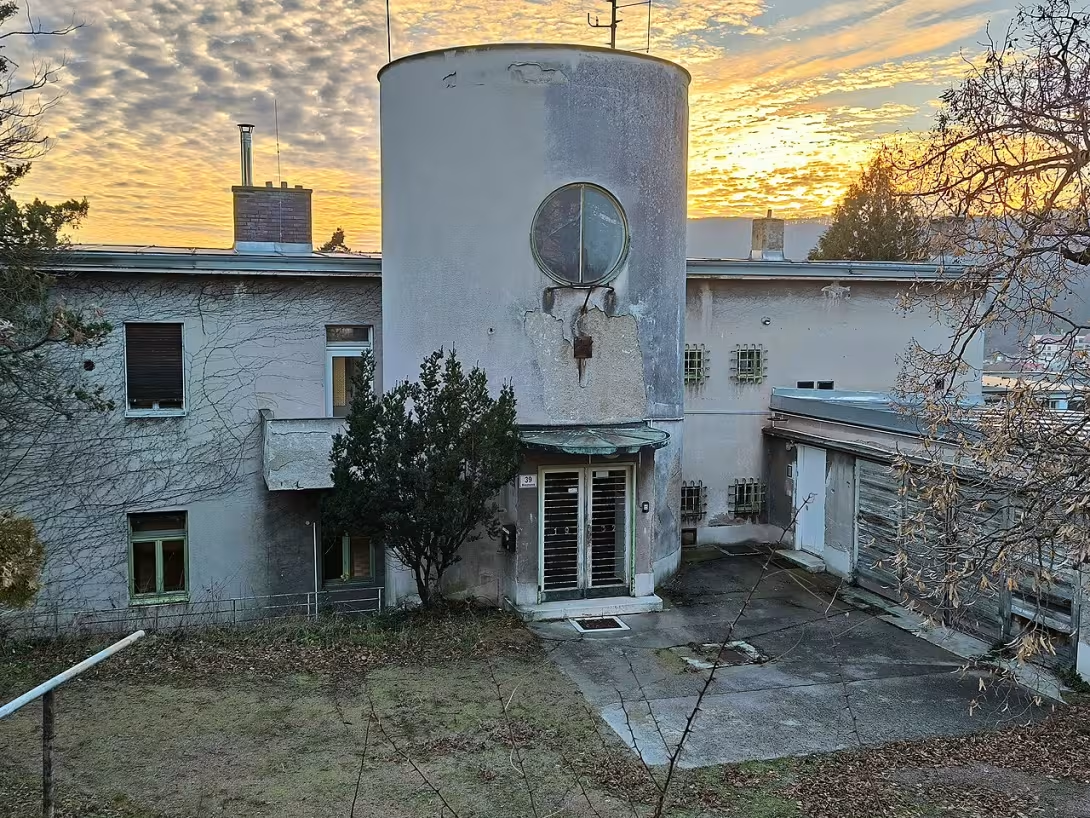
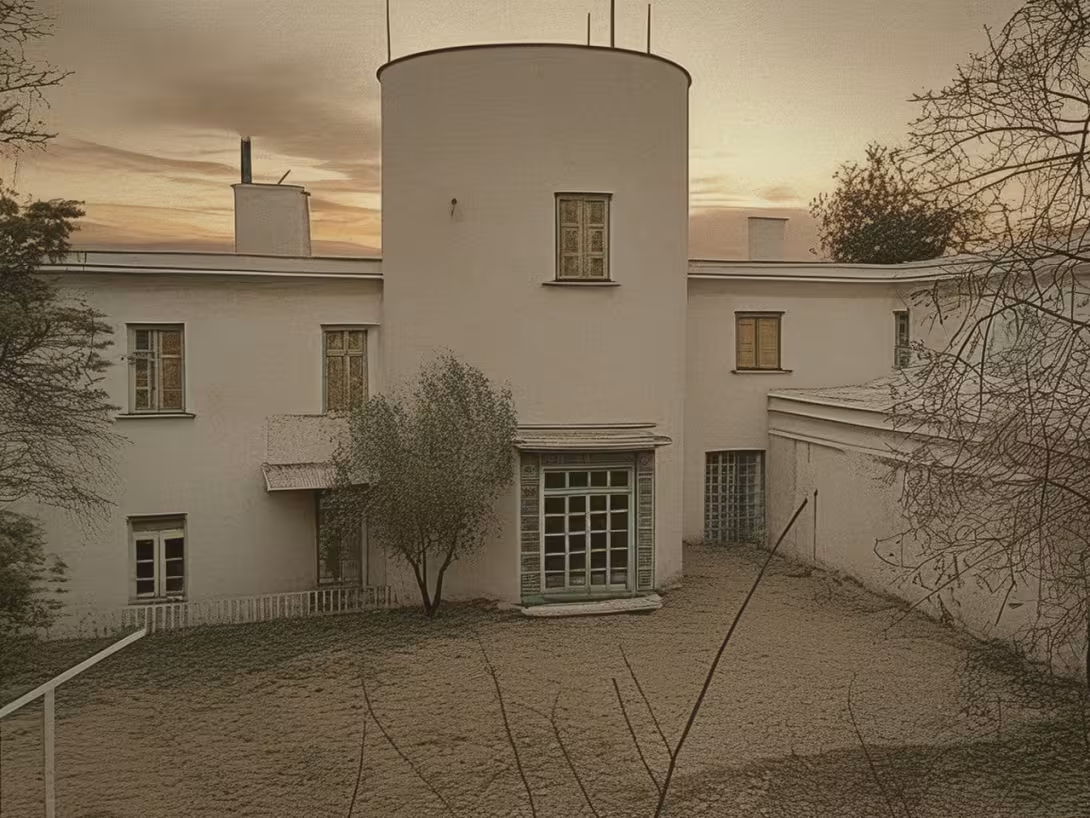
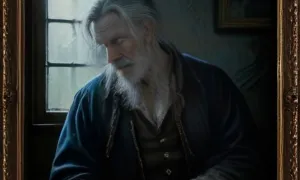
The historical appearance on the left is an AI-generated visualisation and serves as inspiration only.
Historical milestones
- 1932
- Completion of the Wittal family villa according to the Heinrich Blum project.
- 1939
- The villa confiscated by the Gestapo, the Wittal family evicted.
- 1985
- The villa is declared a cultural monument.
- 2024
- Villa taken over by museum for reconstruction and future use as Štetl - center of Jewish culture.
Architectural development
Two-storey villa with simple quad core, supplemented with oval garden terrace and risalite. In the basement there are service spaces, the upper floors form two apartments connected by a spiral staircase. The original materials and details, such as tiles, windows and cabinets, are preserved. The inspiration of maritime architecture is visible in ship's windows and railings. The construction is from 1932 without major reconstructions.
Historical events
The Wittal family was evicted by the Gestapo, the villa confiscated.
Members of the Wittal family deported to Terezin and subsequently murdered.
The villa became state property after the nationalization of the family company.
Villa taken over by museum for reconstruction and use as a centre of Jewish culture.
Owners
The Wittal family
Nazi Gestapo (Otto Koslowski)
National property management (later municipal property)
Brno City Museum
Points of interest
- Vila Wittal is one of the most important preserved examples of functionalist architecture in Brno with elements of organic architecture.
- The villa was built in 1932 for the Jewish business family Wittal, who lived here just before their tragic fate during World War II.
- The owners of the villa, Johann Wittal, his wife Friederike and daughter Ido, were deported to Terezin in January 1942 and died there.
During the war, the villa served as the residence of the Brno Gestapo.
- The villa was preserved in almost unchanged condition, including original tiles, window fillings and closets.
Guide
Show guide text
This text was created by artificial intelligence and has not been editorially reviewed. It may contain inaccuracies.
Welcome to the Brno Writers. Stop for a moment, take a breath and look ahead. You're standing in front of a building that's much more than just an ordinary house. He's a silent witness to the stormy century, a place where the courage of modern architecture collided with the cruelty of history. In front of you are Vila Wittal's, a building that, even today, after many decades, seems very strange and attractive. Feel its overall character and atmosphere surrounding it. It is a place that carries within itself layers of hope, tragedy and the current pursuit of rectification.
Let us now go back almost a century in time, to the year one thousand nine hundred thirty-two. At that time Brno was one of Europe's most modern cities and this ambitious project was being developed in Pisárky. The villa was designed by an architect named Heinrich Blum. For the Wittal family of successful Jewish entrepreneurs, this building was to be the embodiment of their social position, but also their taste. Johann Wittal, his wife Friederike, and their children Ida and Adolf, were here looking for a home that fits the spirit of the time. It was a time of optimism when it was believed that new architecture could change people's lives for the better, that the purity of lines and light would bring health and prosperity.
Now pay attention to the appearance of the villa itself. If you look carefully at its shapes, you'll see it's not a rough, square block. You are faced with one of the most important examples of functionalism in Brno, but with a very interesting addition. The architect Blum inserted elements of so-called organic architecture into the project. Notice the rounded shapes that soften the rigour of modern construction. These monsters seem natural, almost as if the building had grown from the ground or been carved from one piece of material.
Take one more look at the details. Notice the elements that resemble maritime architecture. These maritime details were very fashionable at the time and should have evoked a sense of freedom, travel and openness to the world. Imagine how in the year one thousand nine hundred thirty-two this villa around Pisarik was floating like a modern ship in a green sea of gardens. Everything about her was thought out to serve a man, to be functional and aesthetically attractive. This combination of strict functionalism and soft, organic lines makes the villa a unique piece of Brno heritage.
Unfortunately, the Wittal family story in this house was neither long nor happy. When the political situation changed in the year one thousand nine hundred thirty-nine trees and terror overtook the country, this villa became a target. It was this year that the building was seized by the Gestapo. Johann, Friederike, Ida and Adolf were forced out of their home. Imagine the moment when the people who built their dream of modern life had to abandon everything they owned. Their fate was tragic and the walls became a symbol of the expropriation and suffering of Jewish families during World War II.
After the war, the villa did not return to the hands of its original owners, but its history continued in another state spirit. The building was used for state purposes, which at that time meant that there were very powerful people in its premises. Among the personalities we associate with the villa from this period are for example Klement Gottwald or Vladimír Matul. There was also Otto Koslowski. The villa thus passed from the luxury family residence as an administrative or representative area of the state. It's fascinating and at the same time freezing to think about how different worlds were taking turns in one building. From Jewish businessmen to Nazi expropriations to the top of the socialist regime.
You may now wonder why this villa is so important today. The answer lies in recognising her value. In a thousand and nine hundred and eighty-five, the villa was officially declared a cultural monument. The state realized that Heinrich Blum's architecture was irreplaceable and that the building carries too many layers of history to be forgotten or demolished.
And now we come to the latest chapter that is being written right now. In the year two thousand twenty-four the villa was taken over by the museum. That's the moment of a big turn. The building is now undergoing reconstruction and is preparing for its future use. The Vila Wittal will become a place called Štetl, which will be the center of Jewish culture. It's deeply symbolic. The place that was ripped from the Wittal family by violence and hatred is now returning to its roots. The life and culture of the people who created this villa will be remembered here, while serving as a place for education and meetings.
The interesting thing that may interest you is the contrast between the outer form and the inner content. While you can see from the outside the sea details and rounded shapes that talk about desire for freedom and modernity, the inner history of the villa talks about imprisonment, exile and loss. This villa is like a book where every room and every corner tells a different story. It's a mystery how one building can be so beautiful and so painful at the same time.
Now, if you look at the facade again, try to perceive not only concrete and shapes, but also the people who lived here. Imagine Johann's steps in the halls, Friederikina's conversations in the living room and the children who have briefly spent their youth here. Feel the silence in the building today, but it will fill the voices of visitors to the center of Jewish culture in the future.
Vila Wittal is not just a monument to architecture, it is a monument to human existence. It's a reminder that even though we're trying to build homes that are functional and modern, real value is given to them by people and their stories. And even though these stories were sometimes tragically interrupted, memory in stone and concrete persists.
Now we invite you to take a closer look at the villa. Take a walk around her, pay attention to those gentle monsters, and think about how the past intersects with the present in this place. We hope this short trip to history has helped you see more than just a beautiful house in this building. It's a bridge between the time of hope of a thousand nine hundred thirty-two and today's quest for understanding and remembrance.
Thank you for spending this time with us at the Wittal villa. We wish you a pleasant continuation in your discovery of Brno's Pissars and their hidden treasures. Goodbye.
Tips for visitors
Best time to visit
Vila Wittal is most pleasant to visit in spring or summer, when the weather is pleasant outside and the park is green. It is recommended to visit her in the morning or late afternoon when there are fewer visitors and the light is ideal for photography. In winter, the indoor space is warm and cozy, but the outdoor area can be frozen.
You can use public transport - stops are nearby or arrive by car. Find the current transport connection in the map search engine.
What to take with you
When visiting the villa, wear comfortable shoes because some parts of the area are covered with grass or uneven terrain. If you are planning to take pictures, bring a close-up lens because the detailed elements of architecture are very interesting. In summer wear sunglasses and sunscreen, in colder months warm clothes.
Photography - best places and light
The best places for photography are the entrance part of the villa with its rounded shapes and surroundings overlooking the surrounding garden. It is recommended to take pictures with scattered light, for example in the morning or in the evening when you avoid sharp shadows. Also interesting are the contrasts between modern elements of the villa and older elements in the surroundings such as trees or old wall walls.
What to visit in the area (within 30 minutes)
Near the villa is worth visiting the Baroque Church of St. James, which is only about a kilometer to the northwest. It is a beautiful historical building that offers a quiet environment and the opportunity to become acquainted with Brno's sacral architecture. Another interesting thing is Park Lužánky, which is located about two kilometres east. It is a green space with historical elements and views of the city, ideal for a picnic or walk. If you like nature, go to the Svitavu River, which is about three kilometers west. It is a natural flow with park areas and bike paths where you can relax or ride your bike.
Tips for families with children
Families with children can enjoy a walk around the villa in green areas and nature observation. In Lužánky Park or at the Svitavy River, children will find room for games and discoveries. In the nearby church of St. James, children can watch historical details and talk about their importance. It is advisable for the smallest to bring a toy or a small workbook for drawing so that children can have fun during the visit.
Frequently asked questions
Can the monument be visited?
Some buildings of this kind are open for guided tours, others serve another purpose or are privately owned. We have not verified whether and when this monument is open – please ask the operator. According to the heritage register restoration is under way, so access may be restricted.
What are the opening hours and admission?
We have not verified the opening hours or admission. Current information is published by the operator.
Where is the monument?
Location: Pisárky, Jihomoravský kraj. The map on this page shows the exact spot.
Why is the monument protected?
It is listed in the Central List of Cultural Monuments of the Czech Republic as a cultural monument (register no. 1000133401).
Businesses nearby
Do you run a restaurant, accommodation, shop, museum, rental, wellness or other visitor service near this monument? Show yourself directly to the people heading to it — this is how they will see you in the app and on the web:
Events nearby




Zdroj akcí: otevřená data měst a obcí ČR (Národní katalog otevřených dat) a kalendář akcí Národního památkového ústavu.
Nearby
Kostel svatého Jakuba
asi 1 km na severozápad
Barokní kostel z 18. století, významná brněnská sakrální stavba.
Park Lužánky
asi 2 km na východ
Zelený prostor s historickými prvky a výhledy na město.
Svitava
cca 3 km na západ
Přírodní tok s parkovými plochami a cyklostezkami.
Accommodation nearby
Trips and activities nearby
Guided tours, tickets and activities nearby from GetYourGuide
Affiliate link: if you buy from the partner, we may receive a commission. The price for you does not change.
Search tours and activities →Themed route
Thematic cruise route from Villa Wittal in the village Pisárky
1. Vila Wittal * * - Name of Baroque villa building from 19th century, known as the work of architect Josef Zíta. It is unique in its architectural design and historical significance for Brno exhibitions. In the interior there are richly decorated rooms with works of art.
2. Church of St. James - Name of Baroque church from the 18th century, a significant sacral monument in Brno. Its interior is richly decorated with frescos and statues that reflect baroque artistic style. Located about 1 km northwest of Villa Wittal.
3. Lužánky Park - The name of the historical park with large green areas and city views. In its surroundings there is a memorable lime tree and historic buildings that resemble the past. It lies about 2 km east of St. James's Church.
End of route - After visiting Lužánky Park you can go back to Pisárek or continue to the natural flow of Svitavu, located about 3 km west of Lužánka Park.
Seasonal recommendations
Spring Vila Wittal offers a unique combination of awakening nature and soft light in spring months. The trees of the Pissars are blooming, the sun illuminates the facade at an angle that creates long shadows and golden reflections on the plaster. The atmosphere is calm, but full of revival - the air smells of rain and new leaves, while birds sound in the park. It is convenient to visit them in April, when the temperature is pleasant and the crowds are still not disturbed. Put on a light jacket for cold morning hours and comfortable shoes, because the roads around the park can be wet after the rain. The best time is in the morning when the light is softest and the traffic is minimal.
Summer In the main summer season Vila Wittal will turn into a magnet for tourists, but here you will still find magic. The sun shines directly on the facade, creating a contrast between the shady arcades and illuminated parts of the building. The atmosphere is alive, but not too busy if you avoid major tourism. The surrounding area is green, but hot days can be strenuous. I recommend visiting in July when the days are long and the evenings are pleasant. Dress light, airy clothes and don't forget your hat or sunglasses. The best time is early in the morning or after 6:00 in the afternoon when there are fewer people and temperatures are falling.
Autumn Autumn visit brings the magic of colorful leaves that turn into fire and golden shades on the park trees. The light is softer, but the rain often interrupts bright days, so the atmosphere is sometimes mysterious and calm. Vila Wittal appears to be a hidden treasure, surrounded by a colored sea. It is convenient to come in October when temperatures are pleasant but not too cold. Put on a light jacket and waterproof clothes because the weather is unpredictable. The best time is in the morning, when the light is softest and the park dominates calm.
Winter In winter, Vila Wittal becomes a calm, almost mysterious monument, surrounded by snow. The light is soft and scattered, which creates fine shadows on the facade. The atmosphere is quiet, but full of magic - snowflakes settle on the windows like crystals. It is convenient to visit in December when Christmas decorations are lit and the air smells of hot drinks. Wear warm clothes because temperatures are low. The best time is in the afternoon when the light is most pleasant and the traffic is minimal.
Visualizations and artistic views


The visualisations are generated by artificial intelligence and serve as inspiration.
Photos from the area
Real photos taken near the monument


Zdroj a licence jsou uvedeny u každého snímku.
Tips from visitors
No tips yet. Be the first!
Log in and add your tip.
Sources and literature
Photos: Roman Mifek / CC BY-SA 4.0 — Wikimedia Commons. The author and licence also appear when you hover over the image.
Faktickým podkladem tohoto textu byl článek na Wikipedii, jehož autory jsou přispěvatelé Wikipedie. Článek je dostupný pod licencí CC BY-SA 4.0.
Location on the map
More monuments – Pisárky
Show all in the municipality
Příběhy a pověsti
Legendy, pověsti a příběhy spjaté s touto památkou
Fotografie návštěvníků
Zatím žádné fotografie. Buďte první, kdo přidá fotografii z návštěvy!
Log in a přidejte svou fotografii nebo hodnoťte.
Za ověřenou návštěvu v aplikaci získáte víc bodů — poznáme podle GPS, že jste na místě.
Reviews and comments