






Anthropos Museum
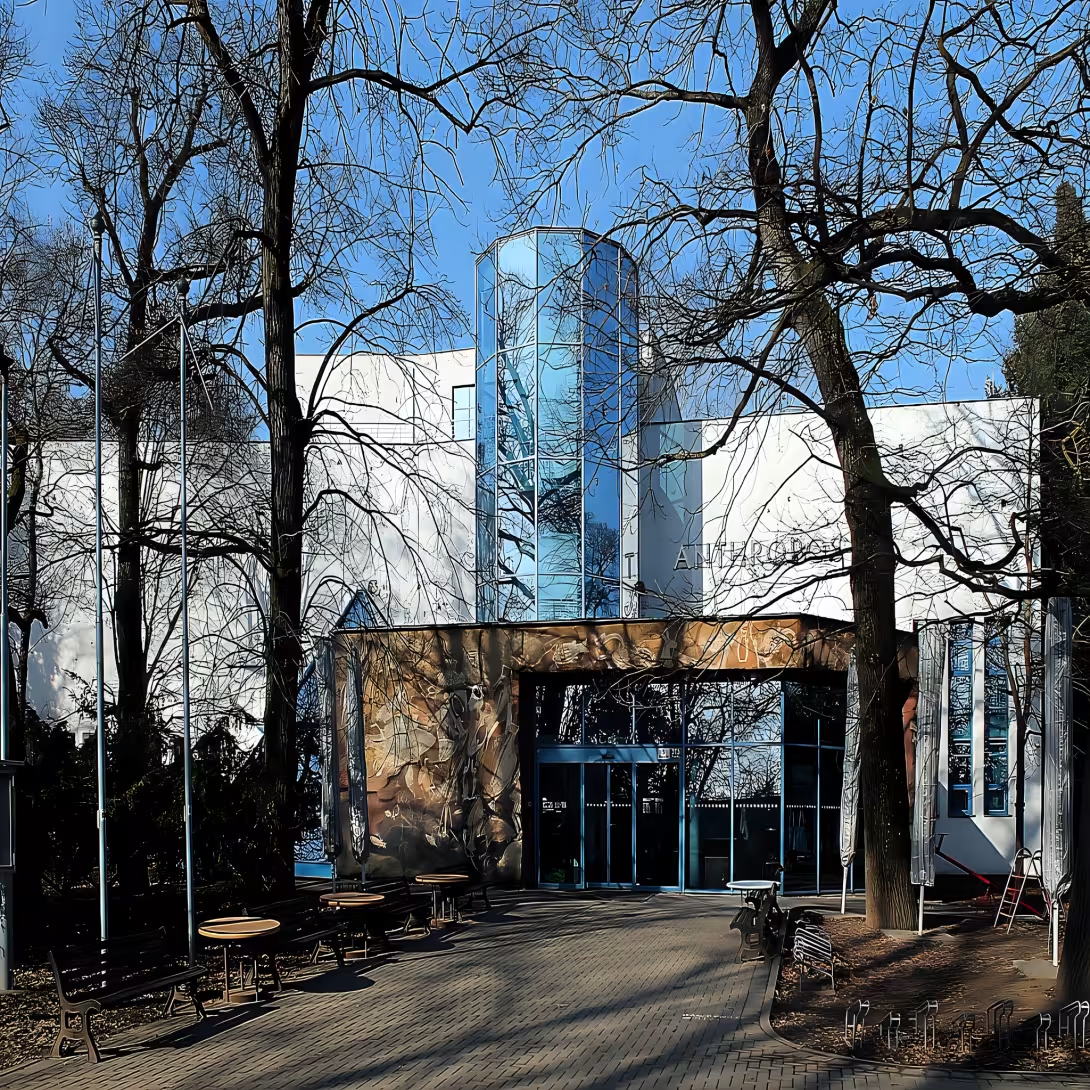
Pavilion Anthropos is located in Pisarky, South Moravian Region Brno. It operates under the Moravian Museum and focuses on the early human settlement in Moravia and Europe, named after the Greek word "human." The pavilion draws attention to prehistoric times through permanent exhibitions which explore ancient technology, art and evolutionary biology.
Anthropos comes from the exhibition "Man and His Kin" from 1928, organized by archaeologist Karel Absolon at the Brno Exhibition Centre. Supported by the first Czechoslovak President Tomáš Garrigue Masaryk and the businessman Tomáš Baťa, financial constraints during the Great Depression and World War II postponed its establishment as an independent institute. In the 1950s, Jan Jelínek, the successor to Absolon and then the director of the Moravian Museum, started building a specialized pavilion in Brno-Pisárky. Officially opened to the public in 1961.
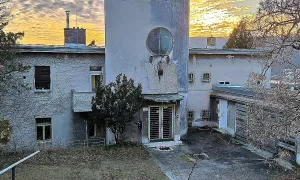
Architect Evžen Šteflíček designed a pavilion, completed in 1962 near the original exhibition in Absolon. This structure replaced one destroyed during World War II. Between 2003 and 2006 significant renovations were carried out with funding from the Ministry of Culture of the Czech Republic to deal with the deteriorating situation.
Permanent exhibitions are divided into three parts. The first part, "Moravian Hunters and Collectors," explores early human life in Moravia, presents artifacts depicting ancient hunting practices and collection techniques. There is also the "Oldest Art of Europe" with parts such as Venus of Willendorf, exhibited for the first time outside Austria. This section shall be immersed in "Paleolithic technologies" which provide knowledge of tools and methods used by early humans.
The second part concerns topics such as "Genetics in the Evolution of Man" and "The Story of Man." These sections offer a comprehensive view of human evolution through genetic studies and historical stories following the evolution of mankind for millennia.
The third part, entitled "Brothers or cousins? - Ethology of primates," examines behavioral similarities between humans and primates. The aim is to provide visitors with an understanding of our closest relatives and their social structures.
During his history Anthropos was a place of cultural importance, especially during World War II Czechoslovakia, when interest in historical studies was restored. Interactive exhibits of the museum, including life-size models such as mammoth, make it attractive for families and children. Its location on the right bank of the Svratka River adds scenic charm.
Today Pavilion Anthropos remains an important cultural institution offering knowledge in human history through a well-arranged exhibition. It is accessible to those interested in discovering prehistoric life and understanding the evolutionary path of mankind. The museum's commitment to education and conservation makes it a valuable destination for anyone who wants to learn about our old past.
The Anthropos Pavilion stands as a proof of a lasting curiosity about human origin and offers an enrichment experience that connects visitors to a distant past. Thanks to its unique exhibits and its historical importance, it is a monument for those interested in anthropology and history.
Historical milestones
- 1928
- Initial exhibition 'Man and His Kin' organized.
- 1962
- Completion of Pavilion Anthropos building.
- 2003
- Starting a major reconstruction due to a bad condition.
- 2006
- Reconstruction complete and pavilion reopened.
Architectural development
Pavilion was originally part of the exhibition in 1928 but was destroyed during World War II. In the post-war period Jan Jelínek led the construction of a new building near its original location. The construction, completed in 1962 by architect Evžen Šteflíček, underwent significant reconstruction between 2003 and 2006.
Historical events
1928: Initial exhibition 'Man and His Kin' organized by Prof. Karel Absolon, supported by President Tomáš Garrigue Masaryk and industrialist Tomáš Baťa.
1962: Completion of the building Anthropos Pavilion designed by Evžen Šteflíček.
2003-2006: Great reconstruction completed in 2006 with financing of the Ministry of Culture of the Czech Republic.
Owners
Pavilion Anthropos is the property of the Moravian Museum in Brno. The museum was founded in 1817, and since then it has developed and watered down its collections and expeditions. Pavilion Anthropos was built as part of the heating development.
Points of interest
- Pavilion Anthropos was originally conceived from an exhibition in 1928 called "Man and His Kin," organized by a renowned archaeologist Karel Absolon. This early effort has laid the foundations for what will become an important cultural institution.
- Despite the support of the first President of Czechoslovakia Tomáš Garrigue Masaryk and the entrepreneur Tomáš Baťa financial difficulties during the Great Depression and World War II, they postponed the establishment of Anthropos as an independent institute until the 1960s.
- Venus Willendorf, one of the most famous prehistoric works of art in Europe, is exhibited in the hall Anthropos. This highlights his unique position as the first place outside Austria to display this iconic artifact.
- Architect Evžen Šteflíček designed a pavilion which was opened in 1962, which replaced the structure destroyed during World War II. His design became an integral part of the identity of the museum and the historical story.
- Between 2003 and 2006 significant renovations were carried out with funding from the Ministry of Culture of the Czech Republic in order to address the deteriorating state of the pavilion and ensure its preservation for future generations.
Guide
This guide is narrated by a synthetic voice generated by artificial intelligence.
Show guide text
This text was created by artificial intelligence and has not been editorially reviewed. It may contain inaccuracies.
Welcome to Hall Anthropos, a remarkable part of the Moravian Museum in Brno. As you stand here in Pisarky, you can dive into the atmosphere surrounding this architectural jewel dedicated to exploring the earliest history of the human settlement in Moravia and Europe.
The road of the pavilion Anthropos began with the first exhibition "Man and His Kin" organized by Karel Absolon in 1928. This early effort laid the foundations for what would become an important cultural institution, reflecting a deep interest in our ancestral roots. The pavilion itself was completed in 1962, thanks to the vision of the renowned anthropologist Jan Jelínek, who played a key role in its founding after World War II.
Designed by Evžen Šteflíček, architecture Anthropos Pavilion is something you should definitely acknowledge. Its design reflects functionality and aesthetic attraction, which serves as an ideal space for immersion in human history. As you look around, notice how the structure harmoniously blends with the environment while providing a unique environment for exploring permanent exhibitions divided into three sections.
The story of the pavilion is intertwined with several key characters in Czech history. Karel Absolon, whose early work ignited this cultural journey, and Jan Jelínek, who later made a significant contribution to the development of the pavilion, are at the heart of its narrative. Other prominent personalities such as Tomáš Garrigue Masaryk and Tomáš Baťa also played a role in shaping their legacy.
An interesting aspect of the Anthropos pavilion is its resistance over time. Despite the challenges, including a major reconstruction that began in 2003 due to a bad condition, it was successfully opened in 2006. These reconstruction efforts underscore the continued importance of the pavilion and the determination to preserve history for future generations.
As you continue your visit, let yourself be drawn into the stories of these exhibitions, everyone offers insight into our common human past. We invite you to further explore, reveal more about this fascinating place where history meets culture. Thank you for choosing Anthropos Pavilion with us. Enjoy your journey through time!
Tips for visitors
The best time to visit the pavilion Anthropos is at the end of spring or early autumn when the weather is pleasant, and the surrounding nature of Pisárky is the most lively. These seasons offer comfortable temperatures for exploring both inside and outside without the crowds that summer can bring. Moreover, a visit on a weekday can provide a calmer experience as weekends tend to be busier.
Parking near the hall Anthropos is available in designated areas near the place, so it is suitable for those travelling by car. For visitors who prefer public transport, the pavilion is accessible through local buses and trams from the Brno Centre. It is advisable to check the latest plans for reliable transit websites or applications before your visit to ensure smooth travel.
When planning your visit, consider bringing comfortable walking shoes as you will probably explore both the indoor exhibits and the outdoor area around the pavilion. It is also recommended, especially during warmer months, to remain hydrated and enjoy the picturesque surroundings of the Svratka River.
For lovers of photography, early morning or late afternoon provides the best natural light to capture the stunning photo of Anthropos Pavilion and its picturesque environment by the river. Playing light through the Hall of Architecture can create fascinating images, especially at these times when shadows add depth to the images.
The Exhibition Centre is located 30 minutes drive from Brno and offers a range of cultural and educational experiences that complement the visit to the Hall Anthropos. Families with children find interactive exhibits and activities designed to involve visitors of all ages, making them the perfect place for a day of exploration of history and science.
Frequently asked questions
Can the monument be visited?
Yes. We verified the opening hours or admission on the official website (13. 10. 2026); you will find them in the visitor information on this page. Please double-check with the operator before you travel.
What are the opening hours and admission?
Details verified on the official website (13. 10. 2026) are listed in the visitor information on this page. Official website: http://www.mzm.cz/pavilon-anthropos/
Where is the monument?
Location: Pisárky, Jihomoravský kraj. The map on this page shows the exact spot.
Businesses nearby
Do you run a restaurant, accommodation, shop, museum, rental, wellness or other visitor service near this monument? Show yourself directly to the people heading to it — this is how they will see you in the app and on the web:
Events nearby


Zdroj akcí: otevřená data měst a obcí ČR (Národní katalog otevřených dat) a kalendář akcí Národního památkového ústavu.
Nearby
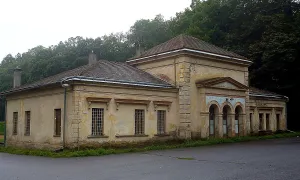
Located on the right bank of the Svatky River in Pisárky, near the Brno Exhibition Centre. The area is known for its picturesque beauty.
Accommodation nearby
Trips and activities nearby
Guided tours, tickets and activities nearby from GetYourGuide
Affiliate link: if you buy from the partner, we may receive a commission. The price for you does not change.
Search tours and activities →Themed route
Thematic walking tour: Anthropos museum and surroundings
1. XZ Museum - Type: Cultural pages - Why Visit: As the highlight of this trip, the Anthropos Museum offers a immersed journey into human history through its extensive collection of artifacts from prehistoric times to the present. The museum exhibition provides a view of cultural evolution and are located in a beautifully restored 18th-century castle.
2. Svratka River Promenade - Type: Scenic Route - Why Visit: Located on the right bank of the river Svratka, this picturesque promenade offers visitors a quiet environment to enjoy the beauty of nature and to think about the historical importance of the area. The river is ideal for peaceful walks or picnics that provide stunning views that complement the cultural experience of Anthropos.
3. Exhibition Centre (Brno) - Type: Cultural place - Why Visit: Just a short walk from Pisárky, these reasons are known for organizing many international exhibitions and events. While especially for their modern architecture and pulsating atmosphere during the events, the Exhibition Centre offers an interesting contrast to the historical atmosphere Anthropos, it shows Brno's role as a cultural centre.
This tour smoothly blends history with natural beauty, offering visitors a comprehensive experience that highlights both rich cultural heritage and picturesque landscape Pisárky area.
Seasonal recommendations
Spring: In the spring period of the Anthropos Museum offers one experience where the event around it begins to pass through its winter sleep. The presence of new production of machinery and equipment that affect own resources means that it is an ideal goal for supporting historical exponents. Due to the general temperature selection this season, you will be able to avoid a possible crowd and set up a mild spring atmosphere. Dress according to temperature - lightweight round with sun-light edge overlay.
Summer: Summer at the Anthropos Museum is a period where there are significant and significant changes in efforts that also concern other things. The atmosphere is full of life with which gardens around and natural colors can dazzle. You wish that if there is State aid to arrive as early as possible in the morning, the gap should be avoided in the paper and museum transfers. Forget to take the umbrella, the protective plate and enough drinking water because temperatures can be high. The warm round is suitable for standard values, while it can be used in the stacks of the museum.
Autumn: In the autumn Anthropos offers on the basis of landscape beauty, which passes with normal deciduous fall. The atmosphere is calm and peaceful, which welcomes the ideal support for a relaxing walk after export. This provision may be applicable to own resources, regardless of whether they are large crowds, in particular in the Advent Article, when this element is real, as defined in Article 2 (1) (a) of Directive 2014 / 65 / EU. We recommend to howl light blankets or coat to protect against the cool wind and enjoy the rights in the quiet areas of the museum.
Winter: Winter National Anthropos Museum offers one experience, the atmosphere of the days is quiet and is cold. Nature is translated into a new paradise with a new rain landscape, meaning that the duration of the historical exponent is higher than the useful life. The opening times of the museum are counted and ordered by being able to perform their own profiles, which are daily hours, in order to set maximum quantities. We recommend we wear a body jacket, blankets, and protective shoes so the cold wind doesn't jump. The morning is an ideal time for invasions when the museum is less intricate and the atmosphere is calm.
Visualizations and artistic views


The visualisations are generated by artificial intelligence and serve as inspiration.
Photos from the area
Real photos taken near the monument


Zdroj a licence jsou uvedeny u každého snímku.
Atmosphere of the place
This atmospheric visualisation of the place and period was generated by artificial intelligence. It is not real footage of the location.
Tips from visitors
No tips yet. Be the first!
Log in and add your tip.
Sources and literature
Photos: Harold / CC BY-SA 4.0, rozlišení zvýšeno umělou inteligencí — Wikimedia Commons. The author and licence also appear when you hover over the image.
Faktickým podkladem tohoto textu byl článek na Wikipedii, jehož autory jsou přispěvatelé Wikipedie. Článek je dostupný pod licencí CC BY-SA 4.0.
Location on the map
More monuments – Pisárky
Show all in the municipality
Příběhy a pověsti
Legendy, pověsti a příběhy spjaté s touto památkou
Fotografie návštěvníků
Zatím žádné fotografie. Buďte první, kdo přidá fotografii z návštěvy!
Log in a přidejte svou fotografii nebo hodnoťte.
Za ověřenou návštěvu v aplikaci získáte víc bodů — poznáme podle GPS, že jste na místě.
Reviews and comments