






Pihel Castle
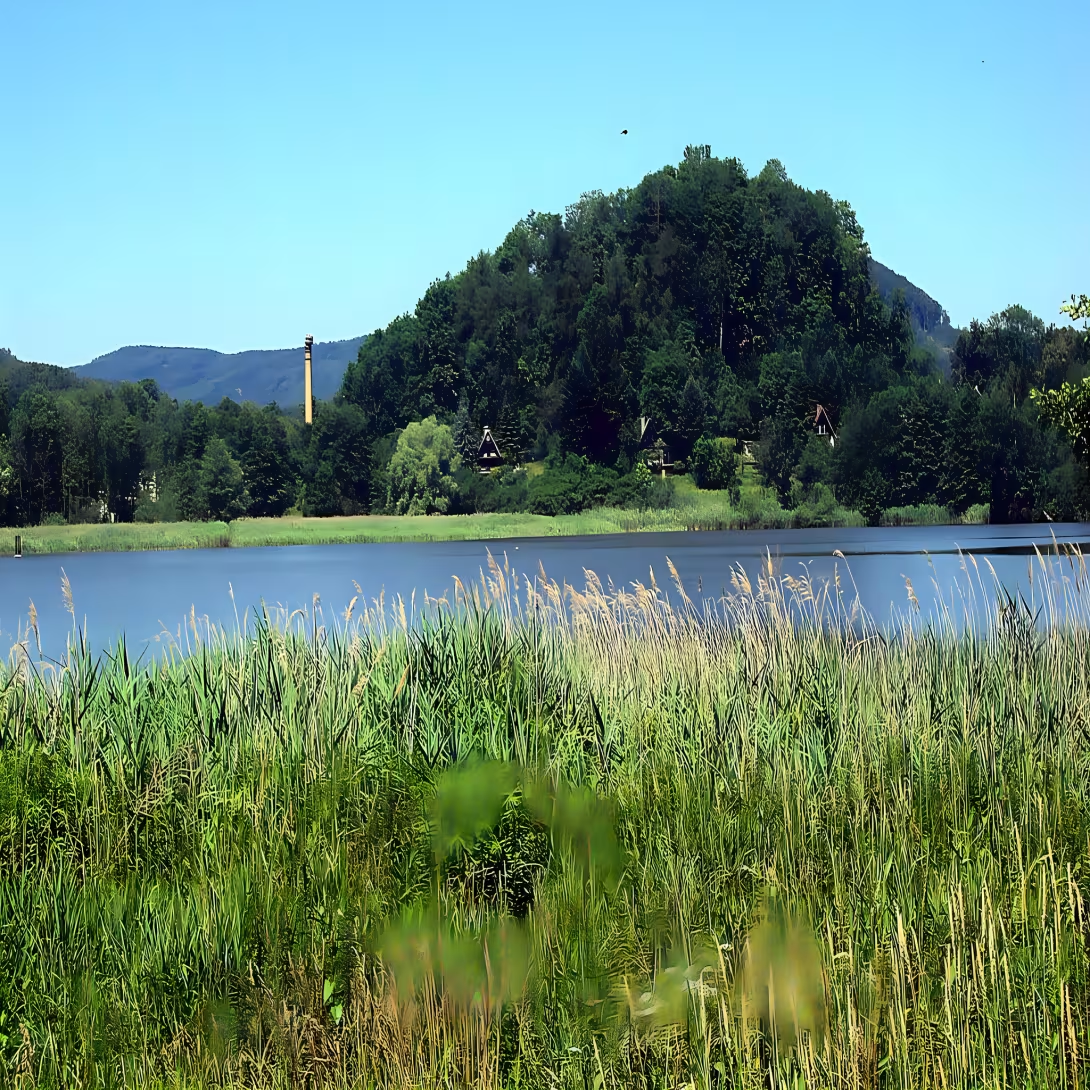
Pihel is an extinct castle built on the steep Pihel hill above the village of Lower Pihel in the district of Česká Lípa, Liberecký kraj. This historical object is one of the small castles of the donjon type and is today protected as a cultural monument. The castle was founded in the first half of the 14th century, as evidenced by archaeological findings and written records. The oldest mention about Pihel dates back to 1396. The castle remains are today badly damaged by the quarry, but a part of the predam, the perimeter walls and the foundation of the tower building has been preserved.
Pihel was probably founded by Hynek Hare from Hazmburk or his son William Hare from Hazmburk. This family played an important role in the medieval history of Bohemia when the Czech estate was divided into powerful noble families. In the first half of the 15th century, Pihel Janu's castle belonged to Chlum, a time of political change and religious conflict, especially Hussite wars. These wars had a significant impact on the fate of many walls in Bohemia.
The Pihel Castle was built from local materials as basalt, tuf and sandstone. Typologically he was one of the small castles of the donjon type with the assumption of a two-part configuration. The main residential building stood at the top of the pile, while the underpanded building was 10 × 16 metres and covered with a premium cover. Construction material and technology suggest that the castle was designed for defence and residential purposes.
The ownership of Pihel has changed over the years. After Hynek Zajic of Hazmburk and his son Wilhelm, the castle was taken over by John of Hlum, who acquired it before 1421. During the Hussite wars Pihel was occupied by the Hussite crew and later empowered by Hynek Hlaváč Berka of Dubé, who joined him to the castle estate Lipý. After these events it appears that Pihel was not maintained and gradually fell into oblivion.
Key events include the occupation of the Hussite crew between 1422 and 1423. This event is an important milestone that reflects broader historical contexts of the time when intense religious and political changes took place in the Czech Republic. After the Hussite wars, the descriptions of the Leipzig estate from 1455 Pihel no longer indicated, suggesting its gradual decline.
Today the remains of the castle Pihel are accessible only through undescribed terrain. There are no tourist marked paths leading directly to the castle ruins, which is why this historical object is not among the popular destinations. However, for those interested in medieval architecture and history of Bohemia, a visit to Pihel can be a valuable experience.
The view of this monument is reminiscent of the importance of preserving historical buildings as evidence of the past. Despite their often fragmental state, they can provide valuable information on lifestyle, technology and political events of earlier times. Pihel is a reminder of the complicated history of the Czech Middle Ages and its visit can be an exploration of not only archaeological relics, but also deeper layers of Czech history.
Then and now
Drag the slider to compare how the landmark may have looked when it was built with the view today.
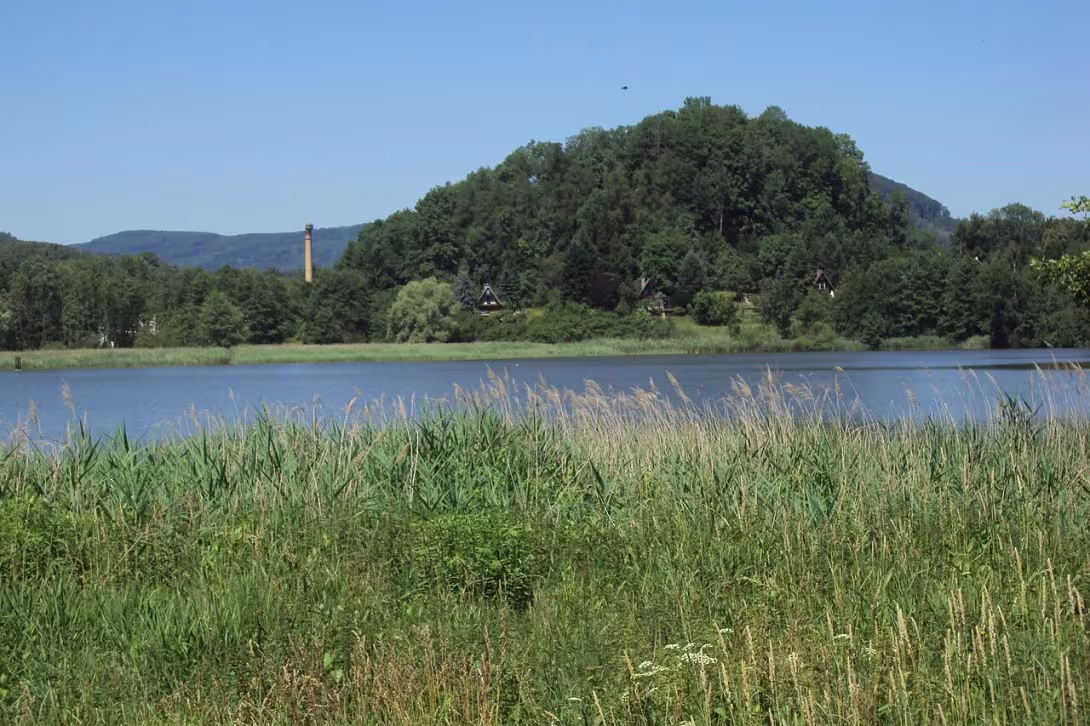
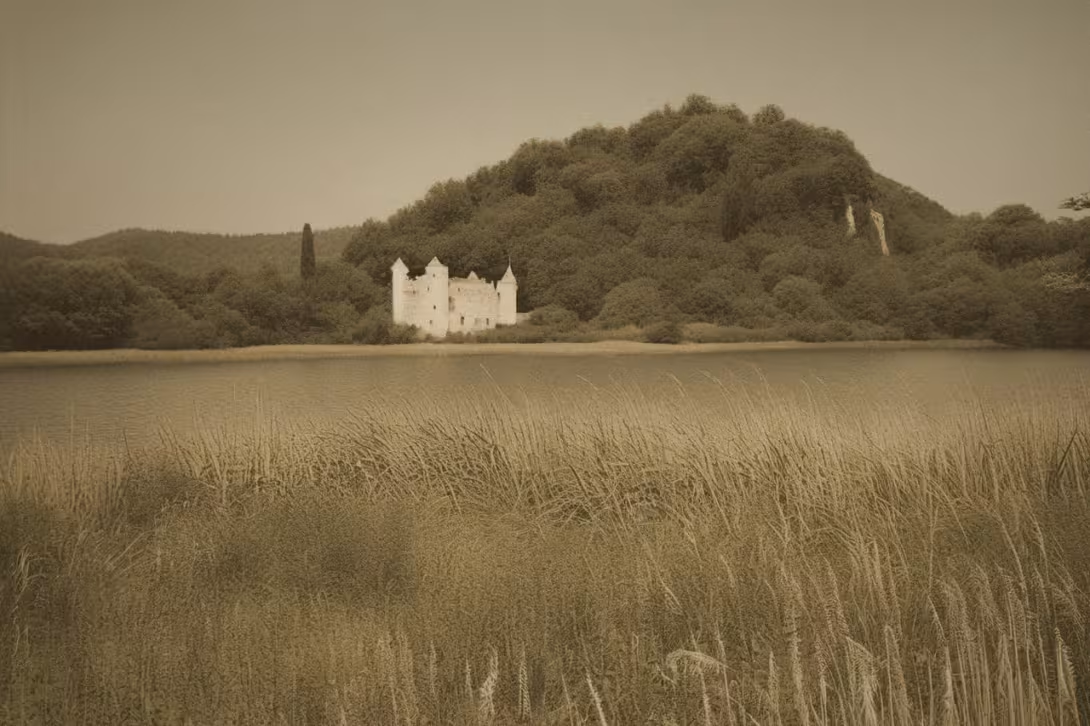
The historical appearance on the left is an AI-generated visualisation and serves as inspiration only.
Historical milestones
- 1396
- First written mention of the castle.
- 1422-1423
- The Hussite crew have taken over the castle.
Architectural development
The castle was built from local materials as basalt, tuf and sandstone. Typologically he was one of the small castles of the donjon type with the assumption of a two-part configuration. The main residential building stood at the top of the pile, while the underlying building had dimensions of 10 × 16 meters.
Historical events
- 1396
- 1422-1423
- 1455
Owners
- before 1396
- after Hynek, before 1421
- from 1421
Points of interest
- Pihel is a extinct castle built in the first half of the 14th century.
- The oldest mention about Pihel dates back to 1396.
- The castle was probably founded by Hynek Hare from Hazmburk or his son William Hare from Hazmburk.
- In the first half of the 15th century, Pihel Janu's castle belonged to Chlum, the age of Hussite wars.
- The cast of the Hussite crew between 1422 and 1423 is an important milestone in Pihel history.
Guide
This guide is narrated by a synthetic voice generated by artificial intelligence.
Show guide text
This text was created by artificial intelligence and has not been editorially reviewed. It may contain inaccuracies.
Welcome to the steep hill above the village Lower Pihel, where you stand in front of the extinct castle Pihel. This place can offer you a sense of travel to the past when you look at tiny terrain relics of buildings and fortifications that still tell their story here. Although the castle belonged to a small castle of the donjon type and its physical form is now almost lost, it is protected as a cultural monument. Notice the air of history and imagine the lives that once broke in.
Pihel was built in the first half of the 14th century and its oldest written mention dates back to 1396. The castle is strongly associated with historical personalities such as Hynek Zajíc z Hazmburka, who probably founded the castle, or his son Vilém Zajíc z Hazmburka, who played an important role in its early history. In the first half of the 15th century, Janu Castle belonged to Chlum, a time of political change and conflict.
Let's move on to an archaeological discovery to help you imagine the architectural elements of the castle. Even though there are only tiny terrain relics, you can imagine how these structures were once built on a steep Pihel hill. The castle belonged to a small castle of the Donjon type, which means that its design was focused on defence and resistance.
Among the key stories associated with Pihl is the Hussite cast in 1422-1423. This event meant that the castle was a strategic position during Hussite and witnessed its importance in regional policy at the time.
Now look up to the steep peak where the castle once stood. The interesting thing is that despite its extinct nature Pihel preserved some of its ancient charm and mystery. You can imagine the history and fate of people who once lived or fought in this place.
It's a place full of mysteries and stories worth exploring. Imagine the world of the past rolling around these hills, leaving your imagination free to imagine life at that time. I hope your visit here was interesting, and I invite you to explore other parts of the Liberec Region, where every stone has a story. Thank you for your attention and I hope you will return with new curiosity.
Tips for visitors
The best time to visit Pihel is in the spring or autumn period when views of the surrounding landscape are particularly impressive and weather friendly for long walks. Sunny days in these seasons offer ideal conditions for exploring historical ruins.
Public transport can be a convenient way to get around Pihel.
When planning a visit, it is advisable to bring shoes suitable for walking on uneven terrain, protective sunglasses and plenty of water. Also remember the camera or camera, because Pihel offers several perspectives for beautiful photos.
For photographers, the best time of the afternoon is when the sun lights up the castle peak and surrounding forested areas. Places around the ruins are ideal for capturing the historic atmosphere.
In the vicinity of Pihel it is possible to visit a small pond, located nearby and offers quiet moments for relaxation. For families with children it may be interesting to explore the surrounding forests and the natural environment.
Frequently asked questions
Can the monument be visited?
This is a ruin. Such sites are often freely accessible, but some can only be visited with a guide or are closed for safety reasons. We have not verified the current situation – take care and respect any restrictions.
Where is the monument?
Location: Pihel, Liberecký kraj. The map on this page shows the exact spot.
Why is the monument protected?
It is listed in the Central List of Cultural Monuments of the Czech Republic as a cultural monument (register no. 30008/5-3211).
For kids
This is an adventure waiting for you! I'd like to tell you about Castle Pihel, which stood 626 years ago, in 1400. It was supposed to be too strong and powerful!
Imagine you found yourself at the time where the Hazmburk estate had vast properties and wealth. Perhaps the founder of the castle Pihel, Hynek Zajíc z Hazmburka or his son Wilhelm, wanted to build the castle to be his residence castle. And that's how Castle Pihel was built!
Businesses nearby
Do you run a restaurant, accommodation, shop, museum, rental, wellness or other visitor service near this monument? Show yourself directly to the people heading to it — this is how they will see you in the app and on the web:
Events nearby
Zdroj akcí: otevřená data měst a obcí ČR (Národní katalog otevřených dat) a kalendář akcí Národního památkového ústavu.
Nearby
Vsí Lower Pihel, Nový Bor district, Liberecký kraj
Accommodation nearby
Themed route
Thematic cruise route from the village Pihel
1. Castle Pihel * Type: * Historical landmark * Why is it worth visiting: * Castle Pihel is one of the oldest forts in the Czech Republic, with a rich historical background dating back to the 13th century. Visit his narrow corridors, rough carved stone steps and see the exhibition about the history of the castle.
2. Church of St. Gilji * Type: * Religious landmark * Why is it worth visiting: * This church is one of the oldest sacral objects in the village Pihel. Its Gothic elements and history attract many visitors who want to explore its architecture and enjoy the quiet surroundings.
3rd Pihel Park * Type: * Green Territory * Why is it worth a visit: * The park is an ideal place to relax and walk after visiting the castle. Its natural beauty offers peaceful pavements that stretch around the castle and church, allowing you to enjoy the views of the village landscape.
4. Pihel Garden * Type: * Historical park * Why is it worth a visit: * The garden is famous for its ancient trees and a calm atmosphere that creates an ideal environment for interview or reading. It's a place full of history and natural beauty where you can enjoy a quiet moment.
5. Pihel pond * Type: * Water * Why is it worth visiting: * The pond is an ideal place for relaxing and observing nature. Its peaceful waters are home to various kinds of birds, making it the perfect place for nature lovers and photographers.
This route offers a combination of history, culture and natural beauty in the village Pihel.
Seasonal recommendations
Spring: In the spring season Pihel Castle is surrounded by flowers and young tree leaves, creating a lively and full of hope atmosphere. The sun illuminates the ruins with its warm light, which emphasizes historical architecture. For a visit it is advisable to come in the early afternoon when the crowd has saved more space and you can enjoy a quiet walk around the castle. It is recommended to wear comfortable shoes and a light jacket, as the temperature during the day can fluctuate rapidly.
Summer: Summer is Pihel in the main summer season most visited. The sunny days bring a bright light that illuminates the walls of the castle and emphasizes its historical beauty. This season you can meet a larger crowd of visitors, so it is advisable to come early in the morning or later in the evening to enjoy a quiet visit. The important thing is to wear a sun hat and protective eye glasses as well as enough drinking water.
Autumn: In autumn the castle Pihel becomes melancholic atmosphere with darker colours of trees and a quieter environment. The sunny afternoon can still be warm, creating ideal conditions for walking around the castle. This season the attendance rate is usually lower than in summer, so you can enjoy a quiet atmosphere without obstacles to large crowds. It is recommended to wear warm clothes and shoes suitable for the lawn surface.
Winter: Winter visit to the castle Pihel offers a unique atmosphere where the ruins are covered with snow and light. Short days mean shorter opening times, so it is advisable to come early in the morning. Winter visit requires warm clothes, including fur and thick shoes, to enjoy a walk without losing heat. The atmosphere is calm and intimate, offering an opportunity to reflect in the historical environment.
Visualizations and artistic views


The visualisations are generated by artificial intelligence and serve as inspiration.
Photos from the area
Real photos taken near the monument

Zdroj a licence jsou uvedeny u každého snímku.
Atmosphere of the place
This atmospheric visualisation of the place and period was generated by artificial intelligence. It is not real footage of the location.
Tips from visitors
No tips yet. Be the first!
Log in and add your tip.
Sources and literature
Photos: Zákupák / Public domain, rozlišení zvýšeno umělou inteligencí — Wikimedia Commons. The author and licence also appear when you hover over the image.
Faktickým podkladem tohoto textu byl článek na Wikipedii, jehož autory jsou přispěvatelé Wikipedie. Článek je dostupný pod licencí CC BY-SA 4.0.
Location on the map
Příběhy a pověsti
Legendy, pověsti a příběhy spjaté s touto památkou

Fotografie návštěvníků
Zatím žádné fotografie. Buďte první, kdo přidá fotografii z návštěvy!
Log in a přidejte svou fotografii nebo hodnoťte.
Za ověřenou návštěvu v aplikaci získáte víc bodů — poznáme podle GPS, že jste na místě.
Reviews and comments