






Pivovar Postoloprty Brewery building
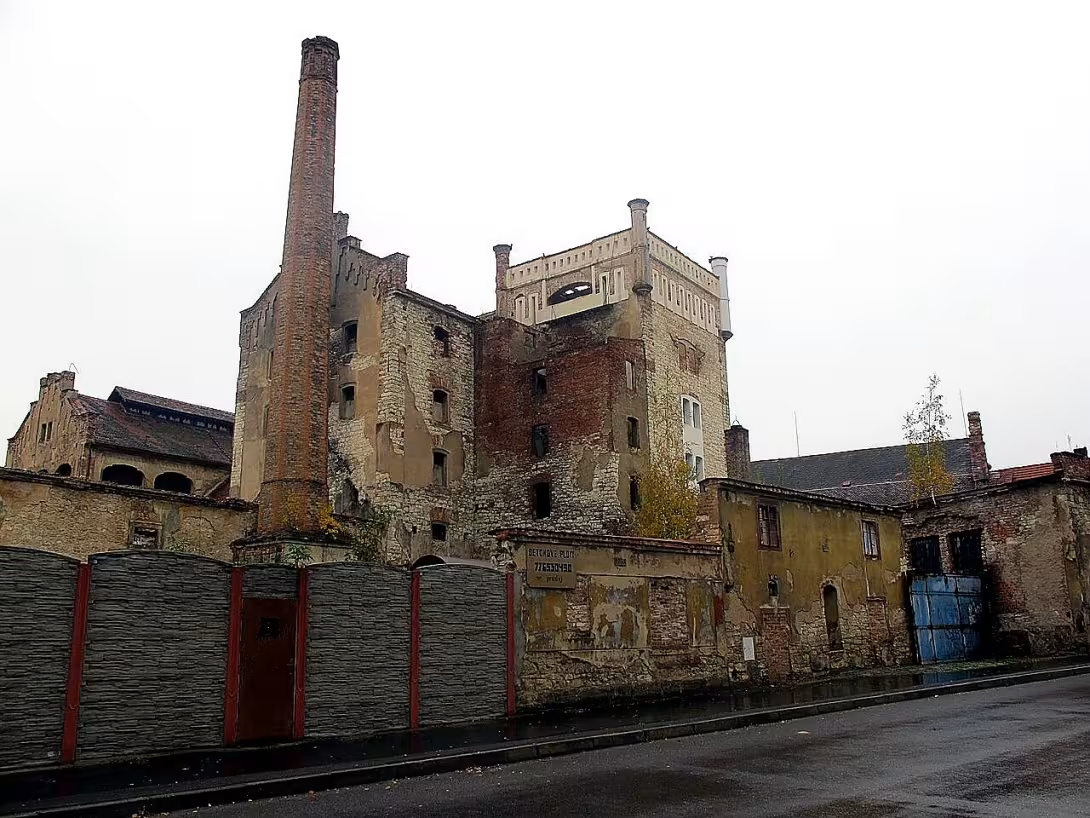
Pivovar Postoloprty is an abandoned public brewery in the village Postoloprty in the district of Louny, built in 1692-1693. Thanks to its architecture and preserved production technology, the site is protected as a cultural monument. It lies on the eastern edge of the city between Alsova and Wolker Street.
The building was built by Ferdinand Vilém Eusebius ze Schwarzenbergu according to the design of architect Giacoma A. de Maggi. The brewery was created at the end of the 17th century in the period of Baroque construction of the premises in Bohemia.
The original building from the end of the 17th century was a simple two-storey building, in which in addition to the production premises there were employees' flats. Later modernization from the second half of the 19th century respected the original project and the matter of the adjacent castle. New lager cellars, boathouse, machinery room, boiler room, steam-powered cookers, cold stores and spillets were created as part of the development. In 1871-1874, the lager cellars at the castle, which separates Wolker Street from the brewery itself, were expanded. The premises are dominated by a cold room with a window arcade covered by wooden blinds.
In 1860-1870, the brewery underwent extensive modernization according to plans of the Lovosice construction office Dr. J. Hanamanna. Adjustments made it possible to increase beer production five times, reduce operating costs and improve product quality. This development phase reflected the industrial revolution and the mechanisation of food production in Europe.
The beer production ended after World War II and the technological equipment was destroyed. After 1989, the buildings began to collapse, but in 1999 the site was acquired by a new owner who started its gradual reconstruction.
Currently, the site is being restored. The monument is important in its technical and architectural character and connection with the history of the local estate.
Pivovar Postoloprty represents a valuable example of the Czech brewing industry and its industrial development. It is a place that is worth visiting all those interested in regional history and architecture.
Historical milestones
- 1692
- start construction of the czech brewery
- 1860
- launch of modernization according to plans of the hunting office Dr. J. Hanamanna
- 1871
- expansion of lager cellars near the castle
- 1999
- acquisition of new owner and start reconstruction of the complex
Architectural development
Originally, the complex formed a simple two-storey building from the end of the 17th century. In the years 1860-1870 there were added lager cellars, boathouse, machinery room, boiler room, steam-powered cookers and cold stores. In 1871- 1874 there was another expansion of the lager cellars near the adjacent castle.
Historical events
1692-1693: brewery construction, 1860-1870: modernization of production, after world war ii: end of beer production
Owners
Ferdinand Vilém Eusebius ze Schwarzenbergu (founder), new owner since 1999
Points of interest
- The brewery was built in 1692-1693 by Ferdinand Wilhelm Eusebius from Schwarzenberg according to the Giacoma A. de Maggi project. - It is protected as a cultural monument thanks to its architecture and preserved production technology. - The premises are dominated by a cold room with an arcade of windows covered by wooden blinds. - Modernization in the years 1860-1870 has enabled five times to increase beer production, reduce costs and improve product quality. - The original building from the end of the 17th century was a simple two-storey building in which there were, in addition to the production premises, the employees' flats.
Guide
Show guide text
This text was created by artificial intelligence and has not been editorially reviewed. It may contain inaccuracies.
Welcome to Postolofarts. Stop for a moment, take a breath and feel the atmosphere of this place. You are standing right outside the premises of the former master brewery, which is today protected as a cultural monument. If you look at the buildings in front of you like this, you may see silence in them, but in the past there was a constant movement, the sound of work and the smell of malt and hops. It is a place where the history of nobility meets industrial progress and where every stone tells its own story of ambition, craftsmanship and time changes.
Let us now move together deep into the past by the end of the seventeenth century. Imagine a time when the landscape around us was completely different and power in the hands of several selected families. It was at this time, between 1692 and 1693, that this area began to emerge here. His founder was Ferdinand Vilém Eusebius ze Schwarzenbergu. For such a nobleman, the brewery was not only a source of profit, but also a symbol of the power and economic stability of its estate. At the time it was a master brewery, which meant that it was directly linked to the castle goods and the needs of the surrounding estate. In order for the building to match the former taste and status of the founder, Giacomo A. de Maggi was invited to its project. This architect brought his experience into the building and helped to create a foundation on which the brewery stood for centuries.
Today, when you are looking at the facade and the overall availability of the premises, see in them the clue of the time when baroque elegance was bound to the practical needs of beer production. It is fascinating to think how many generations of people have worked here and how this space has evolved along with cooking techniques. The brewery was not a static building but a living organism that had to respond to new needs and new technologies.
Now pay attention to how the site changed in a later period. Let's move our perspective to the second half of the nineteenth century. There was a major break in 1860. The world was changing, the era of the industrial revolution was coming, and so was the need for much greater production capacity. It was at that time that extensive modernization started, which was conducted according to the plans of Dr. J. Hanamann's hunting office. This change was not just cosmetic. Modernization significantly increased production capacity and transformed the master brewery into an efficient beer machine that could supply a much wider district.
Now look carefully at the details of the buildings in front of you. One of the most significant dominance of the entire complex is the cooling room. Note its specific shape, especially the window arcade, which is covered by wooden blinds. This detail is not only an aesthetic element, but in the days before the onset of modern cooling, it performed an important function in regulating temperature and light in the space where beer matured. It is these elements, such as the said blinds and the overall architectural composition, that make this place a cultural monument. It is a rare proof of how the technical complexity of the brewing industry was dealt with in the past using architectural elements.
The key figure related to this place was already mentioned Ferdinand Vilém Eusebius ze Schwarzenbergu, but over the years other professionals and craftsmen have also left their trail. It is important to remember that the brewery was not an isolated place. In 1871 there was another expansion, namely the lager cellars near the castle. This connection with the close lock underlines the role of the brewery as an integral part of the government's economy. Imagine those deep, cold cellars, where beer was ripening in silence and calm, while the daily life of the castle yard took place over them.
You may be interested in what makes this brewery so special in the eyes of experts. In addition to the architecture itself, it is mainly preserved production technology. Although the brewery is cancelled today, in its structures, there are traces of processes that have defined the brewery of its time. It's like an open book on technical developments where you can read about the transition from traditional methods to industrial production. It is this combination of historical buildings and traces of old technology that is why the site is so carefully protected.
But the history of this place is not just about flourishing. Like many other historical sites, the brewery in Postoloprtech went through a period of decline. There was a time when his fame was finally lost and buildings became subject to time. However, the story doesn't end sadly. In 1999 he acquired the premises of a new owner, which meant a new beginning. A reconstruction was launched to preserve valuable elements and return their formal dignity to buildings. It is a reminder that even if the function of the building changes and the beer does not flow in as much as it used to, its historical and cultural value remains.
Now, if you look around you, try to imagine the contrast. On the one hand, the Baroque vision of Giacomo A. de Maggi, on the other, Dr. Hanamann's precise plans. Among them hundreds of years of work, thousands of gallons of brewed beer and a constant struggle for quality and modernization. This complex is a silent witness to how our economy changed, how people's preferences changed and how architecture adapted to new technologies.
Now invited to walk around the premises at a slow pace. Feel the texture of the walls, watch the rhythm of the cold room windows and think about how many stories have happened in these walls. Even if we can't enter all the spaces, the outside view alone tells us enough about the ambitions of the people who built and maintained this place.
Thank you for spending time with us with this fascinating witness in history. We hope that you have found a way to understand the importance of the brewery in Postoloprty and that its architecture and its story interest you. We wish you a pleasant continuation in discovering the beauty of this region and we recommend looking around for further traces of the estate. Goodbye.
Tips for visitors
For the best experience we recommend a visit outside the main season, where the surrounding atmosphere is quieter. You can reach the monument by car and public transport; Check the current connection in the search engine before the journey.
We recommend to bring comfortable shoes suitable for historical surfaces. If you want to focus on photography, the best light to capture details of architecture is during morning or late afternoon hours when the sun creates interesting shadows.
It is ideal for families with children to choose walks in the quiet surroundings of the monument. We recommend visiting the nearby castle in Postoloprtech.
Due to the ongoing reconstruction, we recommend monitoring the current state of work to make your tour as reassuring as possible and without surprise.
Businesses nearby
Do you run a restaurant, accommodation, shop, museum, rental, wellness or other visitor service near this monument? Show yourself directly to the people heading to it — this is how they will see you in the app and on the web:
Events nearby

Zdroj akcí: otevřená data měst a obcí ČR (Národní katalog otevřených dat) a kalendář akcí Národního památkového ústavu.
Nearby
Neighborhood lock in Postolofarts.
Accommodation nearby
Themed route
Pivovar Postoloprty Type: Industrial monument, brewery Why is it worth a visit: This is one of the oldest and most important brewery areas in the Czech Republic, where you can see historical buildings, modern production lines and taste the famous posiloprtic beer. The area offers a rich history associated with the Thun-Hohenstein family and the development of brewing in the region.
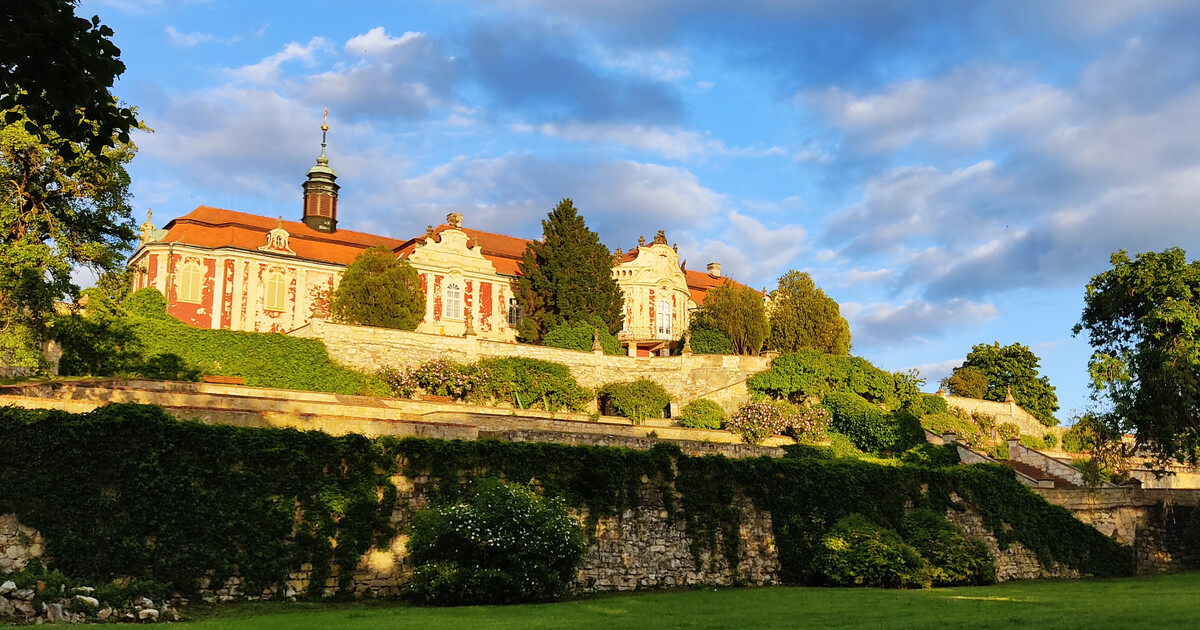
Castle Postoloprty Type: Castle, cultural monument Why is it worth a visit: The neighbouring castle forms a harmonious architectural unit with the brewery and offers a view into the life of the nobles in the region. In the interiors there are exhibitions and salons which complement the picture of the history of the village and its importance to the local economy and culture.
Tanks and park facilities Type: Public area, green area Why is it worth a visit: The space between the brewery and the castle is ideal for a short walk and rest after the tour. Green areas and historical buildings create a calm atmosphere that allows you to enjoy the atmosphere of this unique industrial and noble area without the need to leave its immediate surroundings.
The route is designed so that the visitor can effectively explore the main attractions of the village Postoloprty in a short time. It starts at the brewery, which is the heart of the village, and continues to the neighbouring castle, while the whole journey takes place in the immediate vicinity of these two key buildings. Given the limited range of information available on other specific locations in the vicinity, the route focuses solely on these two main objectives and their direct surroundings, ensuring a logical and coherent course of the trip without commuting to more remote locations.
Seasonal recommendations
Spring in Postoloprty brings gradual warming and awakening of nature, creating a pleasant contrast to the historical walls of the brewery. The light is soft at this time and longer days allow longer walks around. The atmosphere is quiet, ideal for those who want to visit the memory without large crowds. In practice, spring is a great choice because tourism is still gaining strength. I recommend layered clothes with a light jacket because temperatures can change quickly. The best time to visit is in the morning when the air is fresh and the roads are less crowded. It is important to verify the current state of reconstruction, because some parts may still be closed to the public during the spring, while others are gradually opening.
Summer brings maximum heat and longer days to Postološtek, which requires a different approach to visit. Strong sunlight can be uncomfortable in the morning, therefore it is crucial to avoid direct sun and look for shade. The atmosphere is more lively and busy in the main summer season, which can affect the comfort of the tour. The practical advice is to come as soon as possible in the morning to avoid the biggest crowds and heat. Clothes should be light, breathable and of natural materials, supplemented with a hat and plenty of drinking regime. Due to the ongoing reconstruction, the movement on the premises may be limited, so it is advisable to carry comfortable shoes and assume that access routes can be strenuous in summer.
Autumn in Postoloprty offers a unique atmosphere thanks to changing leaves and colder air, which provides a special charm to historic buildings. The golden and red tones of nature perfectly contradict grey stone houses, creating photogenic scenes. The light is shorter and more dramatic this season, which underlines architectural details. Practically autumn is less crowded period, so you can enjoy the memory in peace. Clothes should be warm, with emphasis on layering, because the wounds and evenings are already cold. The best time to visit is in the late morning when the air gets warmer. It should be assumed that wet floors or sliding paths may be dangerous during the rainy season, therefore solid footwear is necessary.
Winter in Postoloprty brings peace and quiet, often reinforced with snow cover that changes the appearance of the complex. Short days and low sun create a melancholy but beautiful atmosphere, ideal for thoughtful walks. The temperatures are low, which requires thorough preparation for outdoor stay. The winter is practically the quietest season, but it is necessary to check the opening times, which are often shortened or limited in winter due to reconstruction work. The clothing shall be laminated and impermeable, with an emphasis on thermal insulation, gloves and cap. The best time to visit is in the morning when it's the hottest. Due to the reconstruction, part of the complex may be inaccessible, so it is appropriate to concentrate on those parts which are open and secure during the winter.
Visualizations and artistic views


The visualisations are generated by artificial intelligence and serve as inspiration.
Photos from the area
Real photos taken near the monument


Zdroj a licence jsou uvedeny u každého snímku.
Atmosphere of the place
This atmospheric visualisation of the place and period was generated by artificial intelligence. It is not real footage of the location.
Tips from visitors
No tips yet. Be the first!
Log in and add your tip.
Sources and literature
Photos: Gortyna / CC BY-SA 3.0 — Wikimedia Commons. The author and licence also appear when you hover over the image.
Faktickým podkladem tohoto textu byl článek na Wikipedii, jehož autory jsou přispěvatelé Wikipedie. Článek je dostupný pod licencí CC BY-SA 4.0.
Location on the map
More monuments – Postoloprty
Show all in the municipality
Příběhy a pověsti
Legendy, pověsti a příběhy spjaté s touto památkou
Fotografie návštěvníků
Zatím žádné fotografie. Buďte první, kdo přidá fotografii z návštěvy!
Log in a přidejte svou fotografii nebo hodnoťte.
Za ověřenou návštěvu v aplikaci získáte víc bodů — poznáme podle GPS, že jste na místě.
Reviews and comments