



Podlažický klášter Monastery
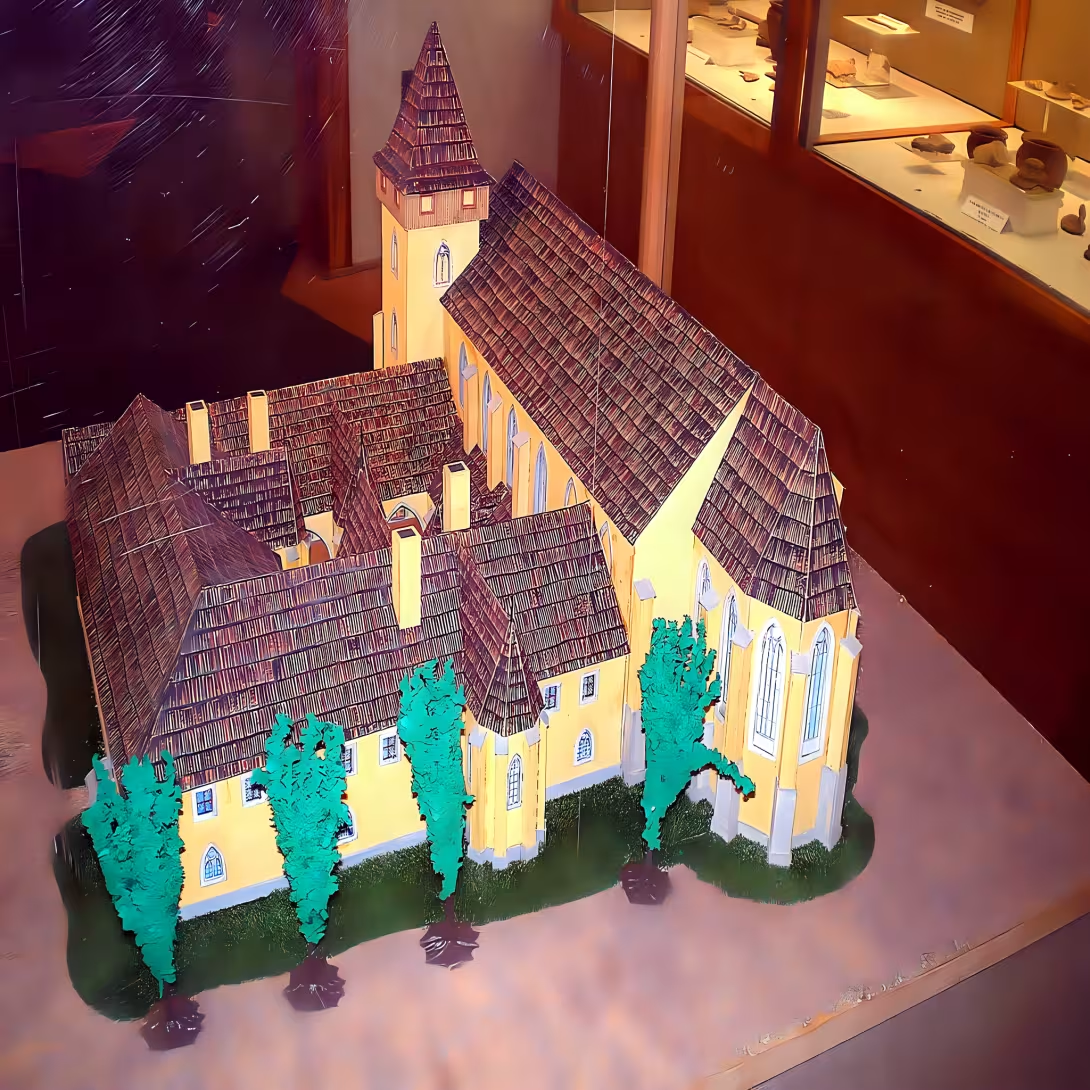
Objekt se nedochoval — na místě dnes nestojí. Následující text popisuje jeho historii, ne současnou návštěvu.
Podlažický Klášter is a historical site located in Podlažice, within the Chrudim District of Pardubický kraj. It originated as a Benedictine monastery established before 1150 by nobleman Vrbata z Kostelce. The complex gained significance through its association with the Hirsau monastic reform and functioned as a double monastery housing both monks and nuns until its destruction in 1421 during the Hussite Wars. Despite being razed, it remains historically important for archaeological findings and documents like the Codex Gigas.
The origins of Podlažický Klášter trace back to before 1150 when Vrbata z Kostelce founded it. The monastery is first documented in 1159, linked to Vrbata's efforts to establish a religious community. Construction likely began earlier, reflecting broader ecclesiastical reforms influenced by movements such as Hirsau, which emphasized stricter monastic discipline and led to the creation of double monasteries.
Architecturally, Podlažický Klášter was constructed in Romanesque style, typical for its period. It functioned as a double monastery with distinct areas for monks and nuns to minimize interaction, indicative of the Hirsau reform's influence during the 11th and 12th centuries. Specific architectural details are limited due to its destruction in 1421.
Throughout its history, Podlažický Klášter experienced changes in ownership and administration. Initially established by Vrbata z Kostelce, it was later led by figures such as Hugo, the first abbot, documented as a witness in a charter from 1160. Its fortunes changed dramatically when destroyed by Hussite forces during their campaign through Eastern Bohemia in 1421. Despite this devastation, its legacy persisted, with Pope Nicholas V appointing Bonifáce z Volkenštejna as titular abbot in 1448.
The site is marked by key historical events and curiosities that underscore its significance. The monastery's destruction during the Hussite Wars was pivotal, reflecting broader religious upheaval. Among its notable artifacts is the Codex Gigas, one of the largest medieval manuscripts created at Podlažice. Additionally, a copper baptismal font from 1406, originally part of the monastery's inventory, now resides in Hradec Králové Cathedral.
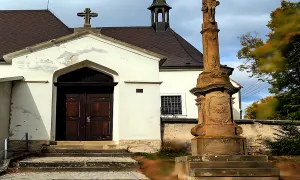
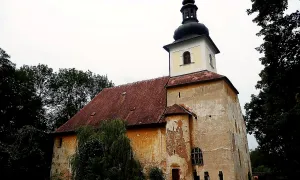
Today, the site is an archaeological landmark with remnants offering insights into its past grandeur and significance. The area includes a church dedicated to Saint Markéta Antiochijská, built between 1696 and 1721 on the site of the original church. While much of the physical structure has vanished, the historical narrative preserved through findings and documents like the Codex Gigas continues to attract interest.
Visitors can explore a site rich in history, where remnants provide a window into medieval monastic life and turbulent times leading to its destruction. The enduring legacy of the monastery, encapsulated by artifacts such as the Codex Gigas, makes it a compelling destination for those interested in exploring faith, art, and history intersections.
Then and now
Drag the slider to compare how the landmark may have looked when it was built with the view today.
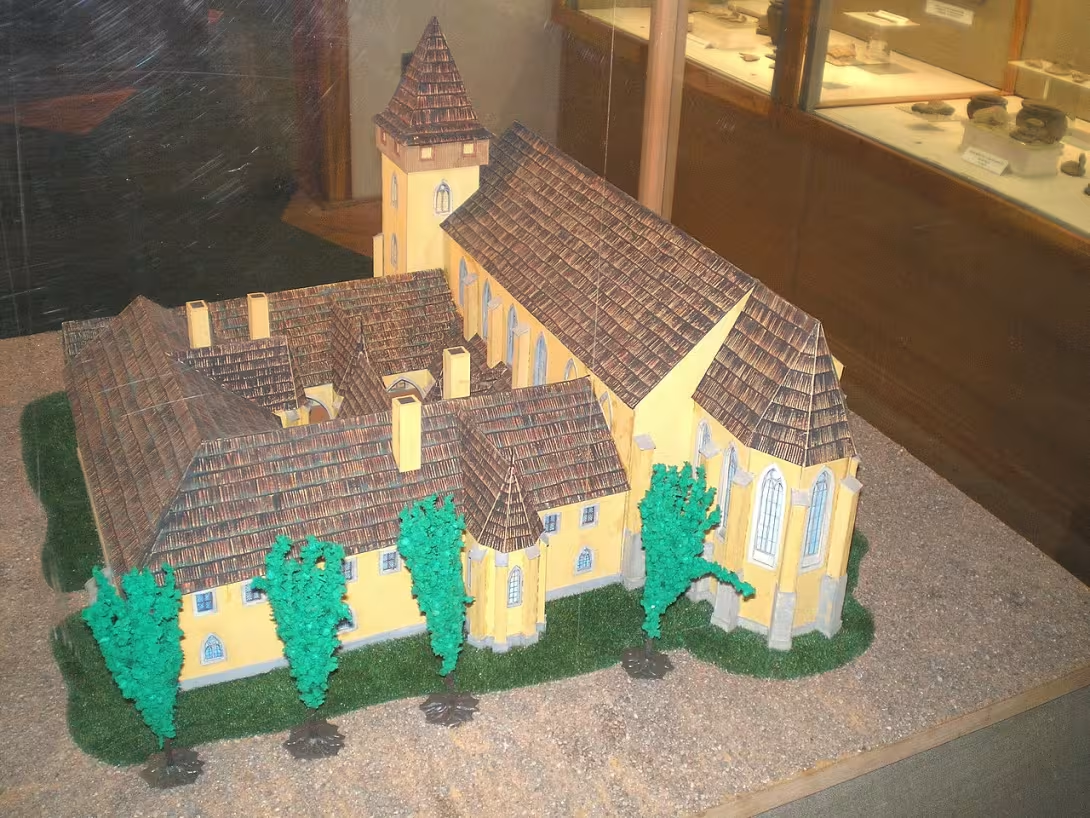
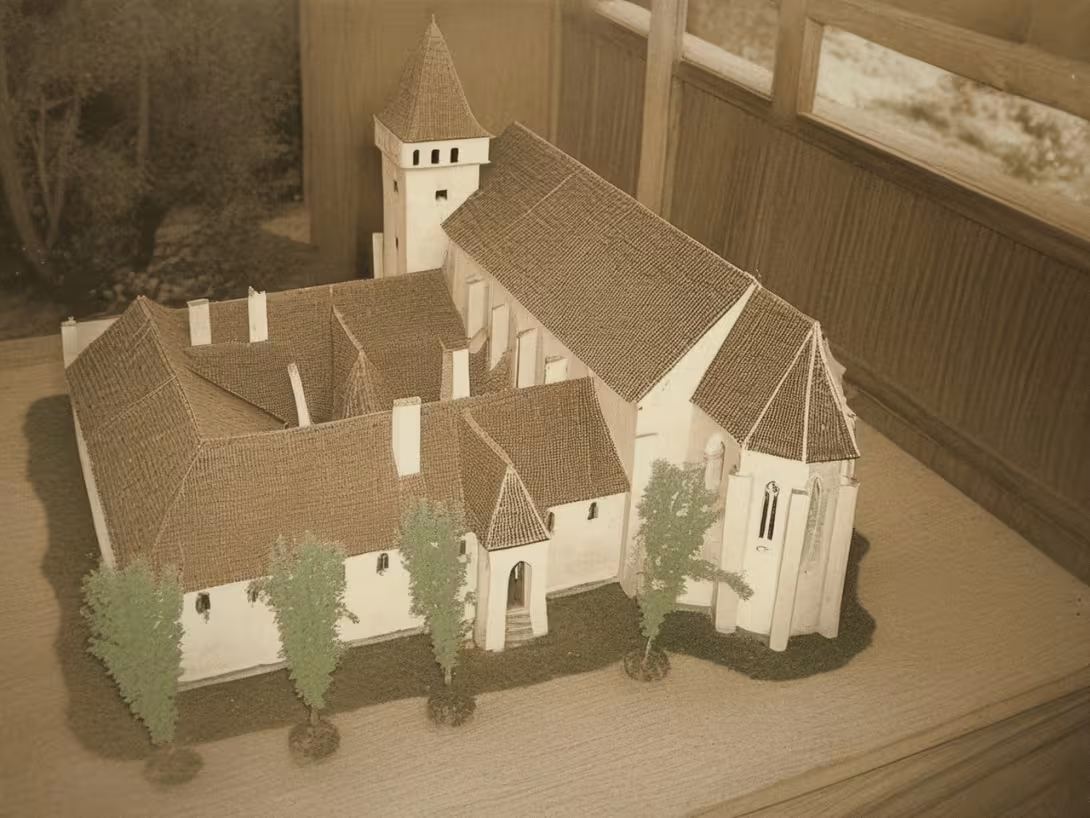
The historical appearance on the left is an AI-generated visualisation and serves as inspiration only.
Historical milestones
- prior to 1150
- Foundation of the Benedictine monastery in Vrbatou from Kostelec.
- 1159
- First documentation of the monastery in historical sources.
- 1160
- Hugo, the first abbot, is a witness to a charter.
- 1421
- The monastery is destroyed during the Hussite Wars.
- 1448
- Pope Nicholas V appoints Boniface of Volkenštejn as titular abbot.
Architectural development
The original Podlažice Benedictine house was likely constructed as a double monastery, reflecting the Hirsau reform's influence. The complex included separate areas for monks and nuns with minimal interaction. After its destruction in 1421, it was never rebuilt.
Historical events
1150: Establishment of the monastery by nobleman Vrbata z Kostelce.
1421: Destruction by Hussite forces during their campaign in Eastern Bohemia.
Points of interest
- The Podlažický Klášter was part of the Hirsau monastic reform movement, which emphasized stricter discipline and led to its unique double monastery structure housing both monks and nuns.
- Despite being destroyed in 1421 during the Hussite Wars, the monastery's legacy is preserved through significant artifacts like the Codex Gigas, one of the largest medieval manuscripts known as the "Devil’s Bible."
- A copper baptismal font from 1406 that originally belonged to Podlažický Klášter now resides in Hradec Králové Cathedral, showcasing the monastery's historical and artistic contributions.
- In a twist of fate, Pope Nicholas V appointed Bonifáce z Volkenštejna as titular abbot of the monastery in 1448, long after its destruction, highlighting its enduring spiritual significance.
- Today, visitors can explore remnants of Podlažický Klášter and a church dedicated to Saint Markéta Antiochijská built between 1696 and 1721 on the site of the original church, offering insights into medieval monastic life.
Guide
This guide is narrated by a synthetic voice generated by artificial intelligence.
Show guide text
This text was created by artificial intelligence and has not been editorially reviewed. It may contain inaccuracies.
Podlažice are nowadays a local part of Chrasti u Chrudimi. In the twelfth century, a Benedictine monastery was founded here, which survived until the spring of fourteen twenty-one. At that time it was destroyed by Hussite forces during their campaign into eastern Bohemia and was never rebuilt.
The monastery is first mentioned in the year eleven fifty-nine in connection with a nobleman Vrbata, who had it built. However, construction probably began already before eleven fifty. The monastery's necrology names Vrbata of Kostelce as the founder and donor. The monks were apparently sent here by the abbot of the monastery in Opatovice nad Labem. The first abbot was Hugo, known as a witness in a charter from eleven sixty.
Podlažice was apparently founded as a double monastery in the spirit of the Hirsau reform. In such monasteries, monks and nuns lived side by side, in separate areas with minimal contact. They were typical of the eleventh and twelfth centuries, and from the middle of the twelfth century they gradually disappeared. They appear rarely in sources. Most reliably they are revealed precisely in necrologies, where the nuns are designated by special terms, among others by the word soror, meaning sister.
Around thirteen fifty, twenty monks lived in the monastery. Even in fourteen forty-eight, long after the monastery's destruction, the Pope appointed a new abbot following the death of abbot Jan, apparently only a titular abbot Boniface of Volkenštejn.
The monastery's most famous work is the Codex gigas, written and illuminated in its scriptorium. It ranks among the world's largest manuscript books and attempted to summarize all knowledge of that time. Because of the full-page depiction of the devil, it is also called the Devil's Bible. From the monastery also comes a tin baptismal font from fourteen oh six, which today serves in the cathedral of the Holy Ghost in Hradec Králové.
The core of the Chrastek estate, which once belonged to the monastery, became in the seventeenth century the foundation of the property of the Hradec Králové diocese. The third bishop of Hradec, Jan František Kryštof of Talmberg, had a Baroque church of Saint Margaret of Antioch built on the site of the original church. Construction lasted from sixteen ninety-six to seventeen twenty-one and the bishop was buried in it in sixteen ninety-eight. The original three-aisled monastery church was almost half as long again.
Archaeologists worked here already in eighteen thirty-four and in the years nineteen oh eight to nineteen oh nine. During the excavation by Jan Frolík in two thousand four, about sixty graves were found of men, women and children, two children's graves even in the paradise court. Why women and children were buried in a male monastery remains unclear. They could have been people from the village, donors of the monastery and their families, or burial here only began after the monastery's destruction in fourteen twenty-one. The finds are stored in the museum in Chrudimi. Further excavation took place in connection with filming the film Ďáblova lest.
Businesses nearby
Do you run a restaurant, accommodation, shop, museum, rental, wellness or other visitor service near this monument? Show yourself directly to the people heading to it — this is how they will see you in the app and on the web:
Nearby
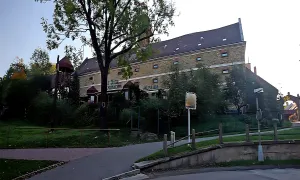
The site is located near Chrastice Castle, which became part of the diocese of Königgrätz in the 17th century. The surrounding landscape includes a former monastery area and archaeological remains.
Visualizations and artistic views


The visualisations are generated by artificial intelligence and serve as inspiration.
Photos from the area
Real photos taken near the monument

Zdroj a licence jsou uvedeny u každého snímku.
Tips from visitors
No tips yet. Be the first!
Log in and add your tip.
Sources and literature
Photos: Josef Hron / Public domain, rozlišení zvýšeno umělou inteligencí — Wikimedia Commons. The author and licence also appear when you hover over the image.
Faktickým podkladem tohoto textu byl článek na Wikipedii, jehož autory jsou přispěvatelé Wikipedie. Článek je dostupný pod licencí CC BY-SA 4.0.
Location on the map

Příběhy a pověsti
Legendy, pověsti a příběhy spjaté s touto památkou
Fotografie návštěvníků
Zatím žádné fotografie. Buďte první, kdo přidá fotografii z návštěvy!
Log in a přidejte svou fotografii nebo hodnoťte.
Za ověřenou návštěvu v aplikaci získáte víc bodů — poznáme podle GPS, že jste na místě.
Reviews and comments