






Kostel svaté Markéty Antiochijské (Podlažice) Church
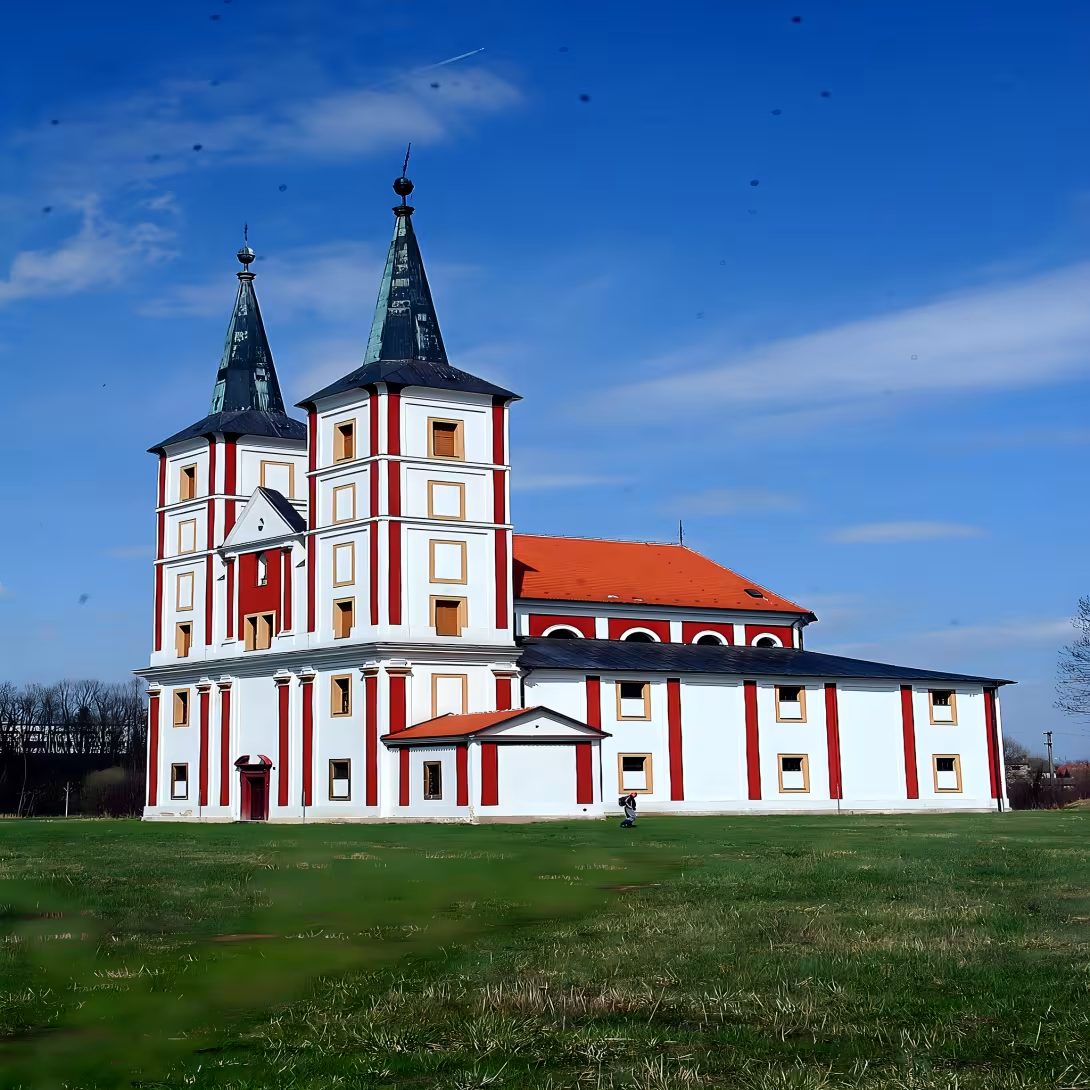
The church of St. Margaret of Antioch in Podlažice, part of the village of Chrast in the district of Pardubice, is a Roman Catholic temple of Baroque style. To build in the Czech environment is often to grow up in places of an older certificate - this is also the case in Podlažice, where the current church follows the old tradition.
The beginnings of local religious life date back to the twelfth century, when the nobleman Vrbata founded the Benedict monastery. This monastery has served its community for centuries, even though it was counted among Czech monasteries among the poorest. The daily life of monks was simple and modest.
But the time of the monastery ended suddenly and tragically. In 1421, during Hussite enquiries to eastern Bohemia, the monastery was destroyed. The monastery had not been restored and the monastery tradition had long disappeared.
Only in 1696, two hundred seventy-five years later, did the landscape change. The initiative was taken by Jan František z Talmberka, Bishop of Hradec. A new church building began to be built in the Baroque style to replace the lost heritage. The project was implemented with ambition and result - a church that still dominates the landscape - speaks for everything. According to his wish, the Bishop was buried in the temple after his death in 1698.
The Podlažice monastery was implanted in the knowledge of the Czechs mainly thanks to a unique book. Codex gigas, also called the Devil's Bible, is the largest manuscript book in the world. It contains not only the complete transcription of the Bible, but also the Kosmova Chronicles of Czech, various tractates, calendar with obituaries, spells and period records. The most famous is the depiction of a giant devil about half a meter high. This book has a long history, but its connection to the Floorboard Monastery makes this place a promise to the past.
Today, interested in history has the opportunity to become acquainted with the story of the Pložice monastery and church at the City Museum in Chrasti, which purchased a replica of the famous Devil's Bible. Here history comes to life and the reader feels the weight of centuries past.
Historical milestones
- 1159
- The founding of the Benedict monastery by the nobleman Vrbata
- 1421
- The destruction of the monastery during the Hussite campaign
- 1696
- Beginning of the construction of the present Baroque church
- 1698
- Death of Bishop John František of Talmberk
Architectural development
On the site of the original medieval monastery was built baroque three-boat basilica with front towers. The new building from the end of the 17th century maintains the ground plan of the original medieval building. The overall appearance corresponds to the Baroque style.
Historical events
1159: Establishment of the Benedict monastery; 1421: The destruction of the monastery during the Hussite campaign; 1696: Construction of the present church.
Owners
Irish Catholic Church
Points of interest
- The present Baroque church follows the tradition of the twelfth century, when the nobleman Vrbata founded the Benedict monastery. - The monastery was counted among Czech monasteries among the poorest. - In 1421 the monastery was destroyed during the Hussite campaign to eastern Bohemia. - The construction of the new Baroque temple was initiated in 1696 by Bishop Králové Hradec Jan František z Talmberka, who was also buried in the church. - Codex gigas, the largest manuscript book in the world, is connected to the site, which contains a depiction of a giant devil about half a meter high.
Guide
This guide is narrated by a synthetic voice generated by artificial intelligence.
Show guide text
This text was created by artificial intelligence and has not been editorially reviewed. It may contain inaccuracies.
Welcome to the Floor. You're standing right in front of a place where history touches the earth and where every brick and every stone tells the story of an ancient century. Look around you. The church of St. Margaret of Antioch, which you are now observing, is not just a building. It is the dominion of this landscape, standing above the surrounding area and reminding all the bystanders that here, in this place, events took place that shaped the history of our region and of the whole Bohemia. Feel this atmosphere of peace and nobility surrounding you. This baroque basilica, which is now right in front of your eyes, seems monumental and confident, but its roots go far deeper into dark and brighter times than it might seem at first glance.
Let's go back deep into the past together to understand why this place is so special. Imagine the year one thousand hundred fifty-nine. At that time, there was no baroque temple, but there was a life that was completely different from today. A nobleman by the name of Vrbata decided that this place would be sanctified by God and founded a Benedict monastery here. Imagine the first stones, the first prayers that were heard in these spaces in the 12th century. Benedict, the benedictini, brought culture, education and order to this area. Although this monastery was referred to as one of the poorest among Czech monasteries in later times, its spiritual importance was extremely strong.
But history wasn't always about peace and prayer. There is a dark period in the history of this place that has come with the stormy times of Hussite wars. In the year one thousand four hundred twenty-one the monastery was destroyed. Imagine the chaos and confusion that brought the Hussite campaign to eastern Bohemia. The holy place was attacked and destroyed, the monastic life was interrupted, and the place that once radiated peace was witnessed by violence and destruction. For years, this place remained a shadow of its past glory until history turned in a different direction.
Now pay attention to the construction itself, which now surrounds you. What you see is the result of a tremendous effort and a new era that took place in the late seventeenth century. The present Baroque temple was built in the years one thousand six hundred and six to one thousand seven hundred twenty-one. Although his face is baroque, full of elegance and dynamics typical of this era, his foundation is much older. Notice how this building respects the layout of the original medieval building. This is a fascinating detail - the Baroque architecture did not start here on the green meadow, but humbly attached to the shapes that the medieval architecture of the monastery determined here. It's like the new century is trying to gently drag new skin over an old, hard skeleton.
This temple is a three-boat basilica. Although you may not have seen the exact plan, you can imagine the tonnage and structure that this type of construction brings. The division into three ships creates a sense of depth and allows light to penetrate inside the temple at a certain angle and create a game of shadows and brightness. When looking at the facade and the total mass of the building, feel the strength with which the Baroque style tried to revive this sacred place again.
In the process of this great recovery there were also fateful moments associated with important people. Did you know that during the construction of this new temple, namely in the year one thousand six hundred and eighty, Bishop Jan František z Talmberka died here? His character is closely linked to this period and the process of the ruins of the old monastery, when a new Baroque form of this place was born. It is a reminder that building such large monuments is not only a matter of stones and mortar, but a process that lasts for generations and is accompanied by the lives of people who believe in it.
If you look at the overall structure of the temple now, you may be interested in its position in the landscape. The church isn't just a building, it's a lighthouse. It stands here as a fixed point that orients the surrounding village and the whole landscape. And at this very depth of history, in this connection between old and new, lies one of the greatest mysteries and proudest of this place.
The place has deep and almost incredible historical significance thanks to its connection to the famous Codex gigas. You may have heard of him - one of the largest and most amazing medieval manuscripts in the world, often called the devil's code. Although his journey to us is difficult, the connection of this place to such an important and mysterious object adds to the underlying sense of mysticism you feel here. It's as if the air around the temple is saturation of stories that can't be easily explained, stories that balance on the edge between history and legend.
Now that you know the foundation on which this temple stands, and know what storm must have survived, I suggest you continue your search. Enter the inner temple, if possible, and try to perceive in the silence of the interior the contrast between the Baroque splendor and the knowledge that beneath your footsteps lies the remains of the old Benedict monastery. Feel the space, feel the silence and try to imagine the people who stood before you hundreds of years ago.
Thank you for choosing to spend a moment right here, in Podlažice. We hope that this brief look into the past has helped you better understand the beauty and weight of this place. We wish you a pleasant further part of your journey and many other experiences in discovering the beauty of our history. Goodbye.
Tips for visitors
The best time to visit the church of St. Margaret of Antiochian in Podlažice is the early autumn period, when vegetation in the surrounding countryside is best visible and the atmosphere calm. The Baroque architecture of basilica is perfectly illuminated by sunlight at that time, which increases its beauty.
Parking for visitors to the church can be found near the monuments themselves. For those travelling by public transport, it is advisable to use bus connections to Podlažice and then continue on foot. Current possibilities of parking and bus lines can be found before the visit.
When planning a visit, it is good to bring a camera or a mobile phone for photography. The best places for photography are the interior of the basilica where you can capture baroque decoration and sun rays that penetrate through the windows. Today's light is perfect for shooting around noon.
There is an offer for short walks around the church in Podlažice. It is advisable to visit the remains of the former Benedict monastery, which are nearby and provide an interesting historical context for the church.
For families with children, a visit to the Basilica of St. Margaret of Antiochian is appropriate as it offers a quiet and educational environment. Children can be interested in the history of the monastery and the Baroque architecture of the temple. In addition, the surrounding nature is ideal for short walks and playing in nature.
Frequently asked questions
Is Kostel svaté Markéty Antiochijské (Podlažice) open to the public?
Yes, the church is open to the public. The opening hours are from 9: 00 to 16: 00.
How do I get to the place by car / public transport?
You can reach the location by car or public transport from Hrasta or Hlinska. Parking space is available at the church.
How much is the entrance fee and is it paid on the spot?
Admission is paid on site, the current price list can be found on the official site of the sights.
Is the tour suitable for children and seniors?
Yes, a church tour is suitable for all ages. The church has flat surfaces and wide courses that are suitable for seniors.
How long does the tour take?
The church tour takes approximately 30 minutes.
What are the opening times and booking is required?
The church opening hours are from 9: 00 to 16: 00. Reservation is not necessary, but we recommend you do it in advance to enjoy the tour.
What's interesting in the immediate vicinity?
In the immediate vicinity of the church is located the village Chrast, which offers several restaurants and shops. If you want to visit other sights, we recommend going to the nearby village of Hlinsko, where you can see Hlinsko Chateau.
For kids
Imagine going back to the past... Until the Christian Church was still young and growing like a tree. And it was at that time, in the city of Podlažice, that the church of St. Margaret of Antioch stood.
This place was once home to many people who lived, worked and prayed here. They were farmers, businessmen, craftsmen... They all had their own stories and their own secrets. And here, in this church, important meetings and prayers were held.
Businesses nearby
Do you run a restaurant, accommodation, shop, museum, rental, wellness or other visitor service near this monument? Show yourself directly to the people heading to it — this is how they will see you in the app and on the web:
Nearby
Chrast, part of the village Chrast, in the district of Pardubice
Accommodation nearby
Themed route
1. Church of St. Margaret of Antioch (Basilica) - Explore the interior and architectural details of this important building. Instead, they capture you with their spiritual atmosphere and artistic processing. 2. The reservoir of the church (area) - Take a walk around the building and observe its outer walls. This area offers a quiet environment for an outdoor tour. 3. Church tower (building element) - Admire the details of the tower section and its integration into the overall body of the basilica. This part of the monument represents an important architectural element.
Seasonal recommendations
Spring: In the spring period, the Church of St. Margaret of Antiochian in Podlažice boasts the bright lighting that today's sunny days bring on roofs and facades. Flowers around the basilica are awakened from their winter sleep, creating the color and lifetime of the surroundings. At this time, the atmosphere is full of hope and recovery. It is advisable for visitors to come early in the morning when the temperature is moderate and the crowds are minimal. A good choice for clothes is light clothes with the possibility to add a vest or coat in case of colder noon.
Summer: Summer offers long days and warm sunny dawn, which increases the attractiveness of St. Margaret's Church for visitors. The atmosphere is full of life with flowering surroundings and the possibility of enjoying natural beauty in the park around the basilica. More visitors may appear this season, especially on Wednesday, so we recommend coming early in the morning or later in the afternoon. Hot clothes with sun protection and sufficient water are crucial for a comfortable visit experience.
Autumn: In the autumn period, the Church of St. Margaret's Antioch offers a unique atmosphere where tree leaves turn into different colors and fall back on the ground. The sunny days are short, but the warm dawn adds a romantic touch to the surrounding basilica. Visit this memory in the late afternoon so you can enjoy the golden rays of the sun and milder crowds. Good clothes for autumn should be several layers to adapt to rapid temperature changes.
Winter: Winter in Podlažice offers a peaceful and quiet atmosphere around the Church of St. Margaret of Antioch, when basilica appears in a special light of the moonlight nights. Short days and cold temperatures bring a softer attendance, allowing more personal time to explore the sights. We recommend visiting construction early in the afternoon because opening hours can be short and warm clothes are necessary to maintain comfort. Also remember to protect against wind and snow if the visit takes place during colder days.
Visualizations and artistic views


The visualisations are generated by artificial intelligence and serve as inspiration.
Photos from the area
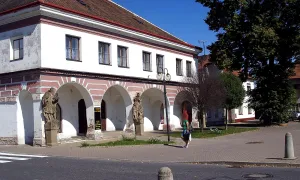
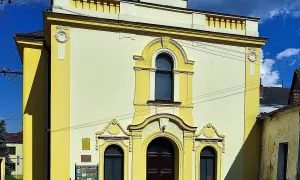
Real photos taken near the monument

Zdroj a licence jsou uvedeny u každého snímku.
Atmosphere of the place
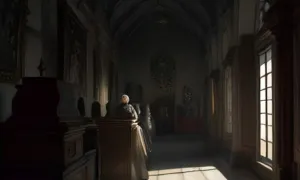
This atmospheric visualisation of the place and period was generated by artificial intelligence. It is not real footage of the location.
Tips from visitors
No tips yet. Be the first!
Log in and add your tip.
Sources and literature
Fotografie: Petr1888 / CC BY-SA 3.0, rozlišení zvýšeno umělou inteligencí — Wikimedia Commons. The author and licence also appear when you hover over the image.
Faktickým podkladem tohoto textu byl článek na Wikipedii, jehož autory jsou přispěvatelé Wikipedie. Článek je dostupný pod licencí CC BY-SA 4.0.
Location on the map

Příběhy a pověsti
Legendy, pověsti a příběhy spjaté s touto památkou
Fotografie návštěvníků
Zatím žádné fotografie. Buďte první, kdo přidá fotografii z návštěvy!
Přihlaste se a přidejte svou fotografii nebo hodnoťte.
Za ověřenou návštěvu v aplikaci získáte víc bodů — poznáme podle GPS, že jste na místě.
Reviews and comments