



Podmokly (zámek, okres Rokycany) Chateau
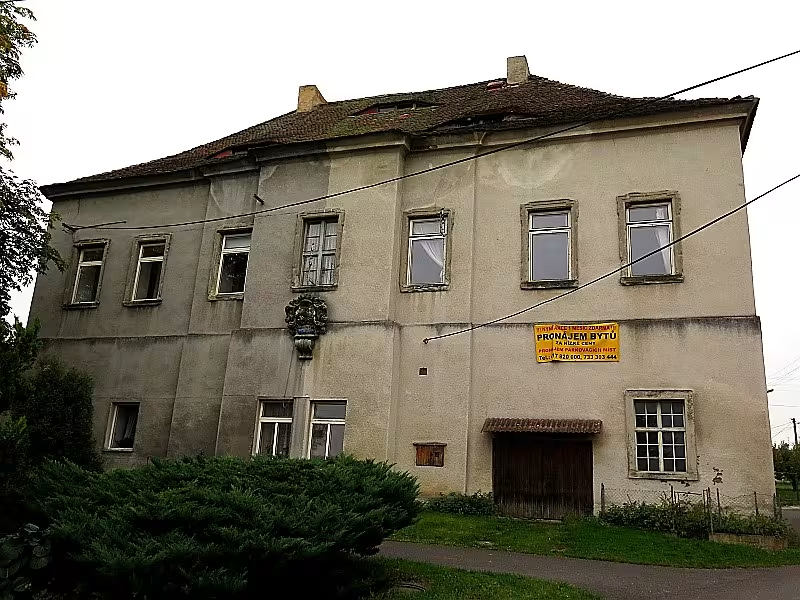
Podmokly is a Baroque chateau in Rokycany district, built in the early eighteenth century. This historical monument is significant in its architectural quality and probable connection with one of the most important Baroque architects.
The history of this location dates back to the 15th century, when there was a fortress of original masters from Podmokel. It was abandoned in the 16th century, but later restored by the Hochhausars of Hochhaz. In 1624 it was inherited by the Varlechs of Bubno, but during the Thirty Years' War it became desolate and in time it disappeared completely. The new owners placed their seat in the economic court, which in 1707, Count Karel Jiří Michna z Vacínova had destroyed to build the present Baroque chateau in its place.
The current single storey building has a rectangular plan and is located on the southern edge of the former economic court. Despite modern interventions that have negatively affected the historical appearance of the building, the chateau still shows a number of architectural details. The two main facades are highlighted by two graduated risties. The facades split the cordon ledge between floors, the richly profiled crown ledge and the lining of rectangular windows with handles. On the ground floor there was once a passage, the two portals of which were later walled up. However, the entrance facade is preserved with an allied character of the builder in the acanthus frame. The rooms in the interior are sealed with vaulted vaults with lunettes.
Given the quality of architecture, it is assumed that the plans of the chateau could have been designed by Jan Blažej Santini-Aichel, which used similar elements on its other buildings. Other important owners were the appeal board Jan Kristián Stolz, which set up the chapel at the chateau. Since 1747, the estate belonged to the Fürstenbergs, who attached it to the Křivoclát estate. In 1869, the chateau and the brewery were sold and in its possession a number of other owners were then replaced.
The chateau in Podmoklech has been protected as a cultural monument since 2010. Despite the gradual loss of original appearance due to modern interventions, this object represents a valuable architectural detail of the baroque period. It is a place that is worth the attention of any interested person in history and architecture.
Historical milestones
- 1624
- The fort was inherited by the Varlechs of Bubn
- 1707
- Count Karel Jiří Michna z Vacínova had the economic court destroyed and the Baroque chateau built
- 1747
- The chateau belonged to the Fürstenberg family
- 1869
- Sale of the chateau with brewery
- 2010
- The chateau was declared a cultural monument
Architectural development
A Baroque chateau was built at the beginning of the 18th century instead of the original 15th century. The construction has a rectangular plan and is highlighted by two graduated rites. The interior consists of rooms with vaulted vaults and lunettes.
Historical events
1624: Taking over the fort by the Varleichs of Bubno; 1707: Construction of the Baroque chateau after the demolishing of the farm yard; 1869: Sale of the chateau with brewery.
Owners
Vladyková z Podmokel (15th century), Hochhausáří z Hochaz (16th century), Varlejch z Bubna (1624), Karel Jiří Michna z Vacínova (1707), Jan Kristián Stolz, Fürstenberg (from 1747), other owners (after 1869).
Points of interest
- The Baroque chateau in Rokycany district was built in the early eighteenth century. - It is assumed that the plans of the chateau could have been designed by Jan Blažej Santini-Aichel. - Jan Kristián Stolz set up a chapel at the chateau. - The entrance facade is preserved by a jewel with an alliance of the builder in the acanthus frame. Since 2010, the chateau has been protected as a cultural monument.
Guide
Show guide text
This text was created by artificial intelligence and has not been editorially reviewed. It may contain inaccuracies.
Welcome to Underwater. You are standing right in front of a building that carries the cramped energy of centuries and testimonies of constant changes in human life and architecture. Before your eyes, there is a Baroque chateau whose presence here is peaceful and noble, but if you try to look deeper below the surface of these walls, you will find that the history of this place is much more complicated and dynamic than it may seem. Feel this atmosphere, feel the feeling that you are standing in a place where the needs of defense, farming and subsequently the desire for representation and beauty have been met.
To understand why this building looks just like this, we have to go back deep into the past until the 15th century. Before the baroque face that you are now observing began to form here, this place was a completely different function. There was a fort, the seat of the original masters of Podmokel. It was not space for comfort and aesthetics, but for survival and protection. This medieval fortress was a symbol of stability in troubled times until it was destroyed by the devastation of the Thirty Years' War. The war was a blow to this region that changed everything. The fortress was destroyed, and for years only the economic court remained there. Imagine this place at that time - a place that lost its nobility and became a simple workplace, the center of agricultural life, where it dominated benefits, not beauty.
The break occurred only in the early eighteenth century. In 1707, the history of this place turned again radically. Count Karel Jiří Michna z Vacínova came up with a vision that completely transformed the surrounding landscape. He chose an act that had to be seen as a huge step forward at the time: he had the existing economic court torn down and, in his place, he began to build a new Baroque chateau. By this decision, the Podmoklas have definitely gone from their simple, agricultural past and entered the era of aristocratic elegance. The Count Michna of Vacin expressed his power and social position with this act, laying the foundations for what you see today.
Now please pay attention to the architecture itself that surrounds you. Although the building has been faced with various modern interventions over the centuries that have affected its original appearance in some places, baroque dignity can still be blamed. If you look directly at the entrance facade now, you can see one of the most important architectural elements of this object. Note the vault that decorate the entrance. It has an alliance character of the builder, which is beautifully framed with acanthus ornament. Akant, this plant motivation, is a symbol of eternity and unwavering in Baroque architecture, and his presence here gives the entrance an unmistakable character. This detail is not just an ornament, it's a signature of history that tells us who was the architect of this new order.
And it is at the name of the architect that we come to one of the greatest attractions this place has to offer. Although it is not explicitly confirmed, in professional circles it is often said that plans for this chateau could be designed by Jan Blažej Santini-Aichel itself. If that were true, you are facing the work of one of the greatest geniuses of baroque architecture, a man whose name is associated with an incredible game of light, shadow and geometry. Although we cannot be absolutely sure, the presence of such a name in the vicinity or its possible influence on the proposal gives this place an extraordinary mystery. Consider it when you look at the rhythm of the facade and how the building operates throughout its space. There's something in there that makes us think about the state of the then builders' championship.
But other fascinating fates and personalities are connected to the history of the chateau. Next to Count Michna of Vacinova is the name of John Kristian Stolz. This man was of vital importance to this place because he set up a chapel at the chateau, which was an important spiritual centre for the surroundings. Imagine the era when religious care and building sacral spaces was a solid part of the aristocratic mansion. The chateau continued to walk through the hands of different families. In 1747 it belonged to the Fürstenberg family, which was extremely important in the company at the time. Later, in 1869, there was another fundamental change when the chateau was proánomen along with the brewery. This link between the aristocratic residence and economic activity, namely with the brewery, reminds us that this baroque world, too, has been closely linked to the economic reality of its time.
Today, this chateau is seen as something far more precious than a private residence. In 2010 it was declared a cultural monument, which is a recognition of its historical, artistic and social value. It is a confirmation that despite all the interference and changes that have happened over the years, this object has retained its essence and importance for our common history.
Looking at the lock, you can ask what these walls have experienced. They have experienced wars that have destroyed everything, and a period of prosperity, when culture and politics were formed here. They've seen the coming and going of powerful families. Every stone and every line on the facade tells its own story about the effort of man to create something lasting in a rapidly changing world.
I now urge you to go on another survey. Walk around the building, try to find more details that architecture reveals to you, and see how the Baroque face of the chateau changes depending on which angle you're looking at. Let yourself be drifted by the atmosphere of this place, which is a living bridge between the medieval fortress and the modern world. Thank you for spending this moment with us and for choosing to know the secret of the chateau in Podmoklech. We wish you a beautiful and inspiring walk.
Tips for visitors
The best time to visit the chateau in Podmoklech is spring or autumn, when the surroundings are quieter and Baroque architecture works best in soft light. We recommend visiting during the morning hours, when there are usually fewer visitors near the monument.
The chateau can be reached by car and public transport.
Take with you comfortable shoes suitable for a tour of the historical building. For photo lovers are the best places near the chateau where Baroque details can be captured in natural daylight.
It is advisable for families with children to prepare their own refreshments. Since there are no other monuments in the background in the direct vicinity, we recommend to devote all time to the tour of the chateau itself and its history.
Frequently asked questions
Can the monument be visited?
Some buildings of this kind are open for guided tours, others serve another purpose or are privately owned. We have not verified whether and when this monument is open – please ask the operator.
What are the opening hours and admission?
We have not verified the opening hours or admission. Current information is published by the operator.
Where is the monument?
Location: Plzeňský kraj. The map on this page shows the exact spot.
Why is the monument protected?
It is listed in the Central List of Cultural Monuments of the Czech Republic as a cultural monument (register no. 1783083886).
Businesses nearby
Do you run a restaurant, accommodation, shop, museum, rental, wellness or other visitor service near this monument? Show yourself directly to the people heading to it — this is how they will see you in the app and on the web:
Nearby
🏰 Historic sites (85)
- Panna Maria Immaculata 0.1 km
- Pomník obětem 1. světové války 0.1 km
- sv. Jan Nepomucký 0.5 km
- Pomník obětem 1. světové války 0.6 km
- Kalvárie 0.7 km
- Pomník padlým - 1. sv. válka 2.4 km
- Socha Panny Marie Svatohorské 2.5 km
- Protifašistickému odboji 2.9 km
- sv. Petra a Pavla 3.5 km
- František Bělohlávek 3.6 km
- Jan Tetřev 4.1 km
- Obětem ve Světové válce, obětem německé okupace 4.1 km
- Zámek Prašný Újezd 4.1 km
- Elektroskanzen Čechův mlýn 4.4 km Šlovice 8 8 604 754 449;775 044 394 web
- Obětem násilí 1939-1945 4.7 km
- Obětem války 5.1 km
- Muzeum každodennosti 5.2 km
- Památník Joachima Barranda 5.2 km
- zámek Terešov 5.2 km
- sv. František z Assisi 5.2 km
🍽️ Restaurants and dining (78)
- U Císaře 0.1 km
- Hostinec U Sluníčka 1.9 km +420 608 306 806
- U Šesti trampů 2.0 km +420 722 264 472
- Pod Mostem 2.0 km
- Pohoda 2.3 km +420 606 114 069
- U Mongola 2.7 km
- Hospůdka na vyhlídce 3.0 km
- Občerstvení u kostela 3.5 km web
- U starýho kozla 4.1 km web
- Hospůdka u Zuzanky 4.2 km
- Pivní samoobsluha 4.6 km +420 777 083 538 web
- pCh! - Pivovar Chříč 5.2 km +420 603 216 581 web
- U Trilobita 5.2 km
- U Grillů 5.2 km
- U Oťase 5.6 km
- U Potůčků 5.8 km
- Na Růžku 6.1 km
- U Jeníčka a Mařenky 7.3 km
- Hospoda Přísednice 7.3 km
- Selský dvůr 7.5 km +420 371 796 371 web
🏨 Accommodation (26)
- Pod Mostem 2.0 km web
- U Varských 2.2 km
- Pohoda 2.3 km +420 606 114 069 web
- Liteň 3.1 km
- Tábor Lhotka 3.9 km web
- Berounka 4.3 km Šlovice 146 +420 725055678 web
- Tábořiště Šlovice 4.3 km 728 810 122
- Trilobit 5.2 km
- Kemp Ahoj 5.7 km
- U Potůčků 5.7 km
- U Mloka 6.4 km +420725348980 web
- Machův Mlýn 7.9 km web
- Na Rybárně 9.1 km
- Skautský tábor 9.7 km
- Zámek Zbiroh 10.1 km web
- Hotel Berounka 11.5 km
- Stellplatz Němčovice 12.0 km web
- Kobylka 12.6 km web
- Camp Tišina 12.8 km web
- Kemp Branov 12.9 km web
🚲 Rentals and sport (12)
- Dronte -Zvíkovec, rekreační středisko Pohoda 2.3 km
- machondak-sport 4.6 km +420 777 083 538 web
- Lodě Skryje 4.6 km +420 777 083 538 web
- Půjčovna lodí Dronte 6.6 km +420 605 242 819 web
- Lanové centrum 9.9 km
- Koupaliště Týček 10.1 km
- Fotbalové hřiště 11.5 km
- Sokolovna 11.8 km
- Dronte - Roztoky u Křivoklátu 14.3 km
- Víceúčelové hřiště 14.6 km
- Sokolovna Kařez 14.6 km
- Opravy a půjčovna kol 15.0 km +420 776 768 479 web
🥾 Hiking and nature (168)
- Na Drážkách 1.0 km
- Černá Skalka 2.2 km
- Lípa 2.5 km
- Plazy 2.9 km
- Vyhlídka Na Plazích 2.9 km
- Na Plazu 3.4 km
- Dubensko 3.7 km
- Dubinky 4.0 km
- Bráh 4.0 km
- Sirská hora 4.1 km
- Čihátko 4.3 km
- Na Klůčku 4.5 km
- Šlovické Lurdy 4.6 km
- Roubík 4.7 km
- Chlumec 4.8 km
- Strážiště 5.1 km
- Strážov 5.1 km
- Čertový kopec 5.1 km
- Vrána 5.2 km
- Pjuvin vrch 5.2 km
Accommodation nearby
Themed route
Since the "Surrounding" line is empty in the assignment, it is necessary to concentrate exclusively on the inner spaces and the immediate chateau area in Podmoklech according to the rules. The route proposed below is therefore only carried out within this monument and its adjacent gardens without opening to the surrounding areas.
Chateau Podmokly This Renaissance chateau, later modified in Baroque and Classicist style, represents the main destination of the trip. It is worth visiting for its rich history, which dates back to the 16th century, and for preserved architecture, which reveals layers of various building works.
Tank Chateau After entering the premises, the visitor is situated in a quiet courtyard, which serves as an ideal place for first orientation and photography. Here you can admire the symmetry of facades and the atmosphere that premarks the wealth of interior space.
Interior exposure The inner premises of the chateau offer a view of period equipment and art collections, which illustrate the living standard of the local owners. A tour of these places allows you to look into the everyday life of the nobles at various historical times.
Castle Gardens The immediate adjacent garden consists of a green frame around the building and offers a quiet environment to relax after a tour of the interior. Its modification complements the aesthetic impression from the whole area and provides space for relaxation in nature right next to the monument.
This compact route ensures that the visitor makes full use of the potential of the monument itself in Podmokles without having to leave its immediate surroundings.
Seasonal recommendations
Spring: In spring the surroundings of the chateau awaken to life and fresh green vegetation creates a pleasant environment. The lighting is delicate and bland in this period, which gives the memory a romantic touch. We recommend arriving early in the morning when the air is the cleanest. Due to the changing weather, you should bring layered clothes to prepare you for sudden changes in temperatures between shadows and the sun.
Summer: Summer moons bring intense sunlight to Podmokel and a full bloom of surrounding nature. The atmosphere is lively and warm, which is ideal for walking around the building. Due to the increased attendance in the high summer season, it is best to arrive immediately after opening to avoid the biggest crowds and the greatest heat. Don't forget light summer clothes and sun protection.
Autumn: Autumn season is characterized by golden shades of leaves and morning fog that create a mysterious and melancholy mood around the chateau. Sun rays are low at this time, creating long, interesting shadows. It is advisable to prepare waterproof shoes and laminated clothing as moisture may be increased. The best time to visit are afternoon hours when the colors of the landscape most excel.
Winter: In winter, the chateau is quiet and quiet between bare trees and possible snow. The lighting is weaker and the days are short, which creates a raw but dignified environment. Due to the cold and probably shorter opening times we recommend planning a visit around noon so that darkness doesn't surprise you. The need for warm and wind-resistant clothes to keep you warm while you search the outside.
Visualizations and artistic views


The visualisations are generated by artificial intelligence and serve as inspiration.
Tips from visitors
No tips yet. Be the first!
Log in and add your tip.
Sources and literature
Photos: Sovicka169 / CC BY-SA 4.0 — Wikimedia Commons. The author and licence also appear when you hover over the image.
Faktickým podkladem tohoto textu byl článek na Wikipedii, jehož autory jsou přispěvatelé Wikipedie. Článek je dostupný pod licencí CC BY-SA 4.0.
Location on the map
More monuments – Plzeňský kraj
Show all in the region



Příběhy a pověsti
Legendy, pověsti a příběhy spjaté s touto památkou
Fotografie návštěvníků
Zatím žádné fotografie. Buďte první, kdo přidá fotografii z návštěvy!
Log in a přidejte svou fotografii nebo hodnoťte.
Za ověřenou návštěvu v aplikaci získáte víc bodů — poznáme podle GPS, že jste na místě.
Reviews and comments