






Podolí Fortress
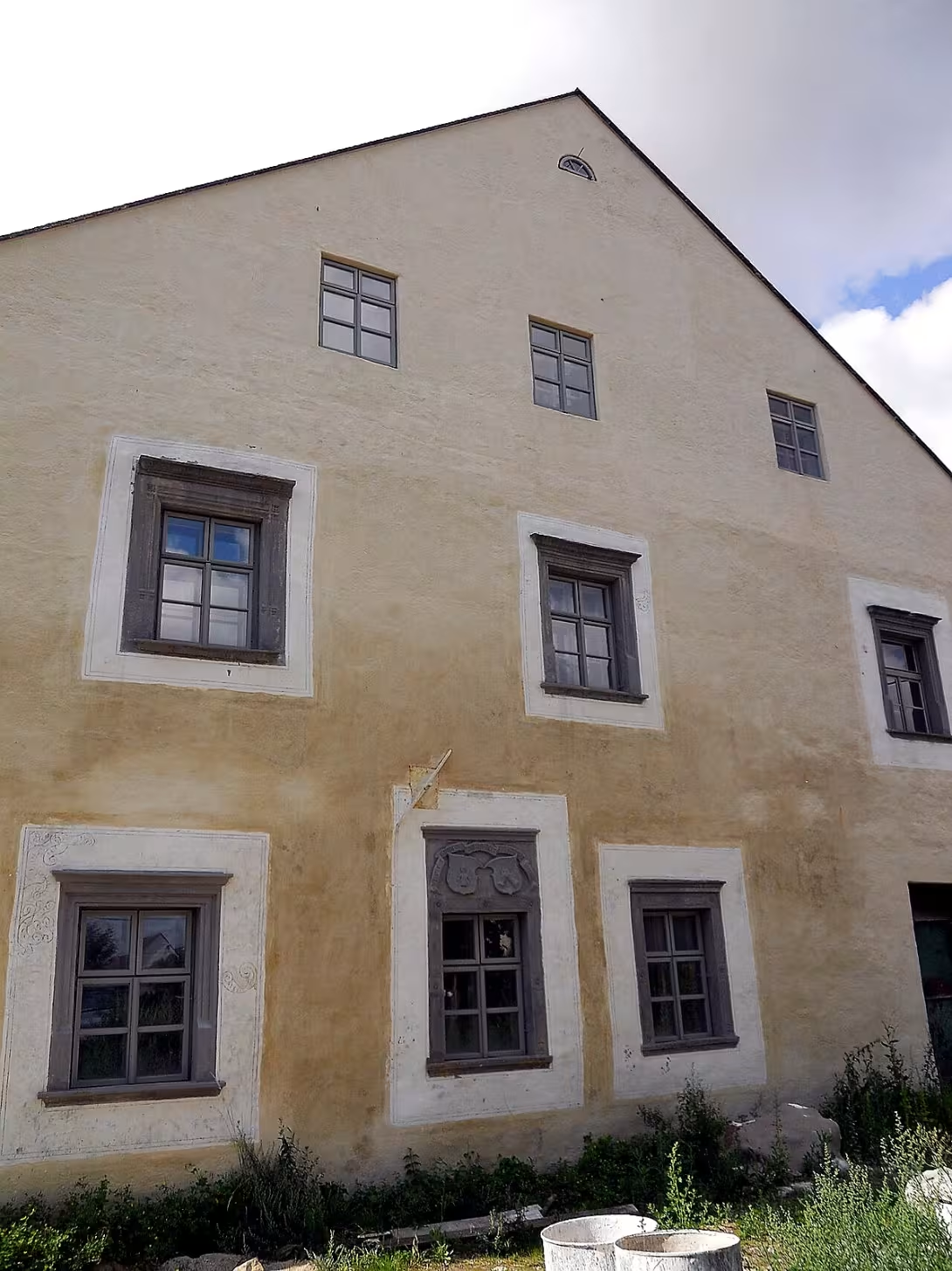
The Kobylk Fortress in Podolí at Mohelnice is a rare example of the Renaissance noble residence from the mid-16th century, which preserved its original architecture. This two-storey rectangular-shaped building is located approximately two kilometres west of the centre of Mohelnice and stands out especially for preserved fragments of gothic plaster and Renaissance frescoes inside.
The first written mention of Podolí dates back to 1381, when the property was divided into several parts. One of them belonged to the Bosnian manor of the lords of Vildenberk, who took over the village in the first half of the 15th century. Before 1551, Podolí became the property of the Olomouc Bishop. In 1551, Bishop Jan Dubravius, a great humanist, put the villages into use by the Peacekeeper Henry Kobylk of Kobyli. He and his wife Anna from Kojetín had the present fort built the same year, which also included the farm yard and brewery.
It is an architectural renaissance new building with a saddle roof and a smooth facade with sgraffiti decoration residue. Above the window in the front wall is the original stone coat of arms of the Kobylk family from Kobylí with the year 1551, which exactly dates its origin. The Gothic plaster on the facade, which is comparable in the Czech Republic to the Prague Chateau only, is of exceptional historical value. Rare Renaissance frescoes have been preserved in the interior of the first floor and inside the property is also a grafted well approximately seven metres deep.
The Kobylk family acquired the Podolan estate at the turn of the 16th and 17th centuries into a hereditary possession, which confirms the inscription in the Urbary of the Peace- Svetavské estate of 1581, where the fort was awarded five hundred gold. After the battle on White Mountain, however, the property was confiscated and subsequently bought by Bishop František z Ditrichštejna, who attached it to the Peacekeeper estate. This change of ownership was typical of the post-white mountain period in Moravia, when the land concentrated in the hands of the Church and loyal nobles.
In 2004, necessary rescue work was carried out which included static building security, installation of new roof and repair of roms, wreaths and vaults. Despite the partial reconstruction in cooperation with the Heritage Institute, a complete archaeological survey has not been carried out here, which could explain the shape and extent of the cellars and corridors buried today.
The fortress in Podolí is a rare sign of transition from simple medieval settlements to more comfortable Renaissance residences of lower nobility. Its visit offers a unique insight into the history of the region and the possibility of seeing artistic elements that have survived elsewhere in the country only exceptionally.
Then and now
Drag the slider to compare how the landmark may have looked when it was built with the view today.
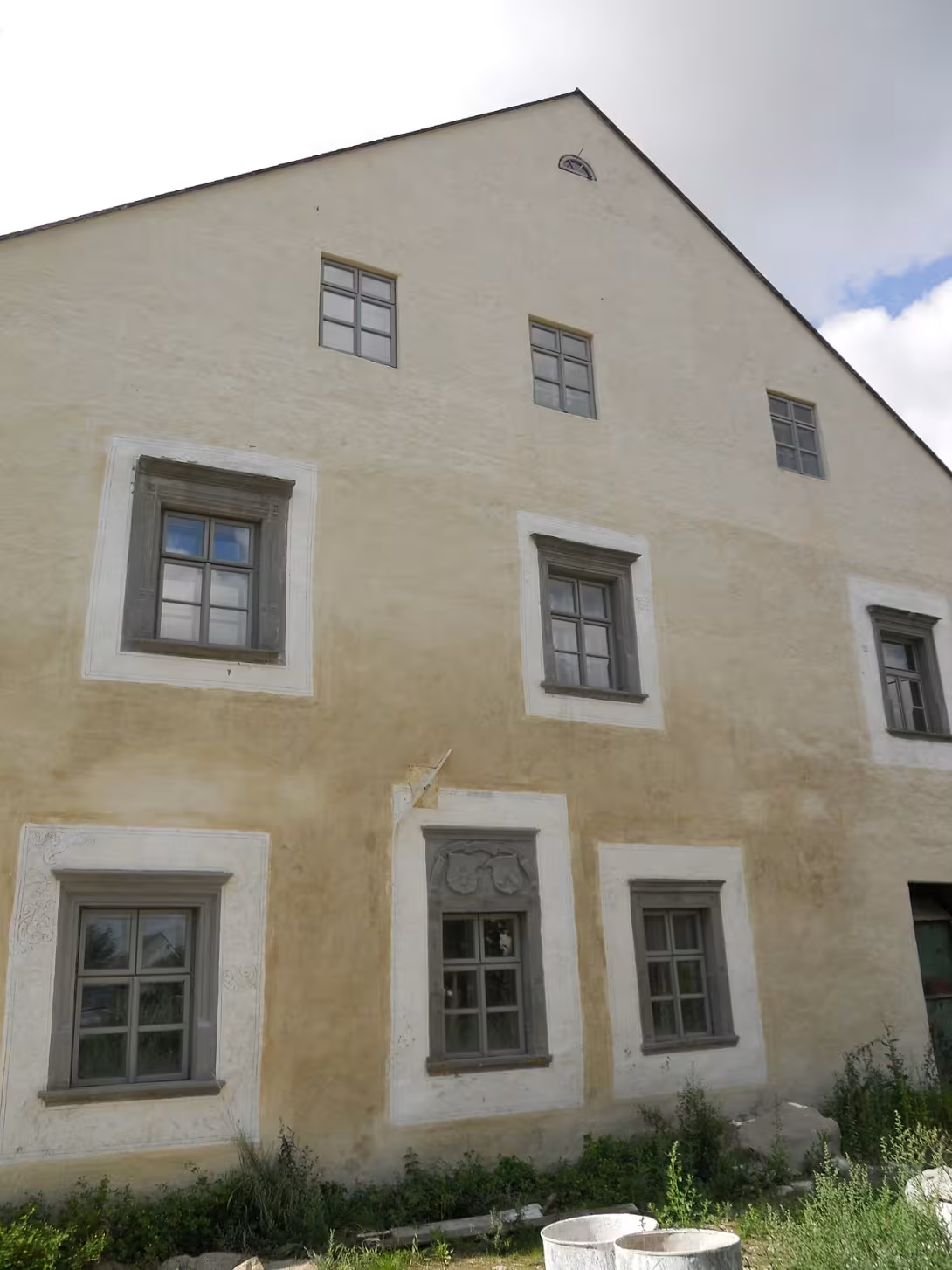
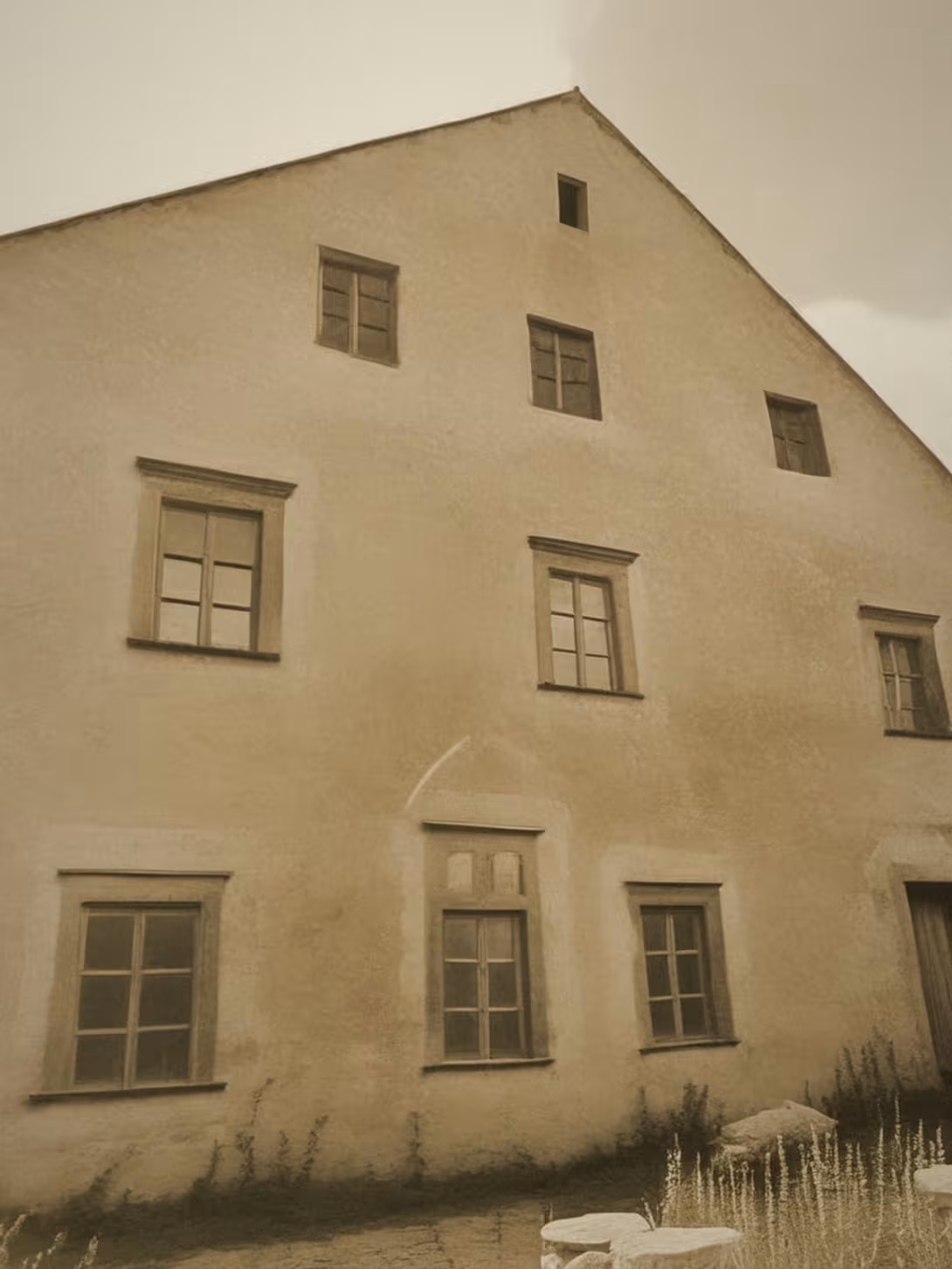
The historical appearance on the left is an AI-generated visualisation and serves as inspiration only.
Historical milestones
- 1381
- First written mention of village Podolí.
- 1551
- Construction of the fortress by Henry Kobylka from Kobyli and his wife Anna.
- 1581
- The record at the urbary of the Peace- Svetave estate appreciating the fort of 500 gold.
- 2004
- Implementation of static building security and roof repair.
Architectural development
The fortress was created as a renaissance new building in 1551, using sgraffiti decoration on the facade. The building kept a smooth facade with a stone coat of arms of founders above the window in the facade. In 2004 rescue work was carried out involving the repair of vaults, rims and the installation of a new roof. The building has not yet been subjected to a complete archaeological survey, especially in the area of buried cellars.
Historical events
In 1551, the construction of the fort was started, along with the economic court and brewery. After the Battle of White Mountain, the Kobylk building was confiscated and attached to the Peacekeeper estate. In 2004 the building underwent a major reconstruction of the roof and static securing.
Owners
Lords of Vildenberk (15th century), Olomouc Bishop (before 1551), Jindřich Kobylka z Kobylího (since 1551), František z Ditrichštejna (after 1620), Peacekeeper Manor.
Points of interest
- The Kobylk Fortress in Podolí is a rare example of the Renaissance noble residence from the mid-16th century, which preserved its original architecture. - The first written mention of Podolí dates back to 1381, when the property was divided into several parts. - Before 1551 Podolí became the property of the Olomouc bishop and then Bishop Jan Dubravius put the village into the use of Henry Kobylk of Kobyli. - The Gothic plaster on the facade, which is comparable in the Czech Republic to the Prague Chateau only, is of exceptional historical value. - In 2004, necessary rescue work was carried out which included static building security and installation of new roof.
Guide
Show guide text
This text was created by artificial intelligence and has not been editorially reviewed. It may contain inaccuracies.
Welcome to Podolí at Mohelnice. You are standing right now in front of an extremely valuable historical monument, which is the Renaissance nobility here. Raise your eyes and look around you. In front of you is a storey building of a rectangular floor plan, which is closed from above by a massive saddle roof. When you look at her silhouette, you realize a fascinating fact. Until today, this entire object has retained its original, authentic form without going through any radical modern modifications that would irreparably alter its face.
Let's go back to the past in the time oasis after oasis and see how this place came to be. The first written mention of the village Podolí itself is surprisingly old, dating back to the year 13-80-1. At that time, the property was divided into several different parts and only gradually evolved and the situation changed with historical turns. The key moment for the form you see before you was five hundred and fifty-one. That's when the entire village of Podolí became the property of Olomouc Bishop Jan Dubravia. He just gave the village to the peace captain Jindřich Kobylka z Kobylího. And it was he, along with his wife Anna of Kojetín, who decided to build a representative residence in this place corresponding to his position. It created a Renaissance fortress whose walls have been breathing through history for almost five centuries.
Now pay attention to the architecture itself. Take a closer look at the entire facade of the building and perceive its clean lines. You're facing a demonstration of Renaissance construction from the mid-sixteenth century. The names of the creators are missing in the historical sources and the architects remain unknown, yet the manuscript of the then builders speaks to us from every detail. The building has a strong yet noble impression. Note the overall composition of the storey object with rectangular plan and elegantly planted saddle roof, which has been sensitively maintained over the centuries. After all, the monument had to face the tooth of time, and so in the year twenty-four it had a very important rescue in the form of static securing of the building and necessary repair of the roof, thanks to which we can admire it in such preserved condition today.
Around this place are many fascinating human destinies and key historical personalities. Imagine Henry the Grasshopper of Kobyli, who rules here as a peacekeeper, and the atmosphere of the time when the mansion was born. The name of John XVI. Dubravia, an educated Olomouc bishop and a humanist historian, gives the place a punch of high ecclesiastical and political power to the then Moravia. And we must not forget the other important figures that shaped the history of the entire estate, such as the mighty Cardinal František z Ditrichštejna. They all wrote stories related to this region.
If you look at the historical documents, you'll find one very interesting and telling clue. In 1580, a detailed record was made in the town hall of Svitava. In this historical inventory, this whole fortress was officially valued at 500 gold pieces, which at the time represented a very solid fortune and clearly indicates the importance and value that the headquarters had for its owners.
I hope you enjoyed today's stop at the historic fortress in Podolí and that you enjoyed the atmosphere that this Renaissance residence radiates with full sips. I wish you a wonderful rest of the day, many other discoveries while exploring the sights of Mohelnick and seeing you next listen.
Tips for visitors
To visit the fortress in Podolí we recommend choosing spring or autumn months when the surrounding landscape of the valley of the river Moravia is the most picturesque and the weather is ideal for walking without summer heat.
For transport, choose a car or bus to Mohelnice, from where it is to Podolí piece; the exact connection and parking possibilities directly at the fort are recommended to check in advance in local map materials.
Take your comfortable shoes for walking on historic tiles and surrounding terrain, a bottle of drinks and snacks, because there may not be a wide range of refreshments in the immediate vicinity of the monument.
For the best photographic footage of the Renaissance mansion from the mid-sixteenth century, it is worth taking pictures in the morning or late afternoon hours, when soft light beautifully highlights the details of a rectangular building with a saddle roof.
As a trip to the surrounding area within 30 minutes, choose the historical heart of the city Mohelnice or go to the nearby chateau of Peace, or you can discover natural beauty in the valley of the river Moravia.
Businesses nearby
Do you run a restaurant, accommodation, shop, museum, rental, wellness or other visitor service near this monument? Show yourself directly to the people heading to it — this is how they will see you in the app and on the web:
Events nearby
Zdroj akcí: otevřená data měst a obcí ČR (Národní katalog otevřených dat) a kalendář akcí Národního památkového ústavu.
Nearby
City of Mohelnice with historical core, chateau of Peace, valley of the river Moravia.
Accommodation nearby
Themed route
Mohelnice Historical Core The walk through the centre offers admirable architecture, picturesque streets and the atmosphere of an ancient city that forms the natural center of the whole region.
Podolí Hard The main destination of our trip is a historic monument with a unique atmosphere that reminds of ancient building arts and history in close proximity to the city.
Valley of the river Moravy Natural location The peaceful landscape along the river stream attracts a relaxing walk through nature and offers a view of the picturesque scenery of the water stream and its surroundings.
Peace 0ZX Castle The impressive historical dominance over the surrounding landscape will capture its massive architecture and rich history associated with this region.
Seasonal recommendations
Spring: In spring, the fortress in Podolí wakes up together with the surrounding vegetation. The light is fine and does not shine in this period, which highlights the face of a historical building in the background of blooming flowers. We recommend wearing layered clothes because the morning cold can quickly rotate with heat from the sun. It is best to choose the working days of the morning for quiet tours without much excitement.
Summer: The summer months bring the sun to Mohelnic and the dense, rich green landscape. The atmosphere is alive, but due to high temperatures and more visitors we recommend arriving right after opening to ensure shade and peace. Don't forget the quality headgear and plenty of fluids. Due to the satisfactory condition of the monument, it is advisable to have fixed footwear for movement in the surrounding terrain.
Autumn: Autumn visit offers melancholy beauty thanks to the golden and brown shades of leaves and morning fog, which deliver the fort mysterious. The sun is low, which creates interesting shadows suitable for photography. It is advisable to carry a waterproof jacket and shoes with good grip because moisture can cause slippery surfaces. It's the most private time of the year.
Winter: In winter, the historical monument is rough and peaceful, especially if snow covers the surroundings. The lighting is weak and the days are short, so plan a visit around noon to use maximum daylight. The necessity is very warm and wind-resistant clothes. In advent time, the atmosphere is quiet, but the surrounding terrain can be difficult to walk for frost.
Visualizations and artistic views


The visualisations are generated by artificial intelligence and serve as inspiration.
Photos from the area
Real photos taken near the monument


Zdroj a licence jsou uvedeny u každého snímku.
Tips from visitors
No tips yet. Be the first!
Log in and add your tip.
Sources and literature
Fotografie: Marekarel / CC BY-SA 3.0 — Wikimedia Commons. The author and licence also appear when you hover over the image.
Faktickým podkladem tohoto textu byl článek na Wikipedii, jehož autory jsou přispěvatelé Wikipedie. Článek je dostupný pod licencí CC BY-SA 4.0.
Location on the map
More monuments – Mohelnice
Show all in the municipality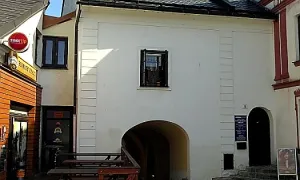
Příběhy a pověsti
Legendy, pověsti a příběhy spjaté s touto památkou
Fotografie návštěvníků
Zatím žádné fotografie. Buďte první, kdo přidá fotografii z návštěvy!
Přihlaste se a přidejte svou fotografii nebo hodnoťte.
Za ověřenou návštěvu v aplikaci získáte víc bodů — poznáme podle GPS, že jste na místě.
Reviews and comments