






Pohřební kaple Povýšení sv. Kříže v Lysicích Chapel
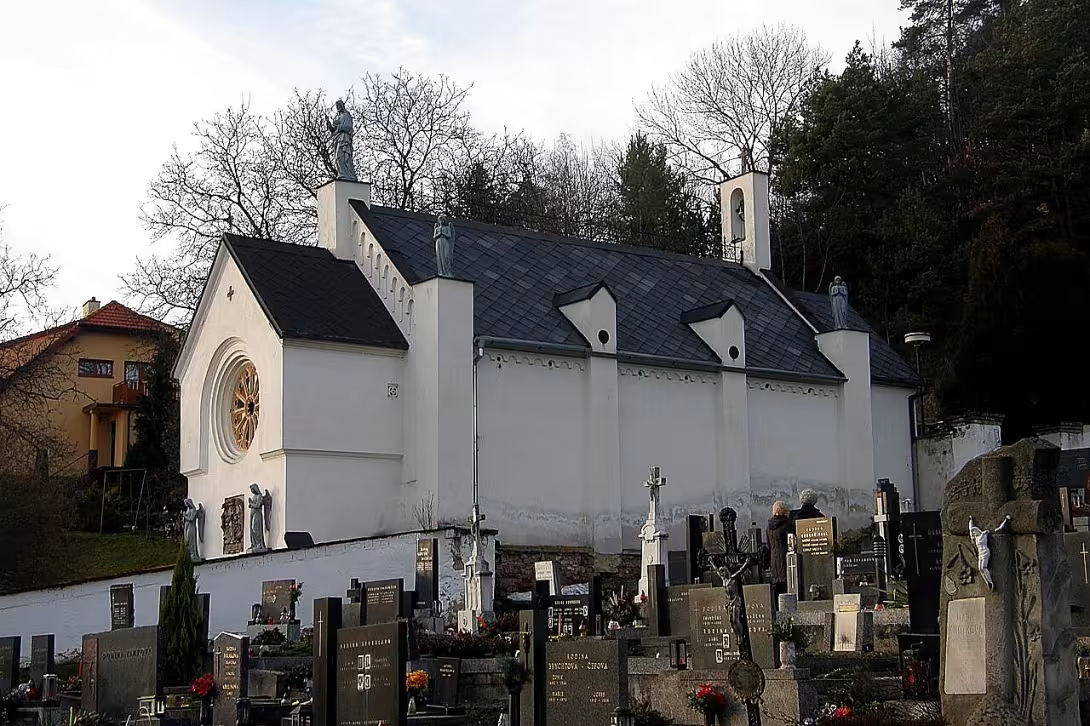
The funeral chapel is located in the village Lysice, Jihomoravský kraj. Built as a family mausoleum for the noble oak family from Třebolovice, this cultural monument stands on the west side of the local cemetery. In 1881, which was designed by Emanuel Dubský, it reflects the architectural style of its era with complex design elements that highlight its historical significance.
The origin of the chapel is deeply connected to the oak family, which obtained Lysice by marriage between František Dubský and Antonia Piatti z Drnovic. Property remained in their possession until 1945. Emanuel Dubský, a member of this noble family, was helpful in designing and building the chapel. Its construction began by acquiring land from the local community in exchange for improved infrastructure. The sanctification of the priest Rudolf Keitter marked his initial use as a burial ground, starting with Emanuel Dubský itself.
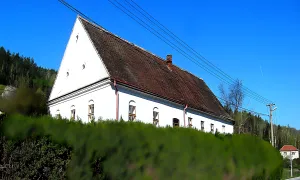
Architecturally, the chapel is remarkable for its neo-Gothic style and detailed design elements. It has an elongated floor plan divided into two levels: a lower level serving as a mausoleum and a higher level functioning as a chapel. The southern facade is specially decorated, with a projecting portico on top of the oblique roof and decorated with profiled corn. On the facade dominates a large pink window with coloured glass and adds a stone plate with an oak family coat of arms and inscription to its historic charm. The statue of angels and other decorative elements decorate the outer structure.
The ownership and administration of the chapel have recorded significant changes over time. Originally, she served as a burial ground for the Dubrovnik family, and in 1945 she became state property after World War II. After the Velvet Revolution, the chapel was moved to the care of the Roman Catholic parish in Lysice. In 1962, it was transformed into a ceremonial hall which led to the removal of the altar and statues. The reconstruction between 2000 and 2002 was intended to preserve its historical integrity, although the interior remained largely unchanged.
Throughout its history, the chapel was the site of several key events. The early sanctification of 1881 meant the beginning of his role as a family mausoleum. The transfer of remains from an older burial site under the local church of St. Peter and Paul to this new chapel underlines its importance within the community. Despite changes over time, such as its transformation into a ceremonial hall, it remains at the heart of historical thinking and religious respect.
Today the Funeral Chapel of the Holy Cross in Lysice is evidence of the region's architectural and cultural heritage. While his interior was not fully renovated during the recent restoration, he continued in the house of the Marmoreal tombstones that reflect its original purpose. The chapel remains under the administration of the Roman Catholic parish in Lysice and ensures its preservation for future generations.
Visitors can appreciate its historical and architectural importance in the context of the 19th century Bohemia, the period marked by cultural revival and stylistic experiment. Its permanent presence offers a view of the link of the Dubské family and their impact on local history. As such, it is worth visiting interested parties to explore the rich tapestry of the Czech heritage.
Then and now
Drag the slider to compare how the landmark may have looked when it was built with the view today.
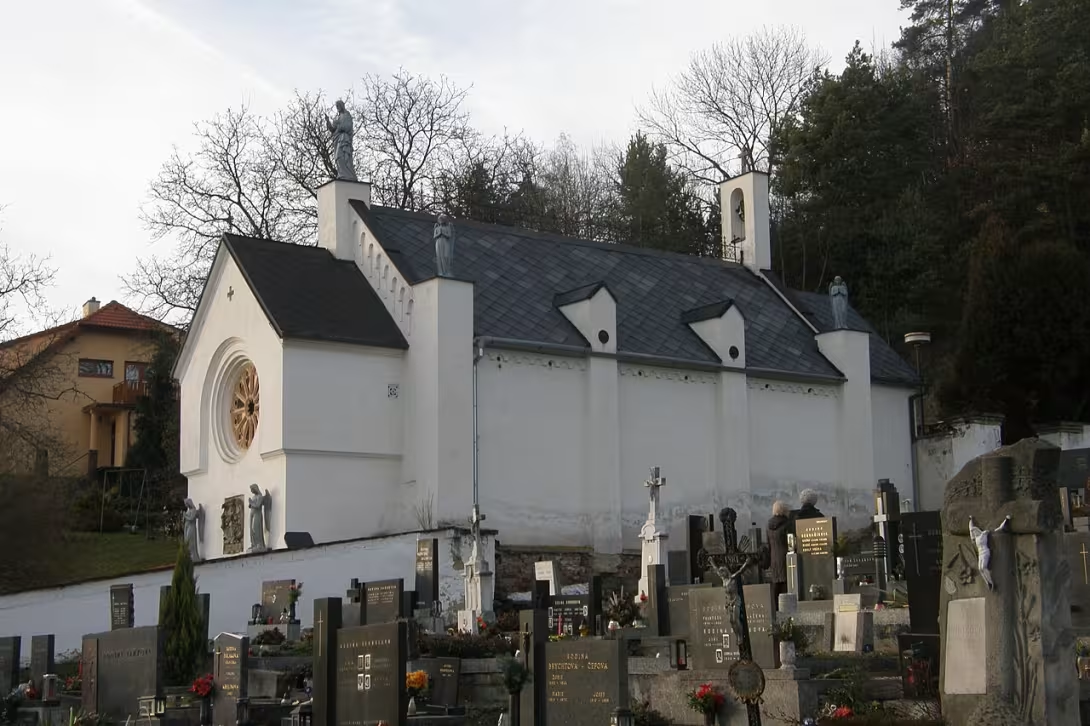
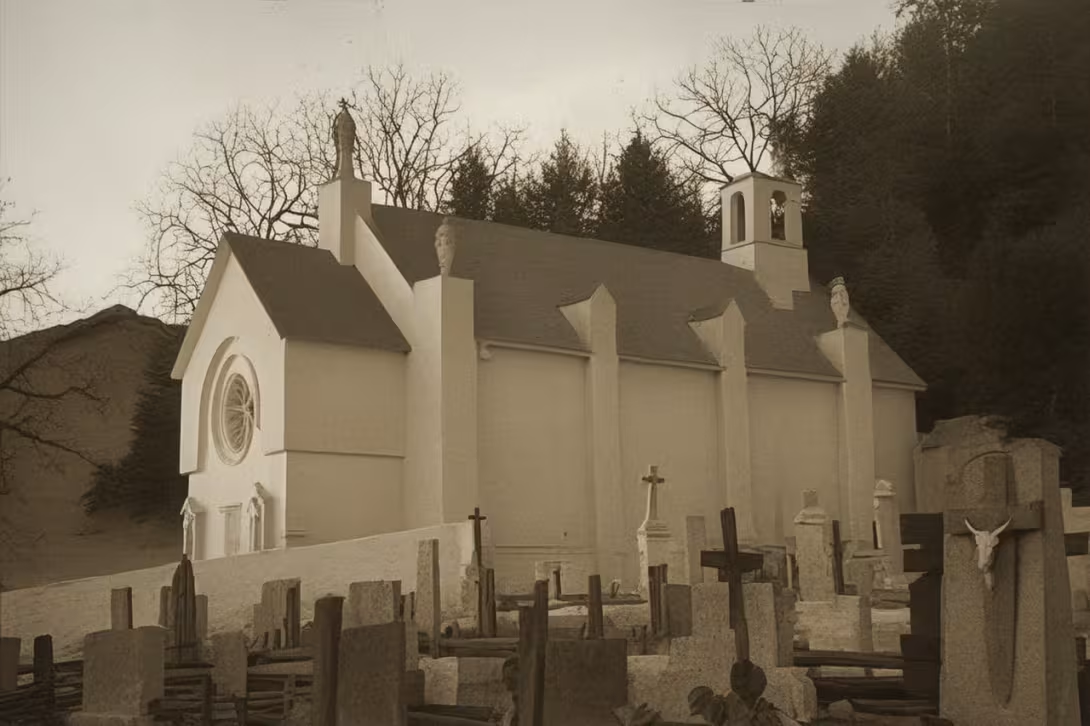
The historical appearance on the left is an AI-generated visualisation and serves as inspiration only.
Historical milestones
- 1881
- The chapel was sanctified by the local priest Rudolf Keitter.
- 1962
- The chapel was converted into a ceremonial hall.
Architectural development
The chapel was designed and probably built by Emanuel Dubský in 1881. It was transformed in 1962 when it was renamed as a ceremonial hall, which led to the removal of the altar and statues. After the Velvet Revolution, the chapel was restored between 2000 and 2002, although its interior was not completely renovated.
Historical events
In 1881 the chapel was sanctified and first used for the funeral of Emanuel Dubský, its builder.
In 1962 the chapel was converted into a ceremonial hall, which led to significant changes in the interior.
Owners
The Dubské family from Třebomyslice owned Lyšice until 1945, after which it became state property.
Points of interest
- The chapel was originally built as a mausoleum for the Dubrovnik family, but it also served as a burial ground for other important individuals from Lysice, including priests and local dignitaries, which reflected its wider importance in the community.
- Despite the fact that Emanuel Dubský was designed, building the chapel included contributions from various craftsmen. One less well known fact is that a complex pink window was created by a renowned glassmaker from Brno, whose work remains largely unrecognized outside the specialized circles.
- During World War II, the chapel served as a temporary shelter for local residents during air raids, which is an unexpected role due to its primary function as a burial ground and a ceremonial hall. This use of war highlights its importance outside religious and family ties.
- The transformation of the chapel into the ceremonial hall in 1962 led to significant changes, including removal of the altar and statues. One surprising element, however, is that during restoration a hidden space was discovered inside the walls of the chapel which contains old documents related to the oak family.
- After World War II, when the chapel became state property, it briefly served as an exhibition space for local art in the 1950s and performed works of emerging Czech artists. This period of cultural use is a less well-known chapter in history before it returns to religious and ceremonial functions.
Guide
This guide is narrated by a synthetic voice generated by artificial intelligence.
Show guide text
This text was created by artificial intelligence and has not been editorially reviewed. It may contain inaccuracies.
Welcome to the Funeral Hood Promotion in Lysice. As you stand before this remarkable structure, take a moment to absorb its peaceful presence on the west side of the cemetery. This neo-gothic chapel with complicated design and historical aura invites you to a story that takes more than a century.
The chapel was completed in 1881, served as a family mausoleum for the noble oak family from Třebolejc. The vision of this architectural miracle was Emanuel Dubský himself, who designed him to honor his lineage and serve as their final resting place. Over time, his role has spread beyond the borders of a private monument; it became a burial ground for other important individuals from Lysice, including priests and local dignitaries.
As you look at the facade of the chapel, notice the decorative details that reflect the neo-Gothic style of its era - characterized by pointed arches and complex stone work. Although specific architectural elements are not detailed here, imagine that you explore these functions as they tell the story of craftsmanship and heritage.
The consecration of this chapel in 1881 by the local priest Rudolf Keitter represents an important chapter in its history. By 1962 the chapel evolved into more than a mausoleum; was transformed into a ceremonial hall which was further inserted into the fabric of the community.
Among the historical figures associated with this site are František Dubský and Antonia Piatti z Drnovic whose lives have intertwined with the history of the chapel. Their stories add layers of depth to this place and invite you to think about their contributions and heritage.
Now, let your curiosity be rooted in the fascinating aspect of this chapel: despite being designed for a noble family, it has welcomed many others in its embrace over the years. This inclusion reflects its broader significance in the history of Lysia.
As we conclude our short journey through time and architecture, I invite you to further explore this site. Every corner hides the whisper of the past, waiting to be discovered by those who seek it. Thank you for joining me today at the Funeral Car. May your visit inspire a deeper appreciation of the stories carved into his stones.
Tips for visitors
The best time to visit Pohřební kaple Povýšení sv. Kříže v Lysicích is at the end of spring or early autumn when the weather is mild and pleasant, making it ideal for exploring the chapel and surroundings. These seasons offer comfortable temperatures and fewer crowds, allowing visitors to fully appreciate the calm atmosphere of this historic place.
For those who prefer public transport, local buses serve routes that pass or near Lysice, but it is advisable to check the current plans on-line before your travel to ensure comfortable travel arrangements.
When visiting the chapel, consider a camera to capture its architectural beauty and historical significance. Early morning or late afternoon light provides the best conditions for shooting, throwing soft shadows that highlight the neogotic details of the structure. In addition, it is recommended to wear comfortable walking shoes if you plan to explore the surrounding cemetery.
Families with children find the chapel a quiet and reflective place to visit. While there are no special attractions tailored to young visitors, the quiet environment offers an opportunity for family discussions on history and architecture. Near historical monuments within a 30-minute drive include other cultural monuments that could provide interactive experiences suitable for all ages.
Frequently asked questions
Can the monument be visited?
Religious buildings are usually open mainly during services; at other times a visit is normally arranged with the parish or the operator. We have not verified specific times.
Where is the monument?
Location: Boskovická, Lysice, Jihomoravský kraj. The map on this page shows the exact spot.
Why is the monument protected?
It is listed in the Central List of Cultural Monuments of the Czech Republic as a cultural monument (register no. 26481/7-546).
Businesses nearby
Do you run a restaurant, accommodation, shop, museum, rental, wellness or other visitor service near this monument? Show yourself directly to the people heading to it — this is how they will see you in the app and on the web:
Events nearby
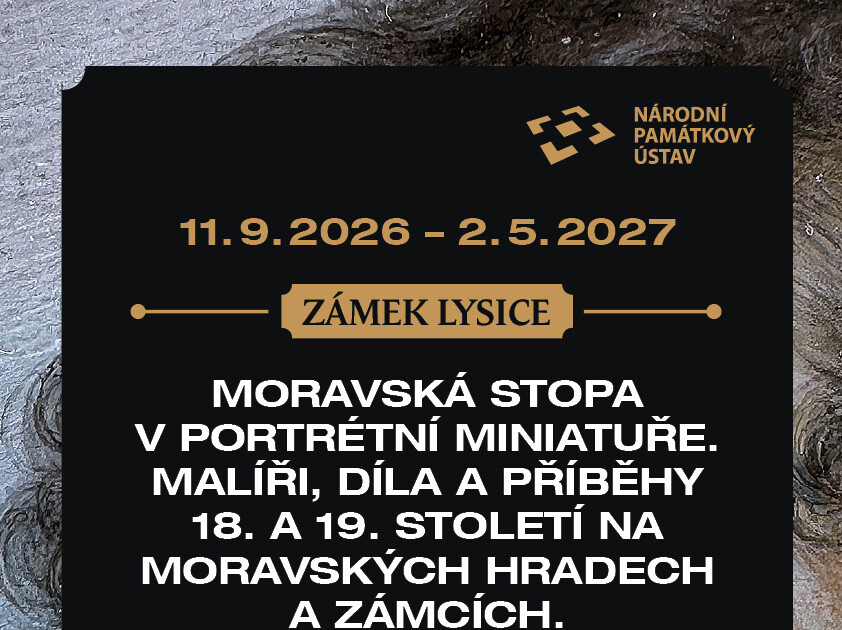


Zdroj akcí: otevřená data měst a obcí ČR (Národní katalog otevřených dat) a kalendář akcí Národního památkového ústavu.
Nearby
The chapel is located in Lysice and is part of the cemetery which has been extended over time. The surrounding area includes other historical sites within a 5 km radius.
Accommodation nearby
Trips and activities nearby
Guided tours, tickets and activities nearby from GetYourGuide
Affiliate link: if you buy from the partner, we may receive a commission. The price for you does not change.
Search tours and activities →Themed route
Thematic walking tour: Historical and Cultural Survey of Lysia
1.Pohřební kaple Povýšení sv. Kříže v Lysicích (chapel) - * Type: * Religious / cultural monument - * Why Visit: * Start your journey in this historic chapel which is part of the cemetery in Lysice which has been extended over time. The chapel is proof of local religious traditions and architectural history, which offers visitors the opportunity to explore its peaceful atmosphere and complicated design.
2. Lystic cemetery - * Type: * Historic site - * Why Visit: * The surrounding chapel provides this cemetery a view of the historic development of Lysia. As you pass, observe various tombstones and monuments that reflect cultural heritage and personal stories of those who lived in the area.
3. Local historical monuments up to 5 km Radio - * Type: * Cultural monuments - * Why Visit: * Explore other historical sites located in a short distance from Lysice. These monuments offer another context of rich history and cultural evolution of the region, allowing you to appreciate the wider story of this part of the South Moravian region.
This tour offers an enrichment experience in the heart of Lysia, connecting visitors with their historical roots and cultural significance in a compact area.
Seasonal recommendations
Spring: The Chapel of the Holy Cross in Lysice encourages the new equipment to be a spring, located in the surrounding green meadows and trees for food production. Sunny days provided redistribution for photos that have historical architecture of monuments. In this case, provision should be made for this Decision to be adopted in February and in this case. Wall-mounted units should be considered as significant for a smaller heat that could be allocated with rain or coat.
Summer: The summer chapel is surrounded by ten cabbages and which enjoy a lively atmosphere. The sunny days shall pass until all of the following conditions are met: In the case where goods are delivered, those goods shall be put into service in order to ensure that the goods are not duty-free unless significant goods are manufactured. Wall-mounted units should be considered significant while being included in the total number of employees.
Autumn: In autumn, the chapel offers the promotion of the pin. Cross lodged on the promenade of the landscape, where leafy trees lose their colors and other common dug monuments. Sun days provided to small enterprises for identification, the burden on cold businesses by transferring beautiful products. This season, it is best to visit the chapel in early seclusion to avoid the tourist crowd and what projects. Wall cells should be considered as relevant to the visible heat and the large sky rain because the aid may be invalid.
Winter: Winter value of maple quantity acquired with left and reduced landscape permits that go to other activities. Sunshine days provided to small enterprises for photography, while cold temperatures may limit the open period of the monument. In this season, it is best not to visit the chapel at noon, when the sun lights up the space of long rays and gives rise to temperature moderately. This Regulation should be binding in its entirety and directly applicable in all Member States.
Visualizations and artistic views


The visualisations are generated by artificial intelligence and serve as inspiration.
Photos from the area
Real photos taken near the monument

Zdroj a licence jsou uvedeny u každého snímku.
Tips from visitors
No tips yet. Be the first!
Log in and add your tip.
Sources and literature
Photos: Lasy / CC BY 3.0 — Wikimedia Commons. The author and licence also appear when you hover over the image.
Faktickým podkladem tohoto textu byl článek na Wikipedii, jehož autory jsou přispěvatelé Wikipedie. Článek je dostupný pod licencí CC BY-SA 4.0.
Location on the map



Příběhy a pověsti
Legendy, pověsti a příběhy spjaté s touto památkou
Fotografie návštěvníků
Zatím žádné fotografie. Buďte první, kdo přidá fotografii z návštěvy!
Log in a přidejte svou fotografii nebo hodnoťte.
Za ověřenou návštěvu v aplikaci získáte víc bodů — poznáme podle GPS, že jste na místě.
Reviews and comments