



pomník bitvy roku 1813 (Přestanov) Monument
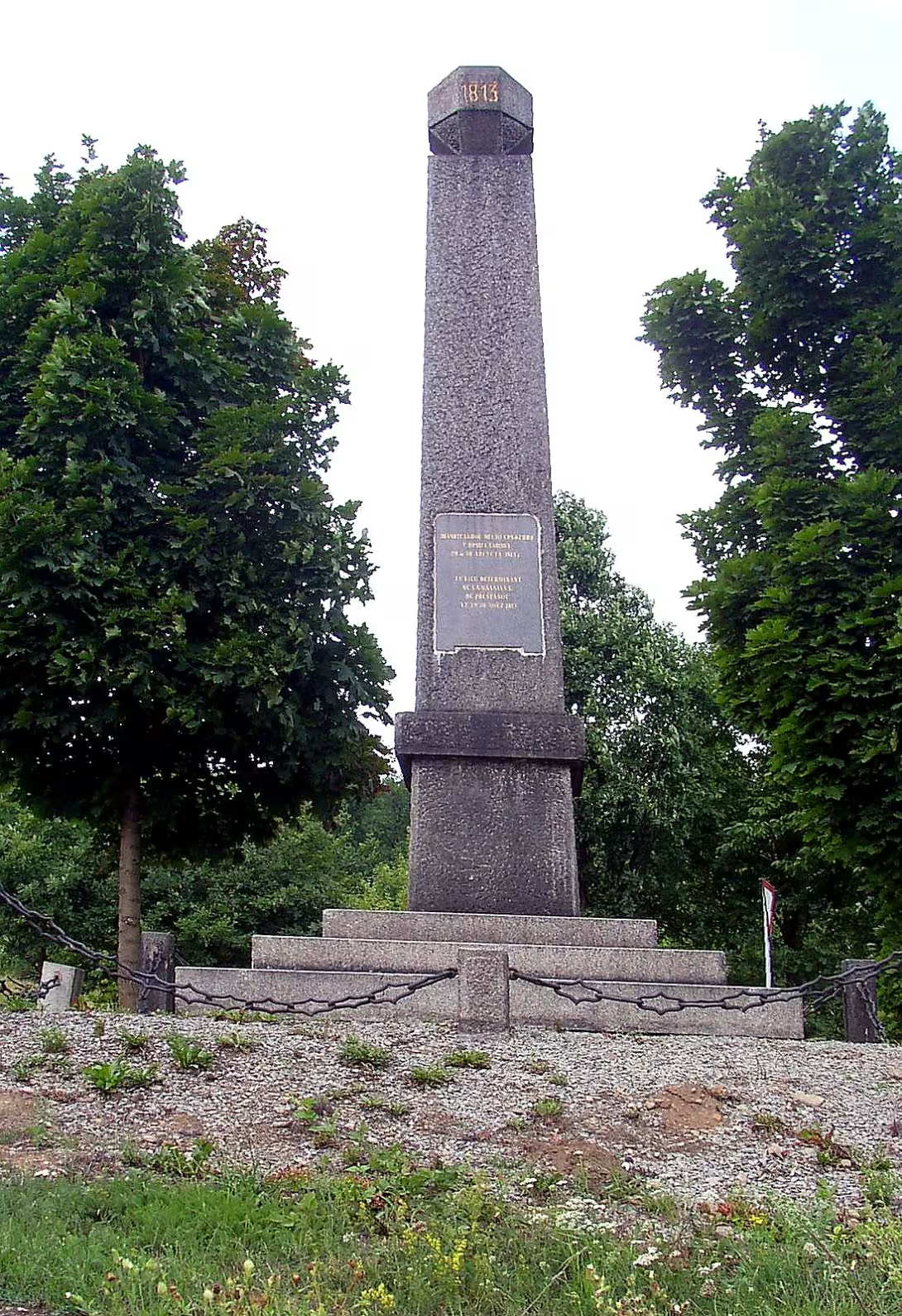
The memorial of the battle in 1813, a folk-called French monument, is a seven-metre Art Nouveau granite obelisk located in the North Bohemian village of Prestanov in the district of Ústí nad Labem. This war memorial was erected in 1911 to honor the memory of Austrian officers and soldiers fallen in the Battle of Chlumce and Prestana. Its most distinctive feature is the unique inscription in four languages, making it the only such object in the entire battlefield.
The historical significance of the site dates back to August 1813, when the major wars of the Naples wars took place here. After the victory of Emperor Napoleon I at Dresden, the Allied army retreated over the Krusty Mountains and was persecuted by the French First Army Corps under the command of General Dominik Vandamm. The Russian rear guard led by General Ostermann-Tolstoy has taken a defensive position here to prevent French penetration of Teplice. He stopped being the center of the Allied line that was defended by the elite Russian Imperial Guard. The battles were very fierce and the city changed the holder three times in one day. The strategic victory of the allies stopped the French troops from moving to Prague and became a turning point in the 1813 campaign.
The monument represents architecture in the spirit of geometrical Art Nouveau and is carved out of granite. The material is grossly worked on most surfaces, while the edges and the inscription plates are raised to the ground or ground. The base of the building consists of three staircase stages, on which is fitted a prism plinth. The actual body of the monument takes the form of a slender chamber needle, which is optically cut off by the belt ledge at the height of the volcano. The entire obelisk is finished with an artistic element in the form of a sphere, which is partially sealed into a multiwall packaging consisting of square parts. On the four walls of this peak, oriented towards the world's sides, the year 1813 is carved. The immediate surroundings are defined by a decorative fence on a square plan, which consists of eight granite columns of various heights connected by an decorative iron chain.
The unique nature of the monument is the existence of original inscriptions in four languages. On the northwest side are placed granite slabs with German and Czech text, while the southeast side bears inscriptions in Russian and French. The presence of a French translation, which was an expression of respect for fallen opponents at the time, led to the extension of the misleading name of the French monument. The building is located in the close neighbourhood of the Classicist Yucht Chapel on the historic line of Russian defense.
Unlike the older monuments in the surrounding area, which arose from the initiative of monarchs or armies, this building was built on the cargo of the village. According to the data in the Memorial Catalogue, the sculptors Berger and Vogt were the authors of the work, with more information about their origin missing. In the mid-1990s, the monument was restored from a private initiative, in which even decorative fences and chains were restored. Another repair took place at the 200th anniversary of the battle in 2013. In 2022, the whole complex was declared a cultural monument, including the fence.
This monument serves as a silent testimony to the major conflict of European powers and its architecture offers a rare view of the Art Nouveau craft. It is an important historical point for anyone who is interested in the history of the Napoleon wars.
Historical milestones
- 1813
- The fundamental fight of the Napoleonic wars in the region of Prestana
- 1911
- Ascension of Art Nouveau granite obelisk on the municipal cargo
- around 1995
- Restoration of the monument and restoration of decorative fences
- 2013
- Repair of the memorial for the 24th anniversary of the battle
- 2022
- Declaration of the whole site for cultural monument
Architectural development
The monument was built as an Art Nouveau granite obelisk. Its uniqueness is written in four languages, which is unique for the battlefield.
Historical events
- 1813
- The Battle of Chlumce and Prestana took place on August 29 and 30.
- 1911
- A memorial rise in the central part of the battlefield.
Points of interest
- It's a seven-meter granite granite obelisk. - It has unique inscriptions in four languages. - This object was built on a cargo village. The entire obelisk is finished with an artistic element in the form of a sphere. - In 2022, the entire area was declared a cultural monument.
Guide
Show guide text
This text was created by artificial intelligence and has not been editorially reviewed. It may contain inaccuracies.
Welcome to this quiet and noble place. You're standing in front of one of the most important monuments in this part of the country. In front of your eyes, there is a high, massive and serious stone, which, as a silent guardian, rises directly to the sky. It is a seven-metre granite obelisk whose grey color and strength immediately appeal to you with its strength. Feel the atmosphere of this place, feel the calm that exists here, and remember that it is here that time has stopped to tell us the story of courage, sacrifice and unusual respect. Look at his line as he goes up, and let yourself be carried away by the thoughts of what this stone has experienced.
Let us now return together deep into the past, to a time when the fate of the entire nations was decided in these very fields. More than two hundred years ago, precisely in the year one thousand eight hundred and thirteen, this area became the center of the great and destructive movements of the world's powers. It was the time of the Napoleon wars when armies moved across Europe and their clashes changed the maps and people's lives. It is here, in the North Bohemian Prestana, that a major battle has taken place. The battles at Chlumce and at Prestano himself at that time were key events that were of great importance to the whole situation at the time. This monument is not just an ordinary stone piece, it is a living witness to the bloody and decisive days when great armies met here.
Now pay attention to the very form of this monument. When you look at him, notice his architecture. This object is not built in some old, rugged style, but it has features of Art Nouveau, which is a style that was very popular at the turn of the century. It's a work that combines the power of natural material with artistic expression. The entire obelisk is made of solid granite, which was chosen to withstand all the unpleasantness of the weather and remained here for future generations. Look up, all the way to the top. This whole tall column is finished with an artistic element in the form of a sphere. This sphere gives the whole part a balanced and completed look and leads your view towards the sky. Note also the decorative fence surrounding the monument. Even if it has been repaired, it still forms an important part of the entire area and helps define this sacred space. It is interesting to know that this magnificent project was not financed by the state, but it was created by the municipality itself. Local people have decided to invest their resources so that this reminder does not go away.
When we talk about history, we can't forget the names that appeared in these contexts at the time. Even though they seem to be just names in books these days, they were people who decided the fate of thousands of soldiers. The figures associated with these events include Dominik Vandamme, Ostermann-Tolstoj or Jermolov. These people were part of the major military operations that took place in this area, and their names are inseparably linked to the era that this monument celebrates.
And now I want to tell you something that makes this monument absolutely extraordinary, something that you won't see here in most other war monuments. Most of these places are built to celebrate only winners or only their own soldiers. But this monument has deep humanity and strange secrets. If you approach it and you start monitoring its surface closely, you'll notice signs. These inscriptions are not in just one language. They're in four different languages. And among them you'll find French. Why would anyone write French for a monument to Austrian officers and soldiers? It's a token of unprecedented respect for the fallen, even though they were from the camp of opponents. This monument not only solves victory or defeat, but pays tribute to the people who fell in battle, no matter what color their uniform was. It's a wonderful example of how people managed to maintain respect for the enemy even in the midst of the greatest chaos of war.
This monument has undergone many changes in time and care that helped him stay in such good condition. After his ascension in the year one thousand nine hundred eleven, the monument was carefully maintained after decades. In the year one thousand nine hundred and ninety-five, there was an important restaurant where the decorative corral that you now see was restored. Ten years later, in the year two thousand thirteen, another repair took place, which took place precisely on the important anniversary of the battles. And finally, in the year two thousand and twenty-two, something very important happened to protect this place. The whole area was officially declared a cultural monument. This means that its value is now recognised as part of our common heritage, which we must protect from oblivion.
Now that you know the story of this granite obelisk, I suggest you stop for a while and feel its presence in silence. Look at the details of its surface, see the weight of the history that is emitted from this stone. This monument is not just a dead object, it's a bridge between the past and the present. I hope this short journey through time and words has brought you new insights into this place. Continue to walk and enjoy the beauty and peace of this neighborhood. Thank you for spending this moment with us. Goodbye.
Tips for visitors
The best time to visit is morning or late afternoon hour, when the granite obelisk of soft light falls. This best excels the Art Nouveau style of the monument and its details, which is ideal for photography.
The location is available by car and by public transport; Check the current connection in the search engine.
We recommend to bring comfortable shoes suitable for field walks. For families with children, the visit is suitable as a short educational stop where the importance of historical events can be explained in peace.
In the immediate vicinity of the monument, remember to visit the Classicist Yucht Chapel, which complements the cultural character of this place.
The monument is located in open terrain, which allows free access from different directions and offers a peaceful atmosphere for contemplation over history.
Frequently asked questions
Can the monument be visited?
This is a structure in a public space that can usually be seen from outside free of charge. We have not verified that this particular one is freely accessible.
Where is the monument?
Location: Ústecký kraj. The map on this page shows the exact spot.
Why is the monument protected?
It is listed in the Central List of Cultural Monuments of the Czech Republic as a cultural monument (register no. 1368331195).
Businesses nearby
Do you run a restaurant, accommodation, shop, museum, rental, wellness or other visitor service near this monument? Show yourself directly to the people heading to it — this is how they will see you in the app and on the web:
Nearby
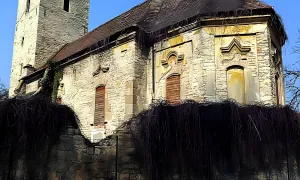
Klasicistní Juchtová kaple
Historická linie ruské obrany
Accommodation nearby
Trips and activities nearby
Guided tours, tickets and activities nearby from GetYourGuide
Affiliate link: if you buy from the partner, we may receive a commission. The price for you does not change.
Search tours and activities →Themed route
Thematic cruise route: Historical line of Russian defense
1. Memorial of the Battle of 1813 (Stop) - Main objective Type: Memorial Why is it worth a visit: This monument commemorates a key battle that took place in 1813 during the wars of Naples. Visitors can enjoy a historical view of the place where the Russian and Allied forces opposed the French troops.
2. Classicist Yucht Chapel - Chapel Type: Religious construction Why is worth a visit: This classical chapel is an architectural treasure that celebrates elegant solutions and historical value. Its location near the monument gives the whole area a deeper cultural context.
3. Expected observation point of Russian troops - Historical site Type: Historical site Why is it worth a visit: This place is an informal but historically important point where Russian troops could observe the movements of enemy forces. Visitors here can imagine strategic decisions and tactics used during the battle.
This route offers visitors the opportunity to explore the historical context and architectural beauty of the area around the Battle Memorial in 1813.
Seasonal recommendations
Spring at Prestana brings awakening nature, which surrounds the memorable place with green tones and flowering trees. The light is soft and scattered at this time, which creates a calm and thoughtful atmosphere ideal for quiet contemplation at the monument. In practice, the spring visit is advantageous by not getting here yet large groups of tourists, which are typical of summer months. For comfortable wandering around I recommend shoes with good soles because the ground can be wet and muddy after the rains. The temperatures are variable, which is why it is advisable to carry a light jacket or umbrella. The best time to visit is in the morning when the air is fresh and lighting supports shooting without sharp shadows.
Summer offers the longest days and brightest lighting, which reveals details of stone sculpture and surroundings in full beauty. Nature is in full bloom, creating a lively and festive atmosphere, but with that comes an increased number of visitors. To avoid the crowds gathering in the high summer season in the morning, I recommend arriving early in the morning or late in the afternoon. In clothing is key light, breathable clothing and sun protection such as hat and sunglasses. It is important to take with you enough drinking mode, because in summer heat you can quickly dry out. The best time to visit is in the morning, when the heat is tolerable and the surroundings are still quiet.
Autumn brings to Prestanov a unique atmosphere of coloured leaves, which forms a dramatic contrast with the stone structure of the monument. The light is lower and warmer this season, which underlines the historical and memorial character of the place. Nature around the monument turns into a mosaic of yellow, orange and red tones, offering excellent conditions for photographic images. Practical advice includes caution on slippery paths, as fallen leaves and morning dew can make movement difficult. Clothes should be layered to easily adapt to colder temperatures. The best time to visit is the late afternoon when the sun shines low and creates long shadows that give the scene depth and dramatic.
Winter in Prestana is a time of silence and rest when nature sleeps and the landscape is often covered with snow or ice. Lighting is short and pale, which creates a serious and respectful atmosphere suitable for deeper reflection on historical events. The winter visit is practically the quietest because the number of tourists is falling to a minimum. However, it is necessary to move to a place in warm clothes, including gloves, hat and shoes with anti-slip soles to avoid any danger on the frozen surface. Shorter opening times of the day means that the visit must be scheduled by late afternoon when it is still visible. The best time is late afternoon hours, when the light quickly turns dark and creates a mystical impression around the monument.
Visualizations and artistic views


The visualisations are generated by artificial intelligence and serve as inspiration.
Photos from the area
Real photos taken near the monument


Zdroj a licence jsou uvedeny u každého snímku.
Tips from visitors
No tips yet. Be the first!
Log in and add your tip.
Sources and literature
Photos: Miaow Miaow / CC BY-SA 3.0 — Wikimedia Commons. The author and licence also appear when you hover over the image.
Faktickým podkladem tohoto textu byl článek na Wikipedii, jehož autory jsou přispěvatelé Wikipedie. Článek je dostupný pod licencí CC BY-SA 4.0.
Location on the map
More monuments – Ústecký kraj
Show all in the region

Příběhy a pověsti
Legendy, pověsti a příběhy spjaté s touto památkou
Fotografie návštěvníků
Zatím žádné fotografie. Buďte první, kdo přidá fotografii z návštěvy!
Log in a přidejte svou fotografii nebo hodnoťte.
Za ověřenou návštěvu v aplikaci získáte víc bodů — poznáme podle GPS, že jste na místě.
Reviews and comments