






Pomník dobrovolné studentské legie Memorial
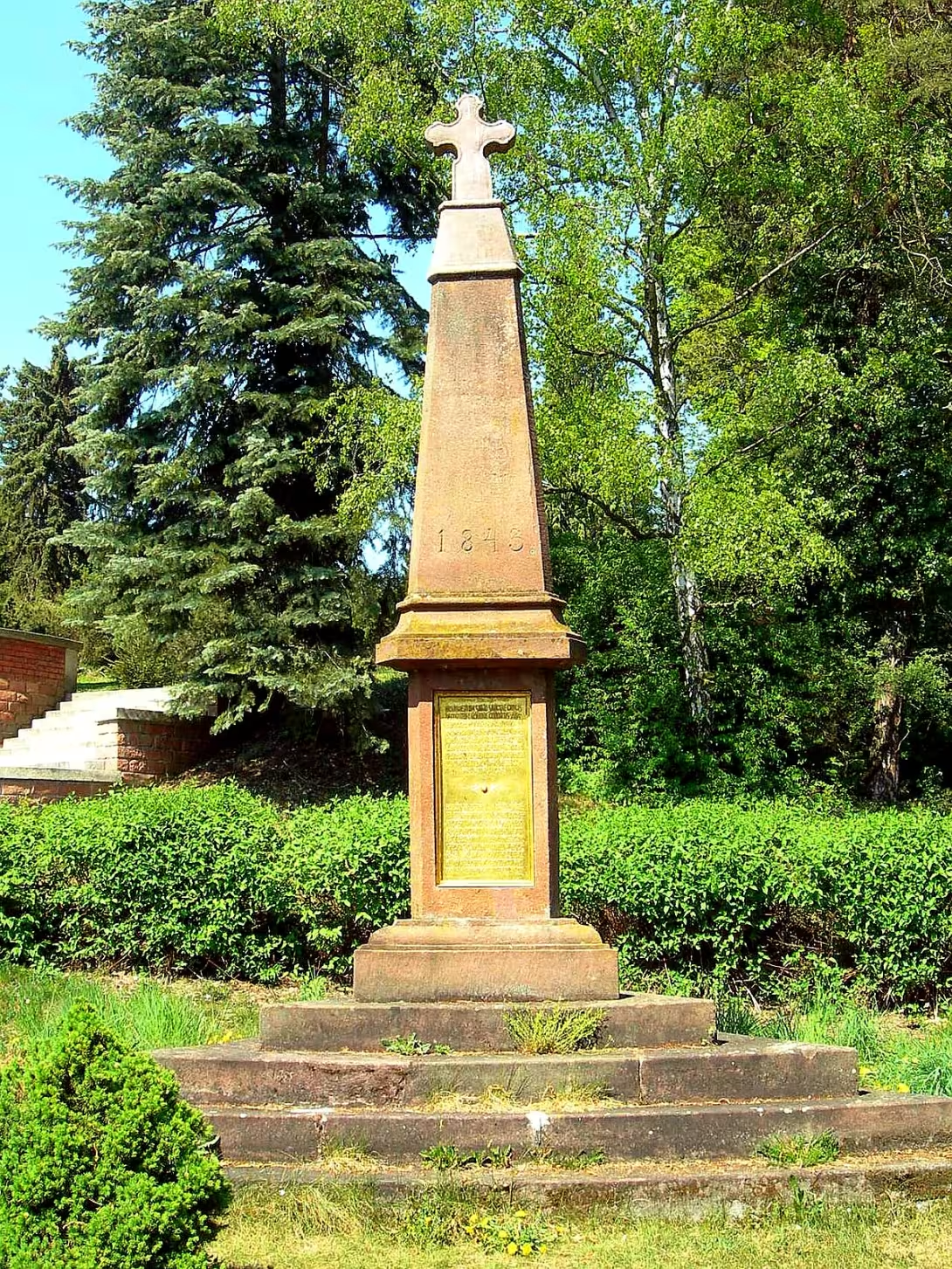
Pomník dobrovolné studentské legie, located north of the village Ondřejov on the hill Žalov near the observatory in the Praha- east district, was built in 1843. This monument resembles a voluntary student legion that stood against Napoleon between 1800 and 1801. It is protected as a cultural monument of the Czech Republic.
The memorial was set up by the local vicar Václav Horáček, who was involved in the fight against Napoleon. His motivation was to honor the courage and victims of students who rushed from Prague to Budejovice in 1800 to face the impending French invasion. Located on the top of the hill, the monument has symbolic significance and visibility.
The architecture of the monument is drawn from the red sandstone, which contributes to its resistance and beauty. The structure includes triangular plinth and base with embossed plate on which are inscriptions in both Latin and Czech languages. The inscriptions tell of the honour of the academic regiment and its participation in the wars against France. Above the pedestal stands a tall slender pylon, ending with a stone cross with triangular shoulders, which gives the monument religious and historical depth.
The ownership and administration of the monument has not changed dramatically over the years. After his position he remained in place, which shows a lasting value for the community and the history of the region.
Today, the monument is accessible to visitors and is worth visiting not only because of its historical significance, but also because it offers a view of the surrounding landscape. Location near the observatory adds another dimension to the visit connecting history with astronomy.
The monument is an important monument not only for its architectural and historical importance, but also as a symbol of the courage and dedication of students from past times. It's a place where visitors can think about the history and values that shaped our current society. Visit this monument and appreciate its historical importance and beauty.
Historical milestones
- 1843
- The position of the monument by the local vicar Václav Horáček
Architectural development
The building is built from red sandstone. It contains a triangular plinth, a base with a relief plate and a high slender pylon with a 1843 date, which ends with a stone cross.
Historical events
In the years 1800-1801, the voluntary student legion fought against Napoleon.
Points of interest
- Pomník dobrovolné studentské legie was built in 1843. - Reminds me of a volunteer student legion that stood against Napoleon between 1800 and 1801. - The architecture of the monument is drawn from a red sandstone with a triangular plinth and a pedestal with a relief plate, which has inscriptions in both Latin and Czech languages. - Located near the observatory in Prague-East district, offers a view of the surrounding landscape and combines history with astronomy. - It is protected as a cultural monument of the Czech Republic.
Guide
Show guide text
This text was created by artificial intelligence and has not been editorially reviewed. It may contain inaccuracies.
Welcome to the top of Paloon. You're standing in front of something that requires not only your perspective, but a moment of quiet reflection. There is a monument before you, which, by its presence in the silence of this place, brings deep thoughts to the ancient past. The first thing that's likely to interest you in this place immediately is its color. Look at the rich, deep red color. This whole structure is carved out of red sandstone. This stone is not just ordinary building material. It has a special texture and color that changes depending on the way the light hits it. Sometimes it seems dark and serious, sometimes bright sunlight is mirrored in its granularity. This red color carries a strange energy in it, as if it kept the warmth and memory of the events that were captured here. Feel this color, feel its weight and how it contrasts with the surrounding greenery and blue sky.
But now look deeper, behind the actual matter of this stone, behind its colour and shapes. This monument is not just a work of art, it is a living witness to events that have shaken the world in the past. To understand why this stone is standing here, we must return to a time when history was formed in the fires of great conflict. In the years of a thousand eight hundred and zero to a thousand eight hundred and one, wars took place in Europe, changing the borders and fates of nations. In these difficult times, when the great leader named Napoleon's power ambitions clashed with the fate of many, this voluntary student legion was born. Imagine those young people, the students who decided to leave their books, their teachings and their safe environment to stand up for battle. It was not the duty that was given to them, but their own choice, their own courage, and their own desire for something greater than themselves. This monument is an expression of their courage and their sacrifice.
Now pay attention to the construction itself and the way it is thought out. Notice how the monument is built on a solid base. The whole structure stands on a triangular plinth. This geometric purity gives the whole piece stability and balance, as if it meant to say that the memory that this monument carries is solid and indestructible. There is a base above this base. If you approach it any closer, you'll see a relief plate on it. On this board are inscriptions in a classic, ancient language that tell us the story of those who choose to fight. These inscriptions are part of the body of the monument itself and remind us that history is written in words that must survive centuries. Above the pedestal, there is a high pylon pole, which heads up to the sky. This tall pillar acts as a link between the earth and the heavens, between human effort and eternity. And it is on top of it that it ends with a stone cross that gives the whole place a sacred and noble character. This whole work of red sandstone works very strongly in the landscape and its shapes are clear and direct.
Who was behind this vision and this effort to preserve memory? To understand why this monument is even standing here, we must return to the year one thousand eight hundred forty-three. That's when the local vicar, Václav Horáček decided to declare this place a monument. He wasn't just a man in church clothes, he was a man who felt a deep need to preserve the memory of the courage of young people. Thanks to his efforts and his belief that history must not be forgotten and that the courage of young generations deserves to be honored, we can watch this monument today. Václav Horáček has imprinted this place so that after many years people who come here can feel the weight of the events.
Perhaps you are now told how it is possible that students, people dedicated to studying, thinking and seeking the truth, have opted for such dangerous volunteering. It is a question that can raise many feelings and questions in us. What led them to such a sacrifice? At that time, what power ignited in them to abandon their safety? The mysterious power of courage that was kindled in them at that time is precisely what this monument still carries. It is the secret of the human spirit that is reflected in this red sandstone.
Now that you have looked at the details and understood the context, let these thoughts be milked. You're standing in a place where youth clashed with danger and faith in something higher manifested itself through the act of voluntary combat. Let these images fit into your memory. The memorial will continue to stand here while the world around it changes. I hope this brief moment at the memorial has helped you better understand its meaning and that it has brought you peace and inspiration. Have these feelings brought to another part of your journey. Enjoy the beauty of this place and the peace that prevails here. Goodbye.
Tips for visitors
The best time to visit the monument is in the spring or autumn season when the weather is pleasant and vegetation at the top of Žalov offers a beautiful view. This place is also suitable for visiting the evening if you are interested in photographing the observatory nearby.
The site offers comfortable access for visitors travelling in different ways.
When planning a visit, it is advisable to bring shoes suitable for walking on hilly terrain, sun or rain protection and water. If you are interested in photography, also bring a quality camera.
The photos at this place offer several attractive perspectives. The best light is usually in early morning or evening, which ensures pleasant colors and shading. When shooting the observatory, it is recommended to choose the time after sunset.
In the vicinity of the monument you can visit the Ondřejov Observatory, which offers interesting exhibitions and programs for visitors. For families with children it can also be attractive to explore the natural beauty of surrounding forests and hilly terrain.
Frequently asked questions
Can the monument be visited?
This is a structure in a public space that can usually be seen from outside free of charge. We have not verified that this particular one is freely accessible.
Where is the monument?
Location: Středočeský kraj. The map on this page shows the exact spot.
Why is the monument protected?
It is listed in the Central List of Cultural Monuments of the Czech Republic as a cultural monument (register no. 1000127776).
Businesses nearby
Do you run a restaurant, accommodation, shop, museum, rental, wellness or other visitor service near this monument? Show yourself directly to the people heading to it — this is how they will see you in the app and on the web:
Events nearby
Zdroj akcí: otevřená data měst a obcí ČR (Národní katalog otevřených dat) a kalendář akcí Národního památkového ústavu.
Nearby
Vrch Žalov a nedaleká hvězdárna.
Accommodation nearby
Themed route
1. Pomník dobrovolné studentské legie - Memorial. Instead, he worships the courage of students who fought for freedom. 2. Peak Žalov - Natural height. The climb to the top offers a beautiful view of the surrounding landscape. 3. Observatory - Astronomical equipment. An ideal place to observe the stars and explore the secrets of the universe.
Seasonal recommendations
Spring: In spring, the monument is decorated with flowers that create a colorful web pattern around the monument. Sun rays shine long and warm afternoons, which makes visitors more attractive. Due to the spring sun, it is advisable to wear a light coat or plaid that is easily added or postponed depending on temperature. The best time to visit is usually the afternoon when the sun illuminates the memory and the surroundings are filled with life.
Summer: In summer, the atmosphere in the monument is full of warmth and light. Sun rays for long days increase the attractiveness of photography, but also bring a larger crowd of visitors. It is important to prepare for a warm time and bring with you sunglasses, UV protective cream and plenty of drinking water. The best time to visit is in the morning or late afternoon to avoid the top number of people.
Autumn: In the autumn period the surroundings of the monument are transformed into gold and red palette colors. Sunrise is less intense, which creates a calm and quiet atmosphere. Clothes should be tailored according to temperature - from light coat to warm plaid. The best time to visit is usually in the early afternoon when nature appears in its most beautiful form and crowds are not much.
Winter: During winter the monument is covered with snow, which creates a magical atmosphere. The sun's rays illuminate the snow carpets and the monument becomes the center of attention. It is important to wear warm clothes, including shirts, gloves and wide pants, so that it is possible to pass long without winter fatigue. The best time to visit is in the morning or in the middle of the day when the temperature rises a bit and snow can be more pronounced.
Visualizations and artistic views


The visualisations are generated by artificial intelligence and serve as inspiration.
Photos from the area
Real photos taken near the monument


Zdroj a licence jsou uvedeny u každého snímku.
Tips from visitors
No tips yet. Be the first!
Log in and add your tip.
Sources and literature
Photos: Jan Sokol / CC BY-SA 3.0 — Wikimedia Commons. The author and licence also appear when you hover over the image.
Faktickým podkladem tohoto textu byl článek na Wikipedii, jehož autory jsou přispěvatelé Wikipedie. Článek je dostupný pod licencí CC BY-SA 4.0.
Location on the map
Příběhy a pověsti
Legendy, pověsti a příběhy spjaté s touto památkou

Fotografie návštěvníků
Zatím žádné fotografie. Buďte první, kdo přidá fotografii z návštěvy!
Log in a přidejte svou fotografii nebo hodnoťte.
Za ověřenou návštěvu v aplikaci získáte víc bodů — poznáme podle GPS, že jste na místě.
Reviews and comments